Jump to a section
AI sales enablement trends are easy to overstate. Every vendor wants to frame AI as a complete reset for sales teams, while many revenue leaders are still trying to answer basic questions: which use cases deserve budget, what data has to be cleaned first, how managers should coach reps, and where human judgment still belongs.
The clearest 2026 shift is not that AI replaces enablement work. It is that enablement is moving closer to the moment of selling. Instead of building static content repositories and hoping reps use them, sales teams are starting to put guidance, summaries, coaching signals, and next steps inside the systems where reps already work.
That shift creates a higher bar. AI sales enablement needs usable data, clear workflows, and evidence that the tool helps reps move deals forward. Gartner predicted in April 2026 that by 2029, sales organizations with AI-driven enablement functions will reach 40% faster sales stage velocity than teams using traditional enablement methods. That is a useful direction of travel, not a reason to buy every AI feature at once.
This guide breaks down the AI sales enablement trends sales and RevOps leaders should watch in 2026, with practical ways to prioritize them.
What AI sales enablement means in 2026
AI sales enablement is the use of AI to help reps and managers prepare, execute, learn, and improve across the sales process. In 2026, that usually means more than AI-generated content. It includes call summaries, meeting prep, account research, coaching prompts, CRM recommendations, content suggestions, workflow automation, and reporting signals.
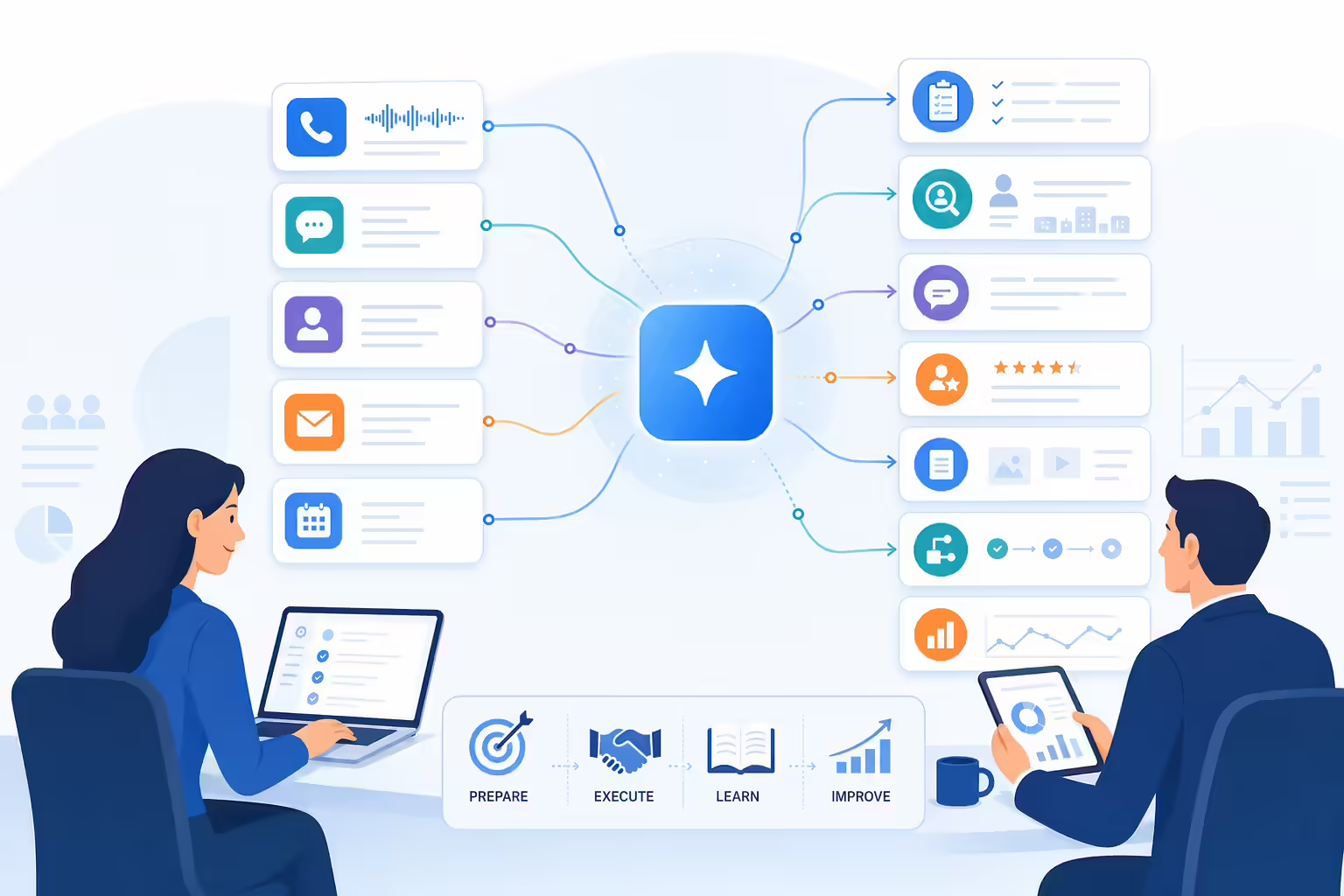
The important distinction is workflow fit. A generic AI assistant can draft an email or summarize a call. AI sales enablement should help the team do the right selling work at the right time, with enough CRM and conversation context to be useful.
For Kixie’s audience, the most practical version of AI enablement lives close to calls, SMS, follow-up tasks, and CRM records. If AI can turn customer conversations into cleaner next steps, better coaching, and more accurate pipeline context, it becomes part of the operating rhythm instead of another tab reps ignore.
How AI brings real-time sales support
Traditional enablement often centered on content: decks, battlecards, training videos, and onboarding modules. Those assets still matter, but the 2026 trend is toward guidance that appears when reps need it.
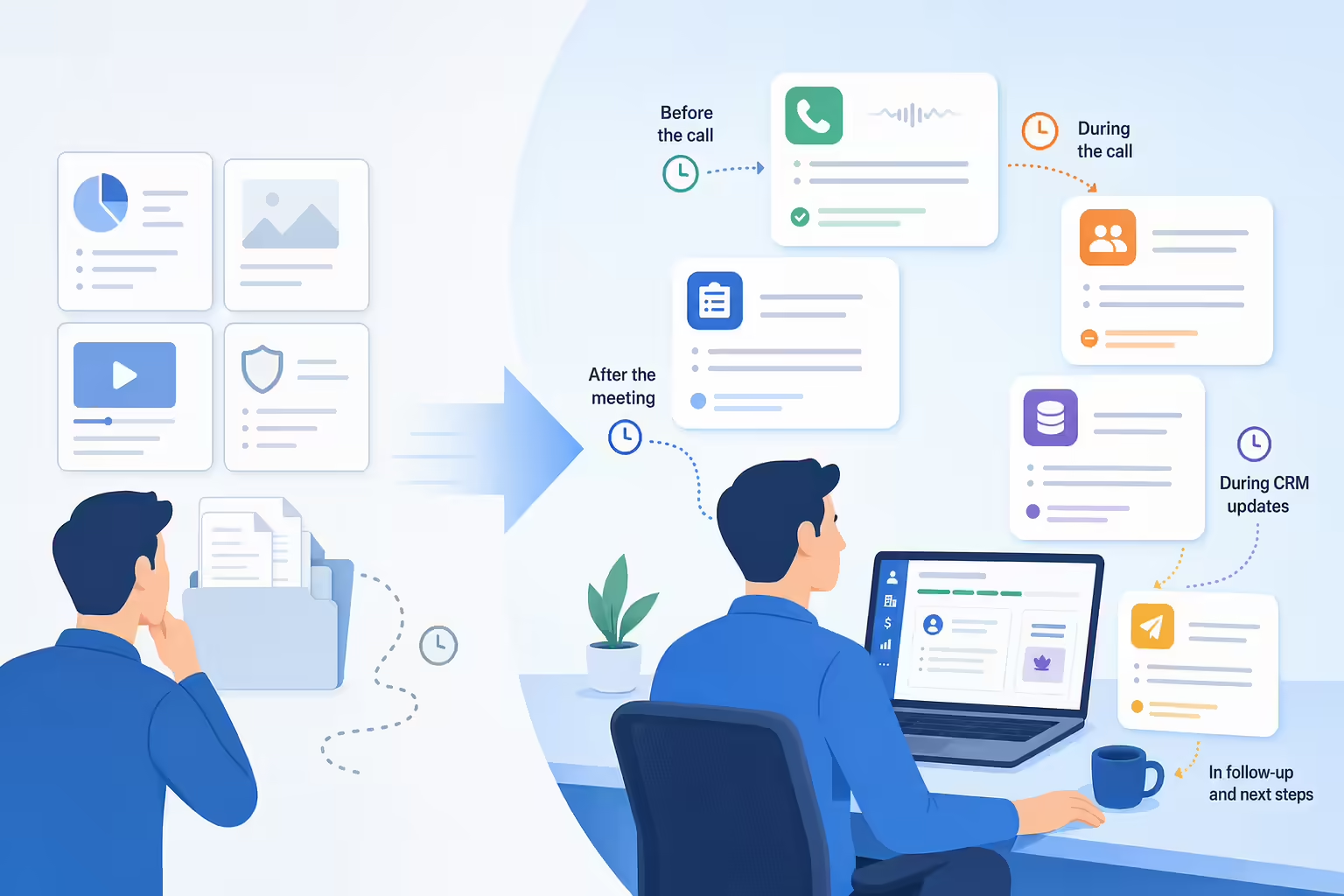
That might mean surfacing the right talk track before a call, suggesting a follow-up after a meeting, summarizing the last conversation before a manager one-on-one, or pointing reps to a relevant objection-handling resource inside the CRM. The value is not the document itself. The value is timing and context.
| Dimension | Static enablement | In-workflow AI guidance |
|---|---|---|
| Delivery | Content portal or separate library | Inside the CRM, dialer, or active sales workflow |
| Timing | Before or after the customer interaction | At the moment context or a next step is needed |
| Context | Broad persona and playbook guidance | Live CRM, conversation, and deal signals |
| Measurement | Views, downloads, and completion | Follow-up speed, stage movement, and conversion |
SERP competitors consistently emphasize this move from static libraries to in-workflow support. It also matches how buyers have changed. HubSpot’s 2026 sales predictions note that buyers are using AI tools to research, compare, and evaluate products before they talk to sales. If buyers arrive with more context, sellers need faster access to accurate context too.
How CRM and conversation signals shape sales enablement
The next AI sales enablement trend is the rise of conversation and CRM signals as raw material for coaching and process improvement. Calls, SMS replies, notes, dispositions, meeting outcomes, and deal updates contain patterns that enablement teams used to collect manually or miss entirely.
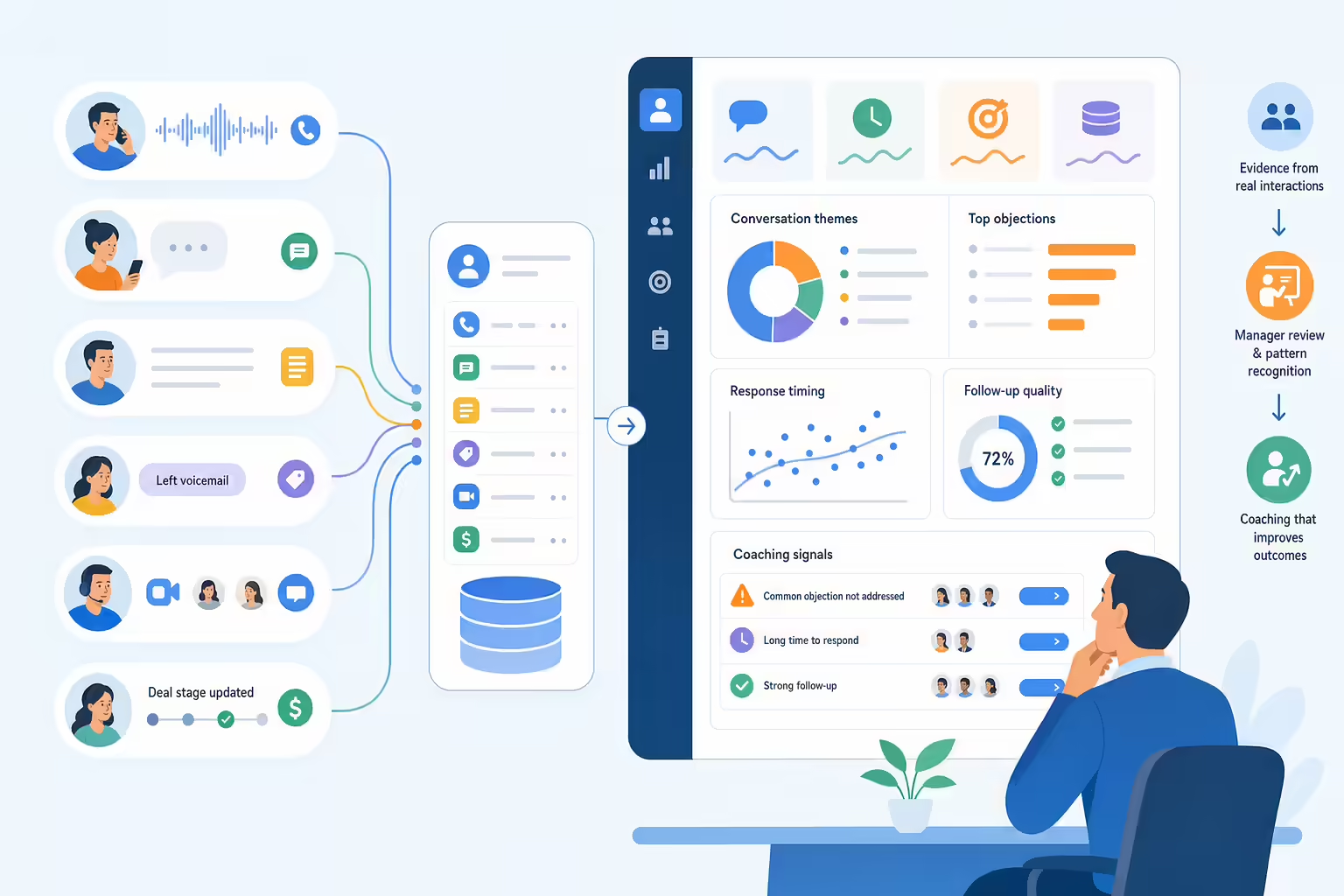
AI can help summarize those patterns, but only if the underlying data is usable. Salesforce’s 2026 State of Sales report says 51% of sales leaders with AI say technology silos delay or limit AI initiatives, and 42% of sales reps are overwhelmed by too many tools. Those figures point to the same operating issue: AI enablement depends on connected systems, not just clever prompts.
For managers, the opportunity is to move from anecdotal coaching to evidence-informed coaching. Instead of asking, “How did your calls go this week?” a manager can review common objections, call outcomes, response timing, and follow-up quality. The manager still makes the judgment call, but AI can make the right evidence easier to inspect.
Kixie’s article on AI Insights for calls and SMS is a practical example of this workflow. The goal is not to replace managers. It is to give them a better view of what is happening in the conversations that shape pipeline.
Why AI prospecting needs cleaner sales data
Prospecting is one of the most common AI sales use cases because it has clear repetitive work: research accounts, identify contacts, draft outreach, prioritize lists, and prepare reps for calls. But it is also one of the easiest places to create noise.

Salesforce’s 2026 State of Sales report found that high performers are 1.7x more likely than underperformers to use prospecting agents. The same report also points to data and tool quality as a limiting factor. If lists are stale, CRM fields are inconsistent, or lead routing is unclear, AI can speed up the wrong work.
McKinsey’s 2025 guidance on gen AI in B2B sales makes a similar point: commercial leaders need a clear view of the sales tech stack and an adoption process rooted in seller feedback. In practical terms, AI prospecting should be introduced with operating rules, not just a new prompt library.
How buyer enablement changes with AI research
AI is changing seller workflows, but it is also changing buyer behavior. Buyers can summarize vendor sites, compare alternatives, ask AI tools for questions to bring to demos, and arrive at sales conversations with more prepared objections.
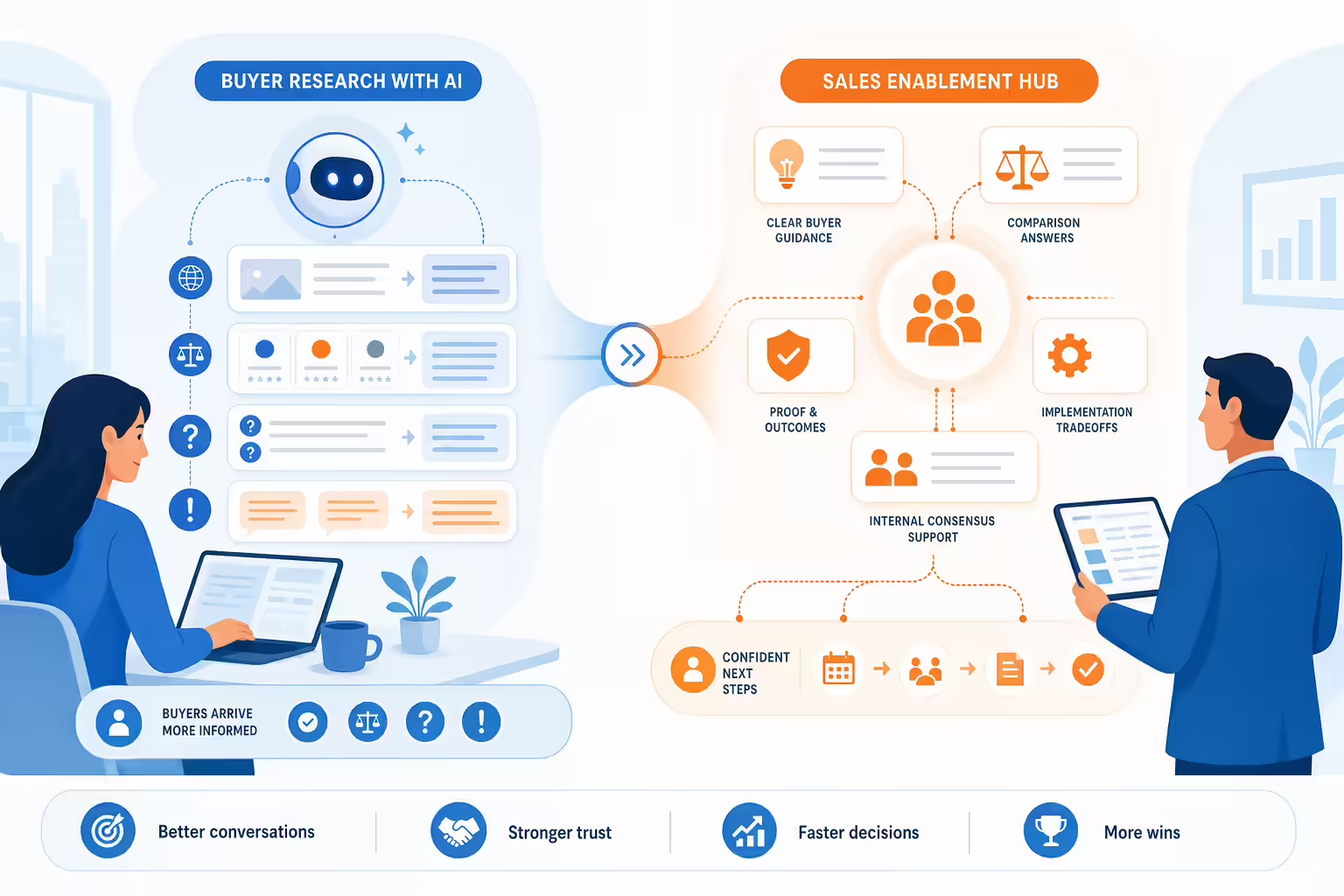
HubSpot’s 2026 sales predictions cite its 2025 sales trends research finding that 74% of sellers say AI tools make it easier for buyers to gather information about products or services. Whether a team sells to SMBs, midmarket buyers, or enterprise committees, that change raises the bar for sales conversations.
The enablement response is not more generic content. It is clearer buyer guidance. Reps need ways to answer comparison questions, explain implementation tradeoffs, show proof, and help buyers build internal consensus. That means enablement teams should prepare reps for the questions AI-assisted buyers are more likely to ask.
Sales enablement metrics that tie to revenue
AI sales enablement can produce a lot of activity metrics: prompts used, summaries generated, trainings completed, calls analyzed, and content views. Those metrics may help diagnose adoption, but they do not prove business impact.
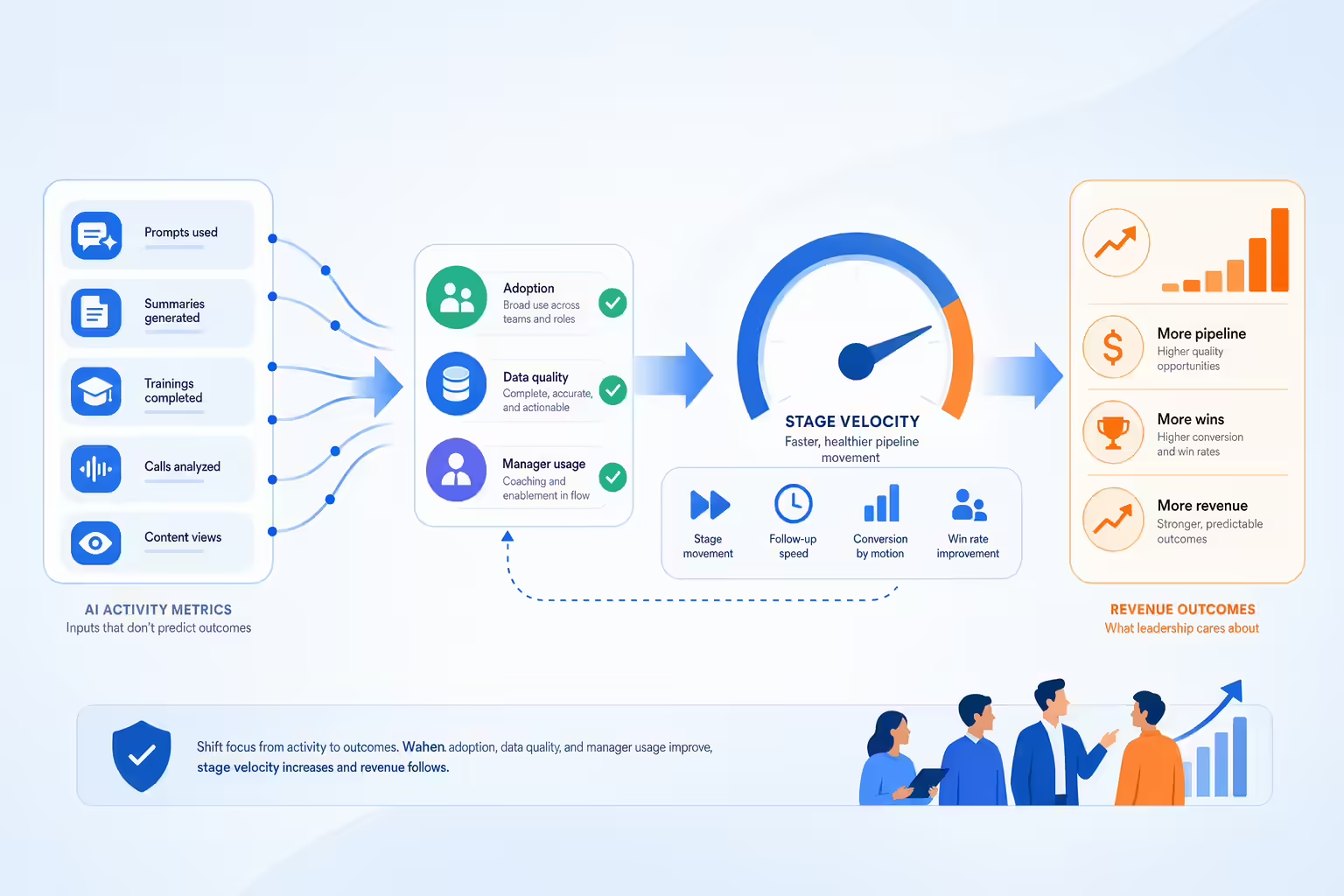
The 2026 trend is toward revenue-linked measurement. Gartner’s 40% sales stage velocity prediction is one example of the metric direction: leaders want to know whether AI enablement helps deals move through the process faster, not just whether reps clicked a tool.
McKinsey’s 2026 Global B2B Pulse article also frames AI, hyperpersonalization, and sales accountability as part of a new operating system for growth. That matters because enablement teams are under pressure to connect programs to pipeline quality, conversion, and retention, not just training completion.
Kixie’s AI sales dashboard guide is useful for teams thinking about how managers should inspect sales activity and coaching signals.
Why AI enablement needs governance and human review
AI sales enablement introduces new risks. Reps may send inaccurate AI-generated messages. Managers may overtrust summaries. Teams may store sensitive call data in systems without clear permissions. Automation may scale outreach before consent, opt-out, or compliance rules are checked.
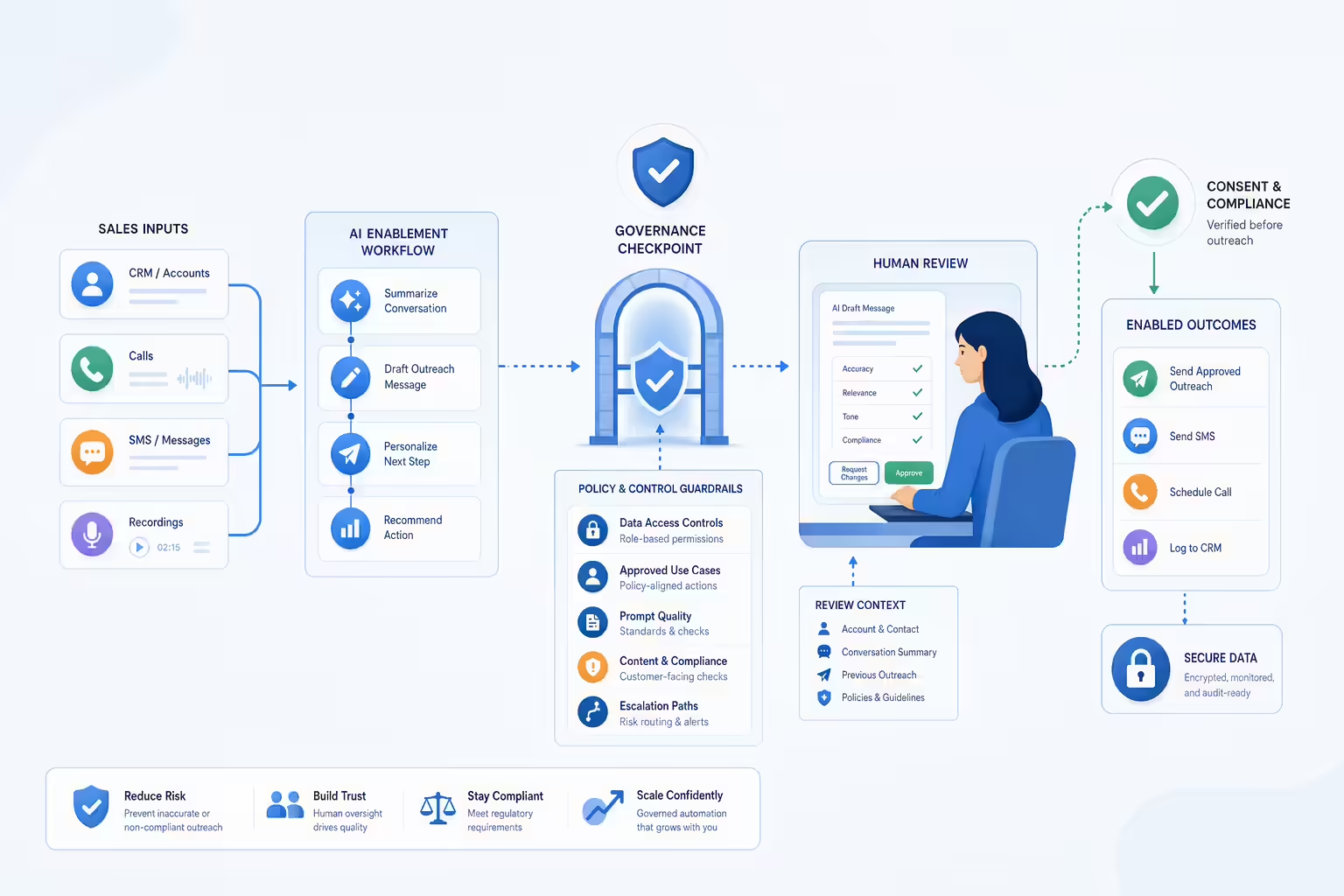
That makes governance an enablement responsibility, not just an IT or legal concern. Sales leaders need clear rules for approved use cases, data access, human review, prompt quality, customer-facing content, and escalation. This is especially important for calls, SMS, recordings, and any workflow that touches regulated data or outbound consent.
Salesforce’s 2026 State of Sales report notes that more than half of sales pros say security concerns delay AI initiatives. That is not a reason to avoid AI. It is a reason to introduce it with clearer controls.
How sales managers drive AI adoption
AI enablement fails when it is rolled out as a tool announcement. Reps need to see managers using the outputs in coaching, pipeline reviews, and deal strategy. Otherwise, the AI workflow becomes optional admin work.

McKinsey’s 2025 B2B sales article stresses change management, seller feedback, training sessions, success stories, and thoughtful use by sales leaders. That guidance is especially relevant for AI enablement because sellers are often skeptical of tools that monitor behavior or create extra steps.
The manager’s role is to translate AI outputs into better selling habits. A call summary should lead to clearer next steps. A coaching signal should lead to a focused conversation. A CRM recommendation should lead to cleaner data or a better follow-up. Without that management loop, AI can create more content without improving execution.
How to prioritize AI sales enablement trends
Most teams should not pursue every AI sales enablement trend at once. The better question is where AI can remove friction from a workflow that already matters.
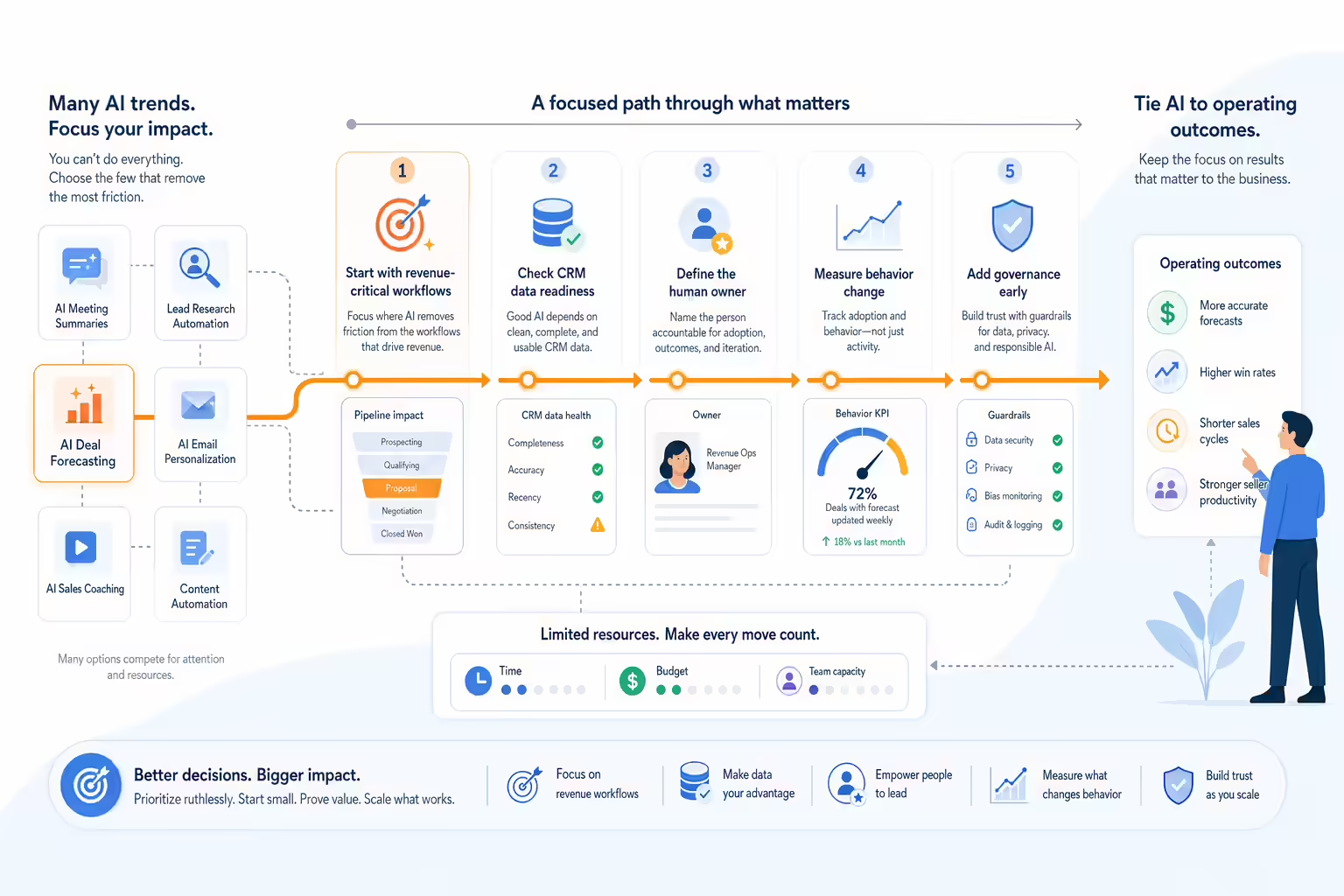
Use this prioritization order:
- Start with revenue-critical workflows. Pick prospecting, first-call follow-up, demo follow-up, renewal prep, or manager coaching before experimenting with broad content generation.
- Check data readiness. If the CRM is inconsistent, start with fields, ownership, duplicate cleanup, and workflow rules before adding AI recommendations.
- Define the human owner. Every AI output should have a person responsible for reviewing, using, or improving it.
- Measure behavior change. Track whether reps follow up faster, managers coach more consistently, or stages move with less friction.
- Add governance early. Do not wait until AI touches sensitive data or customer-facing messaging.
This approach keeps AI sales enablement tied to operating outcomes. It also helps teams avoid buying tools because they are new instead of because they improve the sales workflow.
How sales engagement workflows support AI trends
Kixie is one example of how AI sales enablement can live inside a sales engagement workflow instead of a separate content system. The workflow below is an example configuration, not a benchmark or guarantee. In an outbound sales motion, reps need to call, text, log activity, follow up, and keep the CRM current. Managers need visibility into the conversations behind the numbers.
A practical workflow might look like this:
- A rep works a prioritized call queue.
- Calls, SMS messages, dispositions, and notes sync to the CRM.
- AI Insights helps turn conversations into manager-readable signals.
- The manager reviews patterns before coaching.
- Follow-up tasks or messages keep the next step moving.
That workflow supports several trends in this article: real-time support, conversation data, coaching, prospecting handoffs, and revenue-linked measurement. It also keeps the product angle grounded. Kixie should be evaluated like any sales technology, by how well it fits the team’s CRM, outreach rules, data quality, and management rhythm.
AI sales enablement FAQ
What is AI sales enablement?
AI sales enablement is the use of AI to help sales teams prepare, engage, follow up, coach, and improve. It can include content suggestions, call summaries, account research, CRM recommendations, coaching signals, and workflow automation.
Will AI replace sales enablement teams?
AI is more likely to change enablement work than remove it. Teams still need people to define playbooks, train reps, validate outputs, govern data use, and connect programs to business outcomes. AI can reduce manual work and make patterns easier to inspect, but humans still own judgment and accountability.
Which AI sales enablement trend should you start with?
Start with the workflow where better timing or better context would create the most immediate value. For many outbound teams, that means prospecting handoffs, call follow-up, CRM hygiene, or manager coaching.
Which metrics matter for AI sales enablement?
Useful metrics include adoption, data completeness, manager usage, response speed, stage movement, conversion by motion, call outcomes, and follow-up completion. Tool usage alone is not enough.
What are the biggest AI sales enablement risks?
The main risks are poor data quality, unsupported claims in customer-facing content, weak human review, disconnected tools, unclear permissions, and automation that scales outreach without appropriate consent and compliance checks.
AI sales enablement trends to act on
The most important AI sales enablement trends in 2026 are not about replacing reps or adding another tool to the stack. They are about moving enablement closer to the work: the call, the follow-up, the CRM update, the coaching conversation, and the buyer question that decides whether a deal moves forward.
Teams that get value from AI will be the ones that pair new capabilities with clean data, manager adoption, clear governance, and practical workflows. Start there, then expand only where AI measurably improves how your sales team sells.
Ready to close more deals with Kixie?
See how Kixie's AI-powered tools can transform your sales and support operations.
Start Free Trial