Key Points
- Research suggests that artificial intelligence tools can increase sales representative productivity by 25 to 40 percent.
- Structuring AI requests using the RIGS method—Role, Instruction, Guardrails, and Specifics—typically yields more actionable and accurate results.
- Data indicates that the optimal ratio for sales conversations is 43 percent talking and 57 percent listening, a metric that AI telephony tools can track in real time.
- Modern sales teams using AI report saving an average of 2 to 5 hours per week on administrative tasks such as data entry and call summarization.
- While generic prompts produce generic output, applying specific constraints and context frameworks allows teams to generate highly targeted scripts, emails, and objection-handling strategies.
Integrating artificial intelligence into the sales process is a practical operational shift. For sales development representatives (SDRs), account executives, and revenue operations leaders, the challenge is no longer accessing AI, but instructing it effectively. Vague requests generate unusable, robotic text. However, when paired with specific company data, buyer personas, and structural constraints, AI models can generate highly effective sales assets. This report provides a comprehensive overview of how to structure AI inputs, evaluates current sales telephony tools, and offers an extensive library of over 50 prompt templates designed for everyday sales scenarios.
The Framework for Effective AI Sales Prompts
Many sales professionals experience frustration when their initial AI queries return generic or overly formal responses. This occurs because AI models require explicit boundaries and context to function properly. To generate content that sounds human and aligns with specific sales strategies, revenue teams commonly use the RIGS method.

The RIGS method stands for Role, Instruction, Guardrails, and Specifics.
Role involves telling the AI who it is supposed to be. Instead of asking the AI to “write an email,” you instruct it to “act as a senior enterprise account executive specializing in the telecommunications industry.” This frames the output and taps into the specific industry vocabulary associated with that persona.
Instruction is the core command. It must be clear and action-oriented. For example, “Write a three-step follow-up email sequence for a prospect who attended a product demonstration but has not replied in five days”.
Guardrails define the rules and constraints. AI models will naturally generate long paragraphs unless told otherwise. Guardrails include commands like “Keep each email under 100 words,” “Do not mention pricing,” or “Format the output as bullet points”. Providing constraints prevents the AI from hallucinating or producing irrelevant information.
Specifics represent the context. This is where you input your unique product details, the prospect’s company name, their current pain points, and specific value propositions. An example of a specific input is: “The prospect is a Chief Financial Officer at a mid-sized manufacturing company struggling with inaccurate pipeline forecasting”.
Evaluating Sales Telephony Tools with AI Capabilities
Before generating scripts and emails, it is important to understand the platforms where these conversations take place. Modern sales telephony systems have evolved into comprehensive revenue intelligence platforms. They automatically transcribe calls, score leads, track competitor mentions, and provide real-time coaching prompts to representatives.
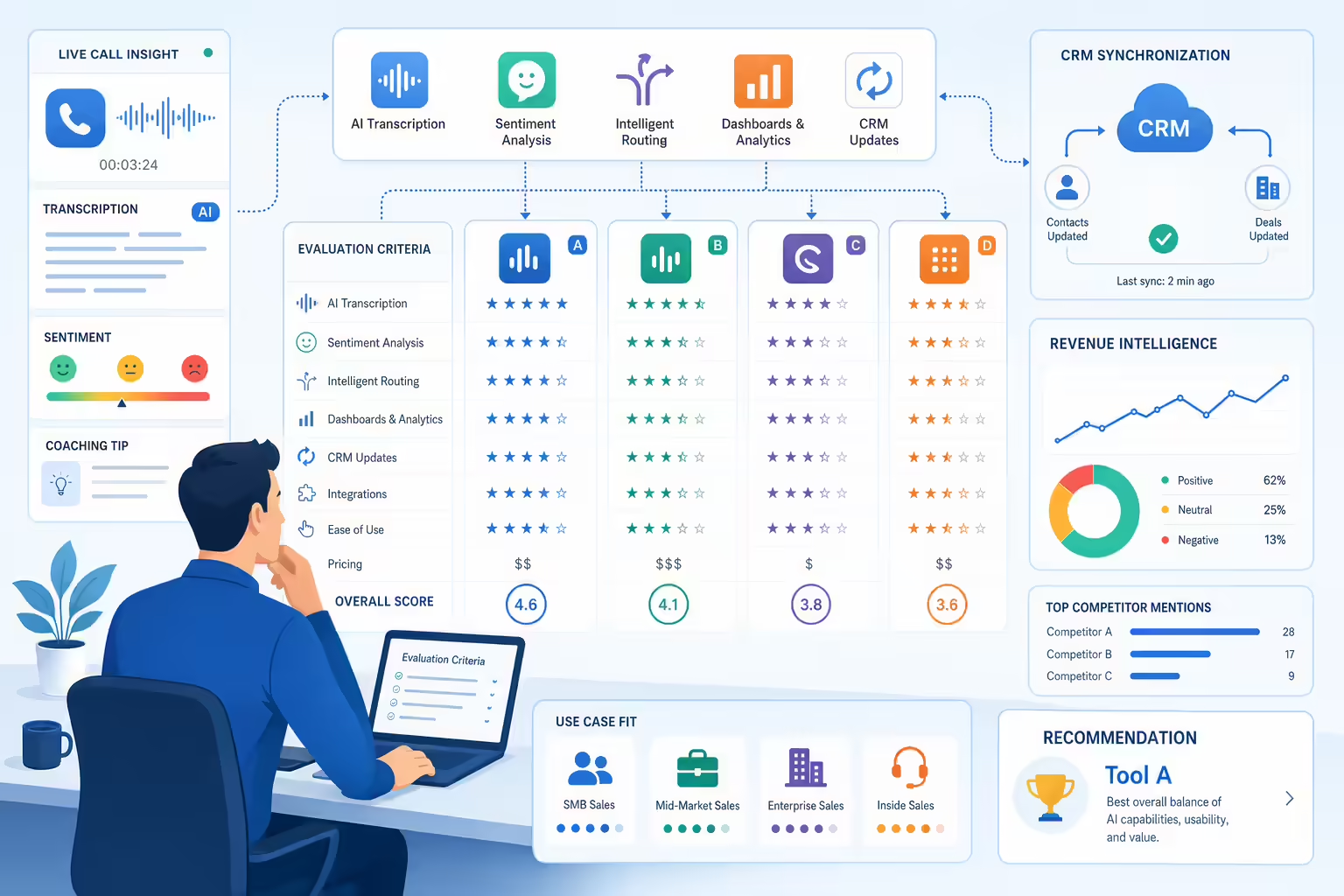
Choosing the right platform depends heavily on a team’s budget, size, and need for post-call analytics versus real-time dialing support. Below is a comparison table of prominent sales telephony and conversation intelligence tools used by revenue operations teams.
| Software Platform | Starting Price (Estimated) | Best Use Case | Key AI Features |
|---|---|---|---|
| Dialpad AI | $15 to $35 per user/month; Premium tier required for AI CSAT is $150 per user/month. | Growing SMB teams needing a unified cloud phone system with built-in transcription. | Real-time call transcription, live agent coaching cards, automated sentiment analysis. |
| Talkdesk | $85 to $165 per user/month; advanced AI modules add 20-60% to base cost. | Mid-market to enterprise contact centers requiring complex routing and omnichannel support. | AI-driven routing, live dashboards, specialized compliance workspaces. |
| Gong | $1,600 per user/year plus a $50,000 annual platform fee. | Enterprise revenue intelligence and deep pipeline forecasting. | Deal risk assessment, competitor mention alerts, advanced talk-to-listen ratio tracking. |
| Chorus by ZoomInfo | Enterprise pricing typically $100 to $150+ per user/month; requires ZoomInfo suite. | Teams already using ZoomInfo seeking integrated market signals and deal intelligence. | Rep performance scorecards, coaching playlists, automatic CRM field updates. |
| AskElephant | $99 per month with no seat minimums. | Teams needing post-call automation and CRM updates without enterprise contracts. | CRM field write-backs, handoff documents, automated churn alerts. |
Prospecting and Lead Research Prompts
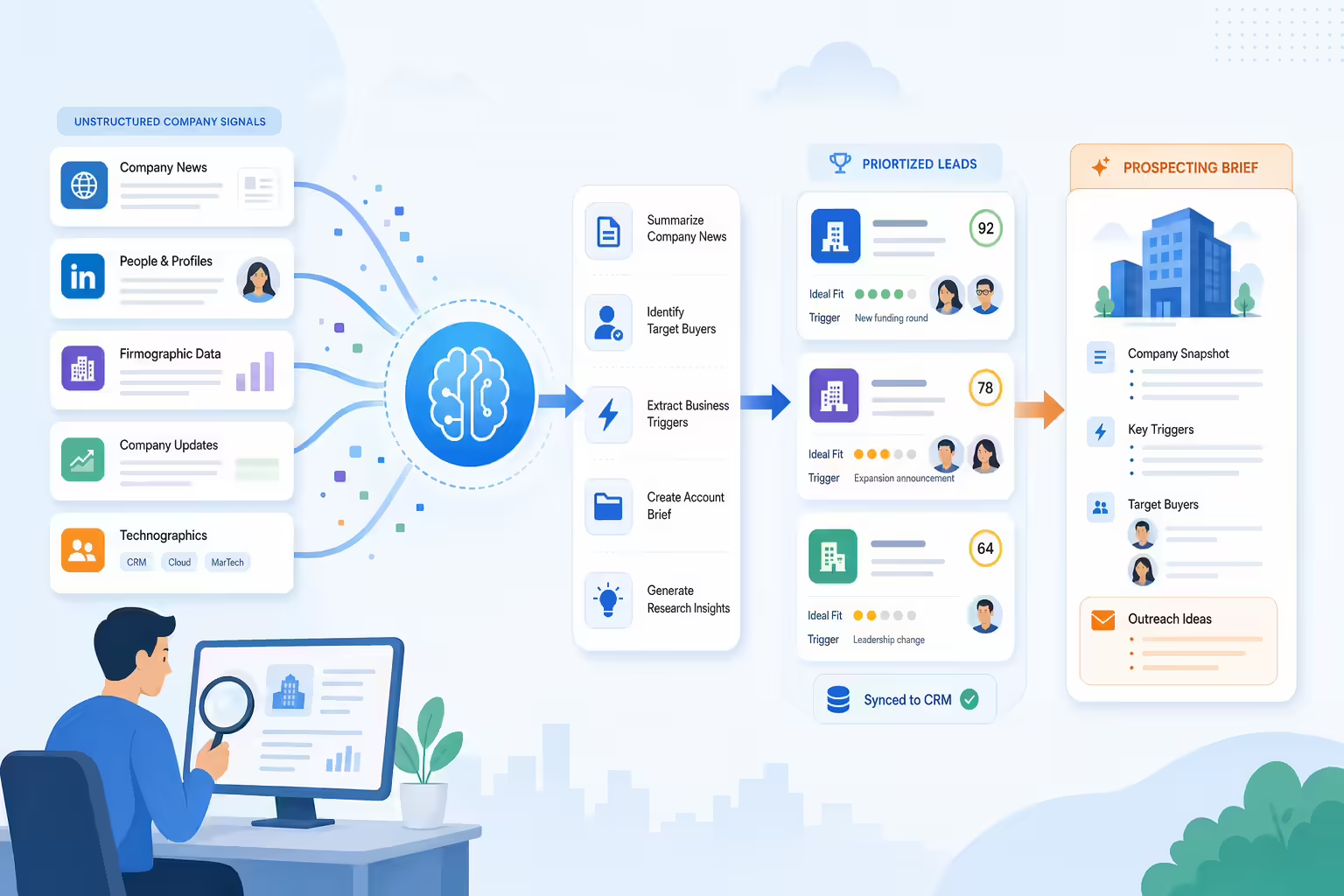
Prospecting requires processing large amounts of unstructured data to determine if a company fits your ideal customer profile. AI can summarize news, extract key personnel, and identify relevant business triggers, saving SDRs hours of manual research.
1Company Mission Summary Prompt:
Act as a B2B sales researcher. Read the following company description: [Insert Description]. Summarize the company’s core mission in under 10 words. Ensure the tone is conversational so I can use it in a cold call opener. Start the output with: “I saw you are focused on…”.
2Identifying the Target Buyer Prompt:
Based on this company’s website text: [Insert Text], identify the exact job titles of the people who would most likely purchase a [Insert Your Software Type] platform. Provide three potential job titles and one sentence explaining why each role would care about our solution.
3Executive Promotion Trigger Prompt:
Act as an SDR researcher. I am targeting the [Insert Industry] industry. What are three specific business challenges a newly promoted Vice President of Operations faces in their first 90 days? Provide actionable pain points I can reference in an outreach message.
4Financial Report Analysis Prompt:
Review the following text from [Company Name]’s recent quarterly earnings report: [Insert Text]. Identify two strategic initiatives they are focusing on for the upcoming year. Explain how a [Insert Your Product] solution can help them achieve these specific goals. Keep the analysis under 150 words.
5Competitor Technology Stack Check Prompt:
Act as a technical sales engineer. A prospect currently uses [Competitor Tool A] and [Competitor Tool B]. What are the top three known integration gaps or workflow bottlenecks associated with using those two tools together? Format as bullet points.
6Lookalike Audience Generation Prompt:
My best customers share these characteristics: [Insert Company Size, Industry, Tech Stack]. Act as a territory mapping expert and generate a list of 5 search criteria or boolean search strings I can use in LinkedIn Sales Navigator to find similar companies in the [Insert Geographic Region].
7Pre-Call Prospecting Brief Prompt:
Analyze [Company Name] using the following recent news articles: [Insert Articles]. Create a 1-page prospecting brief. Include: 1) A summary of their recent funding or product launch, 2) The likely business impact of that event, and 3) Two relevant questions I should ask the decision-maker regarding this event.
8Persona Behavior Snapshot Prompt:
You are an expert buyer psychologist. Describe the typical daily workflow of a Chief Marketing Officer at a 500-person software company. Highlight the three most tedious administrative tasks they perform, which my [Insert Product Type] can automate.
9Social Media Content Analysis Prompt:
Here are the last five LinkedIn posts from [Prospect Name]: [Insert Posts]. Based on this content, what professional topics does this person value most? Draft a one-sentence observation I can use to personalize a connection request.
10Industry Insight Hunter Prompt:
You are a market researcher in the [Insert Industry] sector. What are two emerging regulatory changes or market shifts happening this year that will force companies to upgrade their telephony and communication systems? Provide data-driven reasoning.
Cold Email Outreach Prompts
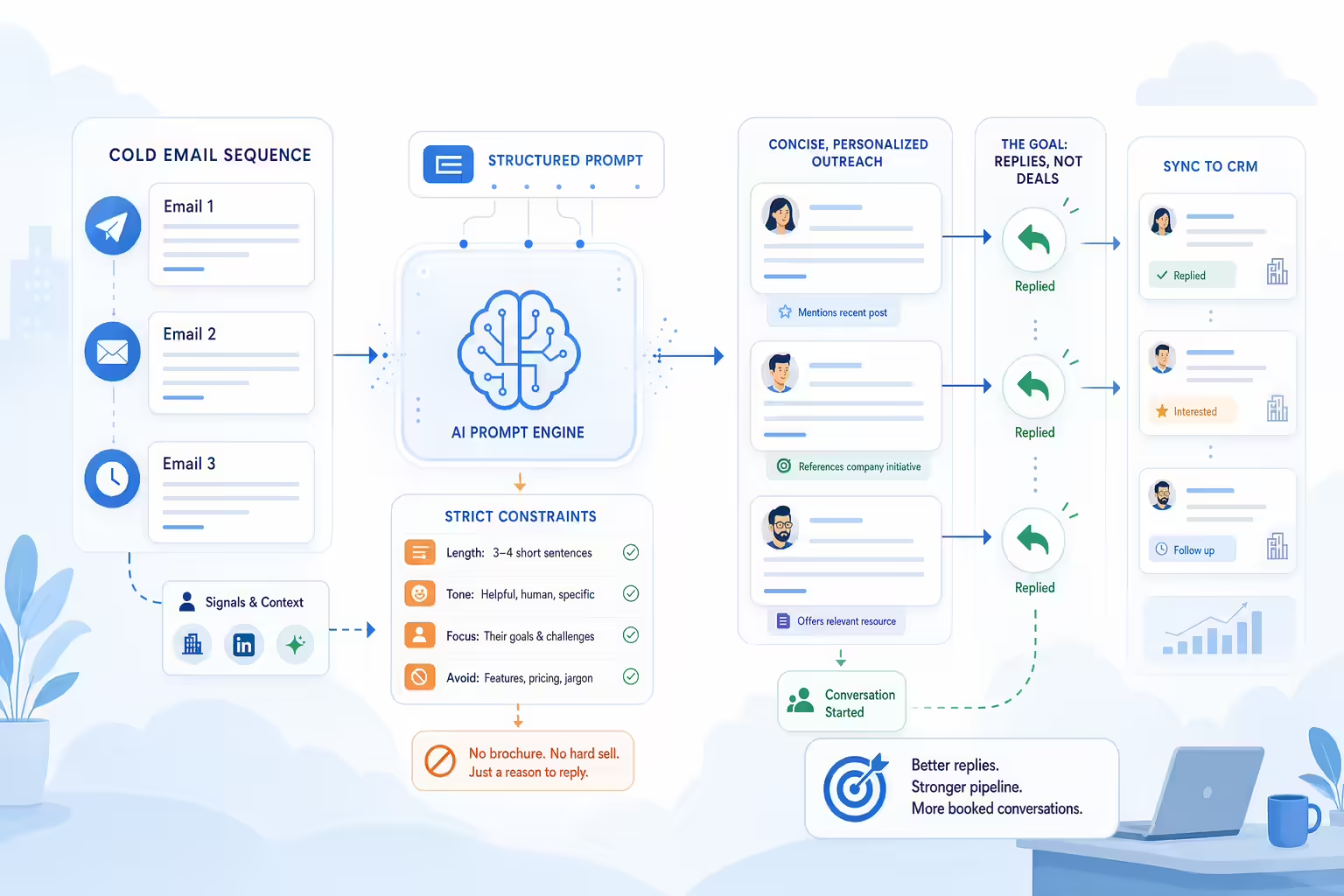
When writing cold emails, the primary goal is to secure a reply, not to close a deal on the first touch. AI prompts for email should enforce strict constraints on length and tone to prevent the output from sounding like a traditional marketing brochure.
11Three-Step Outbound Sequence Prompt:
You are an expert field sales consultant. Create a 3-touch cold email sequence for a [Job Title] at [Company]. Email 1 must focus on [Pain Point A]. Email 2 must share an anonymized customer success story. Email 3 must be a brief break-up email. Guardrails: No email can exceed 100 words. Do not mention our pricing. Tone must be peer-to-peer and confident.
12Event Trigger Hook Prompt:
Act as a B2B SDR. [Company Name] recently announced [Insert Event: e.g., a new office opening]. Write two different email opening hooks tying this event to the need for a scalable [Insert Product] solution. Keep each hook under 150 characters and format them as one to two sentences.
13Mutual Connection Reference Prompt:
Act as an SDR. I share a mutual connection, [Mutual Connection Name], with my prospect, [Prospect Name]. Write a friendly LinkedIn direct message that references this connection to build trust. Include a one-sentence value proposition about [Product/Service] and a low-pressure call to action for a 15-minute chat. Keep it under 200 characters.
14Hyper-Personalized First Line Prompt:
I am emailing [Prospect Name]. Their LinkedIn bio says: [Insert Bio]. Write three options for a personalized first line of an email. Do not mention their university or generic praise. Focus on a specific professional achievement or viewpoint they shared.
15Pain-Agitate-Solution Framework Prompt:
Write a cold email using the Problem-Agitate-Solution (PAS) framework. Target: [Job Title]. Problem: They waste 15 hours a week manually logging call notes into Salesforce. Agitate: This causes inaccurate pipeline data and missed follow-ups. Solution: [Your Product] automatically transcribes calls and writes data to the CRM. Limit to 4 sentences.
16The AIDA Formula Prompt:
Draft a cold email utilizing the Attention, Interest, Desire, Action (AIDA) framework. Target audience: SDR Managers. Product: AI dialing software. Include the statistic that AI increases talk time to 45 minutes per hour. Tone should be educational and neutral.
17Shared Experience Message Prompt:
I am reaching out to [Prospect Name]. We both attended [Insert Conference/Event]. Write a short, casual follow-up email mentioning a specific keynote speech regarding [Topic]. Ask how their team is implementing the speaker’s advice, and gently introduce how our firm assists with that specific challenge.
18Meeting Request Formatting Prompt:
The prospect just replied positively to my previous email indicating interest. Draft a 2-sentence follow-up to lock in a meeting. Acknowledge their interest, suggest two specific time blocks for next week, and keep the total response under 50 words to reduce friction.
19Culturally Sensitive Pitch Tailoring Prompt:
I am a US-based sales representative reaching out to a procurement director in [Insert Country/Region]. Adjust this cold email draft: [Insert Draft] to align with local business etiquette. Ensure the tone reflects the appropriate level of formality and directness expected in that business culture.
20Low Activity Check-In Prompt:
My prospect, [Name], expressed interest 45 days ago but went completely silent. Act as a sales professional and draft a low-pressure, 2-sentence check-in email. Do not use guilt or phrases like “bumping this to the top of your inbox.” Instead, share one new, highly relevant industry statistic.
Cold Calling and Telephony Script Prompts
Voice conversations remain a core channel for B2B sales, with research indicating that 50 to 60 percent of buyers prefer phone contact during the process. AI can generate scripts that navigate gatekeepers and secure the prospect’s attention during the crucial first 15 seconds.

21The Persona-Specific Opener Prompt:
You are a top B2B prospector. Write a cold call opening script that hooks a [Insert Job Title] who is actively dealing with [Insert Specific Challenge]. The opener must stop their standard stall tactics, clearly state who I am, and ask for permission to continue using the framework: “I noticed [Trigger], would it be okay if I shared a quick challenge we see with [Persona]?”.
22Value-Led Call Script Prompt:
Generate a 60-second cold call script targeting manufacturing executives. Include an opening hook, a delivery of our value proposition, two problem-identifying questions, and a clear call to action asking for a 15-minute discovery meeting. Tone should be consultative.
23Gatekeeper Navigation Prompt:
Act as an experienced sales representative. Write a script for speaking with an executive assistant. The goal is to be transferred to the VP of Sales. Use a tone that is respectful, assumes peer-level authority, and provides a concise, non-sales explanation for the call.
24Voicemail Script for Callback Prompt:
Write a 20-second voicemail script for a prospect who requested a software demo but missed the scheduled call. The voicemail must state my name, reference the specific problem they mentioned in their inbound form, and propose a specific alternate time. Do not sound desperate.
25Objection Handling on the Dialer Prompt:
I am using an automated dialer and making high-volume cold calls. Prospects frequently interrupt me within the first 10 seconds and say, “We already have a vendor for this.” Provide three different 1-sentence pattern-interrupt responses that respectfully challenge their status quo and keep them on the phone.
26Post-Voicemail Email Alignment Prompt:
I just left a voicemail for [Prospect Name] regarding [Topic]. Write a 2-sentence email that I will send immediately after hanging up. The email should reference the voicemail, restate the core value proposition, and provide a frictionless way for them to reply.
27Live Call Coaching Prompt Generation Prompt:
I am configuring the live AI coaching cards for my Dialpad platform. Create a list of 5 short, bulleted talking points that should automatically pop up on my screen when a prospect mentions the competitor “Talkdesk.” Focus on our specific advantages in pricing transparency and no mandatory 3-year contracts.
28Call Summary Structuring Prompt:
You are a revenue operations manager. Provide a template for how our AI transcription tool should summarize every sales call. Ensure the template extracts: 1) Identified pain points, 2) Stated budget constraints, 3) Competitor mentions, and 4) Clear next steps.
29Improving Talk-to-Listen Ratios Prompt:
Our call analytics show my talk-to-listen ratio is currently 65 percent talking and 35 percent listening. I need to get closer to the optimal 43 percent talking. Provide 5 open-ended transition questions I can ask after delivering a pitch to force the prospect to speak at length.
30Roleplay Simulator Prompt:
Act as a defensive, skeptical Chief Information Officer. I am going to pitch you a cloud telephony product. You will respond with typical IT security and implementation objections. Rate my responses on a scale of 1 to 10 and provide feedback on my tone. Let’s begin: “Hi, I’m calling from…”.
Discovery and Qualification Prompts
Effective discovery calls uncover the financial and operational impact of a prospect’s problem. Using established methodologies like BANT (Budget, Authority, Need, Timeline) or MEDDIC (Metrics, Economic Buyer, Decision Criteria, Decision Process, Identify Pain, Champion), AI can help structure deep-dive questions.

31MEDDIC Qualification Scoring Prompt:
I am qualifying a deal using the MEDDIC framework. Based on my notes from the first call: [Insert Call Notes], score this opportunity from 1 to 10 for each MEDDIC category. Identify which specific areas are missing information and suggest exact questions I must ask on the next call to fill those gaps.
32Need-Payoff Question Generator Prompt:
Create a discovery call structure for an e-commerce company evaluating new CRM software. Include 5 Situation questions, 3 Problem questions, 2 Implication questions, and 2 Need-payoff questions. Add conversational transition phrases between each question category so it does not sound like an interrogation.
33Stakeholder Mapping Prompt:
The prospect’s buying committee includes a CFO, a VP of Sales, and an IT Director. For each stakeholder, provide: 1) Their primary daily pain point, 2) The specific financial or operational metrics they track, and 3) A tailored value statement proving how our software helps them.
34Uncovering the Cost of Inaction Prompt:
My prospect admits their current manual data entry process is inefficient, but they are hesitant to spend money on a new tool. Provide three specific financial models or mathematical questions I can walk them through on our next call to help them calculate the exact dollar amount their current inefficiency is costing them.
35BANT Alignment Check Prompt:
Review these raw meeting notes: [Insert Notes]. Extract the data and categorize it into the BANT framework (Budget, Authority, Need, Timeline). Highlight any area where the prospect gave a vague or non-committal answer.
36Technical Discovery Preparation Prompt:
I am preparing to speak with a highly technical Lead Engineer about our API capabilities. Act as a technical buyer. What are the top 5 technical questions you would ask a vendor regarding API rate limits, webhooks, and data security? Provide simple, accurate answers I can use.
37The Pre-Meeting Brief Prompt:
Act as an AI sales assistant. Tomorrow I have a 30-minute discovery call with [Company Name]. Generate a pre-meeting brief containing a suggested 5-minute rapport-building topic based on their industry, a proposed meeting agenda to state at the beginning of the call, and the primary objective we need to achieve by minute 30.
38Identifying the Champion Prompt:
Based on email correspondence: [Insert Emails], determine which of the three contacts is most likely to act as our internal champion. Provide behavioral evidence from the text to support your conclusion, and draft an email to that specific person asking for a private alignment call before the main group presentation.
39Pain Point Deep Dive Prompt:
A prospect stated their main challenge is “team communication is too slow.” Provide a series of 5 “peeling the onion” questions to ask next. Each question should dig progressively deeper into the root cause, operational impact, and emotional frustration associated with that statement.
40Qualification Filter Prompt:
I have a list of 10 inbound leads with the following data: [Insert Data]. Act as a strict lead qualification filter. Rank these leads from 1 to 10 based on their likelihood to purchase a $50,000 enterprise software package. Explain why the bottom three leads should be disqualified immediately.
Objection Handling and Negotiation Prompts
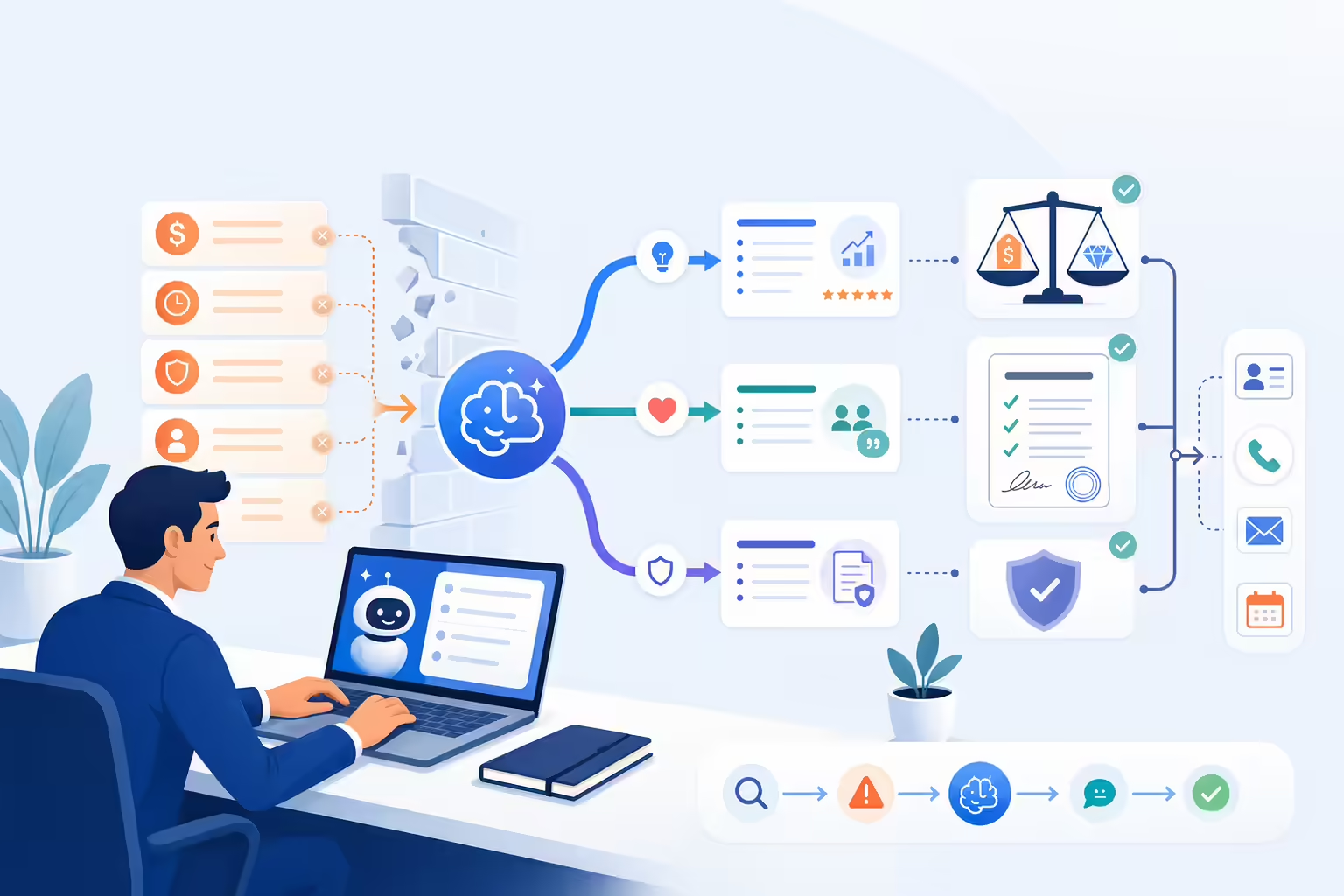
Sales cycles frequently stall during negotiations. Artificial intelligence excels at analyzing typical objections and providing multiple strategic frameworks for overcoming them—whether logical, emotional, or story-based.
41The Multi-Strategy Objection Killer Prompt:
A prospect gave this specific objection: “Your software is 20 percent more expensive than your competitor.” Create 3 different response strategies. Strategy 1: Logical approach (focus on ROI data). Strategy 2: Emotional approach (focus on avoiding the pain of bad customer support). Strategy 3: Story approach (provide a brief customer example of someone who switched to us for quality). End each response with a follow-up question.
42Contract Term Optimization Prompt:
You are a contract negotiation specialist. I am negotiating a $120,000 deal with a 1-year term. The prospect wants a 30-day opt-out clause. Provide three counter-proposals that protect my firm’s revenue while offering a reasonable concession to the buyer.
43Price Justification Framework Prompt:
Develop a value-based pricing justification script. Our platform costs $85 per user per month, while the competitor costs $25 per user per month. Emphasize that our price includes advanced AI routing and compliance features at no extra cost, whereas the competitor charges heavy add-on fees for these features.
44Creating Ethical Urgency Prompt:
The prospect agrees they need the solution but wants to delay signing the contract until the next fiscal quarter. Provide 3 dialogue options that create ethical urgency without being aggressive. Focus on the implementation timeline, lost revenue during the delay period, and onboarding capacity.
45Competitor Comparison Response Prompt:
A prospect states they are leaning toward [Competitor Name]. Generate a respectful, objective comparison response. Acknowledge one specific thing the competitor does well, then clearly pivot to our two main competitive differentiators. Ask a tie-down question to confirm they value our differentiators.
46Budget Constraint Workaround Prompt:
The buyer’s budget is capped at $40,000, but our proposal is $55,000. Give me a list of 4 creative commercial levers I can pull to bridge the gap without simply discounting the software license fee (e.g., phased rollouts, adjusting payment terms, removing non-essential modules).
47Handling the “Send Me Information” Stall Prompt:
During a cold call, the prospect says, “Just send me an email with some information.” Write a script to handle this objection. The script must agree to send the email, but pivot immediately to ask one highly specific diagnostic question to ensure I send the “correct” information.
48Legal and Security Objections Prompt:
The prospect’s IT department is concerned about data privacy laws and call recording consent. Provide a clear, non-legal-jargon explanation of how our telephony platform handles one-party and two-party consent automatically. Keep the explanation reassuring and under 100 words.
49Deal Risk Assessment Prompt:
Review the last three emails from the prospect: [Insert Emails]. Act as a revenue intelligence tool. Flag any language indicating the deal is at risk of stalling or being lost to a competitor. Suggest an immediate intervention strategy to re-engage the decision-maker.
50The Discount Request Deflection Prompt:
The prospect asked for a flat 15 percent discount on the final proposal. Draft a polite but firm email response that deflects the discount request by reiterating the specific hard-dollar ROI the platform will generate within the first six months. Offer to jump on a 5-minute call to review the business case.
Follow Up and Account Management Prompts
Generating revenue does not end when the contract is signed. For Customer Success Managers (CSMs) and Account Executives, ongoing communication ensures product adoption, secures renewals, and uncovers expansion opportunities.

51Post-Demo Recap Email Prompt:
Write a follow-up email to send immediately after a software demo. The email must contain: A brief expression of thanks, a summary of the two main pain points discussed, a link to a relevant case study from a similar company, and a clear proposal for the agreed-upon next step. Use bullet points for readability.
52The QBR Agenda Generator Prompt:
Act as a senior CSM. I am hosting a Quarterly Business Review (QBR) for a client who has been with us for one year. Generate a 45-minute meeting agenda. Allocate time for reviewing past metrics, discussing their future business goals, and introducing a new product feature that solves a current bottleneck.
53Proactive Value Check-In Prompt:
You are a Customer Success Manager. Draft a brief, non-promotional email check-in for [Client Name], who has used our platform for six months. Reference a new, relevant industry trend in their sector and provide a link to a helpful resource or article. Do not ask for a meeting or try to sell anything.
54Upsell Opportunity Pitch Prompt:
The client originally purchased [Basic Product Tier]. Usage data shows they are maxing out their current limits. Suggest a short email highlighting this usage metric and proposing an upgrade to [Premium Product Tier]. Frame the upgrade not as a cost, but as a way to unlock specific operational efficiencies.
55Renewal Reminder Personalization Prompt:
The client’s annual contract expires in 60 days. Draft a renewal reminder email. Instead of a generic invoice notice, summarize two major wins or positive metrics they achieved using our software this year. End with a soft call to action to review next year’s strategy.
Frequently Asked Questions
What is the RIGS method for AI prompting?The RIGS method is a structural framework for writing AI prompts. It stands for Role, Instruction, Guardrails, and Specifics. By telling the AI who to act as, exactly what to do, what rules to follow, and providing specific contextual data, sales professionals can eliminate generic, unusable outputs and generate highly tailored sales messaging.

How do I prevent an AI tool from hallucinating or making up facts in sales emails?AI “hallucinates” when it lacks sufficient context or boundaries. To prevent this, you must apply strict guardrails in your prompts. Use commands such as “Do not mention pricing,” “Only use the information provided in this prompt,” and “Keep under 150 words.” Providing the AI with verified context documents, such as a company background or specific product features, significantly reduces the likelihood of fabricated information.
What is the difference between generative AI prompts and conversational intelligence tools?Generative AI tools (like ChatGPT or Claude) use text prompts to create new content, such as drafting emails, writing call scripts, or summarizing notes. Conversational intelligence tools (like Gong, Chorus, or Dialpad AI) automatically analyze live or recorded sales calls to extract data, such as sentiment, talk-to-listen ratios, and objection frequency, without requiring manual prompt writing.
What is the average return on investment for implementing AI in a sales team?Research indicates that sales teams utilizing AI tools report a 25 to 40 percent increase in productivity and a 20 to 35 percent improvement in close rates. Additionally, sales representatives save an estimated 2 to 5 hours per week by automating repetitive tasks such as call logging, transcription, and follow-up email drafting.
Why are telephony and calling platforms charging so much for AI features?Pricing varies significantly depending on the depth of the AI integration. Basic AI transcription is often included in standard telephony plans starting around $15 to $25 per user per month. However, advanced conversational analytics, live automated quality assurance, automated coaching scorecards, and predictive revenue forecasting require significant computing power and integrations. Tools offering these enterprise-grade features, such as the Talkdesk Elite plan or Gong, typically range from $150 per user per month to thousands of dollars annually.
Do I need a separate AI tool if my CRM already has artificial intelligence?It depends on your workflow. Many CRMs now offer built-in generative AI to help draft emails or predict lead scores. However, if your team relies heavily on outbound calling, a dedicated AI telephony platform will be required to transcribe audio, provide live on-screen coaching during calls, and route that unstructured voice data back into your CRM automatically.
Conclusion and Key Takeaways
The integration of artificial intelligence into daily sales operations represents a fundamental shift in how revenue teams manage time and data. The evidence indicates that AI does not replace the necessity for human relationship-building; rather, it removes administrative burdens. By automating research, transcription, and initial drafting, sales representatives can reclaim hours of non-selling time.
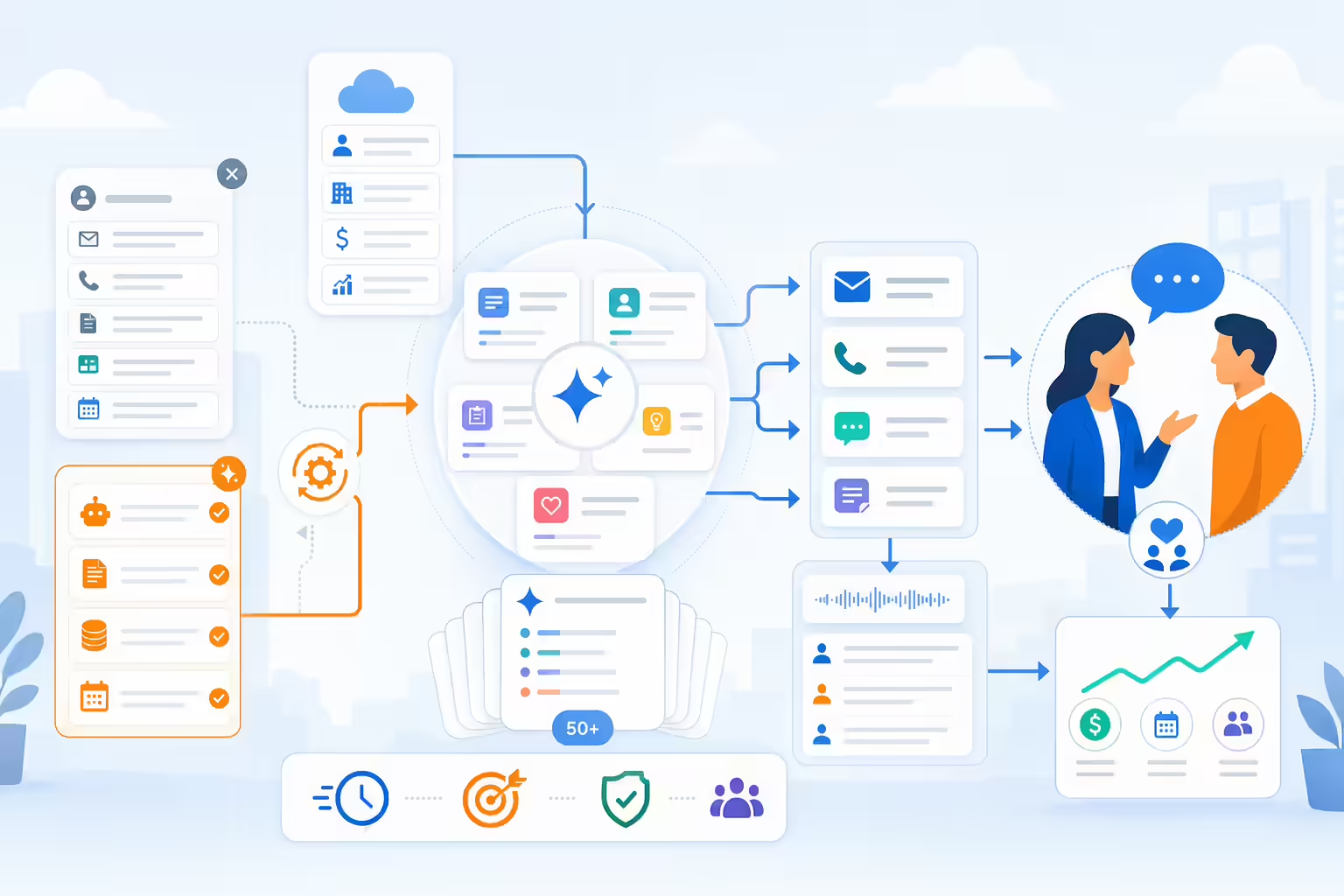
The success of AI in sales is directly proportional to the quality of the instructions it receives. Moving away from generic requests and adopting structured frameworks, such as the RIGS method, allows teams to generate messaging that is highly specific, culturally aware, and aligned with complex sales methodologies like MEDDIC.
Furthermore, as sales telephony tools continue to embed AI natively into their dialers and routing systems, the gap between teams utilizing these technologies and those relying on manual data entry will widen. By testing, refining, and applying the 50+ templates provided in this library, sales professionals can standardize high-quality outreach, accelerate their deal cycles, and leverage AI as a reliable operational asset.
Ready to close more deals with Kixie?
See how Kixie's AI-powered tools can transform your sales and support operations.
Start Free Trial