
TL;DR: Sales automation statistics in 2026 point to one clear operating problem: teams have more AI, CRM, and workflow tools than ever, yet seller time is still scarce. Salesforce says sales reps spend 60% of their time on non-selling tasks, Gartner says AI tools save sellers 4.8 hours per week on average, and Zapier reports that more than 90% of RevOps teams use automation. The teams getting value are not only adding tools. They are routing leads faster, logging activity automatically, improving CRM data, coaching from real conversations, and reinvesting saved time into customer work.
Sales automation used to mean email sequences and CRM reminders. In 2026, the term covers a much wider set of workflows: AI-assisted prospect research, call summaries, CRM updates, lead routing, follow-up tasks, SMS reminders, data cleanup, coaching, forecasting, and pipeline handoffs.
That makes the latest sales automation statistics useful only when they are tied to action. A number about time saved does not matter if reps spend the recovered hours in more internal meetings. A number about AI adoption does not matter if customer data is too scattered for the tool to act on. The point is to find the work that should be automated, the work that should stay human, and the operating rhythm that turns saved time into revenue activity.
Quick sales automation statistics for 2026
| Statistic | Source and date | Why it matters |
| Sales reps spend 60% of their time on non-selling tasks. | Salesforce 40 Sales Statistics to Watch for in 2026, published 2026 and accessed May 31, 2026 | Admin work is still the core automation target. |
| The average seller spends 40% of time selling. | Salesforce State of Sales announcement, February 2026 and accessed May 31, 2026 | Sales capacity depends on protecting customer-facing time. |
| AI tools save sellers 4.8 hours per week on average. | Gartner press release, May 19, 2026 and accessed May 31, 2026 | Time savings need a reinvestment plan. |
| 72% of sales organizations report low reinvestment of AI time savings. | Gartner, May 19, 2026 | Saved time can disappear without manager direction. |
| Sales organizations that reinvest AI time savings are 2.2x more likely to exceed customer growth goals. | Gartner, May 19, 2026 | Automation ROI is tied to behavior change, not tool access alone. |
| More than 90% of RevOps teams use automation. | Zapier business automation statistics for 2026, March 6, 2026 and accessed May 31, 2026 | Automation is now normal RevOps infrastructure. |
| Nearly 7 in 10 RevOps teams use AI and automation together. | Zapier, March 6, 2026 | AI is moving into connected workflows rather than sitting as a standalone assistant. |
| 74% of sales teams with AI are prioritizing data hygiene to support it. | Salesforce 40 Sales Statistics to Watch for in 2026, published 2026 | AI output depends on complete and current CRM context. |
| Sellers use an average of 8 tools to close deals. | Salesforce 40 Sales Statistics to Watch for in 2026, published 2026 | Tool switching can reduce the value of automation. |
| High-performing reps spend 20% to 25% more time with customers than lower-performing reps. | McKinsey sales automation analysis, accessed May 31, 2026 | Automation should create more useful customer contact, not just more activity. |
Vendor-published surveys from Salesforce and Zapier reflect respondent self-report and publisher methodology, so use them as directional signals rather than universal benchmarks.
What sales automation statistics say about selling time
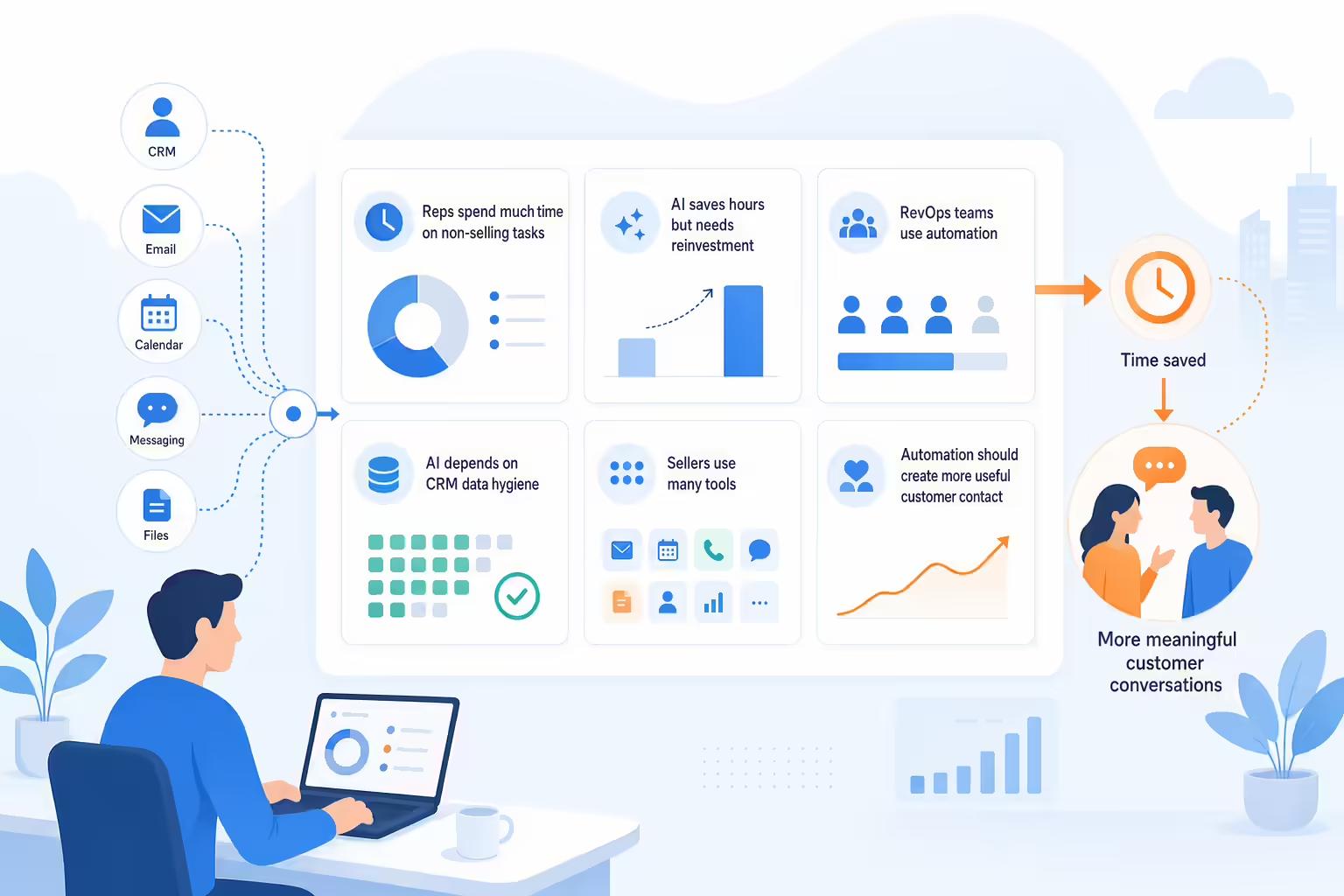
The most important sales automation statistic is still seller time. Salesforce reports that reps spend 60% of their time on non-selling tasks, with the average seller spending 40% of time selling. Those numbers explain why sales automation often starts with CRM updates, activity logging, lead routing, task creation, meeting prep, quote support, and follow-up reminders.

Gartner adds a newer 2026 view of AI time savings. In a survey of 210 chief sales officers and senior sales leaders conducted from January through February 2026, Gartner found that AI tools save sellers 4.8 hours per week on average. That is a meaningful capacity gain, but it is not automatic sales output.
The risk is that saved time becomes unassigned time. Gartner also found that 72% of sales organizations report low reinvestment of AI time savings back into high-value sales activities. In practical terms, a rep might save time on call summaries, but then spend that time updating a different dashboard, sitting in an internal meeting, or manually checking whether the AI summary synced correctly.
For sales leaders, the lesson is simple: pair each automation with a reinvestment rule. If call summaries are automated, the saved time should go to same-day follow-up, account research, coaching review, or higher-quality live conversations. If lead routing is automated, the saved time should go to faster first touch and better qualification.
AI and agents are moving into daily sales workflows
Salesforce says sales teams name investing in AI as the number one growth tactic for 2026. Salesforce also reports that 94% of sales leaders with agents say agents are essential for meeting business demands, 88% of reps with agents say the technology increases their odds of hitting targets, and 85% of reps with agents say AI frees them to focus on higher-value work.

Those are vendor-reported survey findings, so they should be read as directional signals rather than universal benchmarks. Still, they match the broader pattern in the SERP and in current sales operations writing: AI is moving from experimentation into prospecting, call prep, quoting, coaching, data cleanup, and activity capture.
The strongest use cases share a common trait. They sit next to existing seller behavior instead of asking reps to change every habit at once. A rep already makes calls, sends follow-up messages, updates CRM records, and reviews pipeline. AI and automation can help draft notes, fill fields, queue tasks, summarize calls, and flag next steps, but the rep still needs control over the customer relationship.
That balance matters because sales is not only a volume function. Bad automation can create irrelevant outreach, noisy CRM fields, or follow-up messages that sound detached from the buyer’s actual problem. Good automation removes the busywork around the conversation so the rep can spend more attention on the conversation itself.
RevOps automation is standard operating infrastructure
Zapier’s 2026 business automation roundup reports that more than 90% of RevOps teams use automation. It also says 62% of RevOps professionals solve business challenges with multiple types of automation, nearly 7 in 10 RevOps teams use AI and automation at the same time, and 6 in 10 say their challenges are fully or mostly resolved with automation.
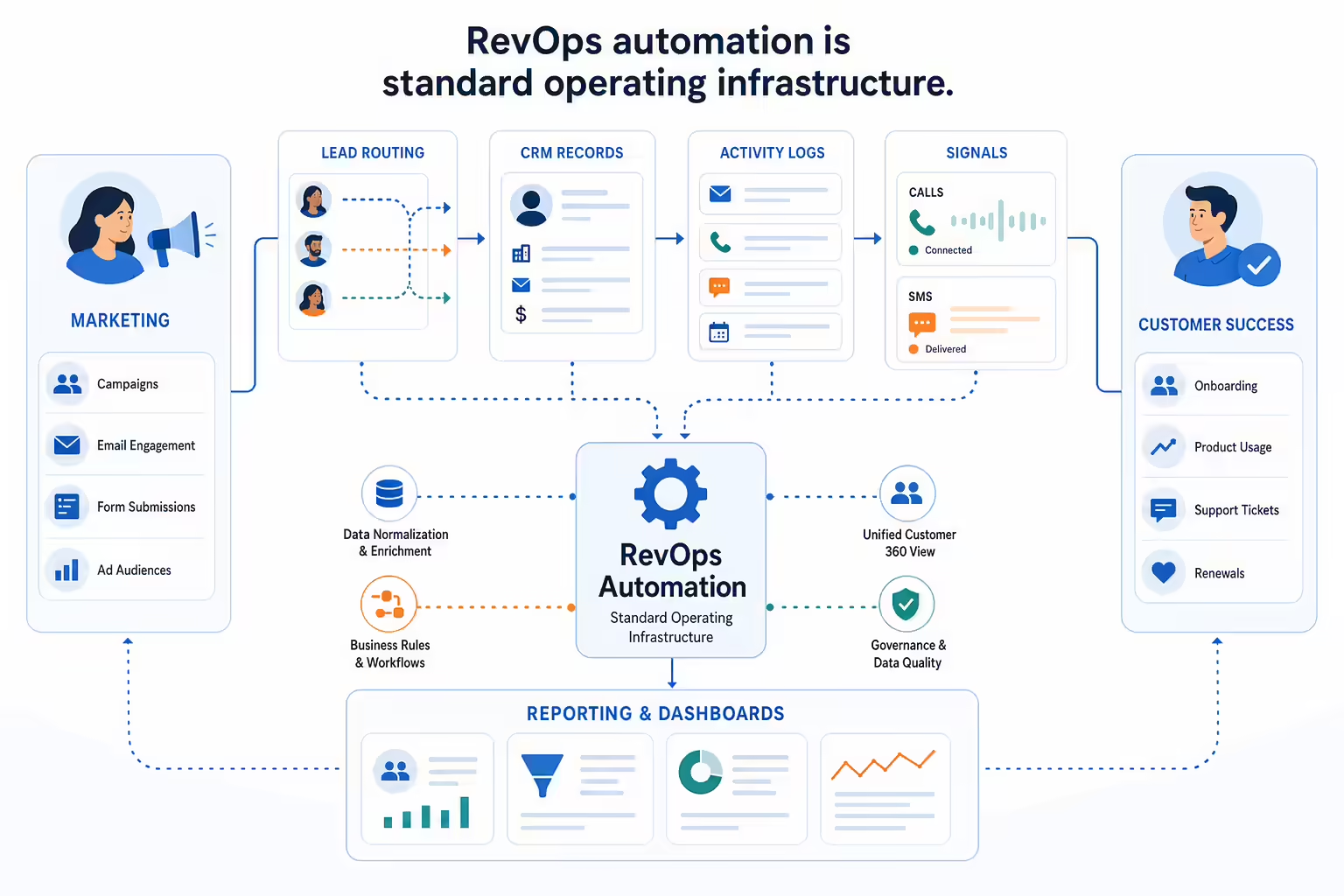
Because these are Zapier-reported figures, they should be treated as survey-based indicators, not as a neutral census of every RevOps team. Even so, they reflect what many revenue teams see daily: automation is no longer a side project owned by one admin. It is part of the operating system for lead handoff, CRM hygiene, pipeline visibility, activity logging, routing, enrichment, alerts, and reporting.
The practical issue is ownership. When every team has its own automations, handoffs can break quietly. Marketing automation can score a lead without triggering sales outreach. A dialer can create activity data that never reaches the CRM fields managers use. A rep can send follow-up messages from one system while the account owner works from another system.
RevOps teams need a map of the revenue workflow before they add more automation. The map should show which system creates the record, which system owns the next action, which fields must sync, and which manager reviews the outcome. Without that map, automation often increases motion without increasing clarity.
Data quality and tool sprawl are holding sales automation back
Salesforce reports that sellers use an average of 8 tools to close deals. Salesforce also says 74% of sales teams with AI are prioritizing data hygiene to support AI, and 73% of B2B buyers actively avoid sellers who send irrelevant outreach.
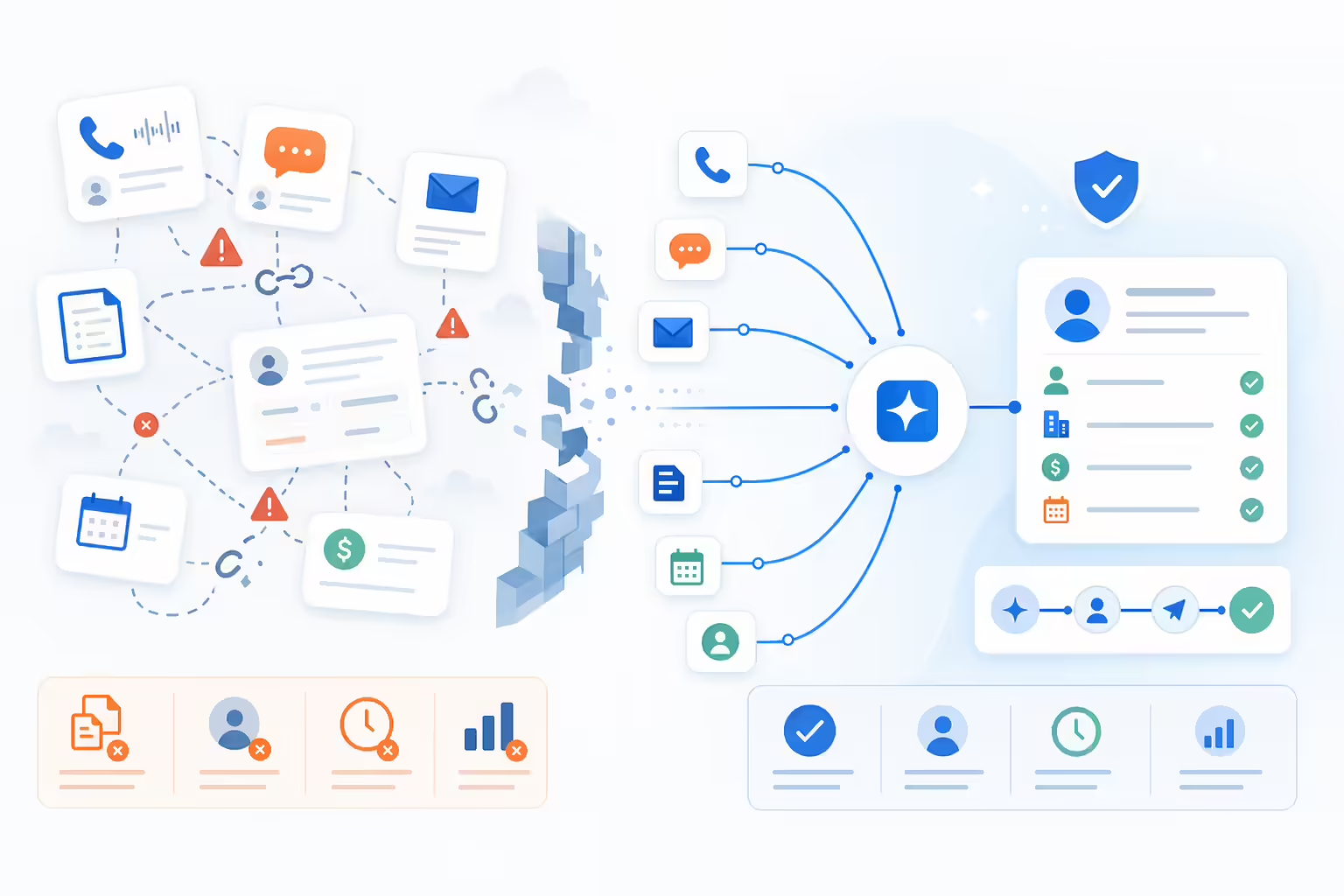
Those numbers connect directly. If sales activity, call outcomes, SMS replies, email threads, meeting notes, and opportunity updates sit in different places, automation has incomplete context. The result can be duplicate tasks, generic outreach, bad timing, and reporting that managers do not trust.
Tool sprawl also affects adoption. Reps usually resist automation when it adds another tab, another manual field, or another place to check before calling a prospect. They adopt it faster when it removes a step from work they already have to do.
For sales leaders, this means the first automation question should not be “what can AI do?” It should be “which repeated task creates bad data or delays customer contact today?” Common answers include call disposition logging, missed-call follow-up, inbound lead routing, post-call SMS, voicemail drop, CRM task creation, and coaching note capture.
Sales automation ROI depends on reinvesting saved time
Gartner’s 2026 findings make the ROI point clear. AI tools save time, but many sales organizations do not direct that time toward higher-value selling. Gartner found that organizations with moderate to large AI time savings that reinvest the time into high-impact sales activities are 2.2x more likely to exceed customer growth goals and 3.1x more likely to exceed lead-to-opportunity conversion goals.
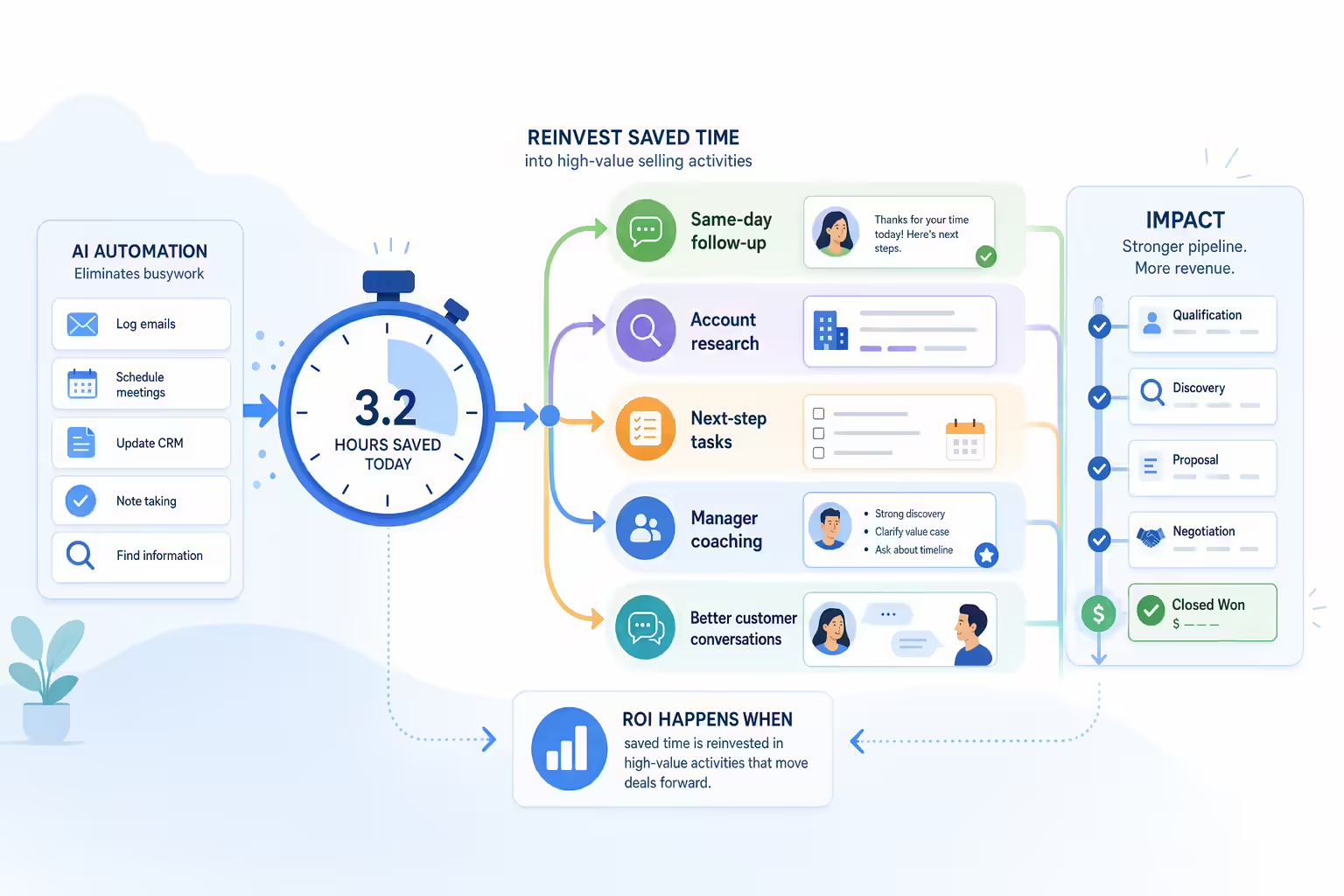
Gartner also reported a split in AI return: 25% of sales organizations report a 50% or higher return on AI investments, while 20% report a 50% or higher negative return. That gap is a useful warning. Buying an AI or automation tool is not the same as changing the sales system around it.
The teams most likely to see value define the before-and-after behavior. For example, “automate call summaries” is a feature. “Every discovery call gets a same-day CRM summary, a next-step task, and a manager-visible coaching note” is an operating rule. The second version is easier to measure and easier to coach.
Useful automation metrics include the share of leads contacted inside the service-level agreement, call outcomes logged automatically, follow-up tasks completed on time, unanswered leads moved into a nurture path, reps’ selling time, meetings booked from first-touch sequences, and manager coaching reviews completed from call recordings or transcripts.
How these stats map to a calling and follow-up workflow
The Kixie angle is straightforward: sales automation should remove friction around the outreach work reps already do. Kixie supports calling, texting, CRM-connected activity capture, and coaching workflows that map to the issues shown in the data.
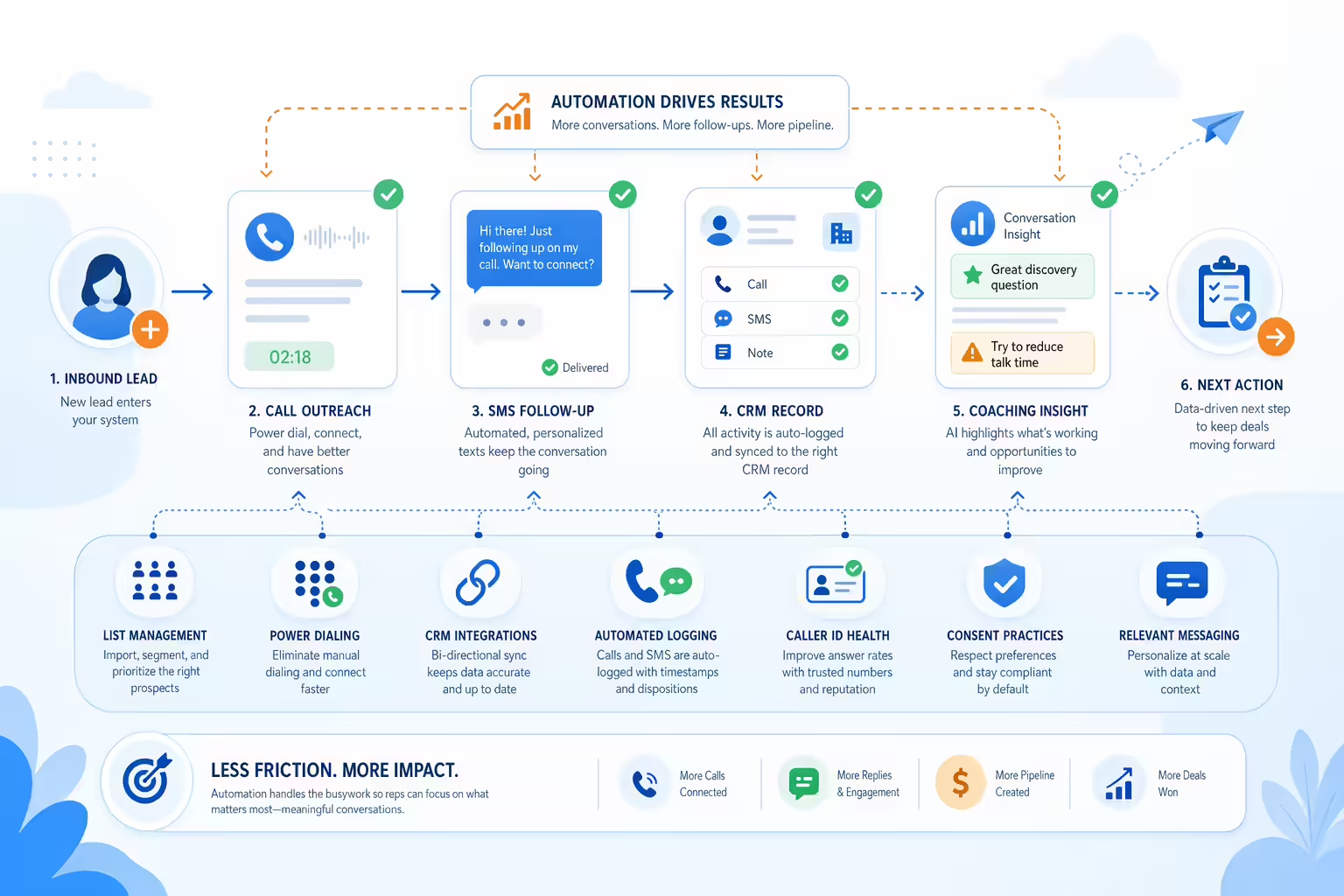
For teams with low selling time, a power dialer can reduce manual dialing steps while reps stay focused on live conversations. For teams with scattered data, CRM integrations help keep calls, SMS, recordings, and outcomes tied to the system of record. For teams with inconsistent follow-up, a structured lead follow-up process can define what happens after each call attempt, missed call, meeting, or reply.
Kixie content also covers workflow-level examples such as automating call and SMS logging and using conversation intelligence for coaching. Those are not magic fixes. They are practical places to reduce manual work and make the next customer action easier to see.
If caller trust is part of the issue, teams should also review number strategy and caller ID health. Local presence and caller reputation tools can support a cleaner outbound process, but teams still need consent practices, relevant messaging, and good list management.
How to prioritize your next sales automation workflow
Start with the task that costs the most selling time or creates the most unreliable data. Then define the action that should happen after automation saves time.
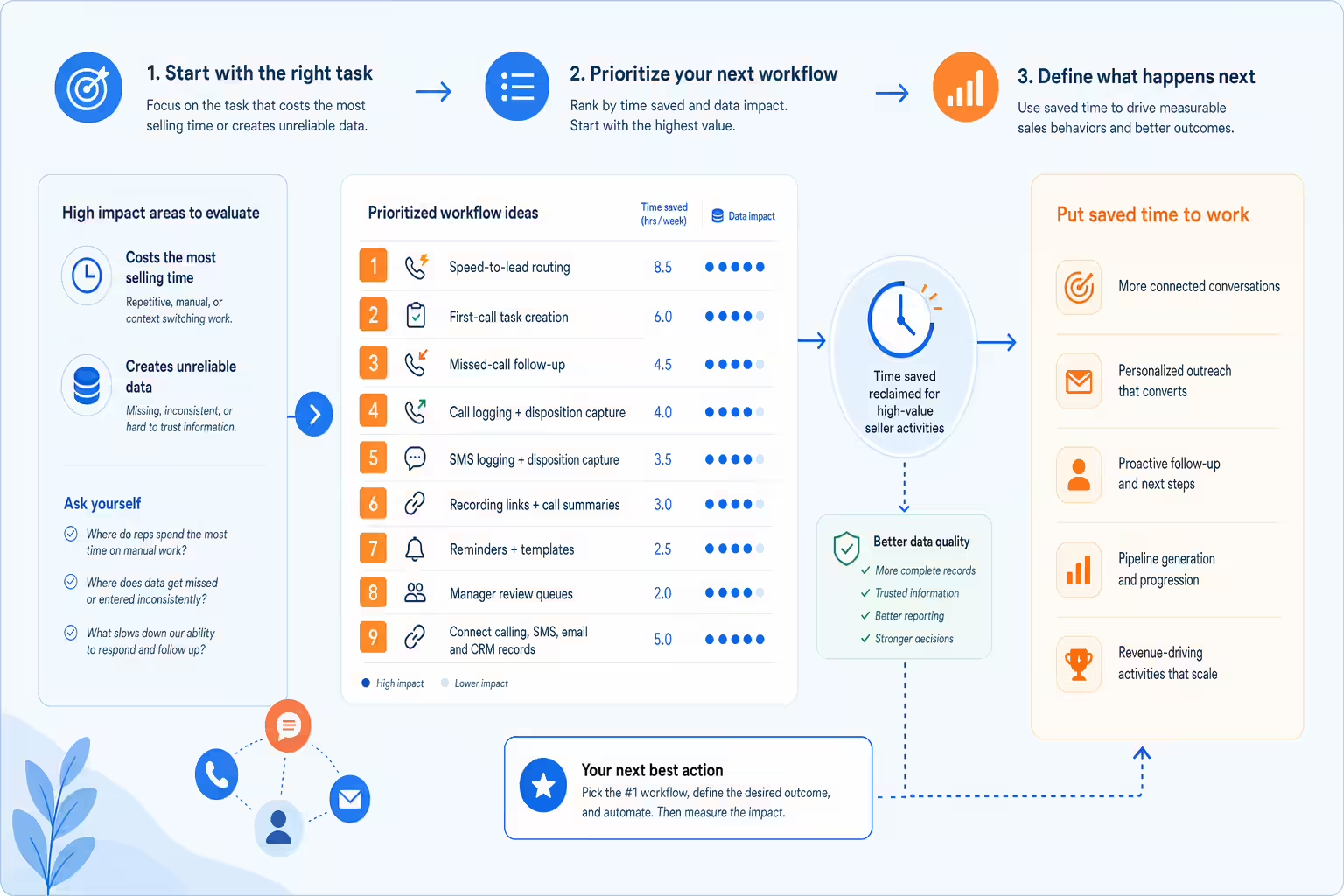
Use this checklist:
- If speed to lead is slow, automate lead routing, first-call task creation, and missed-call follow-up.
- If CRM activity is incomplete, automate call logging, SMS logging, disposition capture, and recording links.
- If follow-up is inconsistent, automate reminders and templates while keeping rep review for sensitive messages.
- If coaching is hard to scale, automate call summaries and manager review queues.
- If data is scattered, connect calling, SMS, email, and CRM records before adding more AI.
- If AI saves time, assign that time to a measurable sales behavior such as same-day follow-up or account research.
The best workflow is usually narrow. A single clean automation that improves lead response or CRM accuracy is more useful than a broad AI rollout that no one trusts.
Sales automation statistics FAQ

What percentage of a sales rep’s time is spent selling?
Salesforce’s 2026 State of Sales coverage says sales reps spend 60% of their time on non-selling tasks, which means the average seller spends about 40% of time selling. The exact mix will vary by role, segment, and sales motion, but the direction is consistent: admin work still consumes a large share of seller capacity.
How much time does AI save sales teams?
Gartner reported on May 19, 2026 that AI tools save sellers 4.8 hours per week on average. Gartner also warned that 72% of sales organizations report low reinvestment of those time savings into higher-value sales activities, so leaders need a plan for where saved time goes.
What should sales teams automate first?
Start with repeated tasks that delay customer contact or create unreliable CRM data. Common first workflows include inbound lead routing, call logging, missed-call follow-up, post-call tasks, voicemail drop, SMS templates, meeting reminders, and coaching note capture.
How should sales leaders measure automation ROI?
Measure both efficiency and behavior change. Track time saved, activity logging completeness, lead response speed, follow-up completion, meeting conversion, lead-to-opportunity conversion, customer-facing time, and manager coaching review rates. Gartner’s 2026 findings suggest that reinvesting saved time is a key difference between automation that saves effort and automation that improves outcomes.
Methodology and source notes
This article was drafted from live US desktop Google page-1 SERP research for “sales automation statistics” on May 31, 2026. Ranking pages showed a clear preference for current statistics roundups with grouped sections for AI, seller productivity, RevOps automation, CRM data, ROI, and follow-up workflows.

Every statistic above is tied to a named external source and date where available. Vendor-published survey stats from Salesforce and Zapier are useful directional signals, but readers should treat them as survey findings from those publishers rather than universal benchmarks. Older McKinsey research is included only where the point is durable and clearly attributed. Gartner’s 2023 forecast about generative AI reducing prospecting and meeting-prep time by 2026 was reviewed during research but not used as a current 2026 measured statistic.
Ready to close more deals with Kixie?
See how Kixie's AI-powered tools can transform your sales and support operations.
Start Free Trial