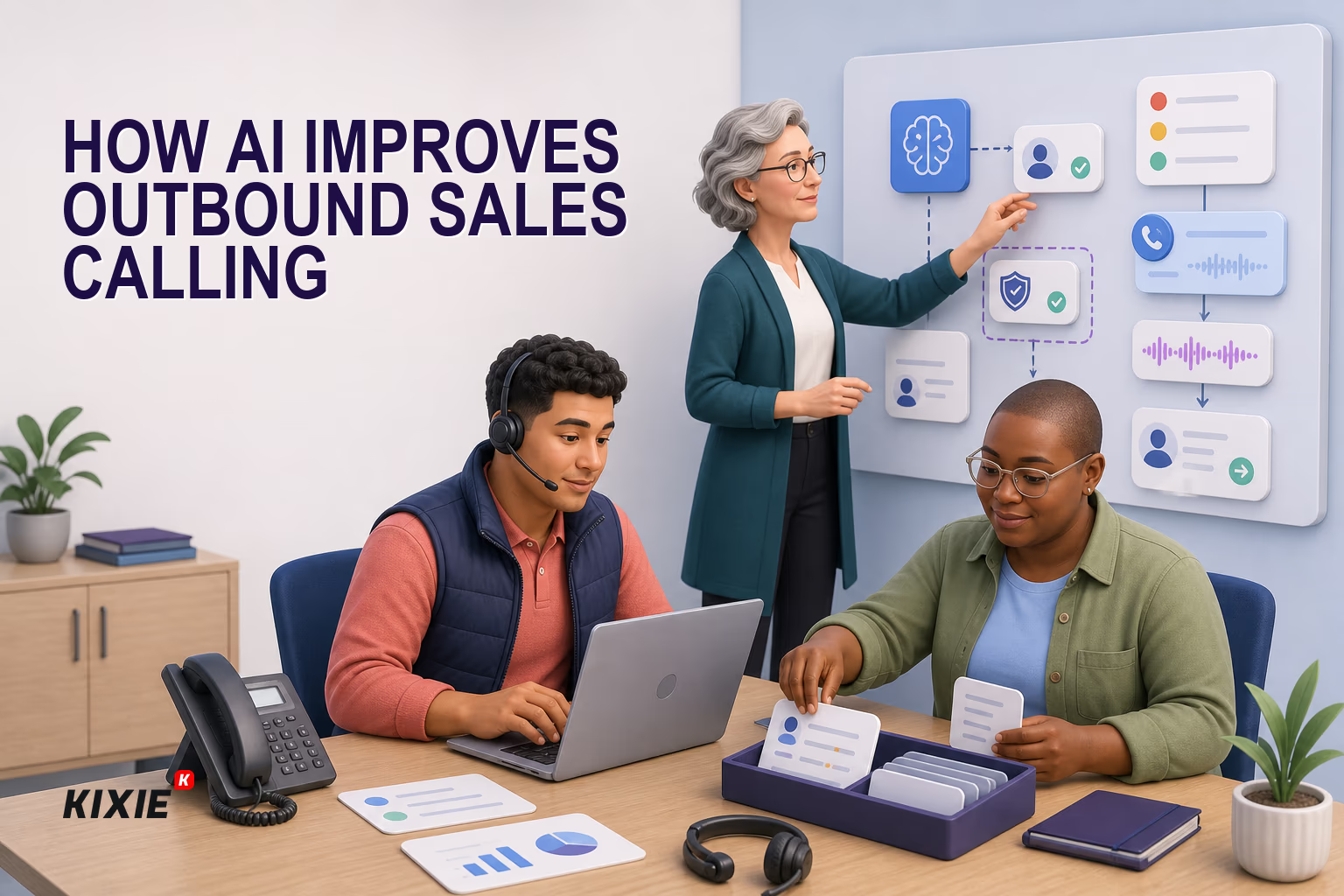
TL;DR: AI improves outbound sales calling by helping revenue teams prioritize the right contacts, prepare reps with account context, support live conversations with prompts and approved messaging, capture transcripts and qualification details, draft follow-ups, analyze call patterns, and reduce repetitive administrative work, but the article stresses that AI-assisted calling, autonomous AI voice calling, and automated dialing are separate models with different risks and best-fit use cases. Before calls, teams can use AI to rank leads, summarize research, suggest relevant openings, and recommend timing, while still reviewing outputs for data accuracy, lawful personalization, and overlooked segments. During calls, AI can provide objection-handling guidance, knowledge retrieval, transcription, and routing support, but prompts should be concise, content must be maintained, important details require human confirmation, and autonomous workflows need clear limits, handoff triggers, and failure handling. After calls, AI can create summaries, dispositions, CRM updates, tasks, follow-up drafts, coaching examples, and trend analysis, yet managers should review consequential details and avoid using automated scoring as the sole basis for rep evaluation. The best results come from applying AI to structured, repetitive tasks such as call prep, note capture, routine qualification, scheduling, and call analysis while keeping human sellers responsible for complex discovery, negotiation, relationship-building, sensitive conversations, and high-value opportunities. Implementation should start with one narrow use case, a data audit, documented boundaries, realistic testing, a controlled pilot, error correction, and cautious scaling, with performance measured by connect rates, qualified conversations, meetings, downstream conversions, admin time, escalation rates, opt-outs, complaints, call-review quality, and CRM correction rates rather than call volume alone. Responsible AI outbound sales calling also requires legal review and operational safeguards for consent, disclosure, recording, privacy, do-not-call rules, suppression lists, access controls, retention, monitoring, and prospect requests to speak with a person or stop future contact.
AI improves outbound sales calling by helping teams decide whom to contact, preparing representatives for conversations, supporting them in real time, and reducing administrative work afterward. It can also analyze calls at a scale that would be difficult to achieve through manual review alone.
That does not mean every outbound call should be delegated to an AI voice agent. AI-assisted calling and autonomous calling are different operating models, each with distinct strengths and risks. The best approach depends on the audience, sales motion, call complexity, data quality, and applicable calling rules.
For most revenue teams, the practical goal is not simply to make more calls. It is to help representatives spend more time on relevant conversations while improving consistency, visibility, and follow-through.
How AI Improves Outbound Sales Calling
AI can support the complete outbound workflow rather than only the live conversation. Common applications include:
- Prioritizing leads based on available account and engagement data
- Summarizing account research and generating relevant talking points
- Giving representatives prompts or objection-handling guidance during calls
- Transcribing conversations and drafting call notes
- Identifying qualification details and potential next steps
- Creating follow-up tasks or drafting messages
- Analyzing calls for recurring objections, coaching opportunities, and quality trends
The value of these applications depends on their implementation. Inaccurate CRM records, weak prompts, poor integrations, or unsuitable automation can make outreach less relevant rather than more effective.
Outbound Sales Calling With AI Assistance or Automation
AI-assisted calling keeps a human representative in control. AI may prioritize contacts, surface information, transcribe the call, recommend responses, or prepare a summary. The representative still speaks with the prospect and makes judgment calls.
Autonomous AI calling uses a conversational voice system to conduct some or all of a call. Depending on the system and configuration, it may ask qualification questions, provide approved information, schedule an appointment, or transfer the prospect to a person.
These categories should not be treated as interchangeable. Rep-assist tools can be appropriate when trust, nuance, or complex discovery matters. Autonomous calls are generally better suited to narrow, clearly defined interactions with limited possible outcomes and a documented human-escalation path.
Automated dialing is another separate concept. A dialer may help representatives move through contact lists without an AI system conducting the conversation. Teams should evaluate the dialing method, AI involvement, and data processing as individual parts of the workflow.
Before Outbound Sales Calls, Improve Targeting and Prep
Prioritize Outbound Sales Contacts
AI models can examine available signals to help rank accounts or leads. These signals might include firmographic data, previous engagement, lifecycle stage, or past interactions. A prioritized list can focus representatives on contacts that match an agreed profile instead of asking them to work through an undifferentiated queue.
Lead scores are recommendations, not objective truth. Teams should review which inputs affect prioritization and check whether the model systematically overlooks valuable segments.
Turn Sales Research Into Call Context
Representatives often need to move between CRM records, company websites, notes, and other approved data sources before calling. AI can summarize this information into a short briefing, highlight recent interactions, and suggest questions.
This can make preparation more efficient, but generated talking points still require review. A polished summary can contain outdated or incorrect information, especially when source records are incomplete.
Adapt the Outbound Call Opening
AI can help draft call openings based on a contact’s role, account context, and documented interests. Useful personalization connects a documented signal to a relevant reason for calling. It should not rely on sensitive, irrelevant, or dubiously obtained details.
Some systems also recommend calling windows based on historical engagement patterns. Such recommendations should be tested against the team’s audience and applicable contact restrictions rather than assumed to work universally.
During Outbound Sales Calls, Improve Conversations
Use Real-Time Sales Call Prompts
A rep-assist system may recognize topics in a conversation and display approved answers, discovery questions, or objection-handling guidance. This can be helpful for new representatives and for teams selling products with detailed positioning.
Prompts should remain optional and concise. Too many recommendations can distract a representative from listening. Teams also need a process for maintaining the underlying content so that obsolete language is not repeatedly surfaced.
Capture Call Conversations and Qualification Details
When configured appropriately, transcription can reduce manual note-taking and make calls easier to review. AI can then identify possible qualification details, action items, questions, and commitments.
Transcripts and extracted fields should not automatically be assumed accurate. Names, numbers, industry terminology, accents, background noise, and overlapping speech can all affect output. Important CRM fields and customer commitments warrant human confirmation.
Keep Sales Call Messaging Consistent
AI-supported scripts and knowledge retrieval can help teams deliver approved explanations more consistently. For an autonomous voice workflow, a constrained knowledge source can also limit the subjects the system is expected to handle.
Consistency should not become rigidity. Prospects may introduce unexpected questions, emotional concerns, or commercially sensitive topics. The system needs a clear path to pause, end, or transfer the conversation instead of improvising beyond its approved scope.
Route Calls to a Sales Rep
Human handoff is essential when a prospect shows strong intent, asks a complex question, requests a person, or enters a sensitive discussion. The receiving representative should get enough context to avoid making the prospect repeat the entire conversation.
Teams should test transfers under realistic conditions, including unavailable representatives, dropped connections, voicemail, and ambiguous requests.
After Outbound Sales Calls, Improve Follow-Up
Draft Call Summaries and Next Steps
AI can turn a transcript into a structured summary, suggest a disposition, and draft follow-up communication. Depending on a team’s systems and configuration, those outputs may be sent to a CRM or task queue.
Human review is particularly important for promises, pricing discussions, objections, and dates. Automation should not convert a model’s inference into an official customer record without suitable controls.
Find Patterns Across Sales Calls
Conversation analysis can help managers look beyond a small sample of manually reviewed calls. Teams may be able to categorize objections, compare talk patterns, identify frequently asked questions, and locate calls that need attention.
These insights can inform coaching and messaging updates. They should not be used as the sole basis for evaluating representatives, because automated scoring may miss context and can reflect flaws in the rubric or training data.
Improve Sales Call Coaching
AI can flag examples for review, but a manager still provides context. Effective coaching connects a specific moment to a practical behavior: asking a stronger follow-up question, confirming a next step, or allowing the prospect more room to speak.
Outbound Sales Calling Benefits and Tradeoffs
Well-designed AI outbound calling workflows may reduce repetitive preparation and administrative work. They can also improve process consistency and give leaders more structured data about what happens during calls.
Those benefits come with trade-offs:
- Accuracy: Generated content, transcripts, and classifications can be wrong.
- Customer experience: Delays, unnatural responses, or irrelevant personalization can frustrate prospects.
- Brand risk: An automated system can repeat a poor interaction across many calls if it is not monitored.
- Data quality: AI cannot reliably compensate for duplicate contacts, stale records, or missing consent information.
- Oversight: More automation requires clear ownership, quality review, escalation rules, and auditability.
Where AI Improves Outbound Sales Calls Best
AI is generally most useful for repetitive, structured tasks. Examples include preparing account briefs, capturing notes, categorizing outcomes, answering a limited set of routine questions, or supporting straightforward qualification and scheduling workflows.
Human representatives are better positioned for complex discovery, negotiation, relationship building, emotionally sensitive conversations, and high-value opportunities where nuance matters. People should also handle exceptions that fall outside an automated system’s approved knowledge or authority.
A hybrid workflow often provides a practical starting point: use AI to remove low-value work while keeping people responsible for the conversation and consequential decisions.
How to Implement AI in Outbound Sales Calling
- Choose one narrow use case. Start with a specific problem, such as call summaries, pre-call research, or qualification support.
- Audit the data. Review contact accuracy, source permissions, duplicate records, suppression lists, and CRM field consistency.
- Define boundaries. Document approved claims, prohibited topics, handoff triggers, opt-out handling, and situations that require human review.
- Test the workflow. Use realistic scenarios, including objections, silence, interruptions, voicemail, incorrect data, and transfer failures.
- Run a controlled pilot. Limit the audience and volume while managers review outputs and prospect feedback.
- Correct recurring errors. Update prompts, scripts, source content, routing, and data before expanding.
- Scale cautiously. Increase use only when the workflow meets the team’s quality, customer-experience, and risk thresholds.
How to Measure Outbound Sales Calling Improvements
Choose metrics that reflect both sales activity and interaction quality. Useful measures may include:
- Connect rate
- Qualified-conversation rate
- Meeting-booked rate
- Conversion rate at later funnel stages
- Preparation and administration time per call
- Transfer or escalation rate
- Opt-out and complaint rates
- Call-review quality scores
- CRM correction rate for AI-generated notes
Compare results with a meaningful baseline and segment them by audience, campaign, and workflow. A rise in call volume alone does not demonstrate improvement if qualification quality declines or opt-outs increase.
Responsible AI Use in Outbound Sales Calling
Outbound calling can be subject to consent, disclosure, recording, privacy, telemarketing, caller identification, and do-not-call requirements. The applicable rules vary by jurisdiction, recipient, call purpose, technology, and other circumstances. Organizations should obtain qualified legal guidance before deploying or materially changing an AI calling program.
Operational safeguards should include suppression-list handling, documented data sources, access controls, retention policies, monitoring, and a clear way for prospects to request a person or stop future contact. Legal review is not a one-time launch task; rules and technologies can change.
Outbound Sales Calling FAQs
Can AI make outbound sales calls?
Some voice systems can conduct defined outbound conversations, but technical availability does not establish that a call is appropriate or lawful. Teams must assess the use case, jurisdiction, consent status, disclosure needs, and provider capabilities.
Will AI replace sales representatives?
AI can automate or assist with parts of outbound calling, particularly repetitive tasks. Human judgment remains important for nuanced discovery, trust building, negotiation, exceptions, and sensitive conversations.
How does AI personalize cold calls?
AI can use approved account and contact data to draft relevant openings, questions, or talking points. Personalization quality depends on lawful data access, accurate records, suitable instructions, and human oversight.
What should a team automate first?
Start with a low-risk, measurable task such as pre-call summaries, transcription, or draft notes. These workflows allow teams to assess accuracy and adoption before considering customer-facing automation.
How should teams evaluate AI calling performance?
Track funnel metrics alongside quality indicators, opt-outs, complaints, escalation rates, and data corrections. Review actual calls and compare results with a relevant baseline rather than relying only on vendor dashboards or activity volume.
Sources
Primary references used to verify AI-assisted call analysis, AI workflow governance, and outbound calling requirements:
- Kixie Help Center: Conversation Intelligence
- NIST: AI Risk Management Framework
- Federal Trade Commission: Complying with the Telemarketing Sales Rule
- Federal Communications Commission: FCC 24-17 AI voice declaratory ruling
Sources verified and content reviewed on August 4, 2026. This article is informational and is not legal advice.
Ready to close more deals with Kixie?
See how Kixie's AI-powered tools can transform your sales and support operations.
Start Free Trial