TL;DR: TCPA AI calling rules in the U.S. now treat AI-generated or cloned voice content as an artificial voice issue, which means outbound sales teams should verify prior express written consent for marketing calls where the TCPA requires it, separate AI-generated voice from live-agent AI assistance, identify the caller clearly, honor opt-outs and do-not-call requests, document consent and revocation, check reassigned numbers and state rules, and use tools like Kixie to keep dialing workflow data organized rather than treating software as legal approval.
This article is for general information only and is not legal advice. TCPA, FCC, state telemarketing, recording, and consumer-protection rules can change quickly and can apply differently by campaign, number type, consent source, industry, and jurisdiction. Sales leaders should work with qualified counsel before launching AI-assisted or AI-generated outbound calling campaigns.
Outbound teams are asking a practical question in 2026: can AI help with calling without creating TCPA risk? The safer answer is not a blanket yes or no. The important split is between AI-generated voice and AI-assisted live calling.
If a call uses an AI-generated, synthetic, cloned, or prerecorded voice, the FCC has said the TCPA restrictions on artificial or prerecorded voice can apply. If a human sales rep is speaking live while AI assists with notes, coaching, call summaries, or CRM prompts, that is a different workflow, though recording consent, state telemarketing laws, internal QA, and data privacy still matter.
That distinction should shape how sales teams write scripts, choose tools, build consent fields in the CRM, and decide which campaigns can scale.
Current TCPA treatment of AI voice
In February 2024, the FCC adopted a declaratory ruling confirming that AI technologies that generate human voices fall within the TCPA’s artificial or prerecorded voice restrictions. The agency’s public summary says calls using those technologies require prior express consent from the called party. The core source is the FCC document, FCC Confirms that TCPA Applies to AI Technologies that Generate Human Voices.
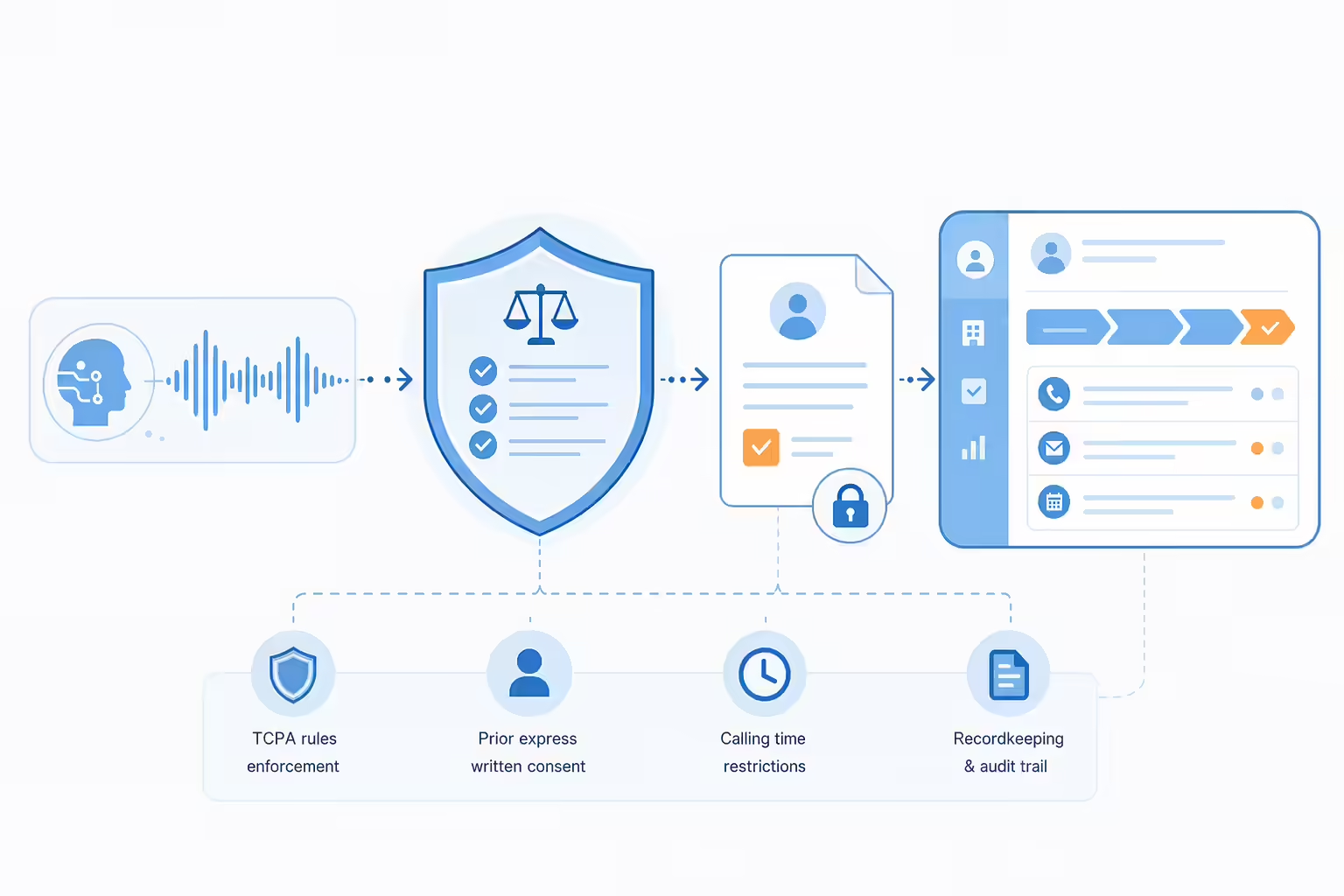
That ruling matters because many AI voice products are designed to sound conversational. A sales team may think it is using a smarter script or a virtual assistant, but the compliance question is more specific: is the called person hearing an artificial or prerecorded voice, and is the call marketing or otherwise covered by TCPA consent rules?
The current FCC rule text in 47 CFR 64.1200 covers automated dialing, artificial or prerecorded voice, caller identification, opt-out mechanisms, do-not-call procedures, and the definition of prior express written consent. Sales teams do not need to memorize every subsection, but they do need a campaign review process that maps each outbound motion to the right consent and disclosure requirements.
What is still pending for AI-generated calls
The FCC has also explored additional AI-generated call and text rules through proposed rulemaking. The September 2024 Federal Register notice on Implications of Artificial Intelligence Technologies on Protecting Consumers from Unwanted Robocalls and Robotexts discusses proposed definitions and requirements for AI-generated content in calls and texts.

Do not treat a proposed rule as final unless counsel verifies its status. For a 2026 sales program, the practical approach is to track three layers: what the TCPA rule already says, what the FCC has already interpreted about AI-generated voice, and what pending or recently changed rules could affect campaign design.
This is also why old AI calling playbooks go stale quickly. A workflow that passed internal review in 2024 may need a fresh review in 2026 if the team adds AI voice, changes the consent source, changes the offer, or expands into new states.
When outbound AI calls need consent
The strongest compliance starting point is simple: identify the call type before deciding whether it can run.

Marketing calls using artificial or prerecorded voice are the highest-risk category for AI voice in a sales motion. The TCPA rule text includes prior express written consent requirements for certain telemarketing calls using automated technology or artificial or prerecorded voice. The details depend on the number being called and the campaign facts, so teams should avoid broad assumptions based only on B2B intent.
For example, a sales team might call a business contact whose number is a mobile phone. A business relationship does not automatically erase TCPA questions. The same is true when a lead entered through a partner, event list, inbound form, purchased data source, or old CRM record.
AI-generated voice and AI-assisted live calls are different
AI-generated voice means the called person hears synthetic, cloned, generated, or prerecorded voice content. That is the category the FCC ruling puts into the TCPA artificial voice frame.
AI-assisted live calling means a human rep speaks to the prospect while software helps with call preparation, CRM logging, coaching prompts, post-call summaries, or follow-up tasks. That workflow can still raise consent, recording, privacy, and quality-control questions, but it should not be described as the same thing as an AI voice robocall.
Sales operations teams should label these workflows separately in campaign briefs and vendor reviews. Mixing them together creates confusion for reps, managers, and legal reviewers.
Consent revocation and reassigned numbers need controls
Consent is not a one-time checkbox that can be ignored after launch. People can revoke consent, and teams need a way to capture and apply that revocation across calling, texting, CRM ownership changes, and campaign lists.
Reassigned numbers are another risk area. A number that once belonged to a consenting lead may later belong to someone else. Teams should ask counsel how to handle reassigned-number checks, stale data, and list hygiene before scaling AI-generated or prerecorded voice campaigns.
This is where CRM hygiene becomes compliance infrastructure. Consent source, timestamp, campaign language, opt-out status, number type, and owner notes need to be available before anyone starts dialing.
Required identification, opt-outs, and do-not-call handling
TCPA compliance is not only about initial consent. Outbound programs also need caller identification, opt-out handling, and internal do-not-call practices that work in daily operations.
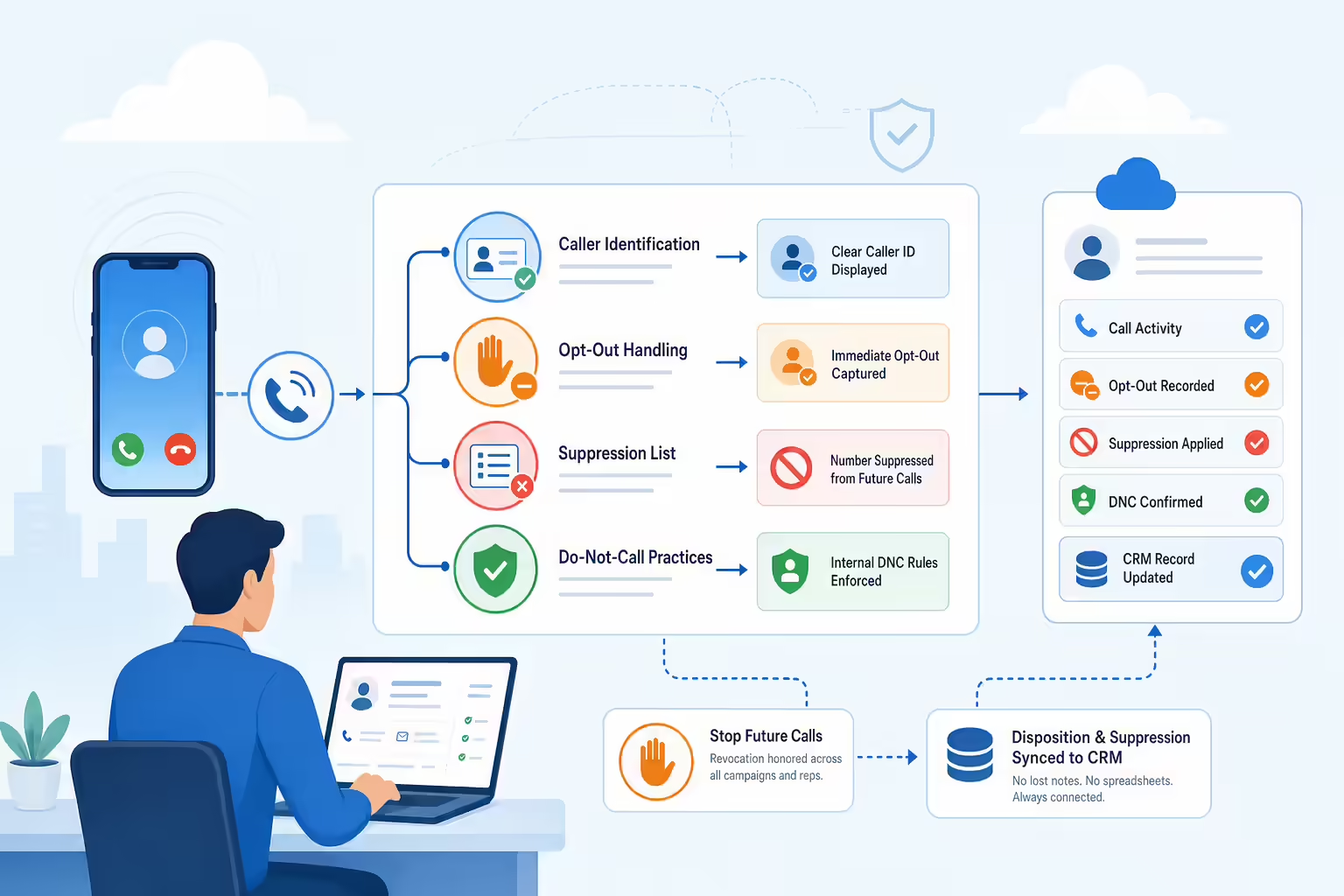
For artificial or prerecorded voice messages, teams should review the caller identification and automated opt-out provisions in 47 CFR 64.1200 with counsel. At a practical level, the called person should understand who is contacting them, how to stop future calls, and how that request will be honored.
That sounds basic, but execution breaks down when revocation lives in a rep note, a voicemail, a disconnected spreadsheet, or a tool that does not sync back to the system of record.
Kixie can fit into this operational layer by helping teams keep calls, dispositions, and CRM activity connected to the sales workflow. The compliance decision still belongs to the business and its counsel, but the workflow should make it hard for a rep to miss known opt-out, consent, and list-quality signals.
A 2026 AI calling compliance checklist for sales teams
Use this checklist as a planning aid, not as legal approval.

Confirm the voice type
Document whether the campaign uses live human reps, prerecorded messages, AI-generated or cloned voice, voicemail drops, AI-assisted live coaching, or a mix. The review should happen before launch, not after a complaint.
Confirm the consent source
Record where consent came from, what language the contact saw, when it was collected, which brand or seller it covered, and whether it covered the channel and call type being used. If the consent chain involves partners, affiliates, lead sellers, or imports, review it with extra care.
Check opt-out and do-not-call status
Before dialing, confirm that the number is not suppressed by internal do-not-call status, prior revocation, campaign-specific restrictions, or applicable external lists. Make sure revocation in one channel does not get lost when a rep switches to another tool.
Review time zones and state rules
Federal calling rules are only part of the review. State telemarketing, mini-TCPA, recording, disclosure, and calling-hour laws may apply. Do not state that a campaign is compliant because it is B2B or because the lead is in a CRM.
Verify vendor and seller responsibility
Using a platform does not transfer all TCPA responsibility away from the seller. Teams should know who writes scripts, who selects lists, who places calls, who stores consent evidence, who handles opt-outs, and who investigates complaints.
Keep records that can survive a complaint
Save campaign approvals, consent records, script versions, AI prompts or voice configurations when relevant, suppression-list changes, opt-out logs, QA notes, and vendor settings. If a contact complains, the team should be able to reconstruct why the call was made.
How Kixie fits into safer outbound calling workflows
Compliance risk often grows when sales activity moves faster than the CRM process. Reps call from one tool, marketing stores consent in another, and managers review outcomes in a third. By the time a question comes up, no one has a clean record of what happened.

Kixie is most useful in this topic as a workflow layer for sales teams, not as a substitute for legal review. A team can use Kixie’s Sales Dialer and PowerDialer pages to think through how calls, dispositions, and CRM activity should be organized before a campaign scales.
For a TCPA AI calling review, the operational question is not just “Can the team dial faster?” It is “Can the team prove the right contacts were eligible for the right outreach at the right time?”
Relevant Kixie reading includes TCPA Cold Calling Rules You Need to Know and How to Manage Caller ID Reputation in HubSpot. Use those as workflow context, then verify current legal requirements with counsel before launching.
Frequently asked questions about TCPA AI calling rules

Are AI sales calls illegal
Not all AI use in sales calls is illegal. The risky category is AI-generated or cloned voice used in a call type covered by TCPA artificial or prerecorded voice rules, especially marketing calls without the required consent. AI-assisted live-agent work, such as notes or coaching, should be reviewed separately.
Does TCPA apply to AI-generated voices
Yes, the FCC has confirmed that AI technologies that generate human voices can fall within the TCPA’s artificial or prerecorded voice restrictions. The campaign facts still matter, including call purpose, number type, consent, and jurisdiction.
Do sales teams need separate AI consent
Do not assume existing generic consent covers every AI use case. The FCC has proposed additional AI-generated call rules, and consent language can be campaign-specific. Teams should have counsel review the exact consent language before using AI-generated voice in outbound sales.
What should teams document before launching AI-assisted calling
At minimum, document the call type, consent source, opt-out process, do-not-call checks, script approval, vendor responsibilities, recording rules, state-law review, and escalation process for complaints. For AI-generated voice, also document the voice configuration and disclosure approach.
Build the process before scaling AI outbound calls
AI can make outbound teams faster, but speed is the wrong first metric for TCPA-sensitive campaigns. The first question is whether the team can explain the campaign, prove consent where needed, honor revocation, and pause quickly if a risk appears.

For 2026, the safer operating model is to separate AI-generated voice from AI-assisted live selling, verify the current status of FCC and state rules, document consent and opt-outs in the CRM, and keep legal review close to campaign design. Once that process is in place, tools like Kixie can support a more organized sales workflow without becoming the source of legal authority.
Sources and review method
The FCC declaratory ruling and the CFR text below are adopted authority. The Federal Register notice describes proposed rulemaking, and this article treats those proposals as pending, not final.
This article is general information, not legal advice. Confirm current requirements with qualified counsel.
- FCC declaratory ruling on AI-generated human voices
- 47 CFR 64.1200
- Federal Register notice on AI-generated calls and texts
Sources verified and content reviewed by the Kixie Research Team on August 3, 2026.
Ready to close more deals with Kixie?
See how Kixie's AI-powered tools can transform your sales and support operations.
Start Free Trial