TL;DR: Kixie Automated LeadCaller is a push-based hunt-and-bridge speed-to-conversation system that calls available reps when a web form, paid ad, or CRM trigger fires and bridges the prospect to a human in under 60 seconds, replacing speed to lead, which measures first outreach attempts, with speed to conversation, which measures time from intent signal to live two-way dialogue. Responding in under 1 minute is tied to 391% higher conversions, under 5 minutes makes leads 21x more likely to qualify, under 30 minutes is 100x less effective than under 5 minutes, under 1 hour is 7x more likely to qualify than over 1 hour, after 1 hour contact likelihood drops 10x, 24+ hour response has 60x lower qualification odds and -95% conversion impact, yet average B2B response time is 42-47 hours and 78% of buyers choose the first vendor that actually talks to them. Kixie also includes multi-line power dialing up to 4 parallel calls, AI Human Voice Detection, ConnectionBoost with 50,000+ local presence numbers and caller ID health, automated SMS follow-up, conversation intelligence with real-time coaching, webhooks and REST APIs, and integrations with HubSpot, Salesforce, Zoho, and monday.com. Reported customer outcomes include Kennected doubling call volume, GoSite increasing answer rates by 12%, Fischer Homes tripling outbound calls, and Solar Power Pros cutting no-shows by 50%.
Modern B2B sales teams are shifting from a volume-first outreach model to a buyer-experience metric: how quickly a real conversation happens. For years, teams measured “speed to lead” as the time between a prospect’s inquiry and the first attempted touchpoint by a sales representative. That metric still matters, but it can overstate performance when the first “touch” is only an automated email, CRM task, or missed call. Speed to conversation is more specific: it measures the time from a prospect’s intent signal to a live, two-way dialogue with a sales rep.
The need for this shift is driven by lead decay. A prospect’s intent is typically highest at the moment they submit a form, request a demo, click an ad, or otherwise raise their hand. Every delay gives the buyer time to get distracted, continue researching competitors, or lose urgency. Buyer-response studies often cited in sales organizations suggest that many buyers engage with the first vendor that responds meaningfully to their inquiry. As a result, the ability to bridge the gap between a digital signal and a human relationship in under sixty seconds—the “Platinum Minute”—has become one of the most controllable ways to improve inbound sales performance.
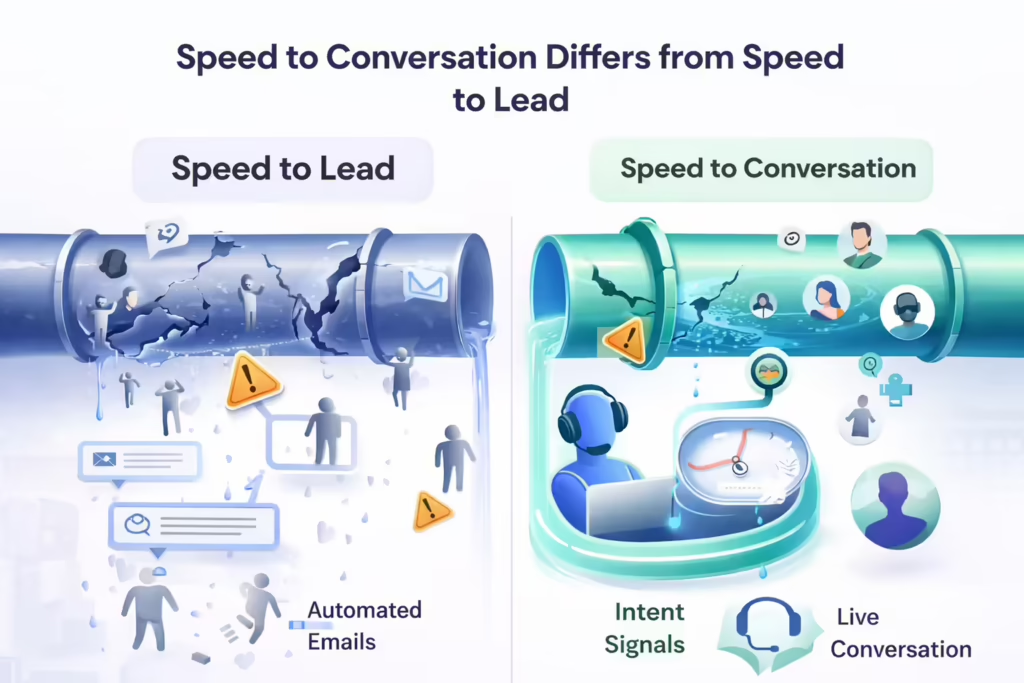
Speed to conversation vs speed to lead
To understand why speed to conversation is superior to speed to lead, one must first examine the inherent flaws in traditional lead management metrics. Speed to lead is an internal-facing metric, typically used to measure the efficiency of Sales Development Representatives (SDRs) and their compliance with service-level agreements (SLAs). It counts an automated email or a manual “touch” as a success, regardless of whether that touch resulted in a meaningful interaction. In contrast, speed to conversation is a buyer-centric metric. it measures the time it takes to deliver exactly what the prospect wants at the moment of peak intent: an answer to their question from a knowledgeable human being.
The operational disconnect between these two metrics is often the source of “pipeline leakage.” A sales organization may boast a sub-five-minute speed to lead due to automated email responders, yet their lead-to-opportunity conversion rates may remain stagnant because those automated touches fail to address the core human need for rapport and real-time objection handling. Speed to conversation addresses this gap by using technology to force an instant interaction, moving beyond “pull-based” workflows (where reps must notice an alert and decide to act) to “push-based” frameworks where the technology initiates the connection automatically.
| Metric | Focus | Measurement Start | Measurement End | Success Definition |
|---|---|---|---|---|
| Speed to Lead | Internal Activity | Form Submission | First Outreach Attempt | Activity Logged in CRM |
| Speed to Conversation | Buyer Experience | Intent Signal | Live Dialogue | Synchronous Human Exchange |
The implications of this shift extend to the very psychology of the buyer. Research indicates that 82% of consumers rate an “immediate” response as important or very important when they have a sales-related inquiry. When a prospect receives a call or a real-time text within seconds of submitting a demo request, the brand is literally still on their screen. This captures their peak attention and prevents the “doubts” or “competitor research” that typically occur during longer wait times.
How to measure speed to conversation
A practical speed-to-conversation KPI needs a clear start event and end event. The start event should be the moment a prospect shows intent: a form fill, demo request, ad lead, chat request, inbound call, webinar hand-raise, or CRM trigger. The end event should be the first live, two-way exchange with a qualified rep—not the first email, voicemail, or logged task.
Formula: speed to conversation = timestamp of first live two-way conversation minus timestamp of the original intent signal.
Teams should track this metric alongside median response time, average response time, p90 response time, call answer rate, lead-to-conversation rate, conversation-to-meeting rate, and lead-to-opportunity rate. This prevents a team from optimizing for activity alone while missing whether real buyer conversations are actually increasing.
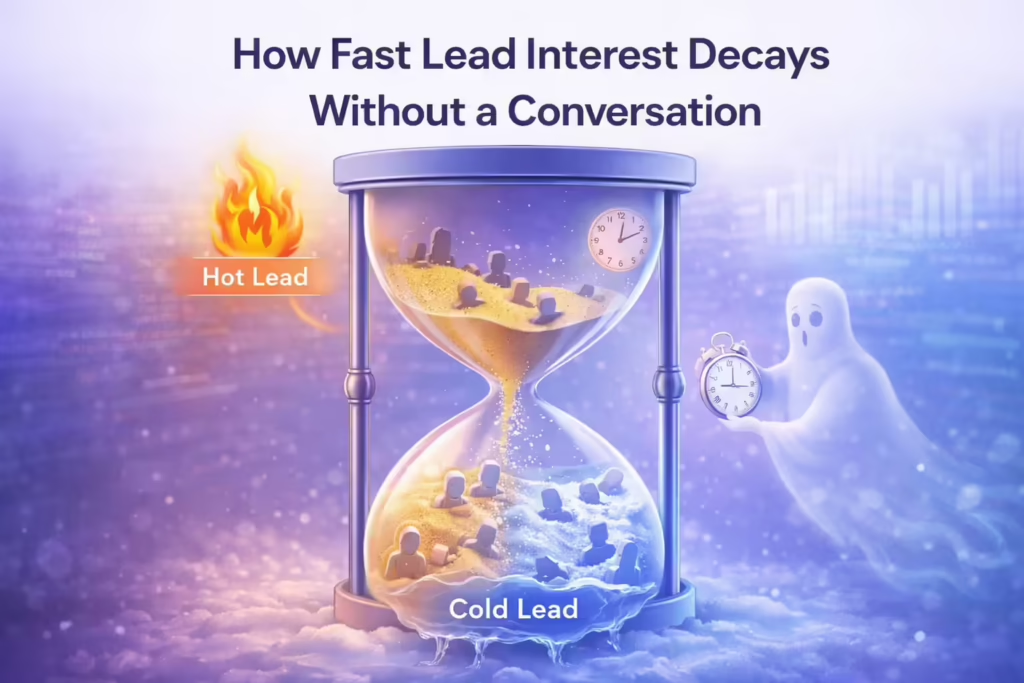
How fast conversations protect lead interest
Lead interest follows a steep decay curve. The moment a prospect submits a form, their intent is at its peak, and every minute of delay sharply reduces the probability of conversion. Research published in the Harvard Business Review found that reaching out within the first minute can result in a 391% boost in conversion probability compared to delays of thirty minutes or more.
The following table illustrates the dramatic drop-off points associated with response windows, highlighting why the “Golden Window” of five minutes is often too slow for modern high-velocity markets.
| Response Window | Impact on Qualification/Connection | Conversion Lift | Strategic Outcome |
|---|---|---|---|
| < 1 Minute | 391% Higher Conversions | +391% | Instant Intent Capture |
| < 5 Minutes | 21x More Likely to Qualify | +100% | Optimal Speed-to-Conversation |
| < 30 Minutes | 100x Less Effective than < 5 min | Minimal | Critical Drop-off Point |
| < 1 Hour | 7x More Likely to Qualify than > 1 hr | Negligible | Standard Aspirational Goal |
| 24+ Hours | 60x Lower Qualification Odds | -95% | Pipeline Leakage |
Organizations that fail to reach prospects within the first sixty minutes are essentially chasing “ghost leads.” After one hour, the likelihood of making successful contact with a lead drops by 10x. Despite this, the average lead response time across industries remains a staggering 42 to 47 hours, leaving a vast majority of potential revenue on the table for competitors who are equipped with automated speed to conversation tools.

Source note: Response-time benchmarks vary by study, industry, lead source, and qualification definition. The statistics below should be treated as directional evidence that faster response times are associated with better conversion outcomes, not as guaranteed results for every team or market.
Why buyers expect instant conversations
The requirement for instant human interaction is driven by a profound shift in consumer psychology. In the digital age, a company’s website functions as its storefront. Just as a customer in a physical retail location would find it unacceptable to wait 42 hours for a salesperson to acknowledge their presence, digital consumers have developed high expectations for immediate service. This “Storefront Effect” means that slow response times are not just a missed opportunity; they are a negative brand impression that destroys the credibility built by marketing efforts.
Several key psychological factors underpin the need for speed to conversation: The speed of a response is often interpreted as a direct indicator of a company’s overall operational maturity. A fast response signals that the organization is organized, attentive, and respects the customer’s time. A slow response, conversely, suggests that the company will be slow in its support, delivery, and implementation. At the moment of inquiry, the prospect is in the “consideration stage” and is actively seeking a solution to a pain point. Establishing a conversation instantly allows the sales representative to capitalize on this high-interest state before the prospect begins to feel “undervalued” or starts “researching competition”. Human connection is the primary driver of trust in high-stakes B2B transactions. While AI can facilitate the speed of the connection, the conversation itself provides the nuance, tone, and empathy that no automated sequence can replicate. Real-time objection handling during a live call or text exchange allows the rep to make the “abstract tangible” for the buyer, providing the momentum needed to move through complex decision cycles.
Furthermore, studies on customer experience frequently show that waiting too long for a reply is a major source of buyer frustration and that response speed can influence vendor perception. Fast conversations do not replace product fit, pricing, trust, or implementation quality, but they can help a sales team earn the first meaningful interaction while the buyer’s need is still active.
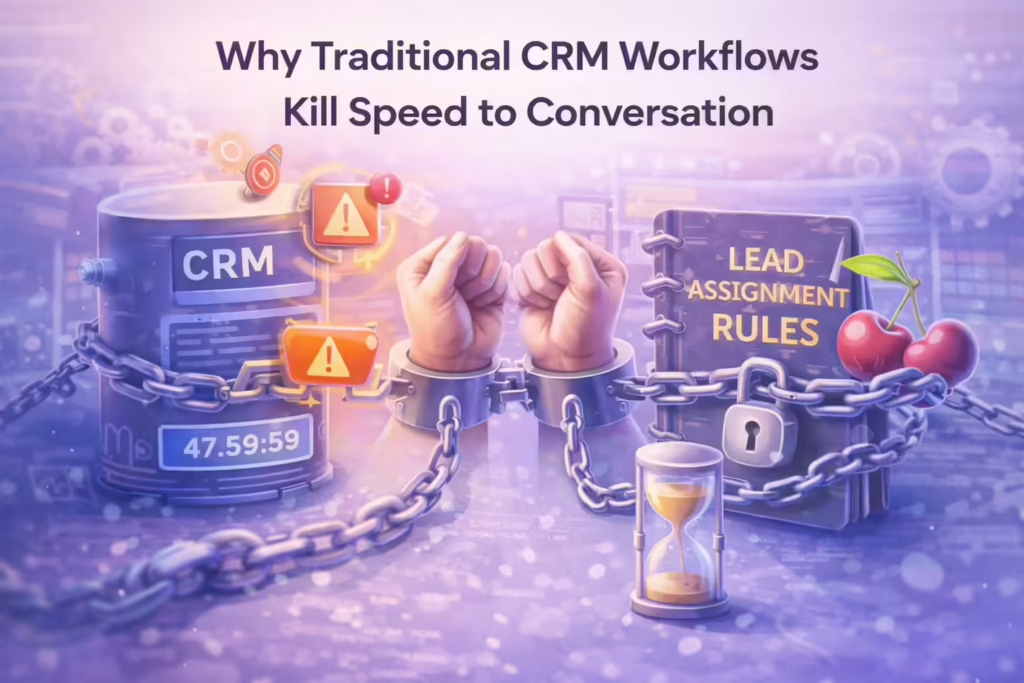
Why CRM workflows slow speed to conversation
If the benefits of rapid conversation are so clear, why do most organizations take nearly two days to respond to leads? The answer lies in the technical and structural friction inherent in traditional CRM and lead management workflows. The “manual chain” from lead submission to human outreach is fraught with latency at every link.
CRM sync lag slows conversations
The path of a lead often involves moving through multiple disjointed systems (web forms, marketing automation platforms, lead scoring engines, and finally the CRM). This “sync lag” can cause leads to sit in intermediate queues for minutes or even hours before a salesperson is ever notified. When data quality is poor (containing duplicates or missing fields), reps are forced to spend additional time vetting the record before they feel comfortable making a call, further eroding the Platinum Minute.
Pull-based workflows delay conversations
Most CRM-native tools use a “pull-based” engagement model. A lead enters the system, an alert fires (via email or a notification bell), and the rep must notice the alert, open the record, and manually initiate the outreach. This model assumes the rep is constantly monitoring their inbox and is ready to act immediately. In reality, reps are often distracted, on other calls, or manually “cherry-picking” leads they think look promising, which introduces catastrophic delays.
Rigid routing wastes the conversation window
Standard CRM assignment rules are often too rigid to account for real-time rep capacity or skill sets. Leads may be routed to an agent who is away from their desk, causing the lead to grow cold in an unattended queue. Without intelligent, real-time lead distribution that prioritizes available agents over a simple round-robin, the “first responder advantage” is lost to internal scheduling conflicts.
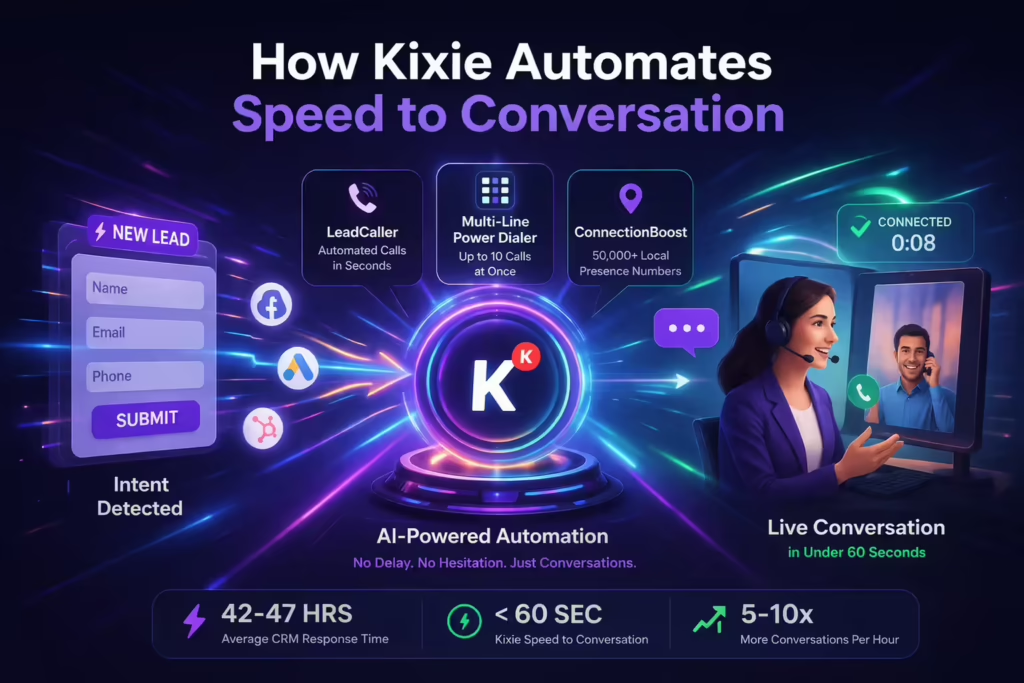
How Kixie improves speed to conversation
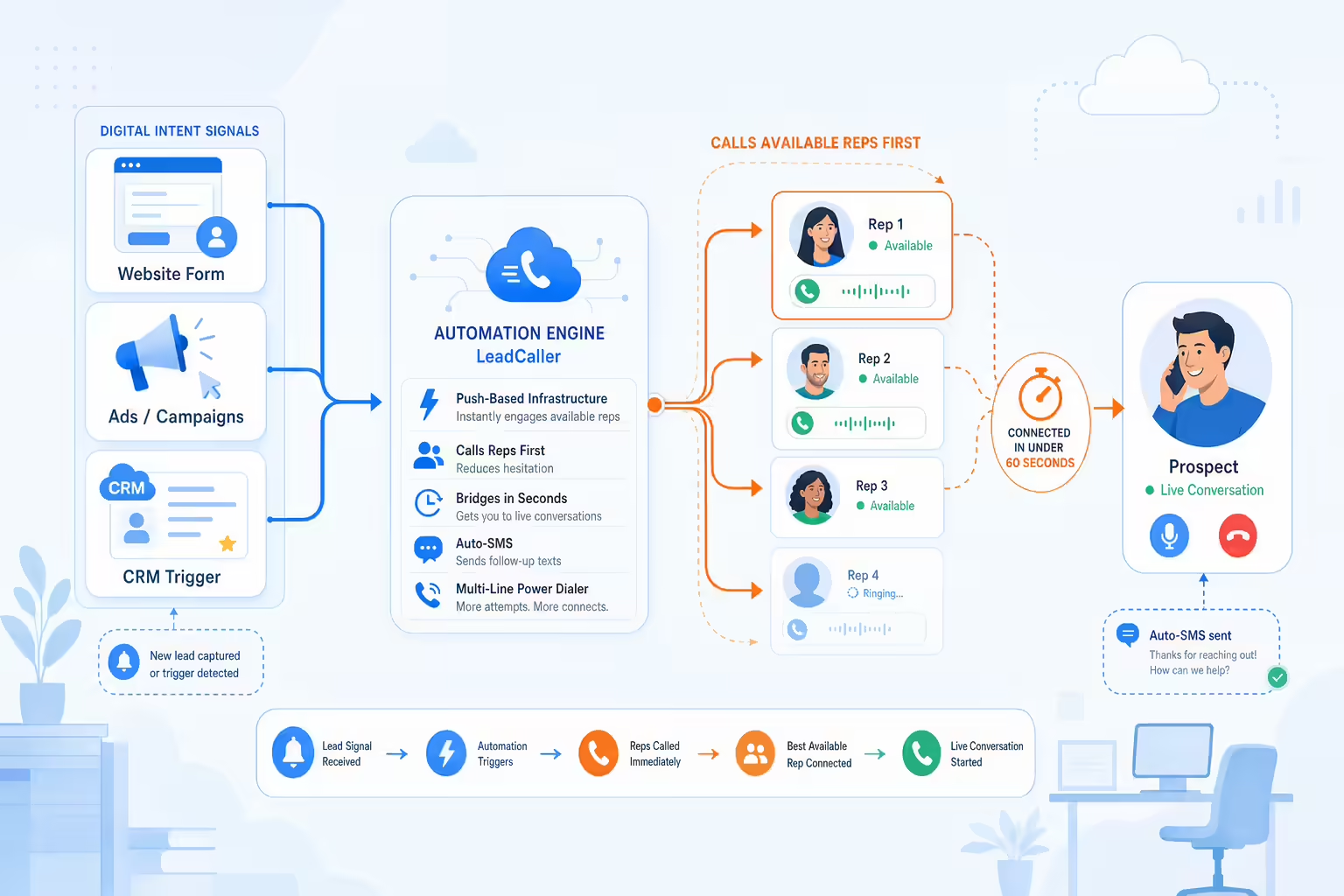
Kixie addresses these technical barriers by providing a “push-based” infrastructure specifically designed to automate the transition from a digital intent signal to a live dialogue. Rather than requiring reps to monitor their systems, Kixie’s framework initiates the connection on behalf of the team, removing human hesitation from the process.
LeadCaller starts conversations in seconds
The core of Kixie’s speed to conversation solution is the Automated LeadCaller. When a new lead is detected (via a web form, a paid ad, or a CRM trigger), the system instantly initiates a call to a group of available representatives. The system “hunts” for an available agent; as soon as a rep answers their phone, Kixie “bridges” the call to the prospect. This ensures that the outreach happens in seconds, often while the prospect is still on the company’s website.
| Feature | Legacy CRM Dialers (Pull-Based) | Kixie LeadCaller (Push-Based) |
|---|---|---|
| Notification | Passive alert (email/bell) | Active call to rep phone |
| Response Initiation | Dependent on rep noticing alert | Initiated automatically by system |
| Latency Risk | High: Rep distraction/monitoring | Low: Eliminated via system-initiation |
| Follow-up | Manual CRM flow configuration | Built-in Auto-SMS and triggers |
| Outcome | Average 42-hour delay | Sub-60-second connection |
Power dialing creates more conversations per hour
To maximize the efficiency of every representative, Kixie utilizes a Multi-Line Power Dialer that can call up to 4 numbers in parallel. This is coupled with AI Human Voice Detection, which uses advanced algorithms to distinguish between a live person and an answering machine or IVR system. This ensures that reps are only connected when a live prospect answers, effectively multiplying their talk time by up to 5x and reducing the “idle time” between conversations to almost zero.
ConnectionBoost gets more leads into conversations
Speed to conversation depends on connection rate: if the prospect does not answer, the team still has not created a conversation. Kixie’s ConnectionBoost suite supports this effort by utilizing a pool of over 50,000 local presence numbers to match caller ID to the prospect’s area code where appropriate. Kixie also supports caller ID reputation management, helping sales teams monitor and maintain the health of the numbers they use for outbound calling.
Automated SMS keeps conversations moving
While voice calls are the gold standard for rapport building, a holistic speed to conversation strategy must incorporate other channels. Kixie integrates automated SMS directly into its lead response framework, allowing for seamless continuity even when a voice connection is not established on the first attempt.
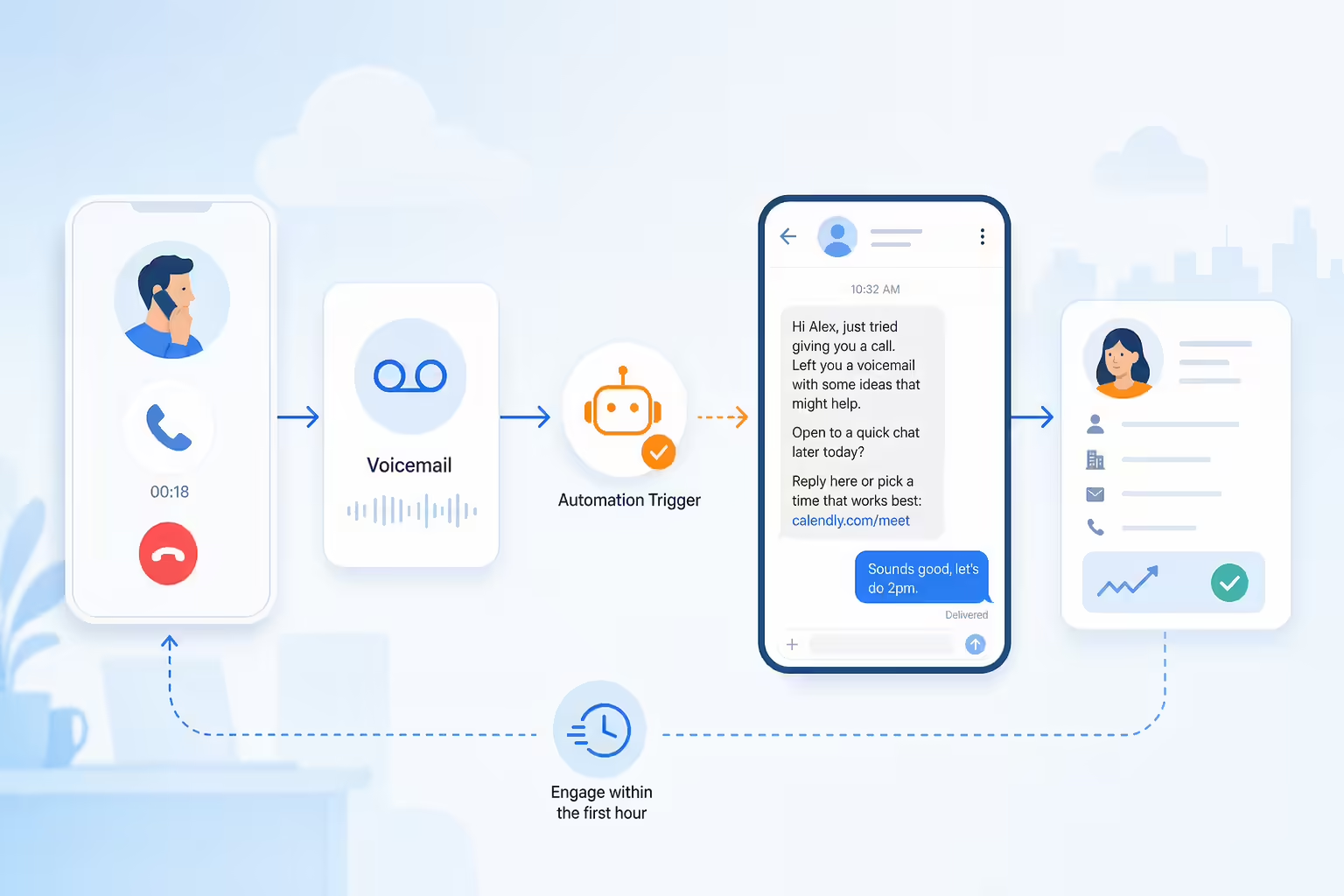
Prospects often respond to SMS at a higher rate than other forms of digital communication. Kixie can be configured to trigger an “Auto-SMS” based on specific call dispositions. For example, if a rep leaves a voicemail, the system can send a text message such as: “Hi [Name], just tried calling you regarding your request for a demo. Looking forward to connecting!” Teams should configure automated calling and SMS workflows with appropriate consent, opt-out handling, and legal review for the markets where they operate. Used responsibly, a multi-channel approach helps the brand stay top-of-mind and gives prospects a low-friction way to reply when they are ready.
What to do when the prospect does not answer
Speed to conversation is not only about the first call attempt. It also depends on the fallback path when the first call goes unanswered. High-performing teams define the next step for every disposition so leads do not disappear into a generic nurture queue.
- No answer: leave a concise voicemail when appropriate and trigger an approved SMS follow-up.
- Busy or missed call: retry within a defined interval while the original intent signal is still recent.
- Wrong rep or unavailable rep: reroute to another available rep instead of waiting for the originally assigned owner.
- Stale lead: move the record into a clear nurture or reactivation workflow rather than leaving it unworked.
CRM integrations speed up conversations
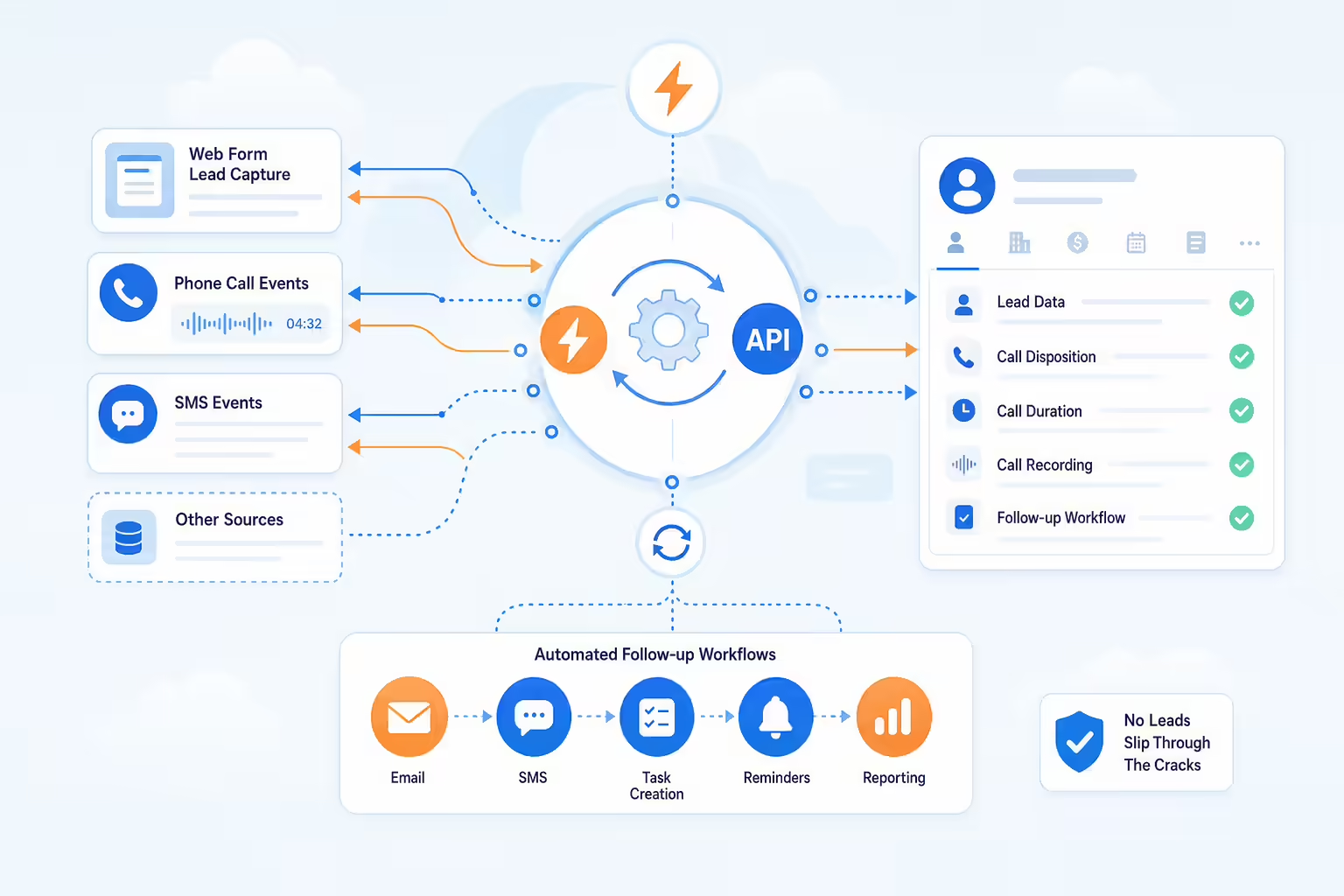
For high-performing organizations, speed to conversation must be a systemic process rather than a series of manual tasks. Kixie’s architecture is designed for deep, bi-directional integration with major CRM platforms such as HubSpot, Salesforce, Zoho, and monday.com. This integration ensures that lead data is synchronized in real-time and that all communication activity is logged automatically without rep intervention.
Webhooks trigger conversations in real time
Kixie uses a robust webhook and REST API framework to facilitate instant automation. Webhooks allow Kixie to send event data (such as “Call Started,” “Call Ended,” or “SMS Sent”) to other applications in the sales stack instantly. This real-time data flow is essential for “triggering different automation workflows” based on call outcomes.
For example, a team using Kixie with HubSpot might set up the following automated sequence:
- Lead Capture: A prospect submits a form on the website.
- Instant Call Trigger: The form submission sends a signal to Kixie, which immediately initiates an Automated LeadCaller “hunt” for the next available rep.
- Real-Time Data Update: As soon as the call ends, Kixie sends a webhook back to HubSpot with the call disposition, duration, and a link to the recording.
- Conditional Follow-Up: If the call disposition was “No Answer,” the system triggers a “Call Counter” field update in HubSpot. If the count reaches three attempts without a conversation, HubSpot can automatically enroll the lead into a different email nurture track or send a specific SMS template.
This level of automation ensures that no lead “slips through the cracks” and that the sales team is always working the highest-potential prospects first.
Speed-to-conversation implementation checklist
To operationalize speed to conversation, sales and marketing teams should audit every step between intent and a live rep. Use this checklist to identify where latency enters the process:
- Map every intent source, including website forms, paid ad leads, inbound calls, chat requests, webinar leads, and CRM-created records.
- Confirm how quickly each source syncs into the CRM or dialer workflow.
- Route urgent inbound leads to available reps, not only to the next static owner in a queue.
- Trigger an immediate call workflow and a compliant SMS fallback when appropriate.
- Log call outcomes, recordings, notes, and follow-up tasks automatically in the CRM.
- Review conversion rates by response-time bucket every week to see where faster conversations are producing measurable lift.
Conversation intelligence improves sales coaching
The goal of speed to conversation is not just to talk fast, but to talk effectively. Kixie’s Conversation Intelligence (CI) tools provide AI-powered insights that allow managers to monitor and improve the quality of interactions at scale. CI features include automatic call transcription, sentiment analysis, and keyword spotting.
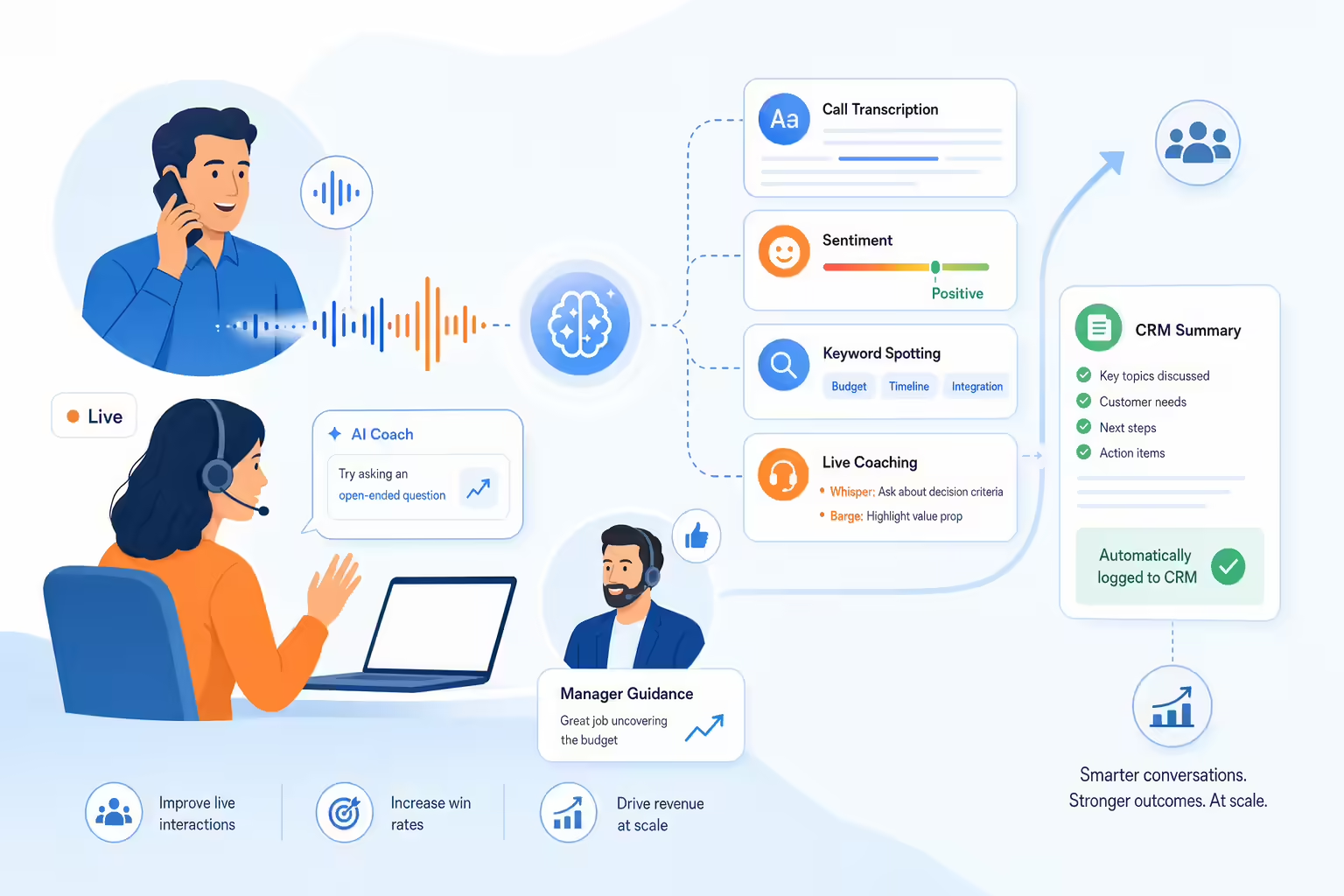
By using CI, managers can improve both speed and quality across the revenue team:
- Coach during live calls: Managers can use features such as Whisper and Barge to guide reps during active conversations when appropriate.
- Identify effective messaging: Call analysis can help managers spot which talk tracks, discovery questions, and objection-handling techniques are associated with stronger outcomes.
- Reduce administrative work: Post-call summaries and notes can be pushed into the CRM so reps spend less time on manual data entry and more time in conversations.
This focus on the quality of the conversation ensures that the speed of the connection is translated into meaningful business value.
Speed to conversation ROI
The fiscal impact of transitioning from a manual speed to lead model to an automated speed to conversation model is quantifiable and significant. By analyzing the “Lead-to-Qualification Rate,” organizations can model the revenue gains associated with sub-minute response times.
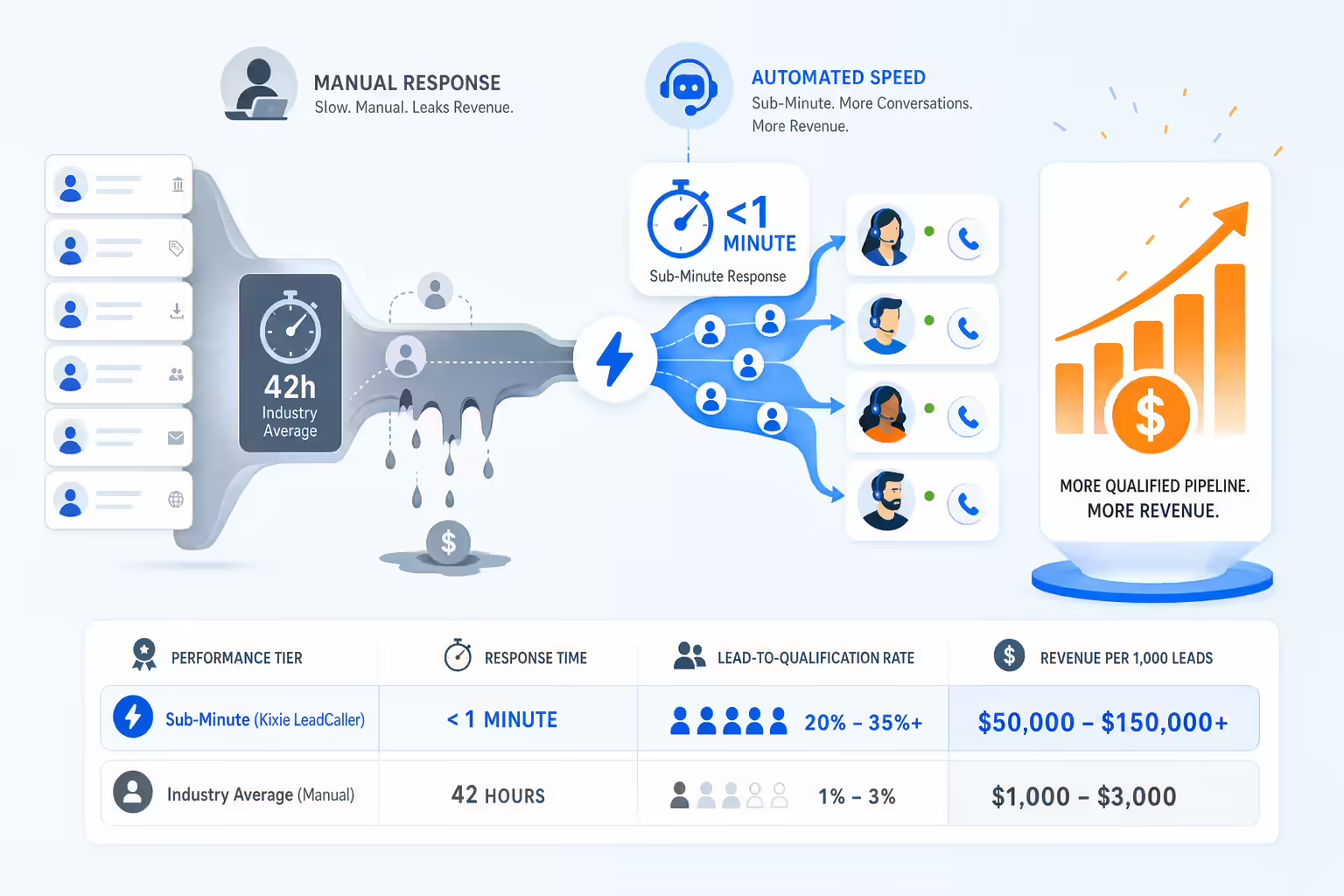
| Performance Tier | Response Time | Lead-to-Qual Rate | Revenue per 1,000 Leads ($5K ACV) |
|---|---|---|---|
| Industry Average | 42 Hours | 0.15% | $7,500 |
| Optimized Manual | 1 Hour | 0.75% | $37,500 |
| Automated Speed | 5 Minutes | 2.10% | $105,000 |
| Kixie LeadCaller | < 1 Minute | 3.00% | $150,000 |
The delta between the industry average and a Kixie-optimized response is a 2,000% increase in revenue from the same marketing spend. This ROI is driven by the “First Responder Advantage,” the fact that 78% of buyers work with the first vendor to respond. By capturing leads while the brand is literally still on their screen, Kixie allows organizations to capitalize on the highest state of intent, effectively reducing the cost per acquisition (CPA) and maximizing the value of every marketing dollar.
ROI note: Any speed-to-conversation model should be treated as illustrative unless it uses your team’s actual lead volume, lead quality, average contract value, sales capacity, connection rate, qualification criteria, and close rate. Faster response can improve the odds of a conversation, but it does not guarantee revenue without the right offer, routing, rep availability, follow-up process, and sales execution.
Speed-to-conversation benchmarks to monitor
Instead of relying on a single response-time metric, monitor a funnel of conversation metrics that shows where leads are gained or lost:
- Time to first live conversation: the core speed-to-conversation KPI.
- Call answer rate: the percentage of call attempts that reach a live person.
- Lead-to-conversation rate: the percentage of new leads that become live conversations.
- Conversation-to-meeting rate: how often live conversations turn into scheduled sales meetings.
- Meeting show rate: how often scheduled meetings actually happen.
- Opportunity conversion rate: how many qualified conversations become pipeline.
Speed to conversation examples
The success of these strategies is reflected in the outcomes achieved by diverse organizations utilizing Kixie’s technology.
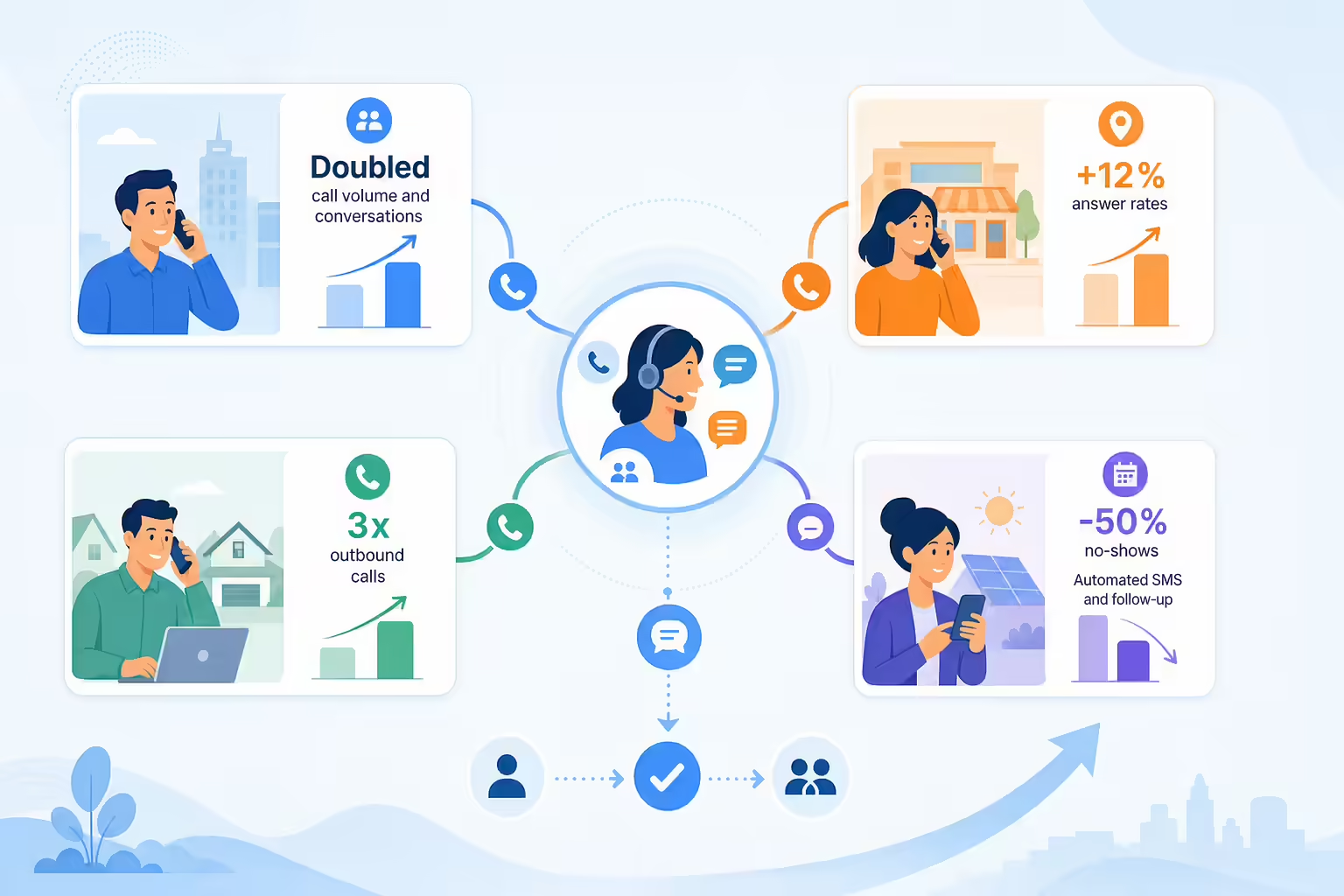
Kennected doubled call volume and conversations
Kennected, a lead generation and marketing firm, initially struggled with a lack of a central phone system, with reps making calls from personal cell phones. This manual process made follow-up cumbersome and difficult to track. After adopting Kixie’s PowerDialer and HubSpot integration, Kennected saw their outbound call volume double. By utilizing “voicemail drop,” agents saved approximately one hour per day, which was redirected toward more live conversations. The integration also allowed for automated SMS reminders for meetings, which significantly reduced their no-show rate and improved the overall customer experience.
GoSite improved conversation answer rates by 12%
GoSite, a SaaS provider for home service businesses, needed a solution to scale their high-volume outbound outreach while maintaining high connection rates. By switching to Kixie and utilizing the ConnectionBoost suite, GoSite increased their answer rates by 12%. The ability to use local presence dialing proved to be a “game changer” for their revenue operations, allowing them to manage over 150,000 calls per month with a high degree of personalization and trust.
Fischer Homes and Solar Power Pros scaled conversations
Other organizations have seen similar transformative results. Fischer Homes tripled their outbound call volume by using Kixie’s automated dialing features, while Solar Power Pros reduced their no-show rate by 50% through automated SMS and follow-up sequences. These results demonstrate that speed to conversation is a universal driver of sales success, regardless of industry or deal size.
How to build speed to conversation into sales
In the contemporary B2B sales market, the concept of speed to lead is being subsumed by the more rigorous and effective standard of speed to conversation. For researchers and sales leaders, the data is unequivocal: the “Platinum Minute” following a lead inquiry is the most valuable period in the entire sales cycle. Organizations that rely on manual workflows, email-first follow-ups, and pull-based engagement are suffering from massive pipeline leakage and wasting billions in marketing spend.
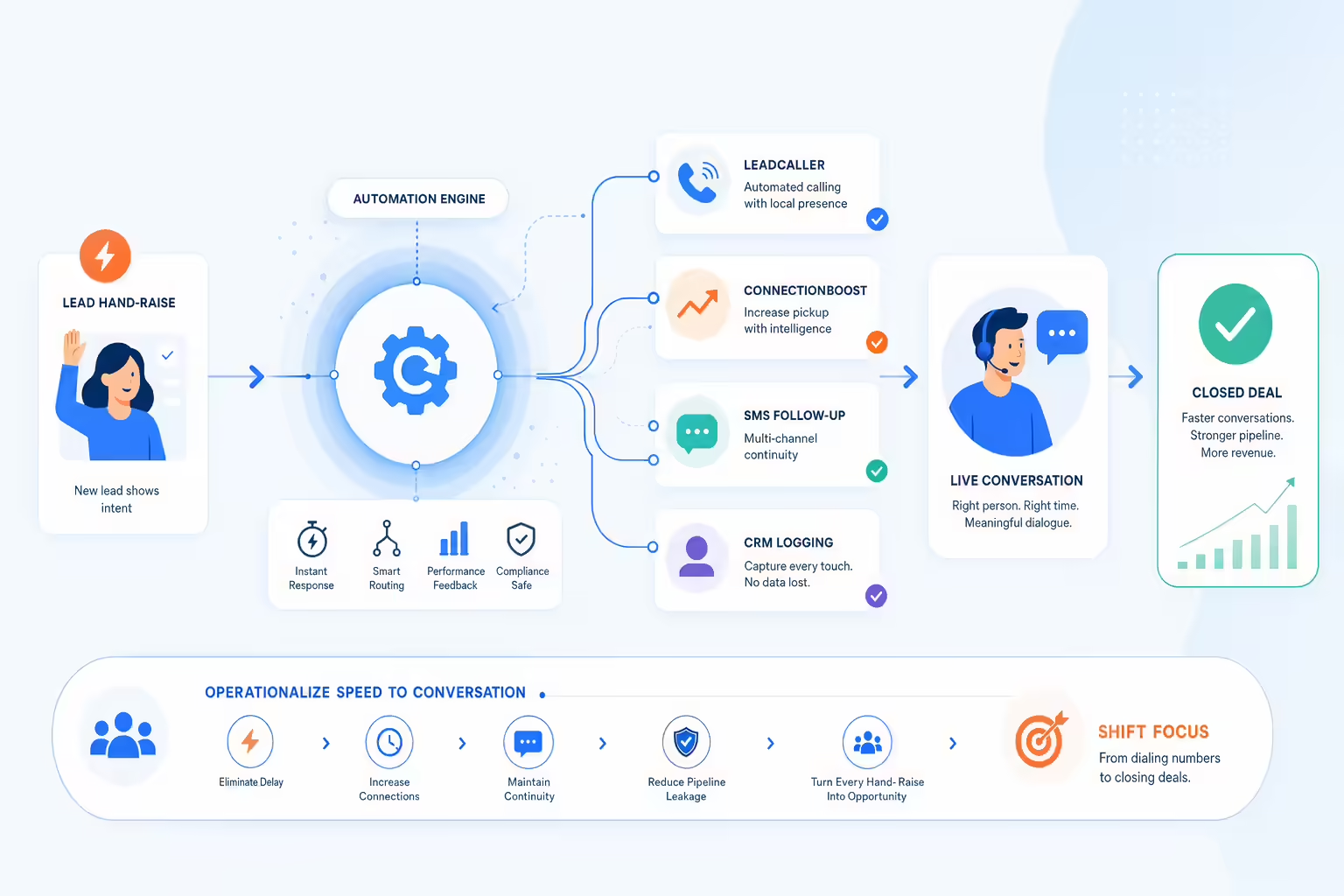
Speed to conversation matters more than speed to lead because it addresses the buyer’s fundamental expectation for immediate, human-driven assistance. It captures intent before it decays, builds trust through reliability, and secures the “first responder advantage” that is the single most decisive factor in winning modern deals.
Kixie provides the necessary technological infrastructure to bridge the gap between digital signals and human relationships. By automating the connection process through the LeadCaller mechanism, ensuring high pickup rates with ConnectionBoost, and maintaining multi-channel continuity via automated SMS, Kixie allows sales teams to shift their focus from dialing numbers to closing deals. For organizations looking to maximize their lead conversion and revenue growth, the solution lies in operationalizing speed to conversation, turning every hand-raise into an instant, meaningful dialogue.
Ready to close more deals with Kixie?
See how Kixie's AI-powered tools can transform your sales and support operations.
Start Free Trial