TL;DR: AI emails for missed calls are automated follow-up drafts or sends after unanswered inbound or outbound calls, using call outcome, CRM context, voicemail status, approved messaging rules, and rep review to keep follow-up fast and consistent. Gong found voicemail plus email raises reply rates from 2.73% to 5.87%, TOPO found emails sent within minutes of voicemail lift conversions 10% to 11%, voicemail-drop tools play a pre-recorded 20-second message after AI detects the beep and can save reps up to 25 hours per month, especially when repeated across 50 calls a day. Key platforms include Orum for high-volume AI parallel dialing up to 10 lines with automatic voicemail drops and reported 25.8% better subsequent pickup rates plus 11.4% better callback rates over 7 days, Zoom Revenue Accelerator with power, parallel, and cascading dialing, pre-recorded drops, AI Companion transcription, summaries, and post-call email drafts, Salesloft with cadences that coordinate calls, emails, and social touches plus AI-assisted follow-up after voicemail dispositions, and Apollo.io with a 275 million plus contact database, enrichment, sequencing, and AI email copy by persona and industry. Recommended workflow detects no answer or voicemail, matches the number to CRM, drafts a short missed-call email from fields like name, title, company, lead source, notes, and recent activity, lets reps review sensitive or high-value messages, logs calls, voicemails, emails, and tasks, and supports repeatable sequences. Sequence guidance says reaching prospects takes an average of 8 call attempts, 80% of sales need 5 or more follow-up touches, reps should leave only 1 or 2 voicemails per contact across a 2-to-3-week sequence, and the example cadence spans 5 touches over 10 days with Day 1 no-voicemail missed call followed by a short email such as Tried you – quick question on topic.
Direct answer: AI emails for missed calls are automated follow-up messages drafted after a call is not answered. They can support inbound scenarios, such as a prospect calling after hours, and outbound sales scenarios, such as a rep leaving a voicemail and sending a quick recap by email.
Why teams automate missed call follow-up
AI emails for missed calls help sales teams respond when a conversation does not happen in real time. That can mean an inbound lead called and no one answered, or an outbound prospect missed a rep’s call. In both cases, the goal is the same: use the call outcome, CRM context, and an approved message framework to create a timely follow-up email instead of making a rep start from a blank page.
Without automation, representatives often have to leave or log a voicemail, look up account context, write a follow-up email, and create the next task manually. Those small steps add up across a full calling block and can delay the response window for high-intent inbound callers. Automating the draft or send step helps teams keep follow-up consistent while preserving rep time for live conversations and higher-value selling work.
How AI emails handle missed calls
Modern telephony and sales engagement platforms use AI to streamline missed-call follow-up for both inbound inquiries and outbound sales calls. At a high level, AI emails for missed calls turn a call outcome, such as no answer, voicemail, or an unanswered inbound call, into a timely follow-up draft. A typical workflow is to detect the missed call, match the phone number to a CRM or contact record when available, use known context to draft a short email or text, route it for rep review or sending based on team rules, and log the activity for the next step. This keeps prospects engaged across multiple channels without requiring the salesperson to write every response from scratch.
Outbound sales and missed calls today

To understand why AI-generated emails for missed calls matter, it helps to separate two common scenarios. In outbound sales, a missed call usually means a rep reached voicemail or got no answer and needs a relevant follow-up that reinforces the reason for calling. In inbound sales or support, a missed call may be a hand-raiser asking for help, pricing, or a demo, so the follow-up should be faster and more service-oriented.
In both cases, the problem is the same: the call outcome is easy to lose in a busy queue, and manual email follow-up often happens too late or not at all. AI emails for missed calls can turn the call disposition, voicemail context, CRM fields, and recent activity into a draft message that keeps the conversation moving without forcing reps to start from a blank page.
Manual missed call follow-up costs
Manual missed-call follow-up adds up quickly for sales teams. Each unanswered call can require waiting through the ring cycle, listening to the voicemail greeting, leaving a message, logging the outcome, and deciding whether to send a follow-up email.
The time cost is not limited to the voicemail itself. Reps also need to remember the context of the call, personalize the next touch, and avoid sending a generic message that feels disconnected from the prospect’s situation.
That is where AI emails for missed calls can reduce repetitive work. Instead of asking reps to manually write a new follow-up after every unanswered call, teams can use the missed-call outcome as a trigger for a relevant email draft that the rep can review, personalize, and send.
Why voicemails after missed calls fall short
If leaving a voicemail consistently resulted in the buyer calling back, the time investment might be justified. In practice, standalone voicemail callback rates are often low, especially when the prospect does not already know the rep, the company, or the reason for the call.
Many buyers also screen calls from unfamiliar numbers and may never listen to the full message. Longer voicemails can create even more friction because the prospect has to spend time listening before they know whether the message is relevant. That is why missed-call follow-up works best when voicemail is paired with a fast, clear email that gives the buyer something they can scan, reply to, or forward.
Why emails help missed call voicemails work

Instead of relying on voicemails to generate callbacks, top-performing sales teams use voicemails to draw attention to another communication channel, usually email.
Why voicemail plus email gets replies
When a representative leaves a voicemail, the prospect receives a notification on their phone. Even if they do not listen to the audio, they see the representative’s name and company in the transcript or notification. If an email arrives in their inbox a few minutes later from that same name, the prospect is already familiar with it.
Data from Gong, a revenue intelligence platform that analyzed millions of sales calls, supports this strategy. Their research shows that leaving a voicemail can increase email reply rates from an average of 2.73% to 5.87%. This means that pointing a prospect to an email via voicemail more than doubles the likelihood that they will respond to the written message.
Similarly, the research firm TOPO found that organizations see a 10% to 11% lift in email conversion rates when the email is sent within minutes of a voicemail being left. The voicemail serves as a trigger, creating a sense of urgency and familiarity that makes the prospect more likely to open the email.
Why manual missed call follow-up fails
While the data proves that pairing a voicemail with an email works, executing this strategy manually is difficult. It requires the SDR to leave the voice message, open their email client or CRM, write a customized message referencing the missed call, and send it immediately. Doing this 50 times a day leads to burnout and errors.
This is where AI and automated telephony tools come in. By automating both the voice and text components of the follow-up, teams can achieve the 5.87% reply rate without sacrificing hours of manual labor.
How AI emails work after missed calls

AI-powered sales tools connect the phone dialer, the customer relationship management (CRM) software, and the email client into a single workflow.
How voicemail drops support missed calls
The first step in the automated workflow is the “voicemail drop.” Telephony platforms use AI to detect whether a call has been answered by a live human, an answering machine, or a phone tree. If the AI detects a voicemail beep, it instantly disconnects the representative from the line so they can move on to the next call. In the background, the software plays a pre-recorded audio file of the representative leaving a perfect, 20-second message.
This technology alone saves representatives up to 25 hours a month. It also ensures that the 50th voicemail of the day sounds just as energetic and professional as the first one.
How AI emails create follow-up messages
Once the voicemail is dropped, the AI system takes over the email follow-up. Using Natural Language Processing (NLP) and Large Language Models (LLMs), the software analyzes the CRM record for the prospect. It looks at the prospect’s name, job title, company, and any notes from previous interactions.
The AI then generates an email draft that references the missed call. For example, the AI might draft “Hi John, I just left a quick voicemail on your line…” and then seamlessly transition into the specific value proposition relevant to John’s industry.
The representative can review this drafted email, make any necessary adjustments to ensure the tone is correct, and press send. Some platforms can fully automate this step, sending the email without human review, though most experts recommend a quick manual check to maintain a personal touch.
Tools for missed calls and AI emails
There are several platforms on the market designed to help revenue teams automate their phone and email workflows. When evaluating these tools, buyers should look at dialer functionality, CRM integration, and AI capabilities.
Missed call tool feature comparison
Below is a comparison of four popular tools used by sales teams for telephony and AI email follow-up.
| Feature | Orum | Zoom Revenue Accelerator | Salesloft | Apollo.io |
|---|---|---|---|---|
| Primary Focus | High-volume AI parallel dialing | Meeting intelligence and auto-dialing | Full sales engagement platform | B2B database and AI sequencing |
| Dialer Type | Parallel (up to 10 lines at once) | Power, Parallel, and Cascading | Power dialing (Zoom integration) | Power dialing |
| Voicemail Drop | Yes, automatic AI detection | Yes, automatic pre-recorded drops | Yes, through integrated dialers | Yes |
| AI Email Follow-Up | Focuses mostly on call disposition to CRM | Yes, AI drafts post-call emails | Yes, AI assists with email workflows | Yes, AI assistants for email copy |
| Best For | High-volume SDR teams needing to maximize live connects | Teams already using the Zoom ecosystem | Teams needing structured, multi-touch cadences | Teams needing combined data enrichment and outreach |
Missed call tool breakdown
When comparing sales tools for AI emails after missed calls, focus less on broad automation claims and more on the workflow your team actually needs. A useful missed-call follow-up setup should be able to capture the call outcome, connect it to the right CRM record, support a voicemail or callback step, and help reps send a timely, relevant email without rewriting every message from scratch.
- Missed-call trigger: Can the system identify unanswered calls or voicemail outcomes clearly?
- Email creation: Does it draft or queue follow-up emails using approved context such as lead source, call notes, or CRM fields?
- Rep control: Can reps review, edit, or approve messages before they are sent?
- CRM logging: Are calls, voicemails, emails, and tasks recorded in the correct contact or deal record?
- Sequence support: Can the tool coordinate calls, voicemails, and emails in a repeatable cadence?
The right choice depends on whether your team is solving for outbound prospecting, inbound missed-call response, or a mix of both.
Orum for missed call voicemail drops
Orum is specifically built to maximize live conversations. It uses a parallel dialer, meaning the software can dial up to 10 numbers at the same time. The AI listens to the ringing lines. When a human answers, the AI instantly connects the sales representative. When the system hits a voicemail, Orum drops a pre-recorded message automatically and moves on. Data shows that using Orum’s voicemail drops leads to a 25.8% improvement in subsequent pickup rates and an 11.4% improvement in callback rates over seven days.
Zoom Revenue Accelerator for missed calls
Zoom has expanded beyond video conferencing to offer a comprehensive sales platform. Its Auto Dialer supports power and parallel dialing. When a call goes to voicemail, the system drops a pre-recorded message. Furthermore, Zoom’s AI Companion can transcribe interactions, summarize meeting notes, and automatically draft follow-up emails for the sales representative to send.
Salesloft for voicemail and email sequences
Salesloft is a broader sales engagement platform that organizes outreach into “cadences”. A cadence is a scheduled sequence of phone calls, emails, and social media touches. Salesloft integrates with dialers (including Orum and Zoom Phone) to facilitate calls. After a call is marked as a voicemail, Salesloft can automatically trigger an AI-assisted follow-up email based on the cadence structure.
Apollo.io for AI email follow-up
Apollo combines a database of over 275 million contacts with outreach tools. It allows users to build lists, verify emails, and set up automated sequences. If a representative logs a missed call in Apollo, the platform’s AI assistant can help draft an email customized to the prospect’s persona and industry data.
Build a missed call email sequence

Having the right software is only part of the equation. To get the highest return on investment, teams must structure their outreach sequences logically. An outbound sales cadence is the exact timeline of steps a representative takes to contact a lead.
Missed call sequence timing
Data suggests that it takes an average of eight call attempts to reach a prospect, and 80% of sales require five or more follow-up touches. However, you should not leave a voicemail every single time you call. Leaving too many voicemails can annoy the prospect and trigger spam filters. Experts recommend leaving only one or two well-placed voicemails per contact during an entire 2-to-3-week sequence.
Missed call sequence example
Here is a practical, data-backed example of a 5-touch outreach sequence spanning ten days. This example uses the strategy of pointing voicemails toward emails to maximize the reply rate.
Day 1 missed call without voicemail
The representative dials the prospect. If the prospect does not answer, the representative does not leave a voicemail. They simply hang up. This creates a missed call notification on the prospect’s phone from an unknown number.
Day 1 missed call email follow-up
The representative sends a short email. The subject line might read “Tried you – quick question on [Topic]”. This satisfies the prospect’s curiosity about who called them earlier.
Day 3 missed call with automated voicemail
The representative calls again. This time, when the call goes to voicemail, the software automatically drops a pre-recorded message. The audio is strictly limited to 15 to 20 seconds. The script is simple “Hi [Name], this is [Rep] from [Company]. I sent you an email on Monday about [Topic]. I’ll reply to that email again right now so it’s at the top of your inbox. Feel free to reply there.”
Day 3 AI email follow-up
Within one minute of the voicemail drop, the software generates and sends an email. This is the crucial step that lifts reply rates by up to 40% compared to generic messages. The email serves as a direct continuation of the voicemail.
Day 8 missed call breakup email
If there has been no response, the representative makes one final call, leaves a second short voicemail, and sends a final AI-generated email offering to close the file or follow up in six months.
AI prompts for missed call emails
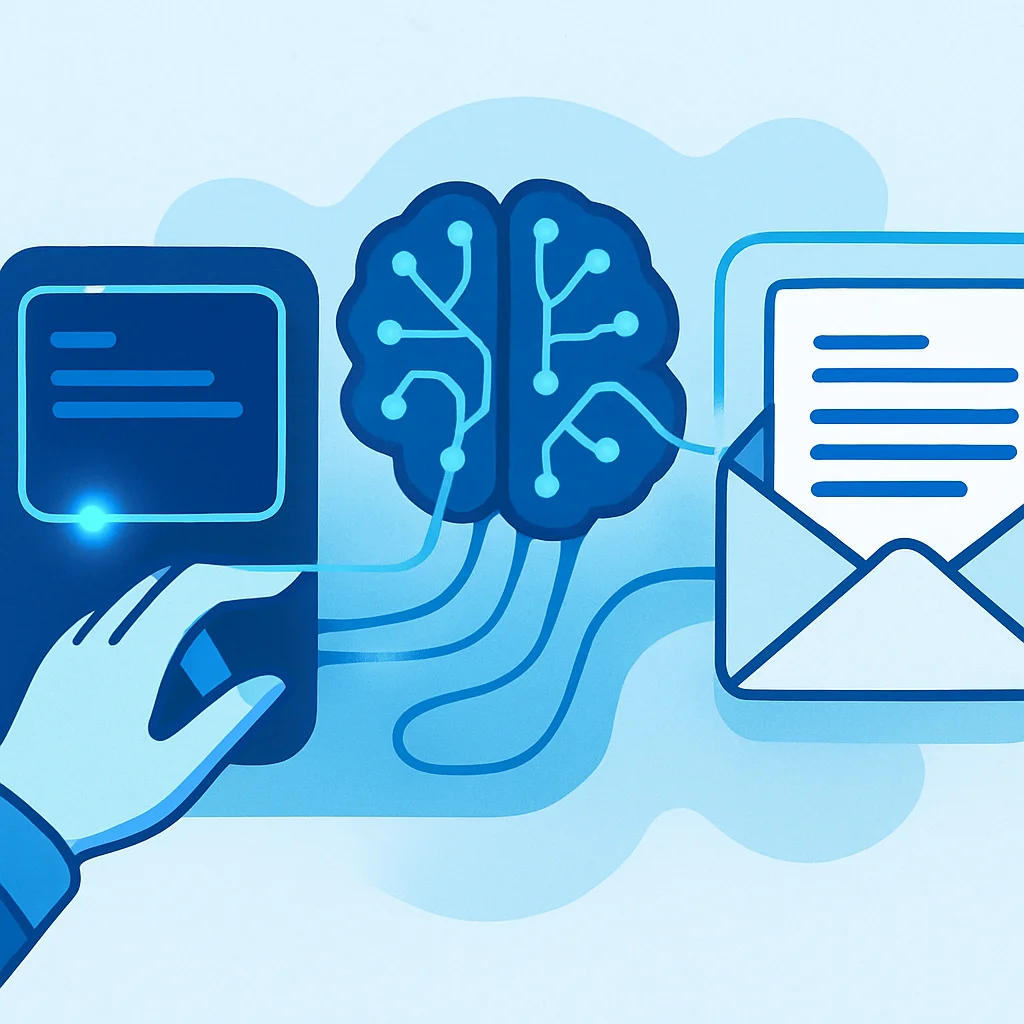
When using AI to generate follow-up emails, the quality of the output depends entirely on the quality of the instructions given to the AI. These instructions are called “prompts.” If a representative gives a generic prompt like “Write a sales email,” the AI will write a generic, ineffective email.
How to write AI email prompts
To generate a high-quality post-voicemail email, the prompt must include specific constraints, context, and a clear goal.
A strong prompt should include:
- The Role: Tell the AI who it is acting as (e.g., a B2B sales expert).
- The Context: Provide the prospect’s details (name, company, job title).
- The Trigger: Explain that a voicemail was just left.
- The Value Proposition: State exactly what problem your product solves for this specific prospect.
- The Tone: Specify the desired tone (e.g., professional, concise, neutral).
- The Call to Action (CTA): Tell the AI what the next step should be.
Missed call prompt example
Here is a specific example of a prompt a sales representative or RevOps manager could build into their AI tool:
“You are an expert B2B sales development representative. I just called [Prospect Name], the [Job Title] at [Company Name], but they did not answer. I left a 20-second voicemail. Write a follow-up email to send to them immediately. The email must be under 75 words. Acknowledge that I just left a voicemail. State that our software helps companies in the [Prospect Industry] reduce their manual data entry by 30%. Ask if they have 10 minutes next Tuesday to discuss. The tone must be professional, educational, and not pushy. Do not use exclamation points.”
By providing strict word count limits and clear parameters, the AI generates a focused, relevant email that feels human and directly aligns with the voicemail.
Missed call email templates
If your team does not use dynamic AI prompts, you can still program your AI software to pull from approved templates. Using templates ensures brand consistency while allowing the AI to automatically fill in the personalized variables (like names, companies, and specific pain points).
The best voicemail follow-up emails are short. Gong’s data shows that emails with subject lines under four words perform the best, and sales-heavy language can reduce open rates by 17.9%.
Here are three data-backed follow-up email templates designed to be sent immediately after a missed call.
Direct missed call reference template
This template is designed for the middle of a sequence (like Day 3). It references the voicemail directly and points to a previous message.
Subject line: regarding my voicemail
Direct reference email body
“Hi [First Name],
I just left a quick voicemail on your line. I was hoping to follow up on the email I sent on [Day of week] regarding [Pain point or goal].
We have helped teams like [Competitor or similar company] improve their [Metric] by [Percentage].
I have attached a brief one-page summary. If this is relevant to your current goals, are you open to a brief call next week?
Best,
[Representative Name]”
Value-first missed call email template
This template focuses on delivering value without immediately asking for a meeting. It works well for high-level executives who guard their time carefully.
Subject line: quick resource for [Company Name]
Value-first email body
“Hi [First Name],
Sorry I missed you on the phone just now. I am reaching out because we recently published a benchmark report on [Industry topic] based on data from 500 companies.
Given your role as [Job Title], I thought the section on [Specific topic] might be useful for your team’s current initiatives.
Here is the link: [Link]
No need to reply if this isn’t a priority right now, just wanted to share the resource.
Thanks,
[Representative Name]”
Inbound missed call follow-up template
When a prospect downloads a whitepaper or fills out a form on your website, they are an inbound lead. The response time for inbound leads must be under five minutes for the best conversion rates. If they do not answer the phone, the AI should instantly send this email.
Subject line: your request for [Content/Demo]
Inbound follow-up email body
“Hi [First Name],
I saw you just requested [Content or Demo] on our website. I tried giving you a quick call to ensure you received everything you needed, but I missed you.
I have attached the information here for easy access. If you have any questions as you review it, feel free to reply directly to this email or call me back at [Phone Number].
Best,
[Representative Name]”
Before choosing a template, match the email to the missed-call scenario:
- Inbound missed call: acknowledge that they tried to reach you, offer help, and make it easy to book or reply.
- Outbound call with voicemail: reference the voicemail and restate one concise reason for connecting.
- Outbound call without voicemail: keep the email light and avoid implying a conversation happened.
- Existing customer callback: confirm the missed call, summarize the likely topic if known, and route them to the right next step.
ROI of AI emails for missed calls

Implementing an AI-driven system to manage voicemails and email follow-ups requires an upfront investment in software. Telephony platforms and AI dialers require monthly per-user licenses. To justify this cost, revenue operations leaders must calculate the return on investment (ROI).
Time saved from AI emails
The most immediate financial impact is the recovery of labor hours. Let us look at a worked example for a team of 10 SDRs.
- Average SDR Salary (Fully Loaded): $89,000 per year.
- Hourly Rate: Assuming 2,080 working hours a year, the hourly cost is $42.78.
- Time Saved by AI Voicemail Drops: 25 hours per month, per SDR.
- Annual Time Saved per SDR: 300 hours.
- Financial Value of Time Saved per SDR: 300 hours * $42.78 = $12,834.
For a team of 10 SDRs, recovering this time represents $128,340 in reclaimed productivity per year. Instead of paying representatives to talk to answering machines, the company is reallocating that budget toward live selling, account research, and closing deals.
Value of more email replies
The secondary financial impact comes from pipeline generation. If leaving a voicemail and sending an automated follow-up email doubles the reply rate (from 2.73% to 5.87%), the team will generate more meetings.
Imagine one SDR leaves 1,000 voicemails in a month and sends 1,000 automated follow-up emails.
- Old Method Reply Rate (2.73%): 27 replies.
- New Method Reply Rate (5.87%): 58 replies.
- Net Increase: 31 additional replies per month.
If 10% of these positive and negative replies convert into a booked meeting, the SDR books 3 extra meetings per month. If the average contract value (ACV) of your product is $20,000 and your sales team closes 20% of their meetings, each extra meeting is worth $4,000 in expected revenue. Booking 3 extra meetings generates $12,000 in pipeline per month, per SDR.
When you combine the labor hours saved with the pipeline generated by the increased response rate, the financial argument for AI email and voicemail automation becomes clear.
Challenges with AI email tools

Transitioning to automated voicemails and AI-drafted emails does require careful planning. Revenue operations leaders often face three main challenges during implementation data hygiene, spam filtering, and tone consistency.
Keep missed call data clean
No AI tool can function properly with bad data. If a CRM is filled with incorrect phone numbers, outdated job titles, or misspelled names, the AI will generate embarrassing emails. For instance, if a prospect’s company is listed in the CRM as “Acme Corp LLC Inc,” the AI will write “I noticed Acme Corp LLC Inc is growing,” which sounds robotic and unnatural.
Teams must invest in data enrichment tools to clean their contact lists before running automated campaigns. Standardizing company names and ensuring direct dial accuracy are critical first steps.
Keep missed call emails out of spam
In 2024, major email providers like Google and Yahoo implemented stricter spam rules for bulk senders. If a company sends thousands of automated emails a day and receives low open rates or high spam complaints, their email domain will be penalized. Approximately 17% of cold emails never reach the primary inbox due to spam filters.
To avoid this, teams should use AI to highly personalize every email rather than sending bulk templates. Additionally, teams should keep their overall sending volume low by focusing heavily on phone calls first, and only using automated emails as targeted follow-ups to voicemails.
Make AI emails sound human
A common mistake when using AI is allowing the system to send emails without human review. AI can sometimes use overly formal language, complex vocabulary, or hallucinate facts that are not true. While the AI can do 90% of the drafting work in seconds, the representative should spend 15 seconds reading the email and adjusting the tone to sound like a natural human before hitting send.
Frequently asked questions
How long should a sales voicemail be?
A sales voicemail should be brief, ideally between 18 and 30 seconds. Messages longer than 30 seconds see a sharp drop in callback rates, falling to around 2.1%. The goal is to be concise, state your name and purpose, and direct the listener to their email inbox.
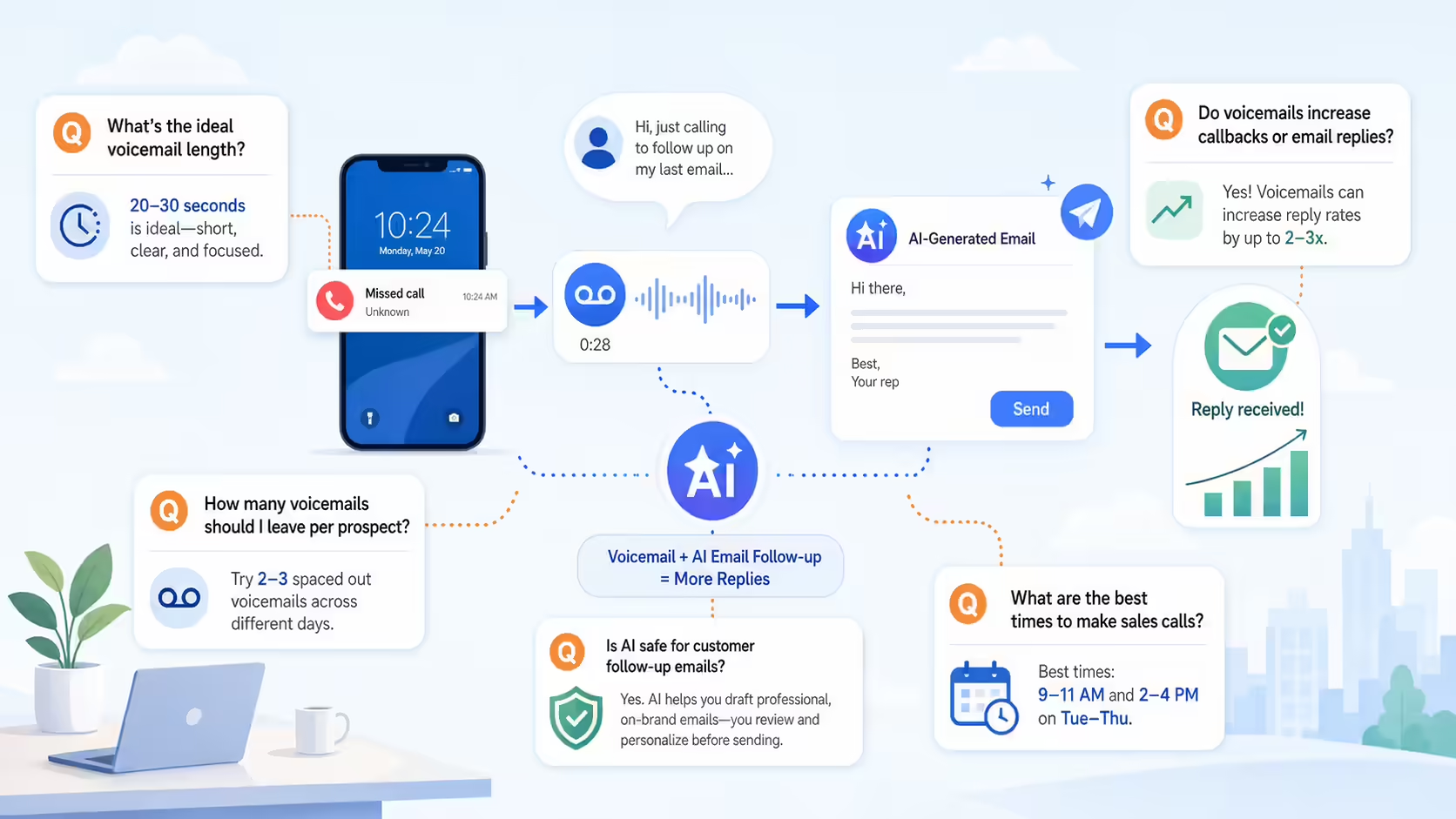
Do voicemails after missed calls increase callbacks?
The average B2B voicemail callback rate is quite low, sitting at roughly 4% to 5%. However, the primary goal of leaving a voicemail in modern sales is not to get a callback. The goal is to trigger an email open. Data shows that leaving a voicemail can increase your subsequent email reply rate from 2.7% to 5.8%.
How many voicemails should you leave for one prospect?
You should not leave a voicemail every time you miss a prospect. Data indicates that there are diminishing returns after the first or second voicemail. It is a best practice to leave only one or two voicemails per contact over the course of an entire 3-week outreach sequence.
Is AI safe for customer follow-up emails?
Yes, AI is safe and highly effective for drafting follow-up emails, provided the system is given accurate context. Most tools use secure Large Language Models that read call transcripts and CRM data to write contextually accurate messages. However, sales representatives should always briefly review the AI-drafted email before sending it to ensure the tone is appropriate.
When is the best time to make sales calls?
Industry data suggests that Wednesday and Thursday are the most effective days to make sales calls, with response rates climbing by up to 49% compared to earlier in the week. The best times of day to connect with prospects tend to be in the morning between 10:00 AM and 11:00 AM, or late in the afternoon.
Key takeaways for missed call emails
The days of manually reciting a 30-second script into a machine are coming to an end. By using automation, sales teams can reclaim hours of lost time and significantly boost their engagement metrics. AI-generated emails for missed calls represent a critical shift in how B2B organizations approach outbound selling.
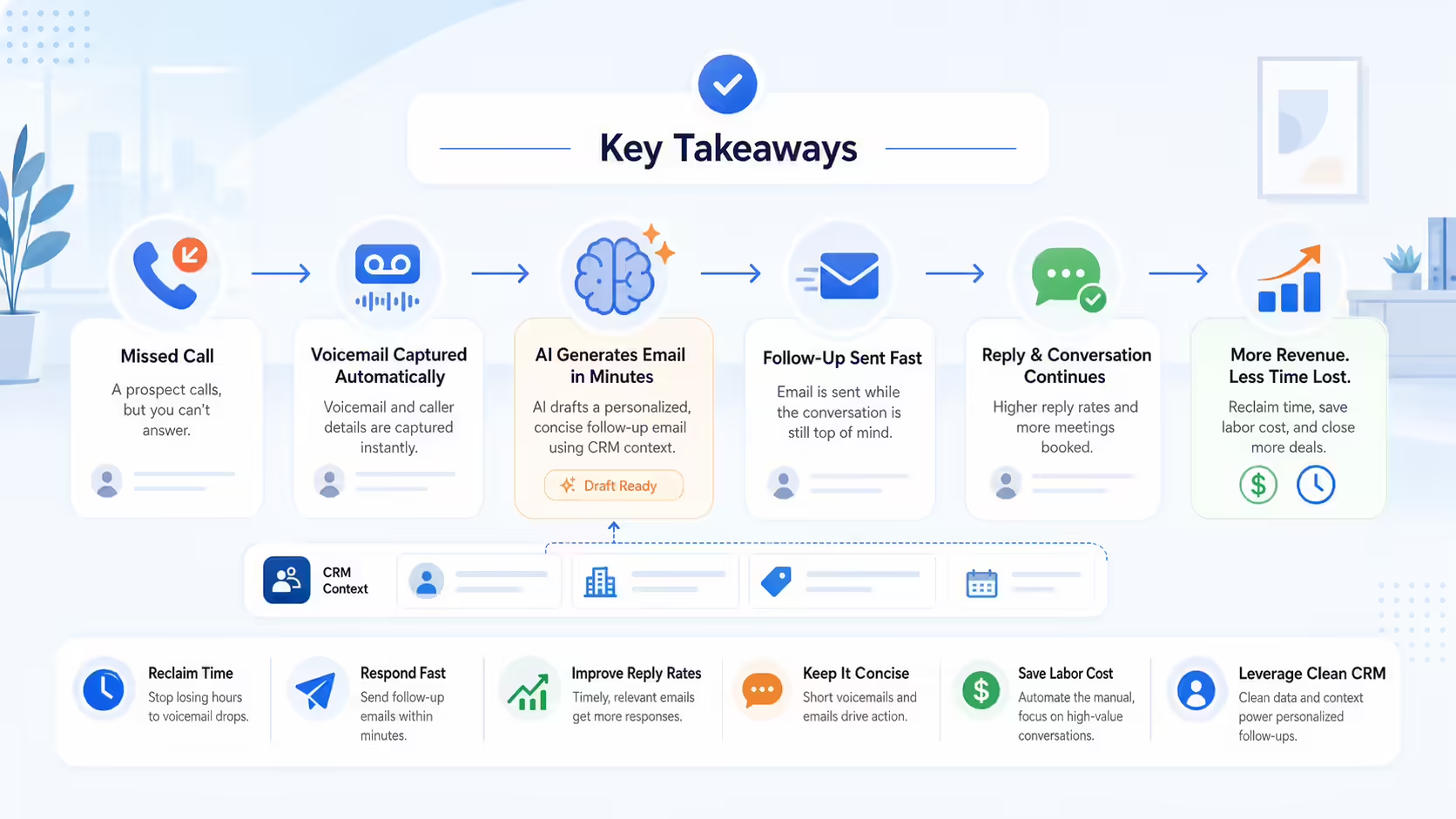
To summarize the key takeaways:
- Voicemails are an assist metric. Do not measure the success of a voicemail by callbacks alone. Measure its success by how much it lifts your email reply rates.
- Speed matters. The highest conversion rates occur when a follow-up email is sent within minutes of a missed call. AI tools eliminate the typing delay and ensure instant follow-up.
- Keep it short. Both your pre-recorded voicemail drops and your AI-generated emails should be concise. Voicemails should stay under 30 seconds, and emails should point directly to the value proposition.
- Automation saves money. Reclaiming 25 hours a month per representative allows teams to focus on revenue-generating activities rather than administrative tasks.
- Context is everything. Use precise prompts and clean CRM data so your AI tools can generate personalized, relevant messages rather than robotic, generic templates.
By integrating automated voicemail drops with AI-drafted email follow-ups, revenue teams can break through the noise, respect their buyers’ time, and build a more efficient, profitable sales process.
Ready to close more deals with Kixie?
See how Kixie's AI-powered tools can transform your sales and support operations.
Start Free Trial