TL;DR: TCPA 2026 compliance centers on consent revocation and opt-out operations for calls and texts, with April 11 2025 FCC consent revocation updates still relevant, a 10 business day opt-out processing benchmark, April 11 2026 as the limited waiver date for the delayed revoke-all or stop-one-stop-all portion, and some commentary reporting a further delayed effective date of January 31 2027 that businesses should verify against official FCC materials and counsel. Teams should support reasonable opt-out methods including SMS words like STOP, QUIT, END, CANCEL, and UNSUBSCRIBE plus other clear revocation language, keep any one-time opt-out confirmation short and non-promotional, and not treat delayed rules as ignorable. Operational priorities are to capture consent source, date, time, phone number, disclosure language, campaign context, and scope across calls, texts, marketing, informational, transactional, account, service, and sales messages, then centralize opt-outs from SMS replies, phone calls, voicemail, web forms, email, chat, CRM notes, and support tickets into suppression or do-not-contact workflows. CRM, dialer, texting platform, marketing automation, and support tools must sync permissions, especially for imported lists, re-engagement campaigns, and sales to customer success handoffs. The article distinguishes final rules from proposals, including possible FCC revisions, possible designated opt-out method changes, congressional TCPA bills, and state mini-TCPA laws, and recommends approved scripts and SMS templates, rep training, audit trails for consent capture and suppression updates, clear classification of marketing versus transactional messages, monitoring FCC updates, and legal review before compliance decisions.
This article is for general educational purposes only and is not legal advice. TCPA requirements change frequently, and businesses should work with qualified counsel to confirm how federal and state rules apply to their specific calling and texting programs.
The phrase TCPA 2026 changes can be confusing because not every 2026 development is a brand-new rule. Some requirements took effect in 2025 and continue to matter in 2026. Some rules were delayed. Others are still proposals, waivers, or legislative ideas that may never become law in their current form.
For sales, marketing, and contact center teams, the practical question is simpler: what should your organization be doing now to manage consent, honor opt-outs, and reduce risk when making calls or sending texts?
Below is a plain-English overview of the key TCPA consent revocation and opt-out issues to watch in 2026, including the delayed “revoke-all” concept, the 10-business-day opt-out processing standard, and workflow steps teams can use to tighten their compliance operations.
TCPA consent and opt-out timeline
Because TCPA requirements are changing, it helps to separate dates by status.

- April 11, 2025: Many FCC consent revocation updates were scheduled to take effect, including requirements around honoring reasonable opt-out requests and processing revocations within a defined timeframe.
- April 11, 2026: A limited waiver delayed part of the FCC’s consent revocation framework, commonly discussed as the “revoke-all” or “stop-one-stop-all” requirement.
- January 31, 2027: Some 2026 legal updates report a further extension of the effective date for the delayed “revoke-all” portion. Businesses should verify the current effective date against the official FCC order and counsel before relying on it operationally.
- 2025 and 2026 proposals: The FCC and lawmakers have considered changes or clarifications to TCPA consent revocation rules. Proposed rules and bills are not the same as final, enforceable requirements.
The most important takeaway: do not treat “delayed” as “ignore.” Even where one specific requirement has been delayed, businesses still need to maintain reliable consent records, process opt-outs promptly, and suppress numbers that should no longer receive covered calls or texts.
2025 TCPA changes still affecting 2026
Several TCPA opt-out concepts that became important in 2025 remain highly relevant for 2026 planning.

Use reasonable opt-out methods
The FCC has emphasized that consumers must be able to revoke consent through reasonable methods. In practice, that means businesses should avoid systems that make opting out unnecessarily difficult, confusing, or channel-specific in a way that frustrates consumer intent.
For text messaging, common opt-out keywords such as STOP, QUIT, END, CANCEL, UNSUBSCRIBE, and similar language are often discussed as examples of reasonable revocation language. However, teams should confirm the exact required keyword handling and scope with legal counsel, especially if they operate across multiple communication channels.
Process opt-outs within 10 business days
One of the most operationally important TCPA updates is the expectation that revocation requests be honored within 10 business days. For sales and marketing teams, this is not just a legal policy issue. It is a systems issue.
If opt-outs arrive through SMS replies, phone calls, web forms, email, CRM notes, or support tickets, those requests need to flow into suppression and do-not-contact workflows quickly enough to prevent follow-up outreach that should not happen.
Limit one-time opt-out confirmations
Businesses may use a one-time confirmation message in certain opt-out scenarios, but teams should be careful not to turn a confirmation into another marketing message. A confirmation should generally be short, neutral, and focused on confirming the consumer’s request.
Because the details can be fact-specific, message templates should be reviewed by counsel before use.
Delayed TCPA revoke-all rule
The most discussed TCPA 2026 change is the delayed portion of the FCC’s consent revocation rule often described as “revoke-all” or “stop-one-stop-all.”
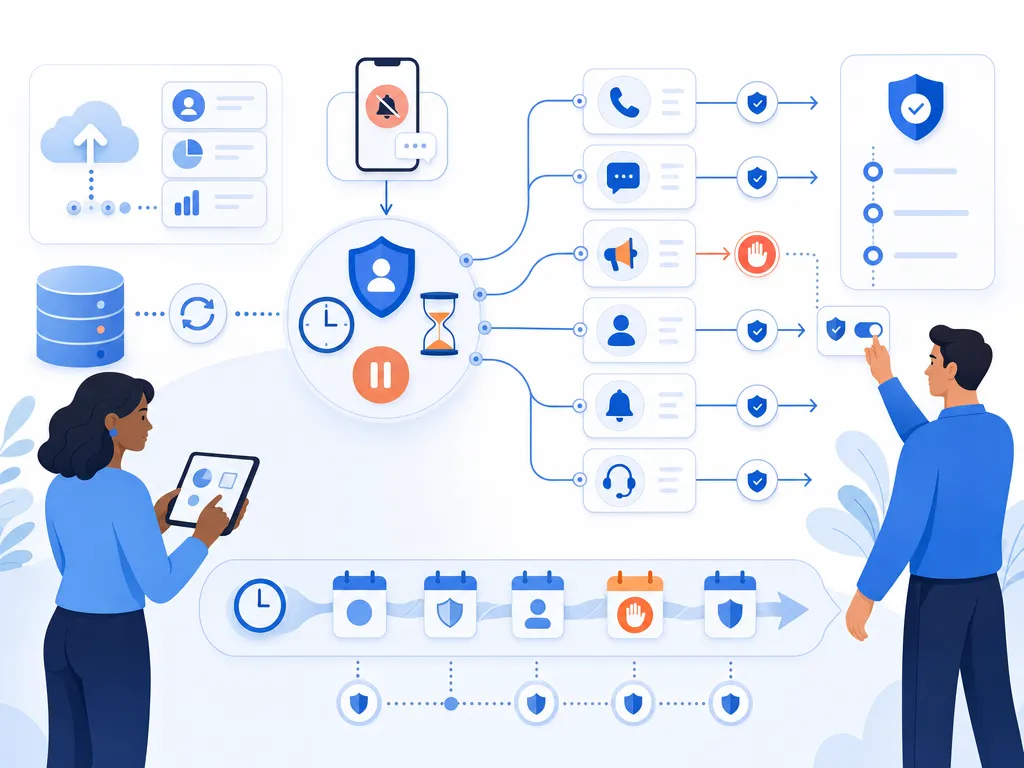
In plain English, this concept raised the question of whether a consumer’s revocation of consent for one type of robocall or robotext from a business should apply more broadly to other covered calls or texts from that same business. This created operational concerns for companies that maintain multiple communication programs, such as marketing, account updates, service notifications, and other categories of outreach.
The FCC issued a limited waiver delaying this specific portion of the rule and later extended the waiver through January 31, 2027. Because this is a narrow and evolving issue, businesses should verify the current status against the FCC’s official orders and with counsel before relying on any date operationally.
Even if the broader revoke-all requirement is delayed, organizations should still be able to answer basic operational questions:
- Where did the consumer’s consent originate?
- Which phone number, campaign, brand, or business unit does the consent cover?
- What exact language did the consumer use to opt out?
- Was the request limited to one type of message, or did it indicate a broader revocation?
- When was the opt-out received, and when was it applied?
- Which systems were updated after the opt-out?
Proposed TCPA changes not yet final
A major source of confusion around TCPA 2026 changes is the difference between final rules and proposals. A proposal, Further Notice of Proposed Rulemaking, or congressional bill can signal where regulation may be headed, but it does not automatically create a new compliance obligation.
Teams should treat these items as watchlist issues rather than settled law:
- Potential FCC revisions to consent revocation rules: The FCC has considered whether parts of the revocation framework should be clarified or modified.
- Potential changes to designated opt-out methods: Regulators may revisit how businesses can define or manage opt-out channels, but any proposed approach should be distinguished from current requirements.
- Congressional TCPA proposals: Bills may be introduced or reintroduced, but proposed legislation is not enforceable unless enacted.
- State-level calling and texting laws: State “mini-TCPA” laws and telemarketing rules may impose additional requirements beyond federal TCPA rules.
For business planning, the best approach is to monitor proposals without prematurely rewriting policies around rules that are not final.
TCPA compliance checklist for calls and texts
TCPA compliance is not only about legal language. It depends on whether your systems, people, and workflows can consistently apply your policies. The checklist below can help sales and contact center leaders spot operational gaps.
Capture consent source and scope
- Record where consent was collected, such as a web form, inbound call, event, purchase flow, or other source.
- Store the date, time, phone number, disclosure language, and campaign context when available.
- Document whether consent applies to calls, texts, marketing outreach, informational messages, or another category.
Centralize opt-out handling
- Create a clear process for opt-outs received by text, phone, voicemail, email, chat, web form, or CRM note.
- Route opt-out requests into a suppression list or do-not-contact workflow as quickly as possible.
- Train reps to recognize opt-out language even when the consumer does not use an exact keyword.
Sync opt-out lists across tools
- Make sure your CRM, dialer, texting platform, marketing automation system, and support tools do not operate from conflicting contact permissions.
- Audit whether opt-outs in one system are reflected in the systems used by other teams.
- Pay special attention to imported lists, re-engagement campaigns, and handoffs between sales and customer success.
Separate consent for marketing and transactional messages
Not every communication has the same purpose. Marketing messages, sales follow-ups, appointment reminders, account alerts, and service notifications may be treated differently depending on the facts and applicable law.
That does not mean teams can ignore opt-outs. It means they should clearly classify message types and work with counsel to determine how revocation should apply to each workflow.
Review TCPA scripts and templates
- Check call scripts for consent and opt-out handling language.
- Review SMS templates to ensure opt-out instructions are clear where required.
- Keep confirmation messages short and non-promotional.
- Remove ambiguous language that could confuse consumers about how to stop future outreach.
Keep a TCPA compliance audit trail
If a question arises later, your organization should be able to show what happened. Maintain records of consent capture, opt-out receipt, suppression updates, campaign activity, and internal review steps.
Common TCPA 2026 questions
Is the TCPA revoke-all rule in effect in 2026?
Parts of the FCC consent revocation framework took effect earlier, but the specific “revoke-all” or “stop-one-stop-all” portion has been subject to a limited waiver and reported extensions. Because the status has changed over time, confirm the current effective date with official FCC sources and counsel.
How fast must opt-outs be honored?
The key operational benchmark discussed in the FCC updates is 10 business days. Businesses should design workflows that identify, route, and apply opt-outs quickly enough to meet applicable requirements.
Do STOP and UNSUBSCRIBE count as opt-outs?
For text messaging, these are commonly recognized opt-out words. However, consumers may revoke consent using other reasonable language as well. Sales and support teams should be trained to escalate any message that clearly indicates the person no longer wants calls or texts.
Do TCPA changes apply to texts?
Yes, TCPA compliance can apply to both calls and text messages, depending on the technology used, consent obtained, message purpose, and other facts. SMS programs should be reviewed alongside voice outreach.
What should sales teams do for TCPA compliance?
Sales teams should focus on the controllable basics: collect and store consent records, use approved scripts and templates, honor opt-outs promptly, keep suppression lists synchronized, and escalate unclear situations to compliance or legal teams.
TCPA compliance bottom line
The most important TCPA 2026 changes are not only about one delayed rule. They are about building reliable consent and opt-out operations across every channel your team uses.
Businesses should keep watching FCC updates, distinguish final rules from proposals, and review their workflows with qualified counsel. A strong compliance process should make it easy to know who consented, what they consented to, when they opted out, and whether every relevant system was updated accordingly.
Reminder: This post is informational only and does not provide legal advice. Consult qualified legal counsel before making compliance decisions.
Sources and review status
This article summarizes TCPA developments to help teams plan consent and opt-out operations. It was written and published by Kixie, which sells outbound calling and texting software, and it is informational only, not legal advice.
Review the primary regulatory sources
- FCC consent-revocation order, including reasonable revocation methods and processing requirements
- FCC waiver extension through January 31, 2027
- FTC guidance on the Telemarketing Sales Rule
Official rules and orders take precedence over any summary, including this one. Confirm how they apply to your calling and texting programs with qualified counsel.
Ready to close more deals with Kixie?
See how Kixie's AI-powered tools can transform your sales and support operations.
Start Free Trial