
Sales automation is no longer just a way to reduce busywork. In 2026 planning, it is a RevOps priority tied to seller productivity, speed-to-lead, CRM hygiene, AI adoption, and buyer expectations for fast digital engagement.
At the same time, sales teams should be careful with automation statistics. Many widely repeated numbers mix sales automation, marketing automation, CRM automation, and AI productivity data. This guide focuses on sales-specific benchmarks where possible, and clearly labels adjacent statistics when they come from broader workplace, AI, CRM, or B2B buying research.
Editorial note: Use these statistics as planning benchmarks, not guaranteed outcomes. Before publishing any high-impact claim in a sales deck or budget proposal, verify the original source, date, audience, and methodology.
Sales Automation Statistics 2026: Key Takeaways
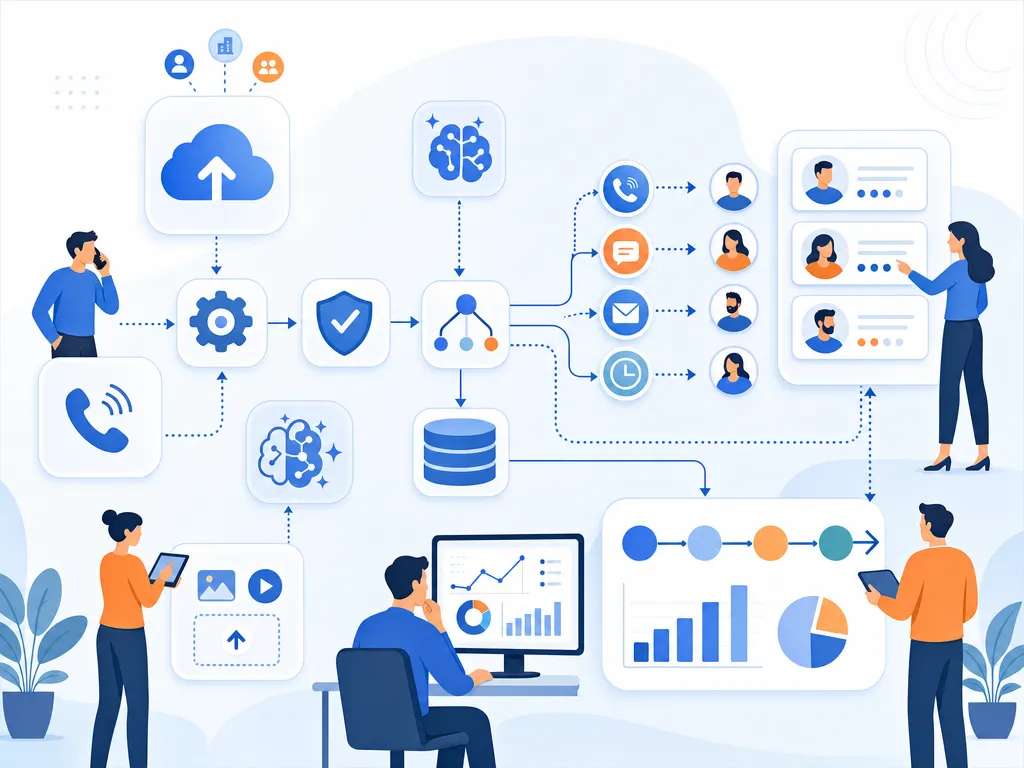
- Sales reps still spend a minority of their week actively selling. Salesforce has reported that sales reps spend only 28% of their week selling, making admin reduction one of the clearest automation opportunities. Source: Salesforce State of Sales
- Digital selling is now the default expectation in many B2B journeys. Gartner forecast that by 2025, 80% of B2B sales interactions between suppliers and buyers would occur in digital channels. Source: Gartner
- Speed-to-lead remains a measurable advantage. A classic Harvard Business Review analysis found that companies contacting online leads within one hour were nearly seven times more likely to qualify the lead than companies that waited longer than an hour, and more than 60 times more likely than companies waiting 24 hours or more. Source: Harvard Business Review
- Lead response gaps are common. The same HBR research found that only 37% of companies responded to online leads within an hour. That makes routing, alerting, dialing, and follow-up automation a practical place to look for improvement.
- AI adoption is accelerating across knowledge work. Microsoft’s 2024 Work Trend Index reported that 75% of knowledge workers were using AI at work. Source: Microsoft Work Trend Index
- Generative AI adoption is rising quickly at the organizational level. McKinsey’s 2024 global survey reported that 65% of respondents said their organizations were regularly using generative AI. Source: McKinsey
- Data quality is a revenue operations issue, not just an IT issue. Gartner has estimated that poor data quality costs organizations an average of $12.9 million per year. Source: Gartner
- Automation works best when it removes friction from high-volume workflows. The best candidates are repetitive tasks such as lead assignment, activity logging, call dispositioning, follow-up reminders, CRM field updates, sequence enrollment, and manager reporting.
What Counts as Sales Automation?
Sales automation is the use of software, workflow rules, AI, and CRM-connected processes to reduce manual effort across the sales cycle. It can support prospecting, lead routing, outbound calling, follow-up, CRM updates, pipeline management, forecasting, reporting, and post-call workflows.
Sales automation is related to marketing automation, but it is not the same thing. Marketing automation usually focuses on audience segmentation, email nurture, campaign triggers, and marketing-qualified lead generation. Sales automation focuses on helping reps and managers move active opportunities forward with less manual work and fewer missed steps.
Sales Automation Market Growth and Adoption
The biggest trend behind sales automation in 2026 is the shift from isolated tools to connected revenue workflows. Sales teams are not just automating a single task; they are trying to connect CRM data, buyer signals, outreach, calls, AI assistance, coaching, and reporting.
- Digital channels are central to B2B selling. Gartner’s forecast that 80% of B2B sales interactions would occur in digital channels by 2025 helps explain why CRM-connected automation has become a strategic priority.
- Buyers are comfortable with remote and self-service buying motions. McKinsey has reported that B2B decision makers increasingly accept remote and digital self-service interactions, including for larger purchases. Source: McKinsey
- Automation adoption is strongest where manual processes are easiest to measure. Examples include inbound lead routing, outbound call queues, meeting reminders, follow-up tasks, and CRM activity capture.
What this means for sales leaders: If your team is still relying on manual lead assignment, spreadsheet follow-up, or rep-entered activity logs, your automation opportunity is likely practical and immediate. Start with workflow bottlenecks that affect response time, data quality, or rep capacity.
Sales Rep Productivity and Time-Savings Statistics
Productivity is one of the most common reasons teams evaluate sales automation. The core question is simple: how much of a rep’s week is spent selling versus updating systems, searching for information, switching tools, or documenting activity?
- 28% of a rep’s week is spent selling, according to Salesforce. That implies the majority of sales capacity is consumed by non-selling work such as admin, internal coordination, CRM updates, research, and preparation.
- 72% of the week is not active selling, based on the same benchmark. This does not mean all non-selling work is waste, but it does show why sales operations teams look for automation in repetitive administrative tasks.
- Knowledge workers spend a large share of time on coordination work. Asana’s Anatomy of Work research has repeatedly highlighted the cost of work about work, including status updates, searching for information, and switching between tools. Source: Asana
- AI is already part of everyday work for many employees. Microsoft reported that 75% of knowledge workers were using AI at work in 2024, a useful signal for sales leaders evaluating AI-assisted workflows.
How to apply this: Track the manual steps required after every call, demo, meeting, or lead handoff. If reps are repeating the same updates dozens of times per week, that workflow belongs on your automation shortlist.
ROI and Revenue Impact of Sales Automation
Sales automation ROI is usually created through several smaller gains rather than one magic metric. Common sources of return include faster lead response, more completed follow-ups, cleaner CRM data, less time spent on admin, higher rep activity capacity, and better manager visibility.
Be cautious with broad ROI claims such as exact return per dollar spent. Many of those figures come from marketing automation, CRM studies, or vendor-specific datasets. They can be useful directional benchmarks, but they should not be presented as guaranteed sales automation outcomes.
- Speed-to-lead has a measurable qualification impact. HBR’s lead response study found that contacting a lead within an hour dramatically improved qualification odds compared with slower follow-up.
- Delayed follow-up creates compounding loss. If reps miss the first hour, forget a second touch, or manually prioritize the wrong lead, automation can help reduce avoidable leakage.
- CRM data quality affects revenue operations. Gartner’s $12.9 million poor-data-cost estimate is not a sales-only number, but it is highly relevant to forecasting, routing, segmentation, and pipeline reporting.
How to apply this: Measure ROI in operational terms first. Track lead response time, number of completed touches, connect rate, booked meetings, rep admin time, CRM completeness, and conversion by lead source. Revenue impact becomes easier to attribute once the workflow metrics are reliable.
AI in Sales Automation Statistics
AI is the fastest-growing layer of the sales automation conversation. In practice, AI is being used to summarize calls, draft follow-up messages, prioritize accounts, support research, suggest next steps, analyze pipeline risk, and reduce manual data entry.
- 65% of organizations regularly used generative AI in 2024, according to McKinsey. That is a broad business statistic, but it shows how quickly AI moved from experimentation to regular use.
- 75% of knowledge workers used AI at work, according to Microsoft. For sales teams, this supports the case for AI policies, enablement, and approved workflows rather than informal one-off usage.
- Microsoft also reported that many employees bring their own AI tools to work. This matters for RevOps because unmanaged AI usage can create inconsistent processes, data risks, and reporting gaps.
- AI adoption does not remove the need for process design. AI-assisted outreach, scoring, or summarization still depends on data quality, CRM structure, and clear sales stages.
What this means for sales leaders: The question is no longer whether reps will use AI. The better question is which sales workflows should be AI-assisted, which data can be used safely, and how managers will evaluate quality.
Lead Generation, Speed-to-Lead, and Follow-Up Automation
Lead follow-up is one of the most sales-specific automation use cases. It is also easy to measure. If a lead fills out a form, starts a chat, replies to a campaign, or requests a demo, the revenue team should know how quickly the right rep responds and how consistently the team follows up.
- Contacting online leads within one hour made companies nearly seven times more likely to qualify the lead than waiting longer than an hour, according to HBR.
- Companies were more than 60 times more likely to qualify a lead when contacting within one hour versus waiting 24 hours or more, according to the same study.
- Only 37% of companies in the HBR study responded within an hour. Even if your market has changed since the study, the operational lesson remains clear: response time is a controllable variable.
Useful lead follow-up automations include instant rep alerts, automatic lead routing, task creation, call queue prioritization, reminder workflows, no-answer follow-up steps, and CRM status updates after each touch.
How to apply this: Build a speed-to-lead dashboard with median response time, percentage of leads contacted within five minutes, percentage contacted within one hour, and number of follow-up attempts completed within the first day.
CRM Automation and RevOps Benchmarks
CRM automation is the foundation for many sales automation programs. If the CRM is incomplete or inconsistent, automation can amplify bad data instead of improving performance.
- Poor data quality is expensive. Gartner’s $12.9 million average annual cost estimate is a reminder that data hygiene affects more than operations; it can influence forecasting, territory planning, routing, and customer experience.
- CRM automation should reduce manual entry without hiding accountability. Automatic activity logging, required fields, and standardized dispositions can improve reporting, but managers still need visibility into rep actions.
- Tool sprawl is a common RevOps risk. If reps must update several systems after every conversation, automation should simplify the workflow rather than add another disconnected step.
How to apply this: Audit your CRM for duplicate fields, stale stages, missing activity data, inconsistent lead sources, and manual handoffs. These are often the root causes of poor automation performance.
Sales Communication Automation: Calls, SMS, Email, and Omnichannel
Sales communication automation is not just about sending more messages. It is about making the next best action easier for reps while preserving relevance and buyer trust.
Common communication workflows include click-to-call, call task queues, voicemail workflows, SMS reminders, email follow-up templates, post-call notes, meeting confirmation messages, and activity syncing to the CRM.
- Call workflows matter because speed and consistency matter. When a hot inbound lead arrives, automation can help route the lead, prompt the rep, and document the outcome.
- Email automation should support personalization, not replace it. Templates and sequences are most useful when reps can adapt them based on buyer context.
- SMS can be useful for timely, consent-aware communication. Teams should review internal policies, customer permissions, and applicable legal requirements before automating text outreach.
- Omnichannel automation should be measured by outcomes. Track booked meetings, connect rates, reply rates, opt-outs, and stage progression rather than just message volume.
Challenges and Risks of Sales Automation
Automation can create leverage, but poorly designed automation can create noise. The most common issues are bad data, disconnected tools, low rep adoption, unclear ownership, and over-automated buyer communication.
- Bad data creates bad automation. If routing rules, scoring models, or follow-up tasks depend on inaccurate fields, the workflow will produce inconsistent outcomes.
- Over-automation can hurt buyer trust. Buyers can recognize irrelevant or repetitive outreach. Automation should make outreach more timely and useful, not more generic.
- Rep adoption determines whether automation pays off. If reps do not understand the workflow or trust the data, they may work around the system.
- Compliance review is essential. Calling, SMS, email, recording, consent, and data retention rules vary by jurisdiction and use case. Have qualified counsel review automated communication workflows before launch.
How to Use These Statistics to Build a Better Sales Automation Strategy
The best way to use sales automation statistics is to turn them into a focused operating plan. Start with the workflows that are high-volume, measurable, and painful for both reps and managers.
- Map the sales workflow. Document what happens from lead creation to first contact, qualification, meeting booked, opportunity created, proposal, close, and handoff.
- Find manual repetition. Look for tasks reps repeat daily: logging calls, updating dispositions, sending the same follow-up, creating tasks, assigning leads, or copying notes between systems.
- Prioritize speed-to-lead. Use the HBR benchmark as a reason to measure response time and reduce routing delays.
- Clean CRM data before scaling automation. Fix field definitions, required stages, duplicate records, and unclear ownership.
- Define success metrics. Track response time, touches completed, connect rate, meetings booked, pipeline created, close rate, sales cycle length, CRM completeness, and rep admin time.
- Roll out in phases. Automate one workflow, validate results, train the team, then expand.
- Review communication quality. Make sure automated outreach is relevant, timely, and aligned with your brand and legal requirements.
Sales Automation Statistics FAQ
What are the most important sales automation statistics for 2026?
The most useful benchmarks are the ones tied to operational decisions: reps spending only 28% of the week selling, Gartner’s digital B2B sales forecast, HBR’s speed-to-lead findings, Microsoft’s AI-at-work adoption data, McKinsey’s generative AI adoption research, and Gartner’s poor-data-quality cost estimate.
What is sales automation?
Sales automation is the use of software, workflow rules, AI, and CRM-connected processes to reduce manual sales work. It can support lead routing, calling, follow-up, task creation, activity logging, CRM updates, forecasting, and reporting.
What sales tasks should be automated first?
Start with repetitive, high-volume tasks that slow reps down or create inconsistent data. Common first candidates include inbound lead routing, speed-to-lead alerts, follow-up reminders, call logging, disposition updates, CRM field updates, and manager reporting.
What ROI can sales teams expect from automation?
ROI depends on the workflow, baseline performance, sales cycle, data quality, and rep adoption. Instead of relying on a universal ROI claim, measure response time, rep admin time, completed activities, meeting conversion, pipeline created, and revenue influenced.
How does AI change sales automation?
AI expands automation beyond rules-based workflows. It can assist with research, summarization, message drafting, next-step recommendations, call insights, pipeline analysis, and prioritization. However, AI still needs clean data, clear governance, and human review.
Are marketing automation statistics the same as sales automation statistics?
No. Marketing automation statistics often focus on campaigns, nurture flows, segmentation, and marketing-qualified leads. Sales automation statistics focus on rep productivity, lead response, CRM updates, outbound activity, sales communication, and pipeline movement.
Ready to close more deals with Kixie?
See how Kixie's AI-powered tools can transform your sales and support operations.
Start Free Trial