TL;DR: Kixie plus Claude is a dialer integration pattern rather than a standalone Claude phone product, with Claude handling orchestration, conversation logic, summaries, follow-up recommendations, CRM notes, and approved tool requests while Kixie executes calls and SMS via no-code automation, API workflows, or an MCP-style server; the core flow is CRM or contact list to Claude rules to approved Kixie call or SMS to call result to CRM update, with server-side tokens, eligibility and consent checks, validation, logging, retry and stop rules, and human escalation. Kixie PowerCall supports high-volume outreach with a Multi-Line PowerDialer that dials up to 4 numbers at once, AI Human Voice Detection as a Multi-Line PowerDialer premium add-on at +$30/month to distinguish live humans from voicemail or IVR, automated voicemail, ConnectionBoost with compliant local numbers for every US area code, progressive number rotation, reputation monitoring, and up to 500% higher connection rates. Integration paths include Zapier and Make for participant onboarding, post-call documentation into monday.com or Salesforce, and no-answer re-engagement texts after 24 hours, plus Kixie API endpoints for Make A Call, Send SMS, Send to Queue, and Business or Team SMS using fields such as businessid, email, target, displayname, eventname, queue ID, Team SMS ID, fromNumber, message, and apikey. Research use cases include Qualitative Research at Scale with planning, interviewing, and analysis phases, Anthropic Interviewer reportedly interviewing 80,000+ participants in late 2025, and clinical recruitment benchmarks of 3x faster enrollment, 60% lower cost, up to 5x higher connection rate with Local Presence, 50+ languages, and 24/7 inbound and outbound availability. Compliance features called out include Kixie BAA support for HIPAA-covered entities, AES-256 encryption in transit and at rest, access controls, audit logs, and recording controls for two-party consent states or sensitive information.
TL;DR: A “Claude dialer” is an integration pattern, not a standalone Claude phone product. Claude can help decide what to say, summarize call outcomes, and trigger approved workflow actions, while Kixie provides the calling and SMS layer. A typical Claude dialer integration connects a CRM or contact list to Claude orchestration, sends approved call or text actions to Kixie, captures the result, and writes the next step back to your system of record. Start with clear business rules, consent checks, logging, and a human handoff path before scaling.Can Claude integrate with a dialer? Yes, but Claude does not function as a phone system by itself. To create a Claude dialer workflow, teams connect Claude to a telephony platform such as Kixie so Claude can support conversation logic, analysis, and next-step recommendations while Kixie handles the actual calling or messaging action.
The core architecture is simple: contact source or CRM → Claude orchestration layer → approved Kixie call or SMS action → call result or activity log → CRM update or follow-up task. Before expanding the workflow, define the actions Claude is allowed to request, test with a limited contact set, log every outcome, and route uncertain or sensitive conversations to a human reviewer.
How Claude Dialer Connects to Kixie
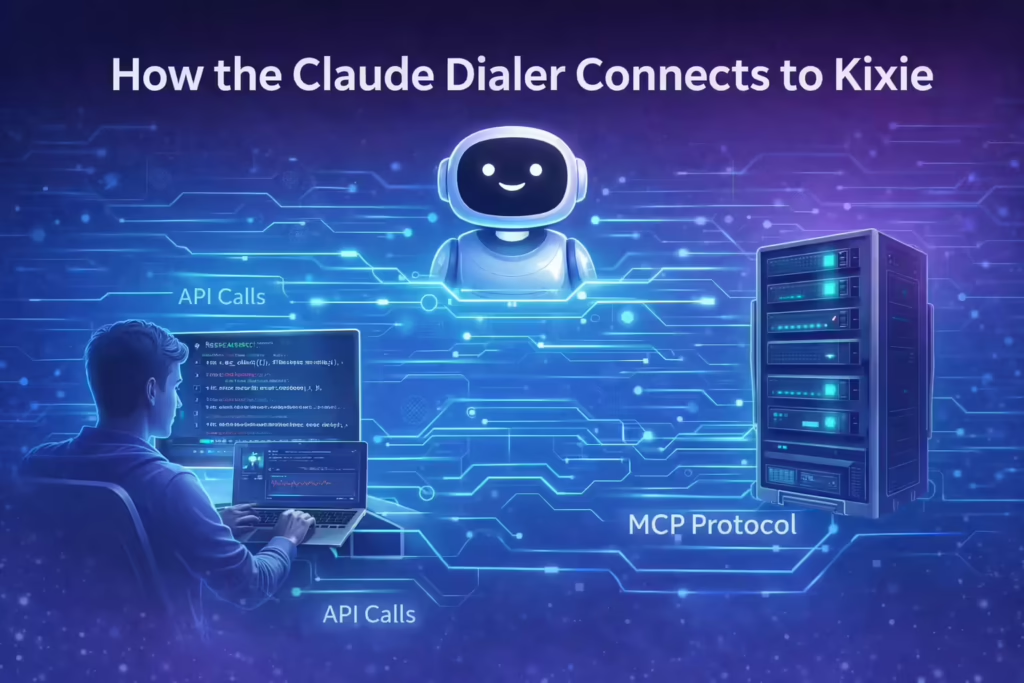
A Claude dialer integration is not a standalone phone system. In a typical Kixie setup, Claude acts as the reasoning and orchestration layer while Kixie handles approved calling and messaging actions through no-code automation or API-based workflows.
The basic architecture is: contact source or CRM → Claude prompt and tool rules → Kixie call or SMS action → call outcome or message result → CRM note, task, or follow-up workflow. This keeps Claude focused on deciding what should happen next while the telephony layer executes the action.
For technical teams, the connection can be modeled with Claude tool use, a custom middleware service, or an MCP-style interface that exposes only the Kixie actions your team has approved. MCP can standardize how tools are described, but it is not required for every Claude and Kixie workflow.
How Claude Uses Tool Calling
Claude’s ability to support a dialer workflow comes from tool calling: your application defines approved actions, Claude selects the appropriate action based on the workflow, and your server executes the request against Kixie. In this model, Claude is the orchestration and reasoning layer, while Kixie remains the calling and messaging layer.
A typical flow looks like this: a CRM or contact source provides the next record, Claude evaluates the prompt and business rules, your application validates the request, and then an approved Kixie action is triggered. After the interaction, your system can pass the result back into Claude for summarization, follow-up recommendations, or CRM note creation.
Programmatic tool calling should not mean unrestricted autonomous calling. Keep authentication tokens on the server side, validate every tool request, check contact eligibility before outreach, log each action, and define clear retry, escalation, and stop conditions. These guardrails help make the Claude dialer integration more predictable and easier to audit as call volume increases.
Using MCP for Kixie Integration
The Model Context Protocol (MCP) can act as a standardized connection layer between Claude and external business tools. In a Claude dialer architecture, a developer can build an MCP server that wraps approved Kixie actions, such as initiating a call or sending a message, so Claude can request those actions through a structured tool interface rather than through ad hoc prompts.
MCP ComponentFunctional Role in a Claude Dialer SetupTechnical MechanismMCP HostThe interface where a user manages the workflow.Could be an AI workspace, internal dashboard, or custom application.MCP ClientThe bridge between Claude and the available tools.Discovers approved tool definitions and passes structured requests.MCP ServerA custom service that connects Claude requests to Kixie actions.Wraps approved API calls, validation rules, logging, and permissions.Transport LayerThe communication channel for the system.Common MCP implementations use JSON-RPC over supported transports.ResourcesContext that helps Claude understand the workflow.May include approved contact fields, CRM fields, campaign rules, and call outcomes.The importance of MCP lies in its ability to provide persistent context. Instead of re-explaining the parameters of a research study in every session, the researcher can teach Claude the workflow once. The protocol allows Claude to remember its connection to Kixie, its specific dialing sequences, and its participant histories across multiple interactions.
Why Kixie Powers Claude Dialer Calls
For a Claude + Kixie dialer setup to be effective in a research or sales context, you need a telephony engine that can handle high-volume outreach while maintaining professional standards and high connection rates. Kixie PowerCall provides this infrastructure through a suite of AI-driven features designed to maximize efficiency and response quality.
Kixie Multi-Line Dialing and Voice Detection
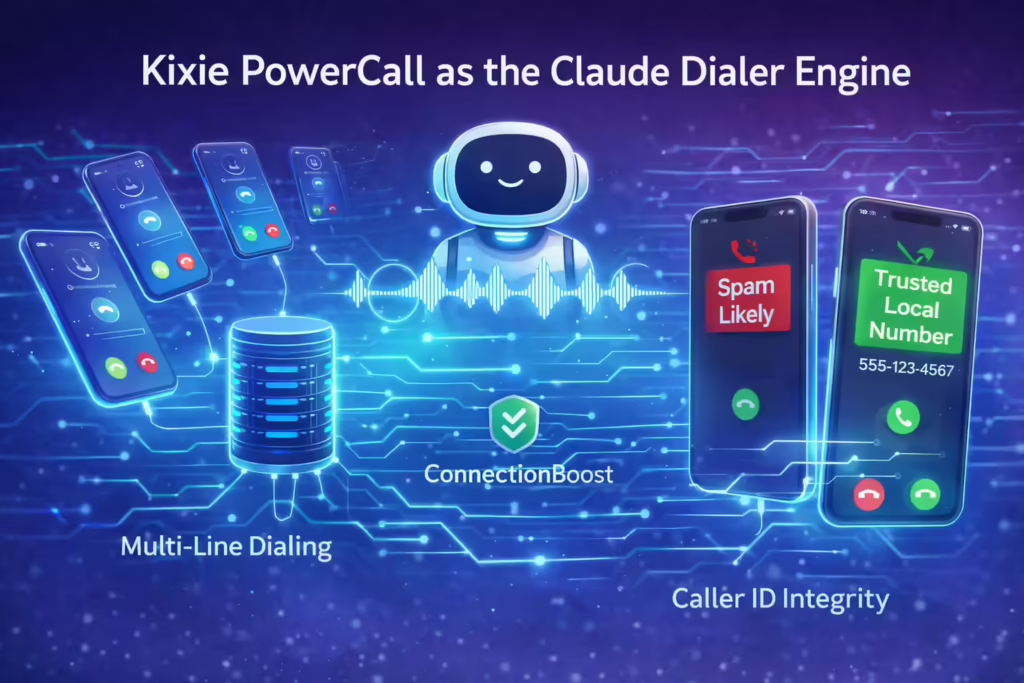
The core efficiency of this setup comes from Kixie’s multi-line power dialer, which can dial up to 4 numbers simultaneously. For large-scale qualitative research, this is a transformative capability. Reaching a sufficient sample size for in-depth interviews often requires thousands of dial attempts. Kixie’s system automates this process, ensuring that Claude is only connected when a live human picks up the phone.
This is made possible by Kixie’s AI Human Voice Detection, a premium add-on available on the Multi-Line PowerDialer plan (+$30/month). Advanced algorithms analyze the audio patterns of a call to distinguish between a live person’s greeting and an answering machine or IVR. When a recording is detected, the dialer can automatically leave a pre-recorded voicemail (or a personalized message generated by Claude) and move to the next number in the queue. This ensures that the researcher or the AI agent spends 100% of their time engaged in meaningful conversation rather than listening to ringtones or voicemail prompts.
Kixie ConnectionBoost and Trusted Caller ID
One of the most significant barriers to successful outreach is the prevalence of “Spam Risk” or “Scam Likely” labels on caller IDs. Kixie addresses this through its ConnectionBoost feature, which provides real, legally compliant local phone numbers for every area code in the US, with progressive number rotation. By displaying a local area code to the recipient, Kixie has been shown to increase connection rates by as much as 500%.
Furthermore, Kixie’s reputation management tools actively monitor the health of these numbers. If a number is flagged by a carrier, it is rotated out of the pool to prevent it from negatively impacting the campaign. This is critical for academic and clinical research, where the legitimacy of the caller is paramount to securing participant trust and compliance with institutional review board (IRB) standards.
Claude Dialer Workflows for Research Teams
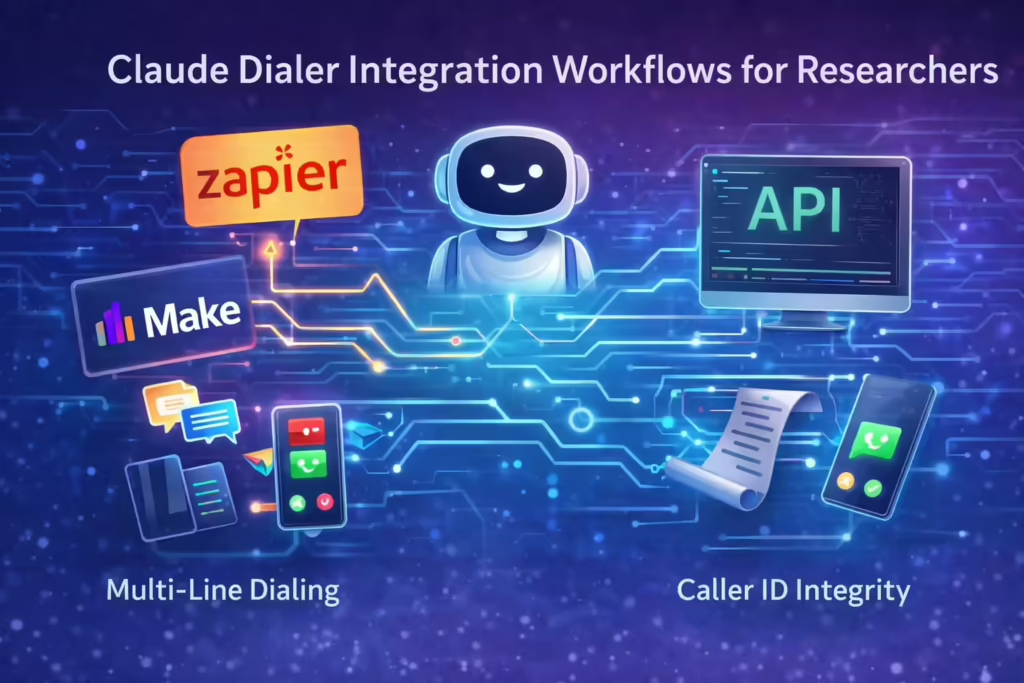
You can connect Claude to Kixie through several pathways, ranging from no-code automation to custom API development. Each pathway offers different levels of control and complexity, allowing organizations to configure the solution for their specific technical capabilities and research needs.
No-Code Claude Dialer Setup With Zapier and Make
For many researchers, no-code platforms like Zapier and Make.com are the easiest way to connect Claude and Kixie into a working dialer. These platforms let you create “Zaps” or “Scenarios” that trigger Kixie actions based on events in other applications.
Common automated workflows include:
- Participant Onboarding: When a new participant completes a web form, Zapier can trigger a Kixie call and send a personalized SMS with a link to schedule an interview.
- Post-Call Documentation: After a Claude-led interview ends, Make.com can automatically push the transcription, call duration, and disposition back into a CRM like monday.com or Salesforce.
- Follow-Up Cadences: If a call results in a “No Answer” disposition, the system can automatically add the contact to a re-engagement cadence, sending a text 24 hours later to reschedule.
Build Custom Claude Dialer Agents With Kixie API
Researchers requiring deeper control can utilize Kixie’s public API endpoints to build a custom dialer interface for Claude. This allows the model to interact directly with the telephony system through programmatic tool use.
| Kixie API Endpoint | Research Application | Critical Data Payload |
|---|---|---|
| Make A Call | Initiates the bridge between Claude and the participant. | businessid, email, target, displayname, eventname (“call”), apikey |
| Send SMS | Automates text follow-ups and appointment reminders. | businessid, email, target, message, eventname (“sms”), apikey |
| Send to Queue | Organizes complex recruitment workflows into prioritized lists. | businessid, email, target, displayname, eventname (“queue”), id (Queue ID), apikey |
| Business/Team SMS | Facilitates multi-agent communication for research teams. | businessid, target, id (Team SMS ID), fromNumber, message, eventname (“bizsms”), apikey |
By using Claude’s allowed_callers field in its tool definition, developers can ensure that the model correctly formats the JSON requests required by Kixie’s endpoints. This “strict” tool use guarantees that the API calls are valid, reducing errors in the communication flow and ensuring that the research data is captured accurately.
Scale Qualitative Research With Claude Dialer
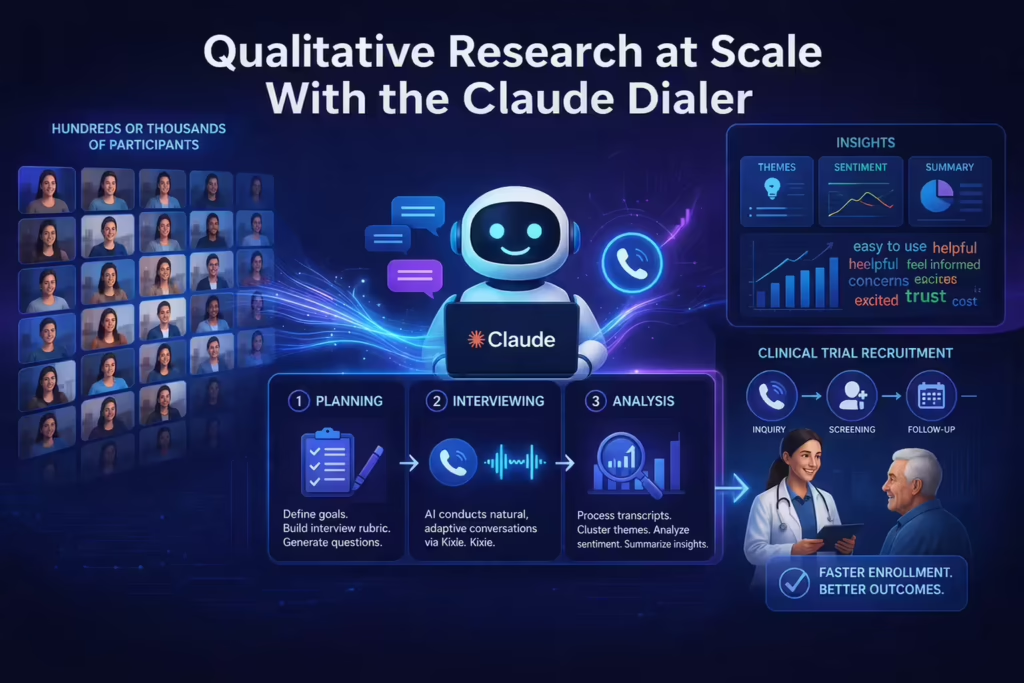
The most compelling reason to build a Claude + Kixie dialer is “Qualitative Research at Scale” (Qual at Scale). This methodology allows researchers to conduct in-depth, adaptive interviews with hundreds or thousands of participants, something that was previously cost-prohibitive and time-consuming.
How Claude Runs Qualitative Interviews at Scale
Anthropic pioneered this approach with the launch of the “Anthropic Interviewer” in late 2025. This tool used a version of Claude to conduct conversational interviews with over 80,000 participants to understand their perspectives on AI. Unlike traditional surveys that rely on rigid, closed-ended questions, a Claude-led interview is dynamic. The AI can probe for deeper meaning, ask follow-up questions based on specific responses, and explore emerging themes in real-time.
The workflow for Qual at Scale typically follows three distinct phases:
- Planning: Researchers define their goals and work with Claude to develop an interview rubric. Claude generates questions that are then refined by human experts to ensure they are clear, unbiased, and comprehensive.
- Interviewing: Claude initiates calls through Kixie. The AI conducts the interview in a natural, conversational format, adapting its tone and direction based on the participant’s input.
- Analysis: After the interviews are completed, Claude assists in processing the transcripts. It clusters related themes, identifies sentiment patterns, and provides quantitative summaries of qualitative data.
Claude Dialer for Clinical Trial Recruitment
In clinical research, a Claude + Kixie dialer setup is particularly effective for patient recruitment and screening. Clinical trials often suffer from enrollment delays, with significant labor spent on manual record review and phone screening. AI phone agents can automate these processes, responding instantly to inbound inquiries and following up with leads the second they appear.
| Clinical Trial Metric | Traditional Human Method | AI Voice Agent (Claude + Kixie) |
|---|---|---|
| Enrollment Speed | 1x Baseline | 3x Faster |
| Recruitment Cost | 100% | 40% (60% Savings) |
| Connection Rate | Industry standard | Up to 5x higher with Local Presence |
| Language Support | Limited by staff | 50+ Languages supported |
| Availability | Business hours only | 24/7 Inbound and outbound |
Voice AI agents like “Anna” have demonstrated that they can match or even exceed human recruiters in conducting initial screenings. In job recruitment studies, AI agents led to 12% more job offers and 16% higher retention rates after 30 days. This success is attributed to the AI’s ability to remain consistent, non-judgmental, and available to the candidate at their convenience.
Claude Dialer Compliance and Security
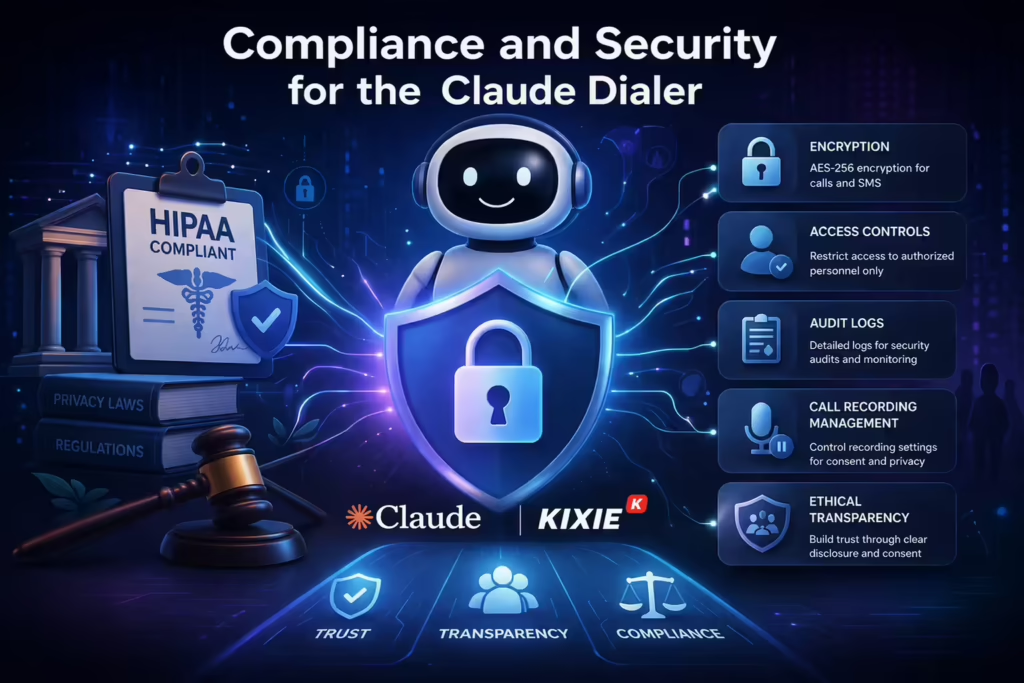
When deploying a Claude + Kixie dialer for clinical or academic research, organizations must work through a complex set of regulatory requirements. Both Kixie and Anthropic provide tools and safeguards to ensure that these communications remain secure and compliant with major privacy laws.
HIPAA Compliance for Kixie Dialer Workflows
For organizations subject to the Health Insurance Portability and Accountability Act (HIPAA), Kixie is an industry leader in providing compliant communication solutions. Kixie is willing to sign a Business Associate Agreement (BAA) with covered entities, which is a mandatory requirement for any third-party service handling Protected Health Information (PHI).
Key security features include:
- Encryption: All voice calls and SMS data are encrypted in transit and at rest using AES-256 protocols.
- Access Controls: Administrators can restrict access to call recordings and transcripts to authorized personnel only.
- Audit Logs: Detailed logs are maintained for all user activity, facilitating security audits and monitoring.
- Call Recording Management: Kixie allows organizations to disable recordings for calls to “two-party consent” states or to pause recordings when sensitive information is being shared.
Transparent Claude Dialer Research Practices
A critical aspect of using AI for research is the maintenance of participant trust. Best practices dictate that the AI agent must disclose its identity at the beginning of the call. Research indicates that while some participants may initially experience “AI aversion,” a staggering 78% of applicants in certain studies opted to interview with an AI agent over a human recruiter when given the choice.
Transparency also extends to data handling. Researchers must ensure that participants provide informed consent for their data to be processed by AI. This includes clearly explaining the purpose of the research, the duration of data storage, and the specific ways the AI will interact with their information. Organizations should also be aware of the risk of de-anonymization. A study by Northeastern University demonstrated that “anonymized” AI interview transcripts could be re-associated with specific individuals with a 25% success rate using other LLMs. This underscores the importance of rigorous de-identification protocols that go beyond simple redacting of names and addresses.
How Claude Dialer Fits Search Intent
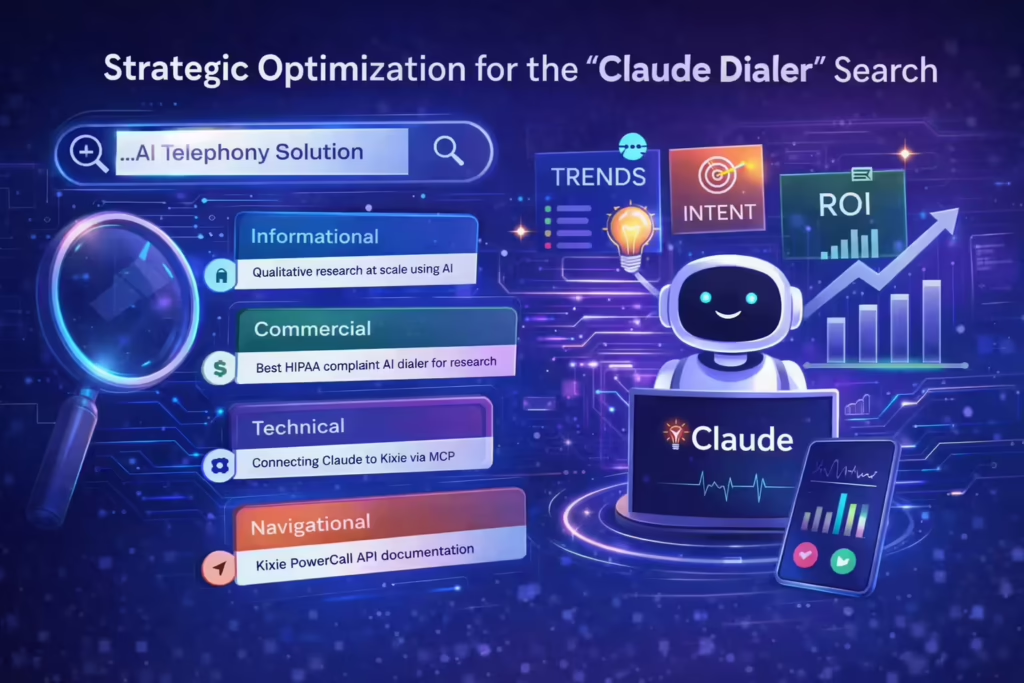
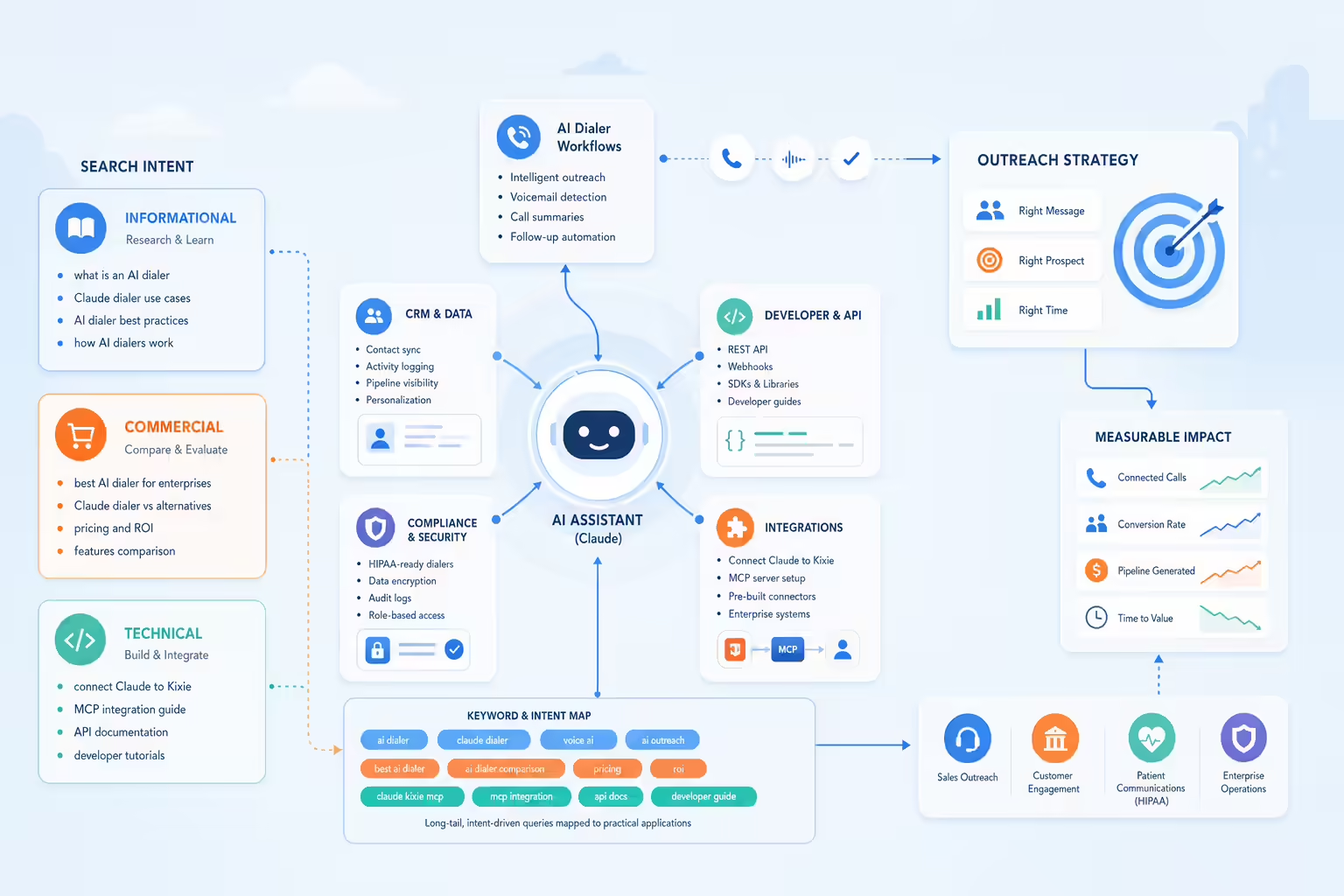
For organizations looking to establish authority in the emerging “Claude dialer” space, it is necessary to align content with the specific intent of researchers and developers. Modern keyword research for 2026 shows a move toward long-tail, intent-driven queries that reflect the complexity of AI integration.
Claude Dialer Keywords Buyers Use
Research suggests that when users search for AI telephony solutions, they are looking for specific functional outcomes rather than just broad tool categories.
| Intent Category | Target Search Term (2026 Trends) | Strategic Application |
|---|---|---|
| Informational | “Qualitative research at scale using AI” | Content focusing on the methodology shift from surveys to interviews. |
| Commercial | “Best HIPAA compliant AI dialer for research” | Comparisons of security features and BAA availability. |
| Technical | “Connecting Claude to Kixie via MCP” | Step-by-step guides for developers using the Model Context Protocol. |
| Transactional | “AI phone agents for clinical trial recruitment” | Case studies and ROI data for healthcare providers. |
| Navigational | “Kixie PowerCall API documentation” | Direct links to integration resources and webhook setups. |
By using Claude to analyze these search patterns, marketers can identify content gaps (such as a lack of detailed FAQ sections for “People Also Ask” (PAA) boxes) and create highly optimized content that addresses the specific questions of their target audience.
Claude Dialer ROI and AI Communication Trends
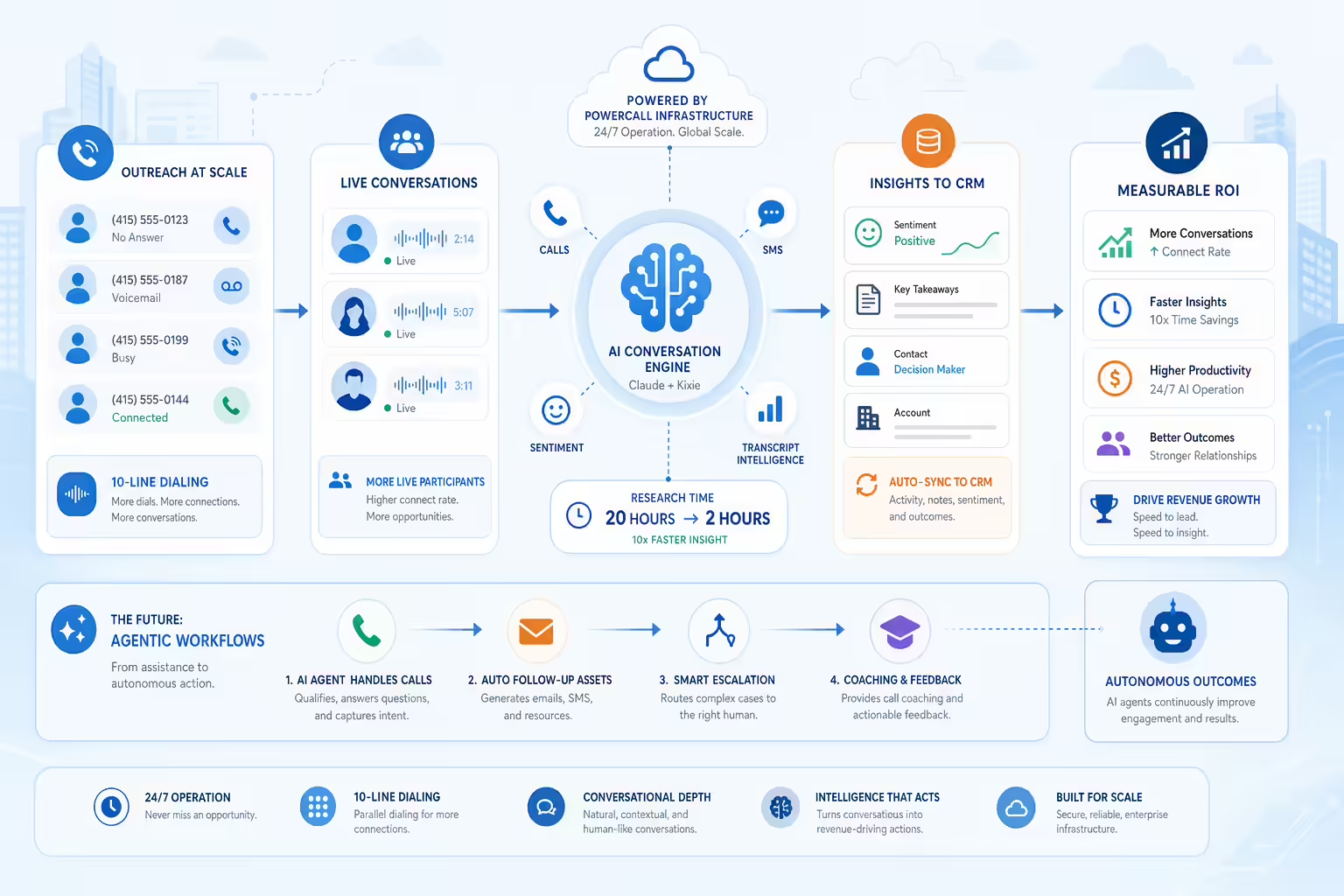
Building a Claude + Kixie dialer is not just a technical exercise. It is a fundamental shift in organizational efficiency. The “Speed to Lead” and “Speed to Insight” this integration provides offer measurable returns on investment that impact both the top and bottom lines.
Efficiency Gains From Claude Dialer Integration
The primary driver of ROI in the Claude-Kixie integration is the dramatic reduction in manual research and outreach time. AI-powered platforms can reduce research time from 20 hours a week to just 2 hours, allowing staff to focus on high-value tasks like strategy and deep analysis.
In the context of outbound sales and participant recruitment, the combination of multi-line dialing (up to 4 lines) and AI-led conversation creates a massive multiplier effect. If a traditional recruiter can make 50 dials a day with a 10% connection rate, they may speak to 5 people. A Claude + Kixie setup, operating 24/7 on PowerCall’s infrastructure, could theoretically make thousands of dials, connecting with hundreds of live participants every day, all while maintaining the same level of conversational depth and data accuracy as a human agent.
What Is Next for Claude Dialer
As we look toward 2026 and beyond, Claude + Kixie dialer setups will move toward even greater autonomy. We are already seeing the emergence of “Agentic” workflows where the AI doesn’t just follow a script but manages the entire lifecycle of a participant or lead. This includes autonomous decision-making regarding when to call, what follow-up assets to send, and when to escalate a conversation to a human specialist.
The integration of sentiment analysis and real-time coaching will also continue to mature. Kixie’s Conversation Intelligence already tracks keywords and sentiment, providing AI-generated summaries that are synced directly to the CRM. In the future, this data will be used to dynamically adjust the AI’s persona and interviewing style mid-call, ensuring that every participant receives an experience that feels personalized, empathetic, and professional.
Start Using Claude Dialer With Kixie
For organizations ready to build a Claude + Kixie dialer, the first step is to activate the necessary Kixie infrastructure. This requires Kixie’s Professional plan or higher to access the API and automation features. Once the infrastructure is in place, researchers should focus on developing a robust set of Claude prompts and tool definitions that reflect their specific domain expertise.
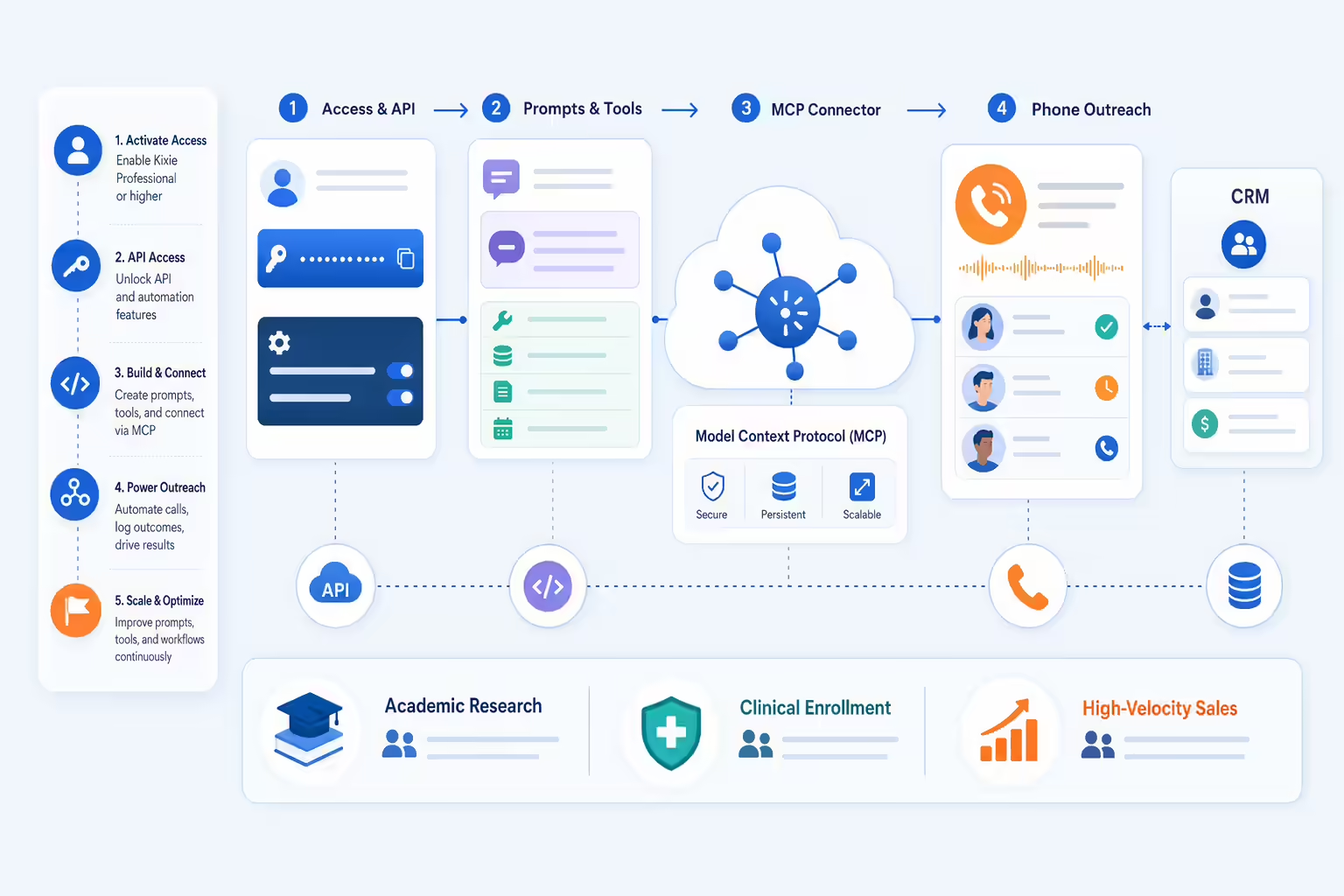
By using the Model Context Protocol, organizations can ensure that their Claude + Kixie dialer setup remains a scalable and persistent asset. The ability to bridge the gap between an LLM and a telephone line is a real opportunity to understand human perspectives at industrial scale. Whether used for academic research, clinical trial enrollment, or high-velocity sales, connecting Claude to Kixie gives you the speed, intelligence, and reliability to compete at the highest level of modern digital communication.
Ready to close more deals with Kixie?
See how Kixie's AI-powered tools can transform your sales and support operations.
Start Free Trial