TL;DR: Data Summary for HubSpot Sales Hub Pro vs. Kixie Integration
This article argues that upgrading to HubSpot Sales Hub Professional is a costly “trap” for sales teams needing high-volume outreach. The HubSpot Starter plan limits users to 500 calling minutes and lacks “Workflows” for automation or native SMS. The Sales Hub Pro upgrade, with a first-year Total Cost of Ownership (TCO) of approximately $7,500 for five users (including a mandatory $1,500 onboarding fee), fails to provide a true multi-line power dialer, offering only a single-line “call queue”. Sales Hub Pro also lacks one-click voicemail drop, AI-powered local presence, and gates live call coaching (whisper/barge) behind the “Enterprise Only” tier. The recommended alternative is the “Smarter Stack”: combining the HubSpot Starter (or Free) plan with Kixie. Kixie integrates with all HubSpot tiers, has $0 mandatory onboarding fees, and provides the missing features: a true multi-line power dialer (up to 4 lines), AI-powered local presence (ConnectionBoost™), one-click voicemail drop, and live call coaching. Kixie also “back-ports” automation, adding “Auto-SMS” and “Auto-Call” actions to HubSpot Starter workflows, enabling triggers from HubSpot form fills or Kixie call outcomes. This alternative stack also includes a Team SMS inbox and bi-directional sync. A case study on Canopy showed this integration reduced average “time to first call” from 35 to 9 minutes and increased conversion rates by 3%.
How HubSpot Limits Power Dialing and SMS at the Starter Tier
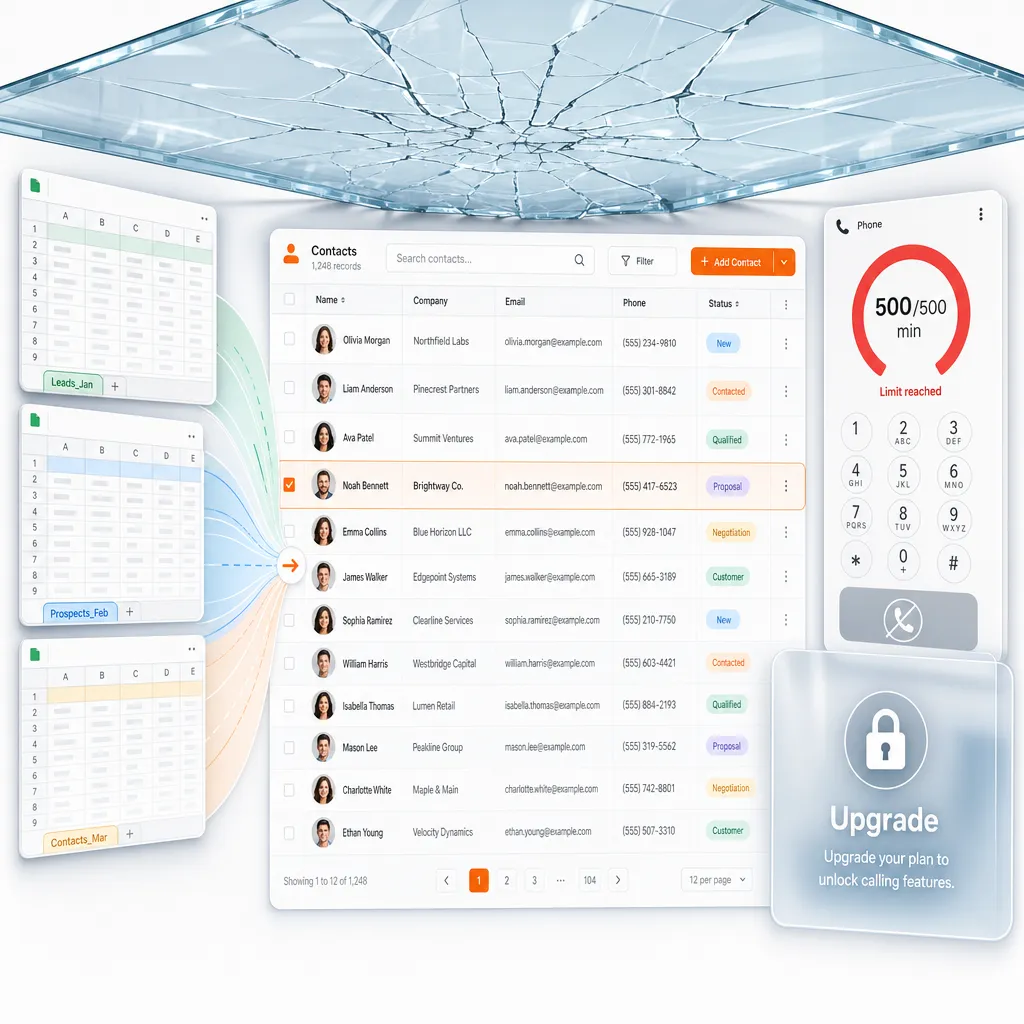
For high-growth sales teams, HubSpot’s platform presents a well-documented paradox.
The process often begins on the Free or Starter plans, which are powerful entry points for organizing a sales process and moving away from spreadsheets. HubSpot’s “freemium” model is notably generous in data storage, allowing users to save up to 1,000,000 contacts without cost. This creates a powerful, centralized Smart CRM, which becomes the system of record for all customer data.
The problem, as many sales managers and operations leaders find, is not one of storage but of action.
A “glass ceiling” is quickly encountered when teams attempt to scale high-volume outreach.
This bottleneck is a deliberate part of the platform’s design, creating what many users describe as a “paywall friction” or “trap”.
By encouraging businesses to build their entire data foundation within the CRM, HubSpot creates significant inertia.
Migrating tens of thousands of contacts, deals, and company records to a new platform becomes a prohibitively complex and expensive task.
This “data trap” leaves teams feeling they have only one viable path forward: a costly upgrade.
The functional limitations of the Starter plan are the primary drivers of this friction:
- Severely Limited Calling: HubSpot Starter plans are capped at 500 calling minutes per user, per month, or approximately 8 hours. The Free plan is even more restrictive, offering only 15 minutes per month. This is functionally insufficient for any sales representative performing outbound calls.
- No Real Automation: The Starter plan offers only “simple” automation, such as the ability to trigger a task or email notification when a deal stage changes. The true “Workflows” engine, which is the core of all meaningful sales automation for lead scoring, automated nurture sequences, and task creation, is locked behind the Professional paywall.
- No Native SMS Automation: Short Message Service (SMS) is a critical, high-engagement channel. However, the ability to trigger SMS messages from a workflow, a key function for modern sales teams, is only available on “Pro or Enterprise” plans.
For the sales manager researching a solution, the problem is clear: the team has a CRM full of leads but no efficient, scalable, or automated way to contact them.
The path HubSpot presents is the upgrade to Sales Hub Professional.
Why Sales Hub Pro Falls Short on HubSpot Power Dialing and SMS
The logical next step for a team hitting the HubSpot Starter plan’s limitations is to evaluate the Sales Hub Professional upgrade.

However, a granular analysis of this path reveals two critical problems: the upgrade is not only prohibitively expensive but is also functionally insufficient for a high-velocity outbound sales team.
Total Cost of Ownership for HubSpot Sales Hub Pro
The first barrier is the sticker shock. The upgrade from Sales Hub Starter (at approximately $15 per seat, per month) to Sales Hub Professional (at $90-$100 per seat, per month) represents a 600% increase in per-user licensing costs.
The most significant financial barrier, however, is the mandatory, one-time $1,500 onboarding fee that HubSpot requires for all new Professional plan activations. This non-negotiable fee, combined with the fact that preferred pricing is often tied to a yearly contract, dramatically inflates the first-year cost.
For a small sales team of five users, the first-year Total Cost of Ownership (TCO) for Sales Hub Professional is approximately $7,500.
This is calculated as:
($100/seat x 5 users x 12 months) + $1,500 onboarding fee = $7,500.
The Core Functionality Gap (Even After Upgrading)
The critical issue that researchers must understand is that even after paying $7,500 for the Sales Hub Professional upgrade, the platform still fails to provide the essential tools that high-volume outbound sales teams need.
The “Pro” upgrade is a “bait-and-switch” for outbound teams; it enables powerful inbound marketing automation (with over 300 workflows) but its outbound sales engagement features remain weak.
1. “Power Dialer” Deficiency
The user is searching for a power dialer. HubSpot Professional does not offer one.
The research is explicit: Sales Hub Pro provides a “single-line ‘call queue’ only”. This is a progressive dialer that dials one contact at a time.
It is not a multi-line power dialer. Reps are still only dialing one number at a time, creating a massive, unresolved efficiency bottleneck.
2. Missing Efficiency Tools
Beyond the lack of multi-line dialing, Sales Hub Pro is missing other industry-standard efficiency tools:
- No One-Click Voicemail Drop: Reps will “waste 30-60 seconds on every call leaving the same, repetitive voicemail message”. True sales dialers offer this; HubSpot Pro does not.
- No AI-Powered Local Presence: The platform has no advanced connection-boosting technology. This means reps are dialing from a single, static number, which leads to low answer rates as prospects screen calls from unfamiliar or “Spam Risk” flagged area codes.
3. Limited and Disconnected SMS
Even with Pro, HubSpot’s native calling and texting are “disconnected”. This means a rep cannot, for example, log a “No Answer” disposition in the dialer and have it automatically trigger a follow-up SMS.
Furthermore, the platform lacks sales-centric SMS features like a collaborative Team SMS inbox for shared sales pods.
4. Gated Management Features
Perhaps most frustrating for sales managers, the $7,500 Pro upgrade still does not provide essential coaching tools.
Live Call Coaching, which is the ability to “whisper” advice to a rep or “barge” into a call, is reserved for the even more expensive “Enterprise Only” tier.
This analysis leads to a stark conclusion: a team that pays the $7,500 premium for Sales Hub Pro will still lack a multi-line dialer, voicemail drop, local presence, and live call coaching.
They will have paid for an expensive upgrade only to find they still need to purchase a third-party dialing solution, forcing them to pay twice for one “Pro” stack.
Adding Power Dialing and SMS to HubSpot Without Sales Hub Pro
There is a more intelligent, cost-effective, and functionally superior alternative to upgrading to Sales Hub Professional: strategic disaggregation. This “Smarter Stack” involves unbundling the solution:
- Keep the low-cost, effective HubSpot Starter (or Free) plan for its best-in-breed CRM.
- Add Kixie, a best-in-breed sales engagement platform, for its powerful dialing and automation.
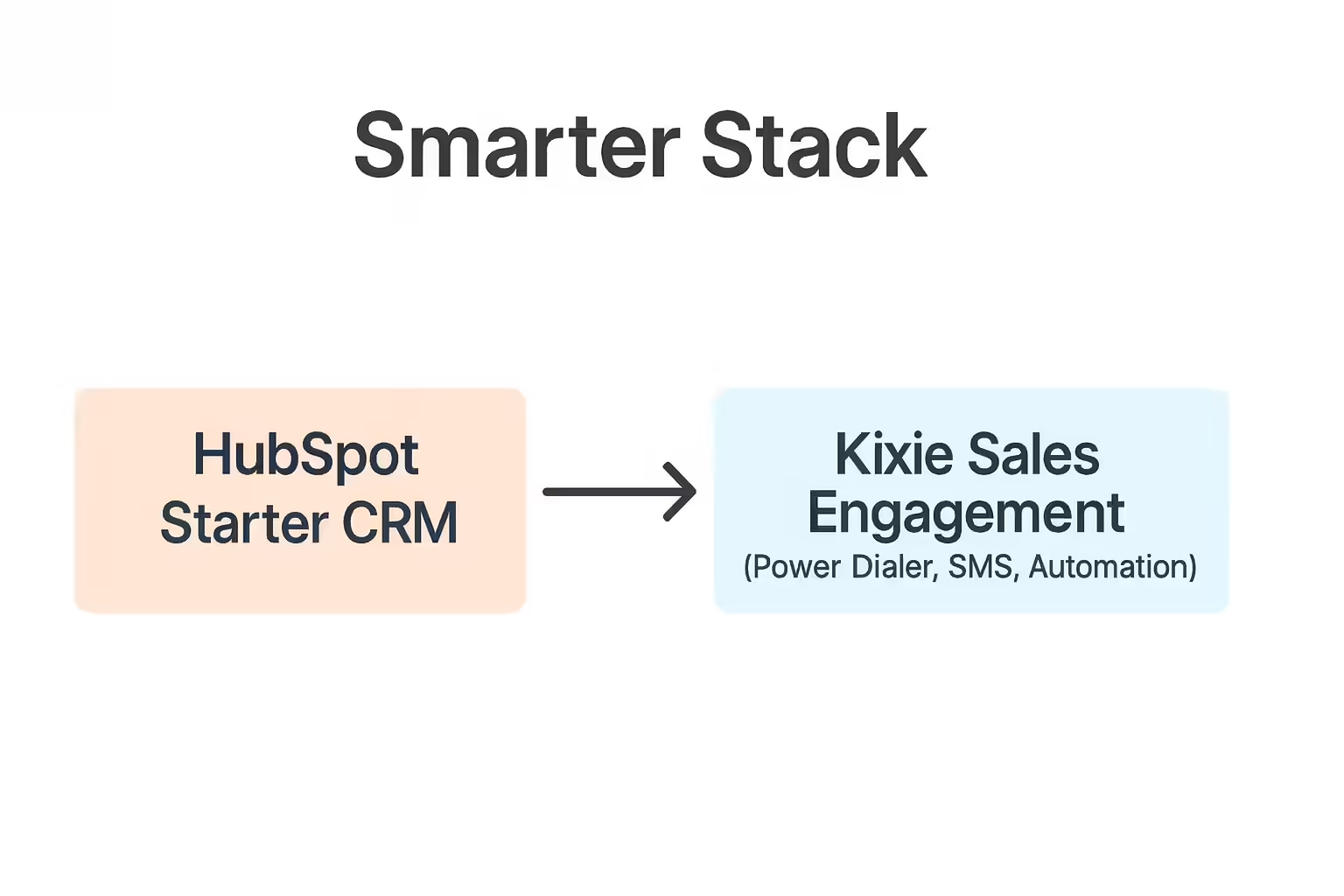
Kixie is a sales engagement platform built to “improve how your CRM works for sales”. It features a deep, bi-directional HubSpot integration that works perfectly with all HubSpot tiers, including the Free and Starter plans.
This approach immediately solves the primary financial barrier of the Pro upgrade:
- $0 Mandatory Onboarding Fees. Kixie’s integration can be set up in minutes, representing an immediate $1,500 savings compared to the HubSpot Pro upgrade.
- No Annual Contracts: Kixie offers flexible month-to-month plans, avoiding the financial lock-in of the HubSpot Pro yearly commitment.
The “Smarter Stack” is not a “cheaper” compromise. As the data shows, it is a “functionally superior tool” that provides critical, revenue-driving features that “HubSpot Pro doesn’t even offer”.
Kixie Multi-Line Power Dialing for HubSpot
Kixie’s dialing solution is designed to solve the three core challenges of outbound calling: low rep activity, low prospect connection, and low conversion rates.
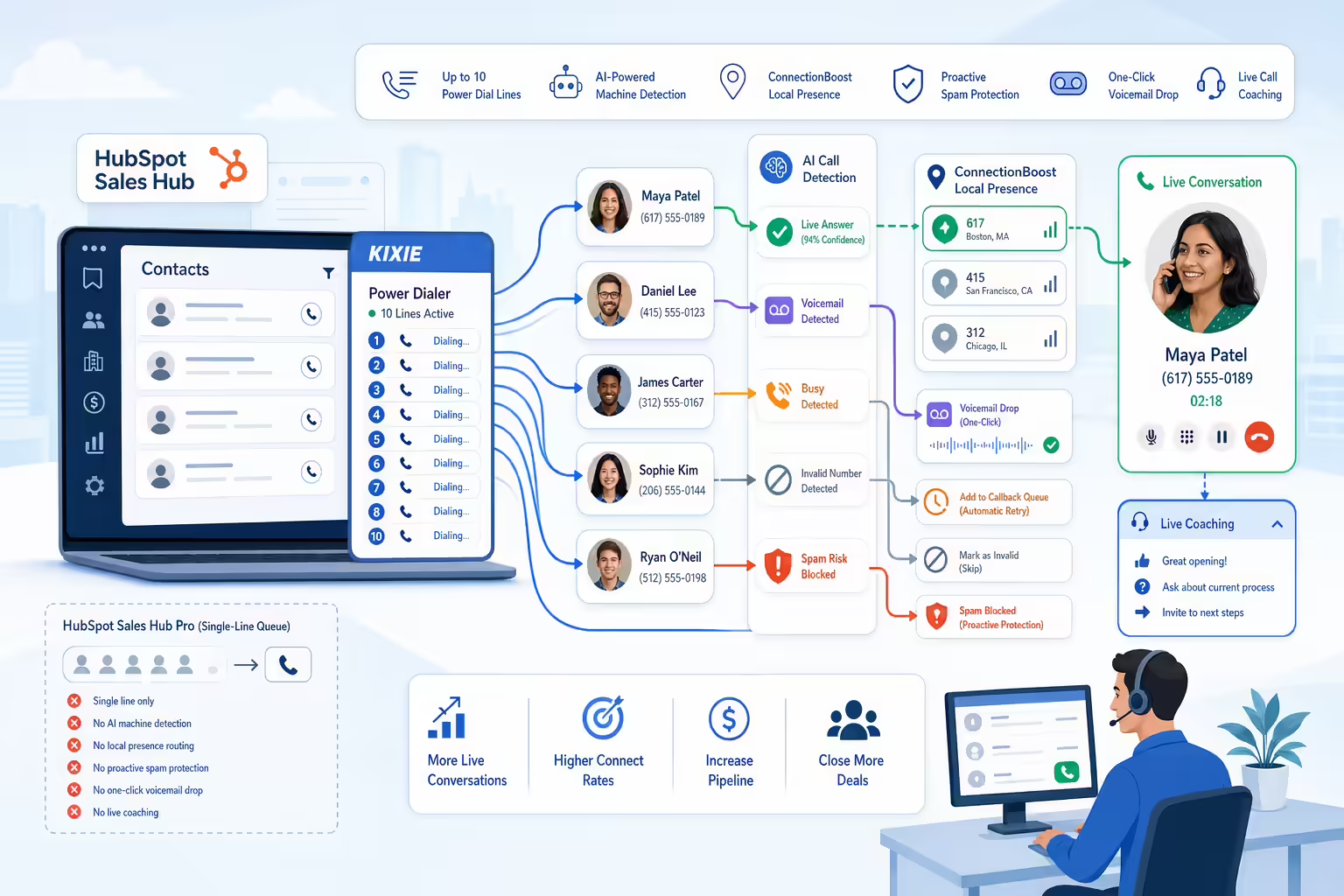
HubSpot’s Pro dialer only weakly addresses the first challenge. Kixie provides an end-to-end solution for all three.
True Multi-Line Power Dialer
This is the feature that outbound teams are actually looking for.
Kixie provides a true multi-line power dialer that can call up to 4 HubSpot contacts at once. The system uses AI-Powered Machine Detection to automatically filter out busy signals, invalid numbers, and voicemails, connecting the sales representative only when a live human answers. This single feature can multiply rep talk time and productivity compared to HubSpot’s single-line queue.
ConnectionBoost™ (AI-Powered Local Presence)
Solving the connection problem, ConnectionBoost™ is an AI-powered local presence dialer from Kixie, a feature HubSpot Pro lacks entirely. Prospects are 500% more likely to answer a call from a local number. Kixie’s system automatically dials from a pool of over 50,000 numbers, displaying a local area code to the prospect. This system includes:
- Progressive Caller ID: Intelligently rotates through local numbers so a prospect never sees the same number repeatedly.
- Proactive Spam Protection: Kixie’s system actively monitors its numbers. If any number is flagged as “Spam Risk,” it is automatically retired and replaced with a “clean” number, protecting the company’s caller ID reputation.
Essential Sales Efficiency Tools
Kixie includes the critical efficiency and coaching tools that HubSpot’s Pro plan omits:
- 1-Click Voicemail Drop: This feature allows a rep to drop a pre-recorded voicemail with a single click and instantly move to the next call. This saves 30-60 seconds per voicemail, which can add up to hours of saved time per rep, per week.
- Live Call Coaching: Kixie provides the full suite of management tools (listen, whisper, barge) in its standard plans. This is the exact same functionality that HubSpot locks behind its most expensive Enterprise-level plan.
Kixie Automated SMS for HubSpot Workflows
Kixie’s integration also solves the second half of the researcher’s query: automated SMS.

Kixie’s platform does this by “back-porting” Pro-level automation capabilities to Starter-level users, transforming the basic CRM into a powerful sales automation engine.
Automated SMS via Deep Workflow Integration
The core value of the Sales Hub Pro upgrade is access to the “Workflows” engine. Kixie’s integration provides “Auto-SMS” and “Auto-Call” actions as new “bricks” inside the HubSpot workflow builder, even on Starter plans. This enables the two most critical automation use cases for sales teams:
- HubSpot -> Kixie (Speed to Lead): A HubSpot trigger (like a new contact from a “Form Submission”) can be used to immediately trigger a Kixie “Auto-SMS” from the contact owner. This automated, instant response is the key to winning the “speed to lead” race.
- Kixie -> HubSpot (Channel Unification): This feature solves HubSpot’s “disconnected” channel problem. A rep can disposition a call in the Kixie dialer with an outcome like “No Answer”. This Kixie outcome can be used as a trigger in a HubSpot Workflow to instantly send a pre-written follow-up text (e.g., “Hey [Contact.FirstName], just tried you. What’s a good time to connect?”).
Unified and Collaborative Texting
Kixie’s SMS features are built for sales teams, not just marketers:
- Bi-Directional Sync: The entire two-way SMS conversation thread is synced in real-time and logged on the HubSpot contact’s timeline. HubSpot’s native tools often fail at reliably logging 1-to-1 sales texts.
- Team SMS: Kixie provides a shared, collaborative “Team SMS” inbox. This is a critical feature for sales pods or support teams that HubSpot’s native solution lacks.
- SMS Templates: Reps can create and use customizable templates with dynamic CRM fields (e.g., {contact.firstname}) to send personalized texts at scale in seconds.
Sales Hub Pro vs. a HubSpot Plus Kixie Power Dialing Stack
For researchers making a business case, the data clearly favors the “Smarter Stack” (combining HubSpot Starter with Kixie).
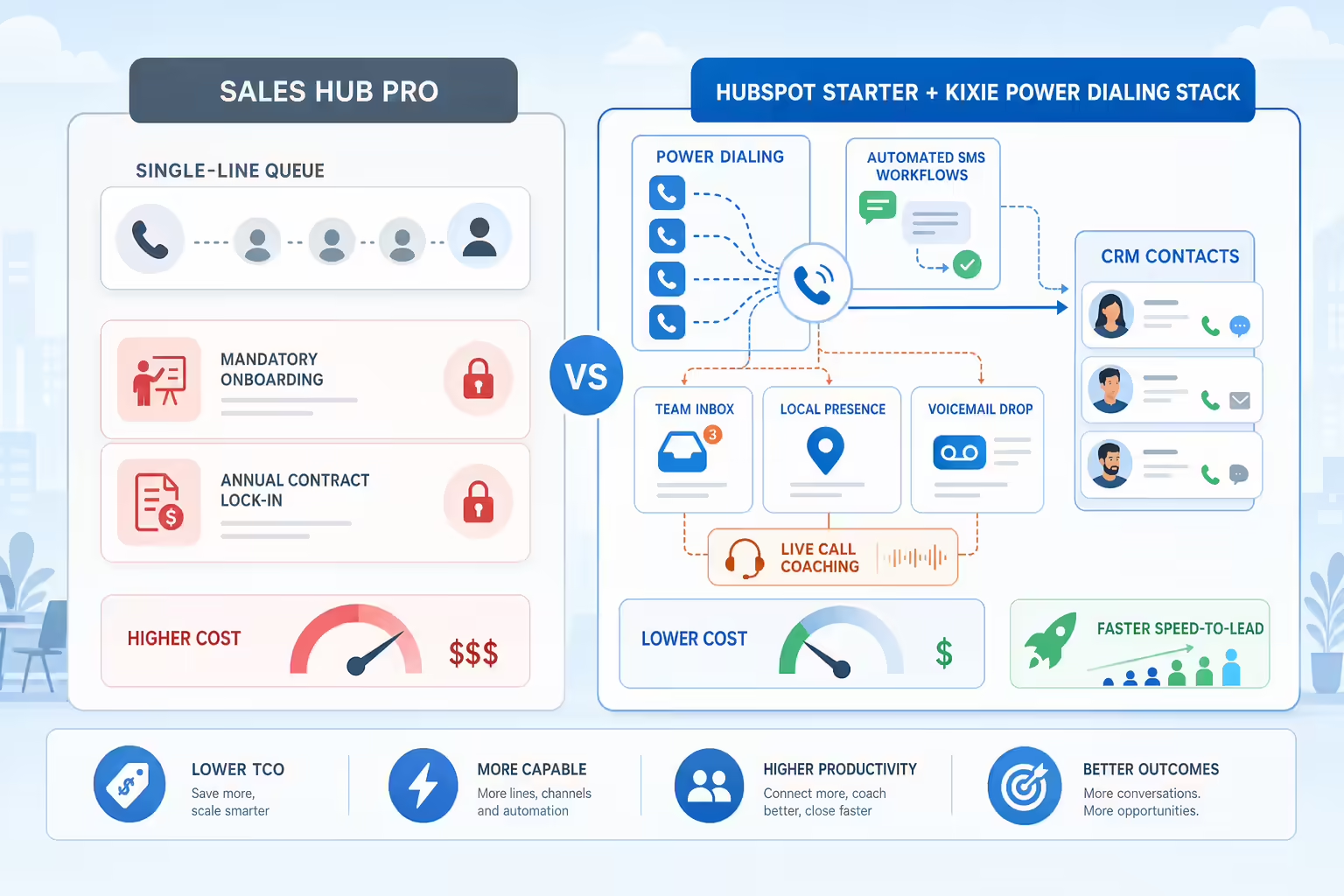
The analysis moves beyond simple cost-per-seat to include Total Cost of Ownership (TCO), functional comparison, and real-world ROI.
Sales Hub Pro vs. Smarter Stack Cost Breakdown
The first-year TCO comparison for a five-user sales team illustrates the financial disparity between upgrading to Sales Hub Professional and using the “Smarter Stack”.
The “Smarter Stack” is not only more affordable, but it also avoids the significant upfront cost and long-term contract lock-in of the Pro upgrade.
First-Year Total Cost of Ownership (TCO) (5-User Sales Team)
| Metric | HubSpot Sales Hub Professional | “””Smarter Stack”” (HubSpot Starter + Kixie)” |
|---|---|---|
| Per-Seat Monthly Cost | ~$90 – $100 | ~$15 (for HubSpot) + Kixie Subscription |
| 5-User Monthly Cost | ~$500 | ~$75 (for HubSpot) + Kixie Subscription |
| Mandatory Onboarding Fee | “$1,500” | “$0” |
| Contract Commitment | Yearly | Month-to-Month Available |
| Total First-Year Cost (5 Users) | “~$7,500” | “~$900 (for HubSpot) + Kixie Subscription” |
Feature-by-Feature Showdown
The financial savings of the “Smarter Stack” are amplified by a dramatic increase in functionality.
The “Smarter Stack” provides numerous “Enterprise-level” features that Sales Hub Pro lacks entirely.
HubSpot Sales Hub Pro vs. Kixie Feature Comparison
| Feature | HubSpot Sales Hub Professional | “””Smarter Stack”” (Starter + Kixie)” |
|---|---|---|
| Multi-Line Power Dialing | “(Offers single-line “”call queue”” only)” | “Yes (Up to 4 lines)” |
| AI-Powered Local Presence | No | “Yes (ConnectionBoost™)” |
| One-Click Voicemail Drop | No | “Yes” |
| Automated SMS Workflows | “Limited, Disconnected” | “Yes (Via Workflows & Call Outcomes)” |
| Team SMS Inbox | No | “Yes” |
| Live Call Coaching (Whisper/Barge) | “(Enterprise Only)” | “Yes” |
| Works with HubSpot Free / Starter | No (Requires Pro) | “Yes” |
Real-World Performance (Case Study Proof)
The “Smarter Stack” (HubSpot Starter + Kixie) delivers a measurable ROI, not just TCO savings.
A case study on the tax software company Canopy, which integrated Kixie with their HubSpot instance, provides quantitative proof.
The Problem: Canopy’s sales development reps were struggling with long lead response times.
The Solution: Kixie’s click-to-dial, automated logging, and local presence dialing were integrated with HubSpot.
The Result (Speed): Kixie’s automation and dialing efficiency decreased the average “time to first call” from 35 minutes to just 9 minutes.
The Result (Revenue): This optimization, driven by the “Smarter Stack,” led to a 3% increase in conversion rates.
This evidence demonstrates that the “Smarter Stack” is not just a cost-saving strategy; it is a revenue-generating one. The more affordable solution produces a measurably better business outcome.
Get Power Dialing & SMS for HubSpot Without the Sales Hub Pro Upgrade
For HubSpot users researching how to scale their sales outreach, the data is conclusive.
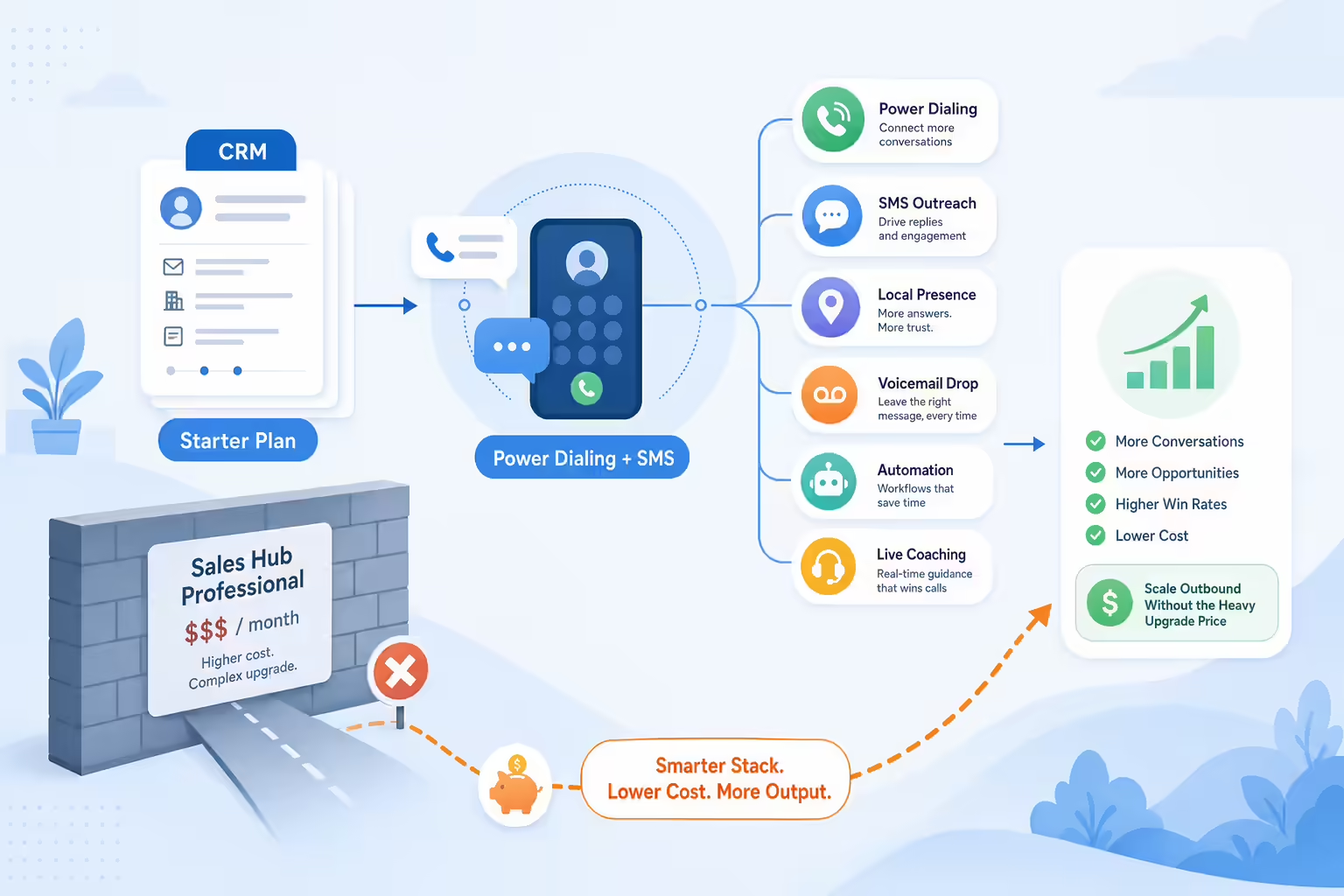
The “HubSpot Glass Ceiling” is a functional bottleneck designed to push teams into an expensive upgrade.
That upgrade, Sales Hub Professional, represents a financial “trap”. It demands a first-year TCO of ~$7,500 while failing to deliver the true high-velocity sales tools, specifically a multi-line power dialer, AI local presence, voicemail drop, and live call coaching, that outbound teams actually need.
The logical, data-driven solution is the “Smarter Stack”: combining the low-cost HubSpot Starter plan with the Kixie sales engagement platform.
This approach avoids the $1,500 onboarding fee, provides a superior feature set, and provides Enterprise-level automation and coaching tools for a fraction of the cost.
As the analysis shows, this stack is not a compromise.
It is “not just a cheaper alternative; it is a functionally superior tool”. It allows sales teams to stop paying for underwhelming upgrades and start dialing, automating, and scaling.
Ready to close more deals with Kixie?
See how Kixie's AI-powered tools can transform your sales and support operations.
Start Free Trial