
10DLC registration is the process US carriers and the messaging industry use to verify who is sending application-to-person (A2P) text messages over standard 10-digit local phone numbers. If your business sends texts to US customers from a local number using a software platform, you register your company (a brand), describe what you send (a campaign), and connect your sending numbers to that campaign through The Campaign Registry (TCR), usually with help from your messaging provider.
Two things are important to understand up front. First, 10DLC registration is a carrier and industry requirement, not a statute or government regulation. Second, registering does not replace your legal consent obligations: TCPA and FCC rules on consent and opt-out apply to your messages whether or not you are registered. This guide walks through how registration works, what to avoid, and how it fits into a compliant business texting program.
What 10DLC Registration Is (and Is Not)

10DLC stands for 10-digit long code: a regular local phone number used for business-to-consumer messaging. US mobile carriers, working through The Campaign Registry and guided by CTIA messaging principles, require businesses that send A2P traffic over these numbers to identify themselves and their use cases. Registered traffic carries brand and campaign identifiers, while unregistered A2P traffic is more likely to be filtered or blocked by carriers.
What registration is not:
- It is not a law. There is no 10DLC statute. It is an industry framework the carriers enforce as a condition of delivering your messages.
- It is not a consent substitute. TCPA requirements and the FCC’s rules in 47 CFR § 64.1200 govern when you may text someone and how opt-outs must work. Registration verifies who you are; consent rules govern who you may contact.
- It is not one registration per phone number. You register a brand and one or more campaigns, then associate your sending numbers to a campaign. Multiple numbers can share a single campaign.
How the 10DLC Registration Process Works

Most businesses register through their messaging or texting provider, which acts as a Campaign Service Provider (CSP) and submits information to The Campaign Registry on their behalf. The process has three core layers.
1. Brand Registration
Your brand is your business identity. Registration typically asks for your legal business name, business type, tax ID (EIN in the US), address, website, and a contact. This information is checked against official records, so accuracy matters: mismatches between your submission and your registered business details are a common cause of delays and rejections. Vetting of your brand influences how carriers treat your traffic, so complete, verifiable information works in your favor.
2. Campaign Registration
A campaign describes what you send and why. Common use cases include customer support and account notifications, appointment reminders, two-way sales conversations, and marketing promotions. You provide a description, sample messages, and details about how recipients opt in and opt out. Your samples should honestly reflect your real traffic; carriers compare declared use cases against actual sending behavior.
3. Number Association
Once your campaign is approved, you associate your sending phone numbers to it. Each sending number must be tied to a campaign, but a single campaign can cover multiple numbers. A distributed sales team texting from several local number area codes, for example, can typically operate under one properly scoped campaign rather than registering each number separately.
4. Review and Testing
Brand and campaign submissions go through review by the registry, vetting partners, and downstream carriers. Approval timelines vary by business type, use case, and how complete your submission is, so plan ahead rather than expecting a fixed turnaround. Registration also involves fees set by the registry, carriers, and your provider; amounts and structures vary and can change, so confirm current pricing with your provider. After approval, send test messages to verify deliverability before ramping up.
Sole Proprietor and Special-Use Registration
The framework includes registration paths beyond the standard business route, covered at a high level here:
- Sole Proprietor: a path for individuals and very small operations that do not have a tax ID suitable for standard brand registration. It supports lower-volume messaging and has its own verification steps.
- Special use cases: categories exist for scenarios such as charity, political, and emergency messaging, with their own vetting requirements.
Eligibility criteria, verification steps, and limits for these categories are defined by the registry, carriers, and your provider and can change over time. If you think one applies to you, confirm the current requirements with your messaging provider before registering.
Registration Is Not Compliance: Consent Still Comes First

A registered campaign does not make a message lawful. TCPA and the FCC’s implementing rules still control whether you can text a given person. Build these practices into your program:
- Get proper consent before texting. Marketing messages generally require prior express written consent, and the required consent depends on message type and how numbers were collected. Collect consent through clear disclosures at the point of signup and keep records of when and how each contact opted in.
- Honor opt-outs immediately. Support standard keywords like STOP and make opting out effortless. Suppress opted-out contacts across your systems.
- Identify your business in messages. Recipients should always know who is texting them.
- Avoid prohibited and restricted content. Carriers restrict content categories under the SHAFT framework (sex, hate, alcohol, firearms, tobacco) and prohibit deceptive practices. Some regulated content requires age gating or is disallowed over 10DLC entirely.
- Never text purchased contact lists. Messaging people who never opted in is the fastest way to generate complaints, filtering, and legal exposure. See our guidance on the risks of purchased lists.
- Keep registrations current. If your use case, sample messages, website, or business details change, update your brand and campaign so your declared information matches reality.
Common Pitfalls (and How to Avoid Them)
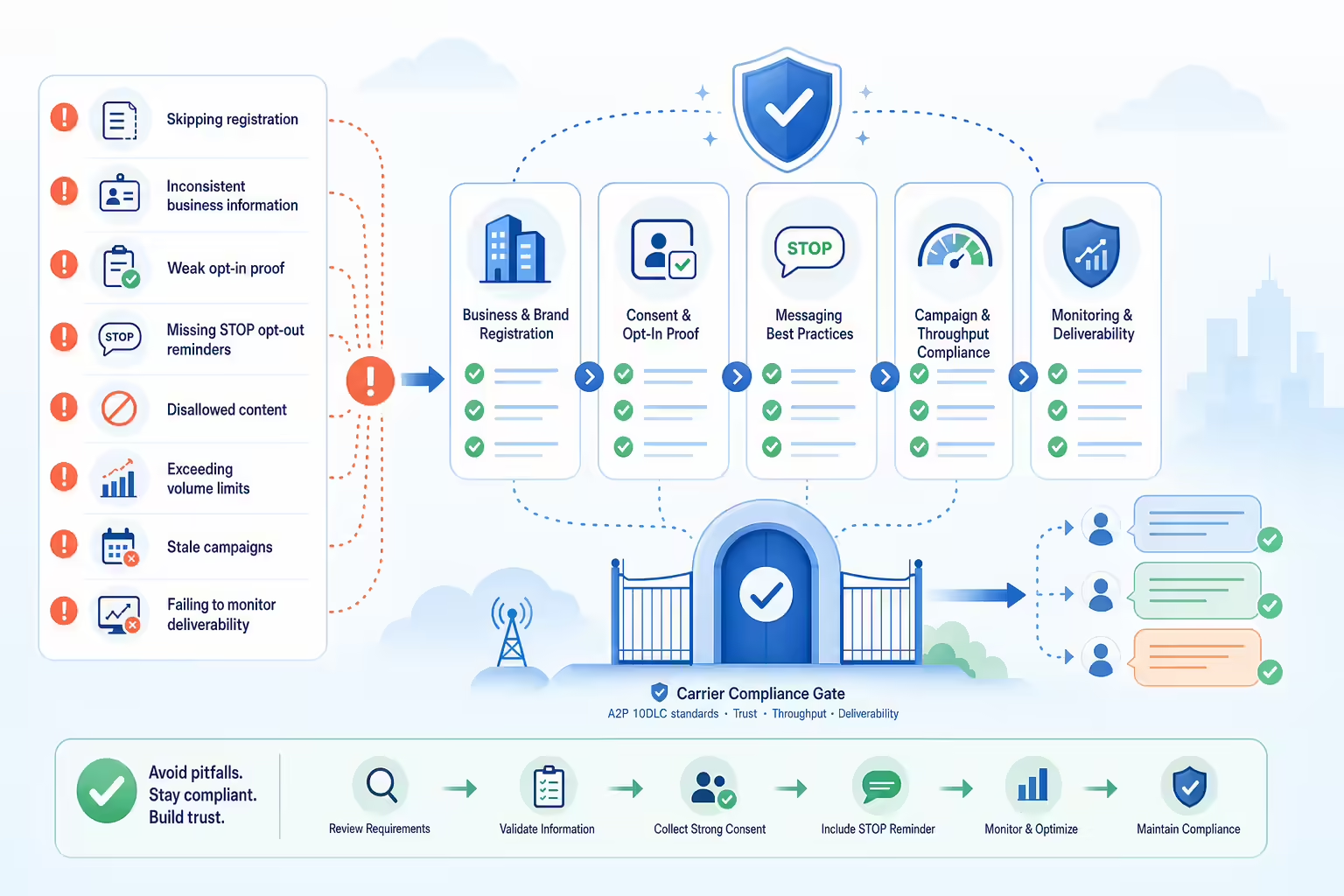
- Inconsistent business information. Submitting a brand name, address, or tax ID that does not match official records leads to failed vetting. Use your exact legal details.
- Vague or misleading campaign descriptions. Generic descriptions and sample messages that do not match real traffic trigger rejections and downstream filtering.
- Skipping opt-in and opt-out details. Campaigns must clearly explain how recipients consent and how they stop messages. Weak answers here are a frequent rejection reason.
- Sending before approval. Unregistered A2P traffic over local numbers is subject to carrier filtering and blocking. Wait for approval and test first.
- Assuming every number needs its own registration. It does not. Map your numbers to appropriately scoped campaigns instead of duplicating effort.
- Treating registration as one-and-done. Carrier and provider requirements evolve. Review your registrations periodically and whenever your messaging program changes.
10DLC vs. Toll-Free vs. Short Codes

10DLC is one of three main routes for business texting in the US. Each has its own registration or verification process and its own strengths.
| Route | Number Format | Best For | Registration |
|---|---|---|---|
| 10DLC | Standard 10-digit local number | Conversational sales and support with a local presence, plus registered promotional messaging | Brand and campaign registration through The Campaign Registry |
| Toll-Free | 8XX number | National support and notifications from a recognizable business number | Toll-free verification through your provider |
| Short Code | 5 or 6 digit code | High-volume campaigns, alerts, and interactive messaging programs | Dedicated short code lease and approval, typically the most expensive option |
Many teams pair a registered 10DLC setup for two-way conversations with Toll-Free Numbers for national notification traffic. The right mix depends on your volume, audience, and whether replies matter to your workflow.
FAQs

Do I have to register for 10DLC?
If your business sends application-to-person text messages to US recipients over standard 10-digit local numbers, US carriers expect that traffic to be registered. Unregistered A2P messages are subject to filtering and blocking. Person-to-person texting from your personal phone is not what this framework covers.
Is 10DLC a government regulation?
No. 10DLC registration is a requirement created and enforced by US carriers and the messaging industry, administered through The Campaign Registry. Separately, government rules like the TCPA and the FCC’s regulations in 47 CFR § 64.1200 govern consent and opt-out, and those apply regardless of registration status.
Does every phone number need its own registration?
No. You register a brand and one or more campaigns, then associate your sending numbers to a campaign. Multiple numbers can share a single campaign as long as they are used for the declared use case.
How long does registration take?
It varies. Timelines depend on your business type, use case, vetting results, and how complete and accurate your submission is. Build registration time into your launch plan and confirm expected timing with your provider rather than assuming a fixed window.
What does registration cost?
Fees are set by the registry, carriers, and your messaging provider, and they can change. Ask your provider for current brand, campaign, and carrier fee details before you register.
Do campaigns expire or need renewal?
Renewal and recurring fee policies depend on the registry, carriers, and your provider. What is consistent is the expectation that your registration stays accurate: update your brand and campaign whenever your business details or messaging use cases change, and confirm any renewal requirements with your provider.
What happens if I send without registering?
Carriers may filter, block, or otherwise penalize unregistered A2P traffic on local numbers, and providers may restrict your account. The practical result is poor deliverability: messages that never reach your customers.
Getting the Most from Registered Messaging

Registration is the foundation, not the finish line. Once your brand, campaigns, and numbers are approved, deliverability comes down to running an honest program: message people who opted in, honor opt-outs instantly, keep your declared use cases aligned with what you actually send, and revisit your registrations as your business evolves. Carrier and provider requirements can change, so treat your messaging provider as an ongoing partner in keeping your setup current.
Done well, registered 10DLC messaging gives sales and support teams a local-presence channel for reaching customers. If you are building out your text messaging strategy, getting registration right is the first step toward making texting a dependable part of how your team reaches customers.
Sources
- The Campaign Registry: Introduction to TCR (2026)
- The Campaign Registry: CSP User Guide (April 2026)
- The Campaign Registry resources
- CTIA Messaging Principles and Best Practices
- Twilio: Direct Standard A2P 10DLC onboarding
- Twilio: Direct Sole Proprietor A2P 10DLC registration
- 47 CFR 64.1200: FCC calling and messaging rules
How we researched this article
This article is based on primary industry documentation and official federal rules: The Campaign Registry’s published introduction and CSP user guide, The Campaign Registry’s resource library, the CTIA messaging interoperability principles that shape carrier expectations, provider onboarding documentation for standard and Sole Proprietor A2P 10DLC registration, and the FCC’s telemarketing and messaging consent rules codified at 47 CFR § 64.1200. Where registry, carrier, or provider policies on fees, timelines, throughput, or renewal are not publicly fixed or are subject to change, this article describes them qualitatively rather than stating specific figures. Requirements in this ecosystem change over time, so confirm current details with your messaging provider. This article is for general information only and is not legal advice; consult qualified counsel about your specific compliance obligations.
Sources verified by Kixie Research Team on August 4, 2026.
Ready to close more deals with Kixie?
See how Kixie's AI-powered tools can transform your sales and support operations.
Start Free Trial