What is a Customer Success Manager (CSM)?
If you’ve ever found yourself wondering… “What’s the difference between a CSM and a CSR?” We get it. There’s confusion and overlap between various sales titles used at different organizations. What’s more, titles are often changing and adapting to industry trends.
The fast-growing, competitive nature of the SaaS industry has created an environment where new titles are needed to accommodate for completely new positions. What’s more, (slightly) different titles – à la Sales Development Rep vs. Business Development Rep – are created to sound more relevant, modern, and in line with company values and culture.
If you’re new to all this sales jargon, look no further! We’ve got you covered. Keep reading to find out exactly what a customer success manager does, average salary for CSMs, career outlook, and available CSM jobs.
In SaaS, the acronym CSM generally stands for Customer Success Manager. CSMs usually work in customer success teams, where they support clients with relevant information, troubleshooting, and understanding.

Customer Success Manager Job Description
Customer success professionals guide clients from the sales to the support phase, by being a reliable, friendly and knowledgeable resource for customers. These employees are key in maintaining and improving customer satisfaction.
What does a Customer Success Manager do?
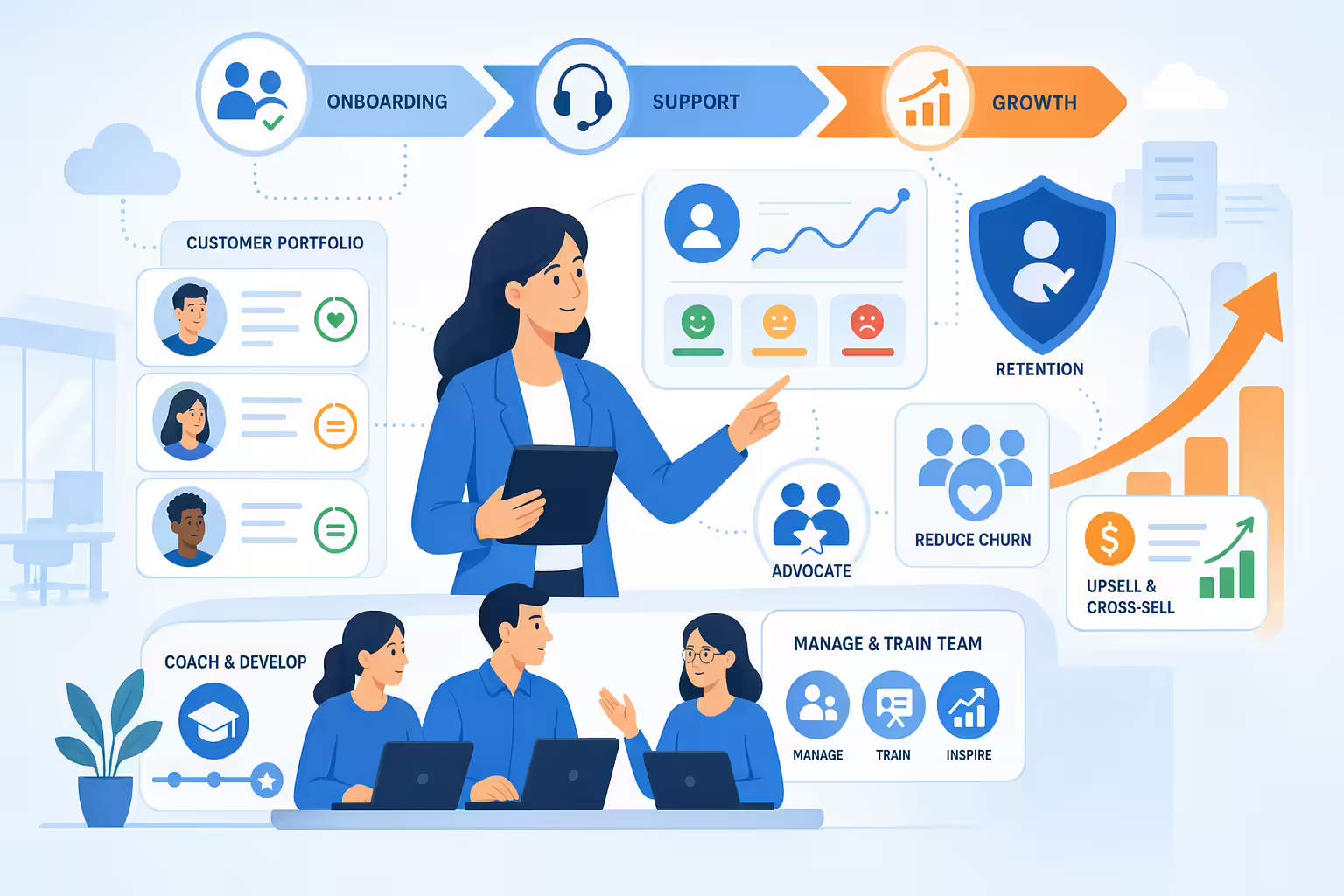
CSMs not only troubleshoot client challenges and provide relevant information, they also build relationships with their portfolio of clients and are an advocate for their needs within the company. Similarly, customer success teams also advocate on behalf of the company and encourage upsells and cross-sells to existing customers.
Effective customer success managers increase a customer’s lifetime value and improve customer retention rate (CRR), encouraging loyal customers who not only continue with the company, but also upgrade and purchase premium products and services.
Another relevant concern of a customer success manager in SaaS is reducing churn, or limiting the number of customers who cancel their memberships or plans. By providing excellent customer service and meeting the needs of clients, CSMs can reduce churn and even increase CRR by up- and cross-selling.
As their title suggests, customer success managers may also be responsible for one or many direct reports on the customer success team, and can be involved in training and motivating a small team of customer service professionals.
Customer Success Manager Salary
Customer Success Managers make, on average, $90,850 per year in total pay in the US (source: Glassdoor). However, this number can vary significantly based on the portion of the pay that is base vs. performance-driven. Salaries also vary based on company size, location, and years of experience. For example, CSMs at Microsoft make an estimated $125,190 per year.

CSM Career Outlook
With the abundance of automation, software, and complex cloud-based tools available on the market today, it may come as no surprise that customer support positions are projected to grow rapidly in the future. In fact, LinkedIn named Customer Success as one of the top emerging jobs in the US in 2020.
If you’re looking to grow your career in the customer success industry, don’t worry – as the market outlook for customer success managers is positive, with a large portion of new opportunities being created in the SaaS field.

Customer Success Manager Jobs
Looking for available CSM jobs? Here are a few resources to help your search:
- Customer Success Manager Jobs on LinkedIn
- Customer Success Manager Jobs on Indeed
- Customer Success Manager Jobs on Glassdoor
Which customer success role is right for me?
The right role for you depends on your experience and expertise, but customer success can be a good industry to get your start if you are entering the job market for the first time!

Some key characteristics of great customer support professionals include:
- Excellent interpersonal skills
- Great communicators
- Passion for what they are selling
- Willingness to roll up their sleeves and get the job done
- No fear calling and following-up with clients
- Positive attitude
- Creative and passionate about helping others
- Sincere empathy for people and clients
- Ability to multi-task across different platforms and forms of communication
- Ability to work well under pressure and with a team
Does this sound like you? Kixie is hiring, and we’d love to hear from you! We are looking for jovial, hard-working colleagues to share our journey as we change the landscape of business telephony.
Customer Success Manager vs. Related Roles
Because sales titles and acronyms often overlap, it helps to understand how a CSM differs from adjacent roles:
- Customer Success Manager (CSM): Proactively guides a portfolio of accounts toward long-term value, focusing on adoption, retention, and expansion.
- Customer Support Representative (CSR): Typically reactive, resolving incoming tickets and troubleshooting specific issues as they arise.
- Account Manager: Often focused on commercial relationship management, renewals, and revenue within named accounts.
- Sales Rep: Focused on acquiring new business and closing deals rather than nurturing existing customers.
In short, a CSM sits at the intersection of customer service and account growth, blending relationship-building with measurable outcomes.
Core Customer Success Manager Responsibilities
Beyond troubleshooting and relationship-building, day-to-day CSM responsibilities often include:
- Onboarding new customers so they reach value quickly after purchase.
- Driving product adoption by helping customers use features that fit their goals.
- Monitoring customer health to spot risk and opportunity early.
- Supporting renewals and expansions, including identifying upselling and cross-selling opportunities.
- Coordinating escalations with support, product, and engineering teams.
- Collecting and sharing customer feedback internally to improve the product and experience.
Key Customer Success Manager Skills
Successful CSMs typically combine soft skills with practical, role-specific abilities:
- Communication: Clear writing, active listening, and confident lead follow-up habits.
- Problem solving: Diagnosing issues and proposing practical solutions.
- Product knowledge: Deep understanding of how the product solves customer problems.
- Data literacy: Interpreting usage and health signals to prioritize accounts.
- Relationship management: Building trust across multiple stakeholders.
- Time management: Balancing a portfolio of accounts and competing priorities.
Customer Success Manager KPIs and Metrics
CSMs are commonly measured on outcomes that reflect long-term customer value. Depending on the organization, these may include:
- Customer retention rate (CRR)
- Churn rate, and efforts to reduce churn
- Product adoption and usage
- Renewal rate and expansion revenue
- Customer satisfaction signals such as CSAT or NPS
The specific mix of metrics—and whether they carry a quota—varies by company and team structure.
How to Become a Customer Success Manager
Customer success can be an accessible entry point into a software career. Common paths into the role include:
- Starting in customer support or as a customer success associate, then advancing to CSM.
- Transitioning from sales, account management, or implementation roles.
- Highlighting transferable skills like communication, organization, and relationship-building on your resume.
- Preparing for interviews by being ready to discuss how you’d onboard, retain, and grow accounts.
From there, many CSMs progress to senior CSM, team lead, and eventually director or VP of customer success.
Customer Success Manager FAQ
Is a customer success manager a sales role?
Not exactly. CSMs focus on retention and customer value, though they often support renewals and identify expansion opportunities, which can overlap with sales goals.
What is the difference between a CSM and a CSR?
A CSR is usually reactive, resolving incoming support requests, while a CSM is proactive, guiding a portfolio of accounts toward long-term success.
Do customer success managers have quotas?
It depends on the company. Some CSM roles include renewal or expansion targets, while others are measured purely on retention and customer health.
Is customer success a good career path?
Many professionals find customer success a strong long-term path with room to grow into leadership roles, particularly within software organizations.
Ready to close more deals with Kixie?
See how Kixie's AI-powered tools can transform your sales and support operations.
Start Free Trial