TL;DR: A strong SDR call cadence is a structured sequence for when to call, voicemail, email, use LinkedIn, and stop, with 5 adaptable templates covering 21-day cold outbound, 10-day high-intent inbound, 72-hour warm lead, account-based, and re-engagement motions. Practical outbound starting point is 3 to 5 calls inside 7 to 13 total touches across roughly 10 to 25 business days, adjusted for buyer seniority, intent, deal size, urgency, and compliance. The 21-day cold outbound cadence uses calls on days 1, 3, 7, 14, and 21 plus LinkedIn on days 2 and 17 and emails on days 1, 5, 10, and 21. The 10-day high-intent inbound cadence prioritizes speed with day 0 call within minutes, confirmation email, second same-day call, day 1 call, day 2 email, day 4 call, day 6 still-interested email, and day 10 final call and close-the-loop email. The 72-hour warm lead cadence uses hour 1 call and email, day 1 call and voicemail, day 2 value email, and day 3 final call and note. The account-based cadence researches 2 to 4 contacts, calls and emails the primary on day 1, calls again day 3, emails a second stakeholder day 5, calls them day 7, sends account insight day 10, calls primary and another stakeholder day 14, sends final email day 18, and ends with day 25 final call or LinkedIn touch before nurture or recycle. The re-engagement cadence is lighter with calls on days 1, 8, and 18, emails or LinkedIn on days 1, 4, 12, and 18, and requires new context, a changed situation, or clear value-add. Best practices include matching intensity to lead intent, varying local call windows, avoiding repeated generic voicemails, pairing calls with short relevant emails, personalizing by role or company context, defining exit criteria such as booked meeting, disqualification, opt-out, referral, or no engagement, reviewing compliance, and tracking call-to-connect, conversation-to-meeting, voicemail-to-callback, email reply after calls, and step-level performance.
A strong SDR call cadence gives reps a clear plan for when to call, when to leave voicemail, when to send supporting emails, and when to stop. The goal is not to simply add more touches. The goal is to reach the right prospect with the right message at the right moment, without relying on one channel or one follow-up.
Below are five SDR call cadence examples you can adapt for cold outbound, inbound leads, warm leads, account-based prospecting, and re-engagement. Treat them as starting points, then refine based on your audience, sales cycle, call data, and compliance requirements.
SDR call cadence templates you can adapt
Here is a quick overview before we break down each cadence:

- 21-day cold outbound cadence: Best for prospects who have not engaged with your company yet.
- 10-day high-intent inbound cadence: Best for demo requests, pricing page visitors, and other hand-raisers.
- 72-hour warm lead cadence: Best for event attendees, webinar leads, referrals, or recent content conversions.
- Account-based SDR cadence: Best for target accounts where personalization and multiple stakeholders matter.
- Re-engagement cadence: Best for previous non-responders, closed-lost opportunities, or older nurture leads.
Most of these examples combine calls with email and LinkedIn touches. Calls are the backbone, but supporting channels help create context, reinforce value, and give prospects more than one way to respond.
What is an SDR call cadence
An SDR call cadence is a structured sequence of call attempts and supporting follow-ups used to contact a prospect over a defined period of time. It tells the rep what to do next, when to do it, and what message to use.
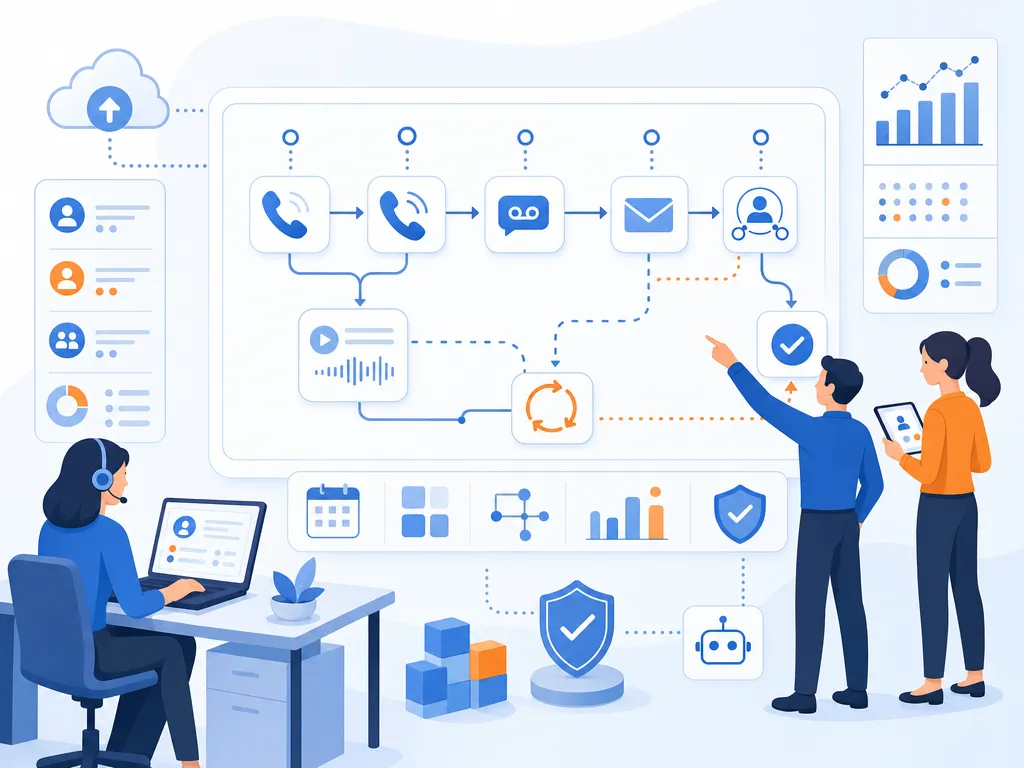
A call cadence usually includes:
- Call attempts: Live calls placed at different times and days.
- Voicemails: Short messages used selectively when a prospect does not answer.
- Follow-up emails: Contextual emails that reinforce the reason for calling.
- LinkedIn touches: Profile views, connection requests, or short messages where appropriate.
- Breakup or close-the-loop message: A final touch that gives the prospect a clear next step or moves them to nurture.
The best SDR cadence is not universal. A high-intent inbound lead may need several fast touches in the first few hours, while a cold outbound account may require a longer, more personalized sequence.
How many calls should an SDR cadence include
For many outbound SDR teams, a practical starting point is 3 to 5 call attempts inside a broader 7 to 13 touch sequence. Those touches may span roughly 10 to 25 business days, depending on the buyer, deal size, and urgency.
That range is not a rule. If your prospects are senior executives, you may need fewer but more personalized touches. If your leads requested a demo or filled out a high-intent form, you may need more immediate call attempts in a shorter period. If your market is highly regulated, your team should review calling, consent, and do-not-call requirements before launching or scaling any cadence.
21-day cold outbound call cadence template
Use this cadence when the prospect has not recently engaged with your company. The goal is to create recognition, test multiple call windows, and pair each call with a relevant reason for reaching out.
Cold outbound cadence steps
- Day 1: Call attempt 1. If there is no answer, do not automatically leave a voicemail unless you have a strong reason. Send a short personalized email after the call.
- Day 2: LinkedIn profile view or connection request. Keep the note brief and non-pitchy.
- Day 3: Call attempt 2 at a different time of day. If no answer, leave a concise voicemail that references the email.
- Day 5: Send a value-led follow-up email with one relevant problem, trigger, or observation.
- Day 7: Call attempt 3. If connected, use a permission-based opener. If no answer, skip voicemail unless you have new context.
- Day 10: Send a short proof or insight email. Avoid exaggerated claims; use a relevant idea, question, or resource.
- Day 14: Call attempt 4. Try a different local-time window than previous attempts.
- Day 17: LinkedIn touch or email with a specific question tied to the prospect’s role.
- Day 21: Final call attempt and breakup email. Give the prospect an easy way to respond, redirect you, or opt out of further outreach.
When to use this SDR cadence
- You are prospecting into cold accounts.
- You have a clear persona and pain point.
- Your list quality is strong enough to support personalization.
- You want a balanced sequence that does not rely only on email.
Cold outbound call voicemail example
“Hi [Name], this is [Rep] with [Company]. I’m reaching out because teams like [relevant team or role] often look at [problem area] when [trigger or business context]. I also sent a short email with the reason for my call. If this is relevant, you can reach me at [phone number]. Again, this is [Rep] at [phone number].”
10-day high-intent inbound call cadence template
Inbound leads should usually be handled faster than cold outbound prospects because the buyer has already shown intent. This cadence is useful for demo requests, contact-us forms, pricing inquiries, or high-intent website activity.
High-intent inbound cadence steps
- Day 0, within minutes if possible: Call attempt 1. Reference the exact action the lead took, such as requesting a demo or submitting a form.
- Day 0, immediately after call: Send a confirmation email with a clear scheduling option or next step.
- Day 0, later the same day: Call attempt 2 if the request is high intent and the first call was missed.
- Day 1: Call attempt 3 at a different time of day. Leave a short voicemail if you have not already done so.
- Day 2: Send a helpful email that answers the likely reason they reached out.
- Day 4: Call attempt 4. If connected, confirm their goal and route them to the right next step.
- Day 6: Send a short “still interested?” email with two or three simple response options.
- Day 10: Final call and close-the-loop email. Let them know you will step back unless they want to continue the conversation.
High-intent call opener example
“Hi [Name], this is [Rep] from [Company]. I saw you requested [demo/pricing/contact] and wanted to help route you to the right next step. Is now still a good time for a quick question about what you’re looking for?”
72-hour warm lead call cadence template
A warm lead has shown some level of interest, but may not be actively asking to speak with sales. Examples include webinar attendees, event booth scans, content downloads, referrals, or leads from partner campaigns. The first 72 hours are important because the context is still fresh.
Warm lead cadence steps
- Hour 1: Call attempt 1. Mention the specific event, content, referral, or interaction that created the warm lead.
- Hour 1, after call: Send a short email with the relevant resource, recap, or reason for following up.
- Day 1: Call attempt 2. If no answer, leave a voicemail that references the shared context.
- Day 2: Send a value-focused email. Ask one question related to the lead’s role or likely challenge.
- Day 3: Call attempt 3. If there is still no response, send a final short note offering to reconnect later or point them to a useful resource.
Warm lead call voicemail example
“Hi [Name], this is [Rep] with [Company]. I’m following up on [webinar/event/resource/referral]. I thought it might be useful to connect for a few minutes because [specific reason]. I’ll send a quick email as well. You can reach me at [phone number].”
Account-based SDR cadence for target accounts
An account-based cadence is useful when the account matters more than a single lead. Instead of repeating the same message to one person, the SDR researches the account, identifies multiple stakeholders, and coordinates outreach around a relevant business trigger.
Account-based cadence steps
- Day 1: Research the account and identify 2 to 4 relevant contacts. Call the primary contact and send a personalized email.
- Day 3: Call attempt 2 to the primary contact. Reference a company-level trigger, initiative, hiring trend, technology change, or public business priority if relevant and verified.
- Day 5: Email a second stakeholder with a message written for their role. Avoid copying and pasting the same note to everyone.
- Day 7: Call the second stakeholder. If connected, ask who owns the initiative or problem area internally.
- Day 10: Send a concise account-level insight or question to the primary contact.
- Day 14: Call attempt 3 to the primary contact and attempt another relevant stakeholder if appropriate.
- Day 18: Send a final email that summarizes why you reached out and asks whether there is a better person to contact.
- Day 25: Final call or LinkedIn touch, then move the account to a later nurture or recycle queue if there is no engagement.
Account-based call opener example
“Hi [Name], this is [Rep] with [Company]. I’m calling because I noticed [verified account trigger], and I’m trying to understand whether [relevant problem area] is something your team is focused on this quarter. Would it be unreasonable to ask one quick question?”
Re-engagement call cadence template
Use a re-engagement cadence when a prospect went quiet, previously said “not now,” or did not respond to an earlier sequence. This cadence should be lighter than your first outbound push. The reason for reaching out should be new information, a changed situation, or a clear value-add.
Re-engagement cadence steps
- Day 1: Call attempt 1 with a specific reason for re-engaging. Send a short email after the call.
- Day 4: Send a helpful resource, new idea, or question tied to the last known pain point.
- Day 8: Call attempt 2. If no answer, leave a short voicemail only if your message adds new context.
- Day 12: LinkedIn touch or email asking if the priority has changed.
- Day 18: Final call and close-the-loop email. Offer to reconnect at a later date if timing is the issue.
Re-engagement cadence email example
“Hi [Name], I know timing was not right when we last connected. I’m reaching back out because [new trigger, relevant update, or changed context]. Is [problem area] still on your radar, or should I check back later?”
Call cadence best practices for SDRs
Match cadence intensity to lead intent
A demo request and a cold prospect should not receive the same cadence. High-intent leads usually deserve faster follow-up. Cold prospects usually need more context, more personalization, and more spacing between touches.
Vary your call times
If you always call at 9:00 a.m. on the same weekday, your data will only tell you how prospects respond to that window. Test different local-time blocks, such as early morning, late morning, mid-afternoon, or late afternoon. Avoid assuming one universal best time for every market.
Avoid repeating the same call voicemail
Voicemail can be useful, but repeated generic voicemails often add little value. Use voicemail when you have a clear reason, keep it brief, and point to a simple next step. If you leave multiple voicemails in a cadence, make each one distinct.
Pair calls with relevant emails
A call creates urgency. An email creates context. The best support emails are short, specific, and easy to answer. They should not read like a brochure. Use them to clarify why you called, what problem you are asking about, and what the prospect can do next.
Personalize SDR outreach beyond basics
Useful personalization connects your outreach to the prospect’s role, company situation, likely business problem, or recent behavior. Avoid fake familiarity or unsupported assumptions. A simple relevant observation is usually better than a long, over-personalized email.
Set clear cadence exit criteria
Every cadence should define when to stop, recycle, or move a prospect to nurture. Exit criteria may include a booked meeting, a disqualification, an opt-out, a referral to another contact, or no engagement after the final touch.
Review call compliance before scaling
Calling and messaging rules vary by region, audience, number type, consent status, and other factors. Before launching a cadence, review applicable calling, texting, email, consent, do-not-call, and privacy requirements with the appropriate internal owner or legal counsel.
What to say on each call attempt
Your call cadence is only as good as the message behind it. Reps should know the purpose of each attempt before they dial.
First call attempt with a permission-based opener
“Hi [Name], this is [Rep] with [Company]. I know I’m catching you out of the blue. The reason I’m calling is [one relevant reason]. Do you have 30 seconds for me to explain why I reached out?”
Second call attempt with context
“Hi [Name], this is [Rep] with [Company]. I reached out earlier this week because [reason]. I also sent a short note with more context. Is [problem area] something your team is looking at right now?”
Call voicemail that is short and specific
“Hi [Name], this is [Rep] from [Company]. I’m calling about [specific reason]. I sent a quick email with the context, and if it’s relevant, you can reach me at [phone number]. Again, that’s [phone number].”
Final call to close the loop
“Hi [Name], this is [Rep] with [Company]. I’ve tried you a few times regarding [reason]. If this is not a priority, no problem. If there is someone better to speak with, I’d appreciate the redirect. I’ll also send one final note.”
How to improve your SDR call cadence
Do not judge a cadence only by total activity. A rep can make many calls without creating meaningful conversations. Track both activity and outcomes so you can improve the sequence over time.
Call cadence metrics to track
- Call-to-connect rate: The percentage of calls that turn into live conversations.
- Conversation-to-meeting rate: The percentage of conversations that result in a booked meeting or qualified next step.
- Voicemail-to-callback rate: Whether voicemail is creating responses or simply adding activity.
- Email reply rate after call attempts: Whether call-supported emails perform better than standalone emails.
- Step-level performance: Which specific cadence steps create the most connects, replies, and meetings.
- Disposition quality: Whether reps are accurately logging outcomes such as no answer, wrong number, not interested, call back later, or referred contact.
- Lead source performance: How cold outbound, inbound, warm, event, and re-engagement leads respond differently.
How to optimize your cadence
- Test one variable at a time: Change call timing, voicemail strategy, email subject line, or opener separately so you know what moved the result.
- Segment your reporting: Compare by persona, industry, company size, lead source, and territory instead of averaging everything together.
- Listen to call recordings if available and approved: Review openers, objections, pacing, and whether reps are asking clear next-step questions.
- Remove low-value touches: If a step consistently produces no connects, replies, or useful data, revise or remove it.
- Keep messaging aligned: The call, voicemail, email, and LinkedIn message should feel like one coordinated conversation.
SDR call cadence FAQs
How many calls should an SDR make in a cadence
A common starting point is 3 to 5 call attempts within a broader multichannel sequence. High-intent inbound leads may justify faster and more frequent early calls, while cold outbound or executive outreach may require more spacing and personalization.
How long should an SDR call cadence run
Cold outbound cadences often run for two to four weeks. Inbound and warm-lead cadences are usually shorter because the prospect’s interest or context can fade quickly. Re-engagement cadences may be lighter and more spread out.
Should SDRs leave voicemails
Yes, but selectively. A good voicemail is short, relevant, and connected to a reason for outreach. Leaving the same generic voicemail after every missed call is usually less effective than using voicemail when you have meaningful context.
What channels should be included in an SDR cadence
Most modern SDR cadences use a mix of phone, email, and LinkedIn. Some teams may also use other channels depending on their market, consent, and internal policies. The channel mix should match buyer preferences and applicable outreach rules.
When should an SDR stop calling a prospect
Stop when the prospect opts out, is disqualified, redirects you to someone else, books a meeting, or completes the final step of your defined cadence without engagement. After that, consider moving the contact to nurture or a future re-engagement list if appropriate.
Build a call cadence your team can execute
The best SDR call cadence is specific enough to guide daily execution but flexible enough to adapt to lead intent, persona, and real conversation data. Start with one of the examples above, define your call and follow-up steps clearly, then review performance by step so your team can improve over time.
If your SDR team is evaluating its calling process, look for gaps in list quality, messaging, call timing, follow-up discipline, and reporting. Better cadence performance usually comes from improving the entire workflow, not just adding more dials.
Ready to close more deals with Kixie?
See how Kixie's AI-powered tools can transform your sales and support operations.
Start Free Trial