Your CRM and CRM integrations are used to gather customer data that helps your business better understand your clients and potential customers.
But alongside useful sales software, the idea of gamification and CRM are becoming more intertwined. Sales gamification can increase productivity, collaboration, and many sales reps around the world use gamification to increase engagement among their team.
Sales gamification can do much more than just inspire employees—it’s a helpful resource that improves your team’s abilities and adds a deeper layer of enjoyment into their everyday work. If you’re looking for something new to kick your team into the next gear, here’s 3 sales gamification ideas that can help:
What Is Sales Gamification?
Sales gamification is the practice of turning important sales behaviors into visible goals, points, competitions, or recognition moments. The best programs do more than keep score. They help reps see which activities matter, give managers a coaching signal, and make steady progress feel visible during the week.
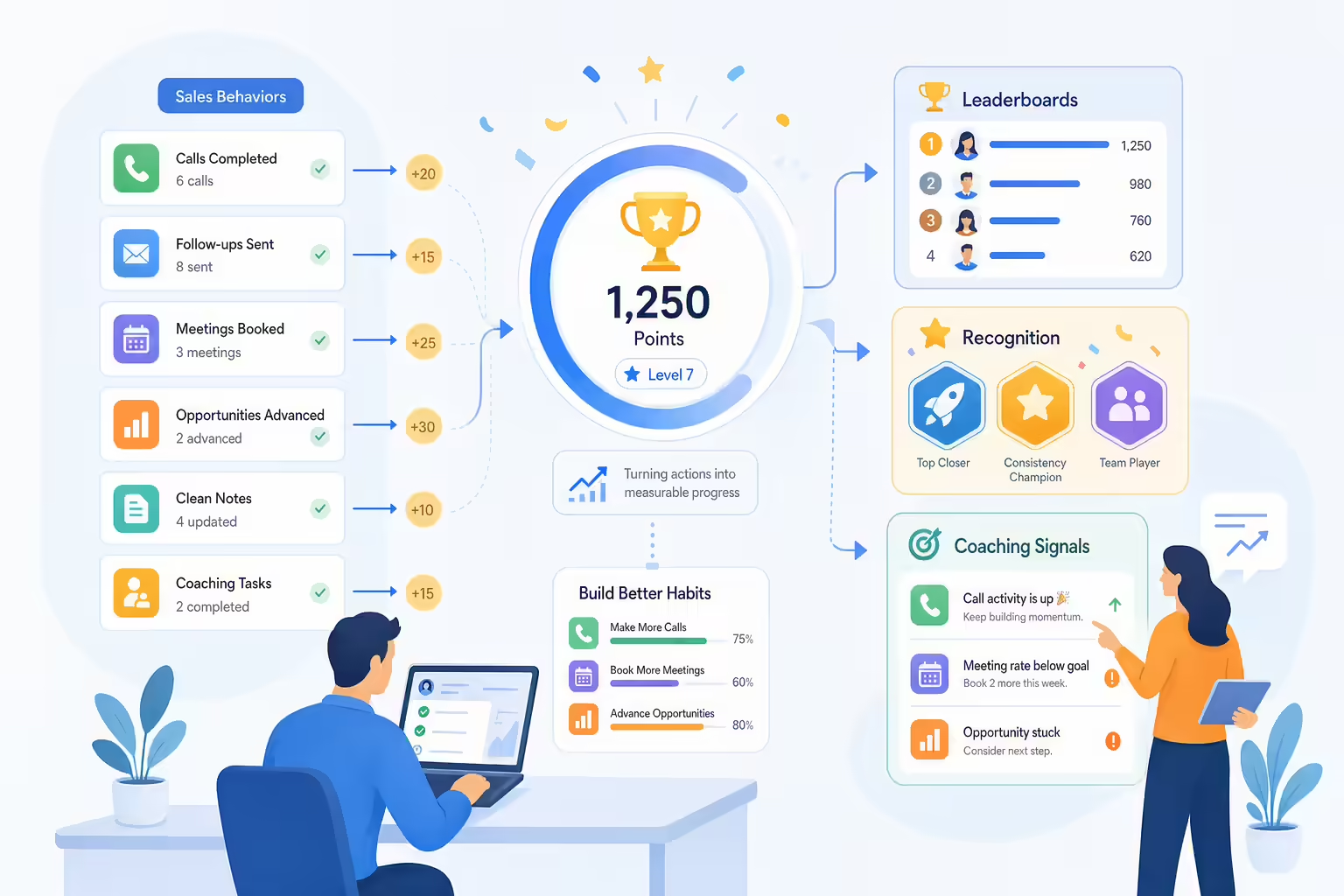
For a sales team, that usually means tying game mechanics to behaviors you can measure in the CRM or sales engagement workflow: calls completed, follow-ups sent on time, meetings booked, opportunities advanced, clean notes added, or coaching tasks completed. When those activities are tracked clearly, gamification becomes an operating system for better habits instead of a one-off contest.
1. Sales Gamification Creates a Better Relationship with Your CRM
Typically, sales reps only use their CRM as a storage shed to dump and forget about customer data. Worst of all, some sales reps get lazy and have a hard time inputting customer data altogether!
Sadly, what many sales reps don’t realize is that CRM data is invaluable in terms of learning from past mistakes and keeping customers happy in the long-term. From understanding churn rates to recognizing the right call dispositions to land a client, data within the CRM and from CRM integrations need to be collected at all times to help teams make more informed decisions. And this is where sales gamification can make a huge impact.

One of the best parts about using sales gamification for CRM management is that you can transform something boring into something fun and competitive. For instance, gamification allows for improved targeting strategies and customer retention. By turning client contacts or aspects of note-taking into a game—like rewarding the employee who compiles the best customer data over a certain period of time—the amount of data collected will not only increase, but it will be complete with more insights and become beneficial to others down the road.
Not only can you reward employees who fuel the CRM with more data, but more importantly, you’re instilling a habit of engagement between them and the CRM without them thinking of it as a daunting task. Sales can be a grueling job in and of itself, so anything you can do to diffuse the pressure can be a game-changer for everyone.
2. Sales Gamification Helps Identify Problems Within Your Sales Team
In addition to gathering more data, sales gamification enables you to identify problem areas among your team and equip them with the tools they need to resolve those problems.
For instance, imagine that you have a sales team that’s great with getting leads to sign up for a free demo. However, as soon as the demo is over, the lead decides not to convert. Now, you could chalk that result up to bad timing or pure misfortune, but if you decide to host a sales game with your team and use the opportunity as a moment of sales coaching, you can quickly get to the bottom of why your team isn’t closing deals throughout the process. You could even have salespeople go head-to-head with mock customers and see what information and steps each sales reps go through to identify which areas of their workflow are problematic. And remember, none of this is meant to call out a person’s shortcomings—it’s purely a chance to make improvements and have fun while doing it.

The same goes for companies that continue to have problems with their CRM. In fact, some companies have already created apps that use visual progress displays in order to improve CRM software adoption and expand activity records and other vital customer relationship management essentials.
While visual progress displays may seem like the minimal amount of gamification a company could implement, it has still shown substantial promise. The company IActionable, for instance, saw more than a 100 percent increase in targeted activities after including a gamification app that used visual displays in their CRM activities.
How to Build a Sales Gamification Program That Lasts
Start by choosing behaviors that lead to better pipeline outcomes, not just the easiest number to rank. A leaderboard based only on closed revenue can motivate top performers while leaving newer or mid-pack reps feeling out of reach. A stronger program gives people multiple ways to win: personal bests, team challenges, streaks, activity goals, and coaching milestones.
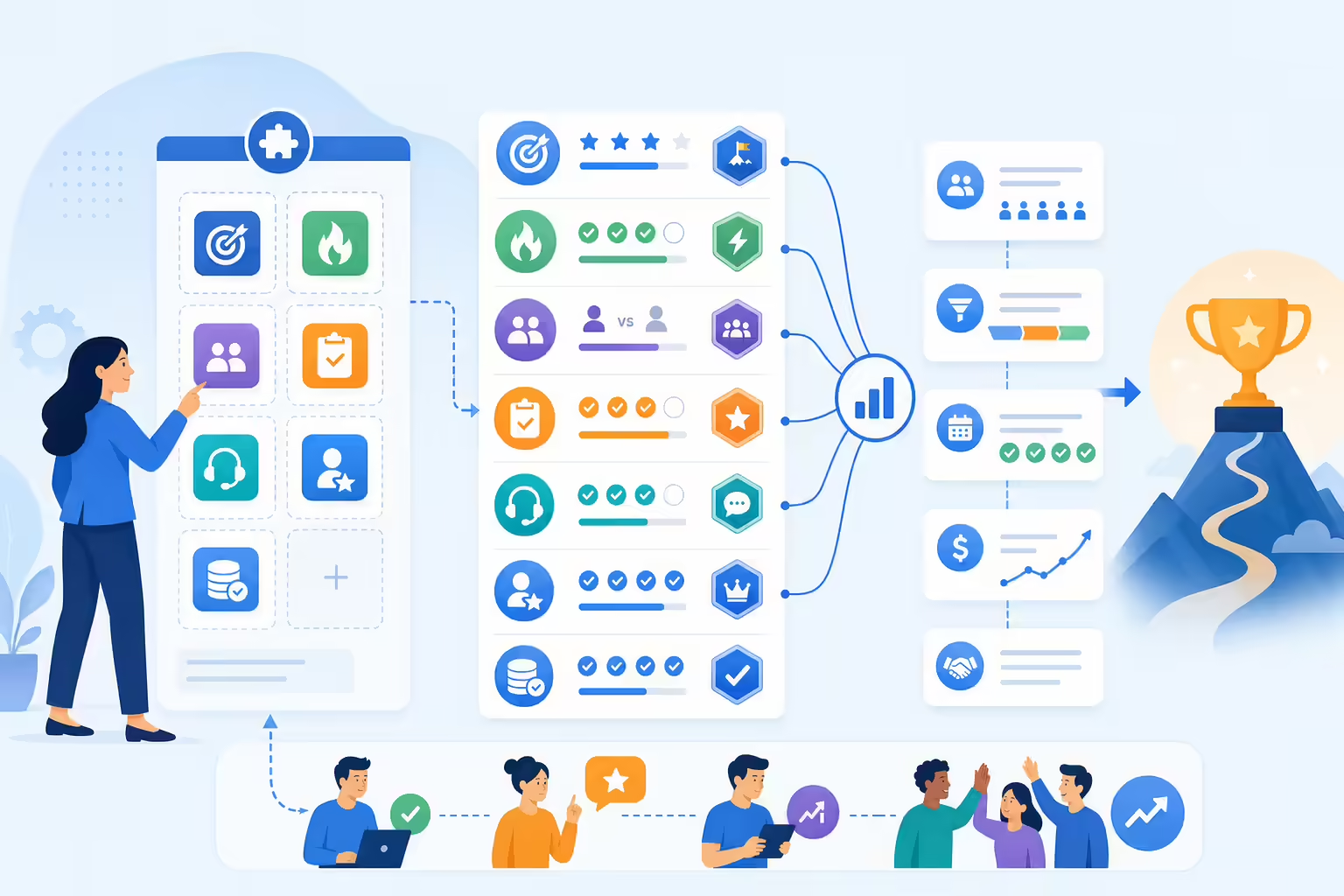
Keep the rules simple enough for reps to understand at a glance. For example, an outbound team might score points for completed call blocks, booked demos, clean CRM updates, and timely follow-ups. A manager can then use sales analytics and reporting to see whether the contest is driving the right behavior, while tools like a power dialer make the activity goals easier to execute consistently.
3. New Technologies Offer New Ways to Improve
Gamification has been around in some form or another for well over a century, and when it comes to sales gamification ideas, the best is still on the horizon.

Over the past few years, there has been an influx of new startups that are purely based on gamification. From Badgeville to UserInfuser, these apps provide SaaS gamification outlets that allow companies to improve upon their current processes. While many of these apps don’t yet work directly within CRMs, they’re still useful technologies that offer teams more ways to get involved.
To help give you an idea of what sales gamification software is leading the industry, check out this list from G2.com that gives you a great breakdown of each resource.
Take Advantage of Sales Gamification with Kixie
Kixie is a sales engagement platform designed to help sales reps crush their quota. But more than that, the platform leverages a ton of useful sales coaching and sales gamification tools to develop better sales strategies.

One of the most helpful resources that Kixie offers sales teams is the real-time sales leaderboard that keeps track of each team member’s progress and measures it against others on the force. The visual progress of other sales reps can be just enough to inspire someone to learn more, and along with other sales coaching tools, like call whispering and live call coaching, sales reps are supported with reliable sales enablement strategies to help them succeed.
This is only a sliver of what Kixie can do for your sales team, so click here to schedule a free demo to learn more!
Ready to close more deals with Kixie?
See how Kixie's AI-powered tools can transform your sales and support operations.
Start Free Trial