
TL;DR: Sales call coaching with recordings works when it stops being a listening hobby and becomes a system: pick calls deliberately instead of randomly, review them against a short list of observable behaviors, coach exactly one behavior per rep per week, and check the next recordings for whether it moved. Recordings changed what coaching can be, because the manager no longer has to be on the call to know what happened on it. But most teams use them the way people use gym memberships: paid for, praised, and untouched. The fix is not more listening time. It is a selection rule for which calls to pull, a shared definition of what good sounds like, and a cadence that ties every session to the one from the week before.
Every sales team records calls now. Almost none of them coach from the recordings in any way a rep could describe. Ask a manager how calls get chosen for review and the honest answer is usually “when something goes wrong” or “when I have time,” which are the same answer wearing different clothes.
Why recordings changed what coaching can be
Before recordings, coaching ran on two broken inputs: ride-alongs, where the rep performs because the manager is watching, and the rep’s own retelling, which is a story, not data. A recording is the call itself. The buyer’s actual words, the actual pause after the price, the actual moment the rep talked past a buying signal.
That changes the manager’s job from being present to being selective. One manager cannot sit on forty calls a day. One manager can absolutely review five well-chosen recordings a week per rep and coach from them with more precision than a month of ride-alongs. The recording removes the excuse. The system decides whether anything happens next.
Pick calls deliberately, not randomly
Random sampling is better than nothing and worse than almost anything deliberate. A working selection rule pulls three kinds of calls:
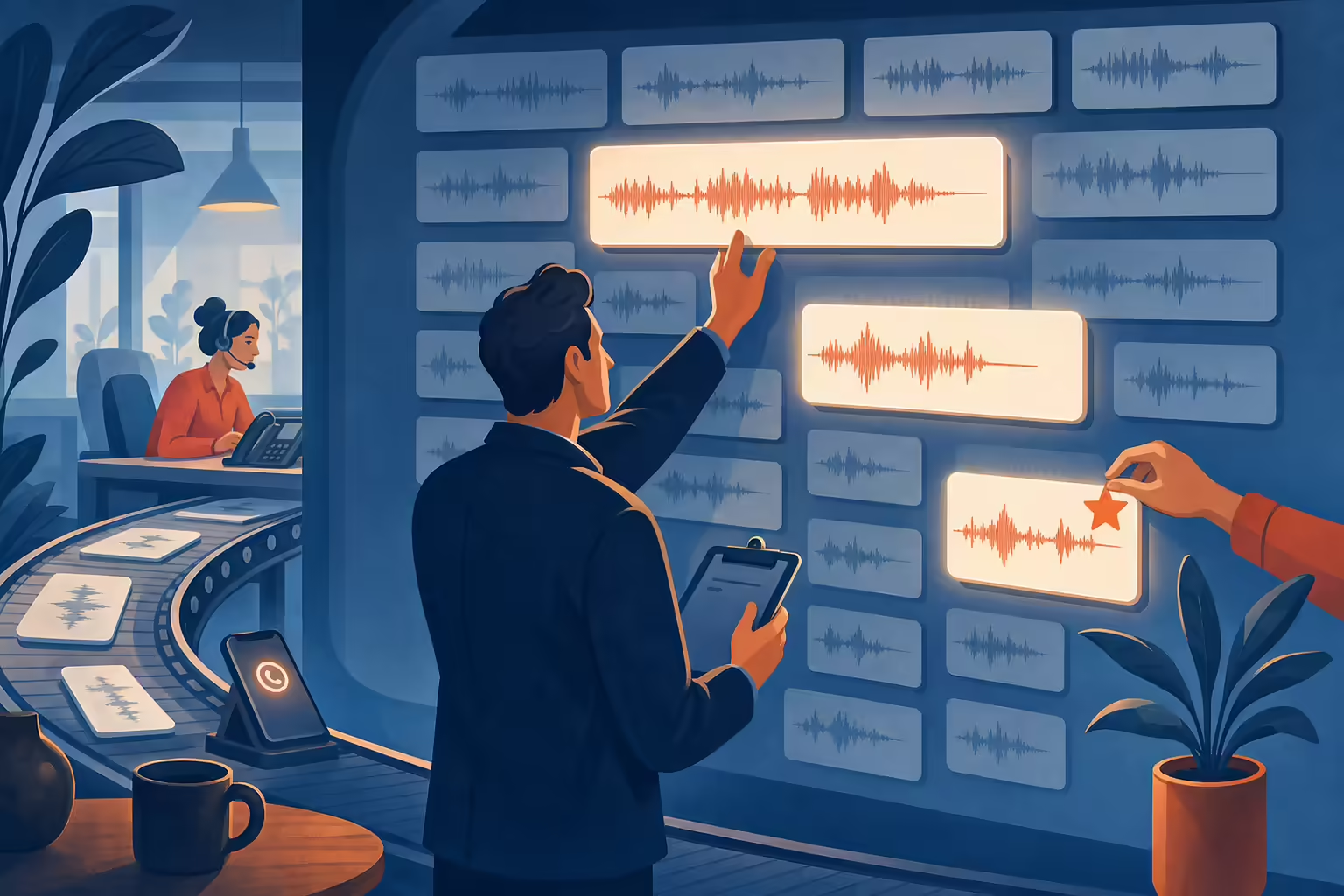
- The outliers. The longest conversation of the week and a call that ended abruptly. Long calls show what the rep does with real engagement. Abrupt ends show the first broken moment, and the first broken moment is the coachable one.
- The repeats. Calls carrying the disposition the rep logs most. If a rep’s outcomes skew heavily toward one label, the pattern lives inside those calls, not the exceptional ones.
- The rep’s own pick. One call the rep flags themselves each week: proudest or most confused by. This turns review into something done with the rep instead of to them, which is the difference between coaching and surveillance.
This selection only works if outcomes are logged consistently, which is an argument for dialing workflows where the disposition and recording attach to the CRM record automatically. Kixie’s PowerDialer logs calls and outcomes to the CRM as reps work, which means the selection rule runs on real data instead of on whatever anyone remembered to type. It also means the attempt history is honest, the same property that makes disqualification decisions defensible.
Review against behaviors, not vibes
“That call felt weak” is not coaching. A short checklist of observable behaviors is. Five questions cover most of what matters on an outbound call:
- Did the rep earn permission to continue in the opening, or just survive it?
- Did they establish a real problem before presenting anything?
- When the buyer changed direction, did the rep adapt or return to script?
- Did they ask at least one question whose answer they could not predict?
- Did the call end with a specific, dated next step both sides agreed to?
Every question is answerable from the recording with a yes, a no, and a timestamp. That last part matters: coaching lands differently when the manager can say “listen at the four-minute mark” instead of speaking in general impressions. The checklist also protects reps from mood-based management, because the standard is written down and the evidence is replayable.
Coach one behavior at a time
The most common coaching failure is generosity: a manager hears five problems and shares all five. The rep hears none of them. The discipline is brutal and simple: pick the one behavior that is costing the most, name it with a timestamp, agree on what it should sound like instead, and stop talking.

Then, and this is the part that separates a system from a habit, next week’s review starts by checking that one behavior in the new recordings. Did the opening change? Did the next-step ask show up? Improvement gets named as specifically as the problem did. A rep who watches one behavior actually move gains something no pep talk provides: evidence that coaching works, which makes them easier to coach forever after.
What not to do reads like the reluctance playbook, because it is: do not review calls only when numbers dip, do not ambush reps with clips in team meetings, and do not confuse call volume with call quality. A rep who fears the recordings will find quiet ways to avoid making calls at all, and then you have traded a coaching problem for a call reluctance problem.
Turn what top reps do into shared process
The second use of recordings is bigger than fixing weaknesses: figuring out what the best rep actually does. Not what they say they do. What the recordings show. How they open, how they handle the first objection, when they stop talking. Pull the patterns out, write them down, and the top performer’s habits become the team’s playbook instead of the team’s mystery.
This is also the honest path to leadership for the rep in question: mastering the role, codifying why the process works, and improving peers is a stronger management case than being the best individual seller. The recordings are where that codification starts.
One caution: copy the moves, not the person. A checklist built from one rep’s charisma will fail everyone else. Extract behaviors that transfer: question patterns, pacing, next-step asks. Leave the personality with its owner.
Sales call coaching with recordings FAQs
How many calls should a manager review per rep per week?
Enough to cover the selection rule, which usually means three to five per rep. Depth beats volume: five calls reviewed against a behavior checklist outperform twenty absorbed in the background while answering email.
Should reps listen to their own recordings?
Yes, and before the coaching session. A rep who has heard the call arrives ready to discuss it instead of defending a memory of it. The rep’s own weekly pick makes this a habit without making it homework.
Do we need consent to record sales calls?
Recording rules vary by location and by who is on the call, and some places require every party’s consent. Configure recording behavior with counsel’s guidance for the regions you call. Software settings alone do not establish compliance.
What about AI call summaries and scoring?
Useful for aiming attention: AI can flag which calls show pushback or a collapsed script so the manager reviews the right five instead of a random five. The judgment about what to coach, and the conversation with the rep, stay human. AI points; the coach decides.
Ready to close more deals with Kixie?
See how Kixie's AI-powered tools can transform your sales and support operations.
Start Free Trial