TL;DR: Federal telemarketing rules generally limit outbound residential sales calls to 8 a.m. to 9 p.m. in the called party’s local time, but state rules can be narrower. Use this 2026 planning reference to flag verified stricter examples, including Alabama, Connecticut, Maryland, Nevada, Rhode Island, and Texas, then have counsel or your compliance vendor verify every campaign state before calling. Kixie can support local-time dialing workflows, CRM logging, and suppression-list processes, but legal compliance depends on your policies, configuration, lists, consent records, and legal review.
This article is for general business information, not legal advice. Telemarketing laws change, exemptions vary, and state rules may apply differently based on who is calling, what is being sold, the recipient type, consent, phone type, call technology, and whether the call is B2B or consumer-facing. Before launching a campaign, confirm the rule set with qualified counsel.
Federal telemarketing calling hours in 2026
The federal baseline is the starting point, not the full compliance answer.
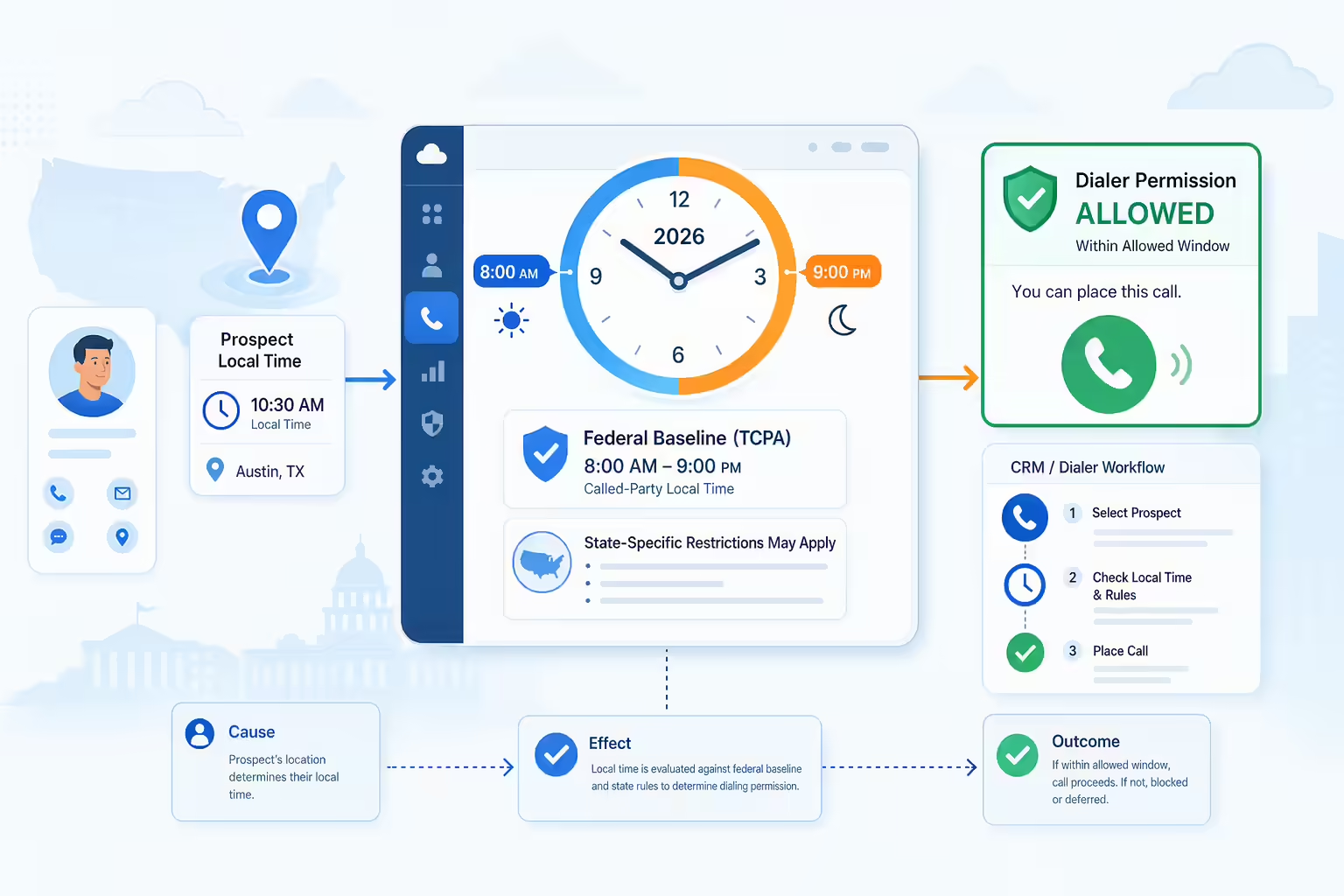
The FTC’s Telemarketing Sales Rule says that, without prior consent to call at another time, outbound telemarketing calls to a person’s home are limited to 8 a.m. to 9 p.m. local time at the called person’s location. The current rule text appears in the TSR calling-time rule, and the FTC’s business guidance explains the same calling-time restriction in plain language.
The FCC’s TCPA implementing rule also prohibits telephone solicitations to residential subscribers before 8 a.m. or after 9 p.m. local time at the called party’s location. See the FCC delivery restrictions rule for the current text.
That federal window does not mean every state lets your team call from 8 a.m. to 9 p.m. Some states set narrower windows, Sunday limits, holiday limits, frequency caps, registration rules, or separate requirements for automated dialing, prerecorded voice, artificial voice, text messages, and revocation requests.
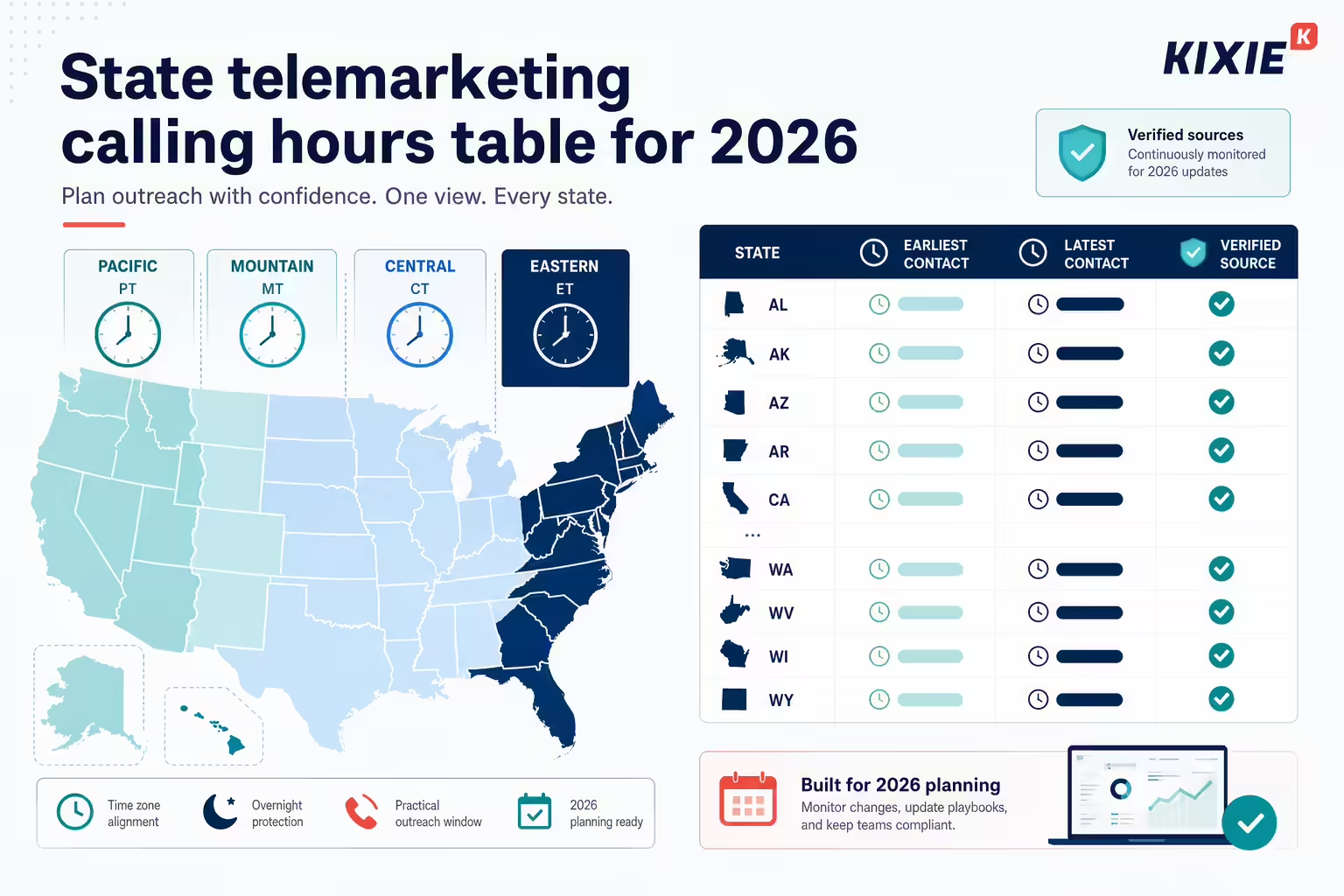
State telemarketing calling hours table for 2026
Read this table as a planning screen, not a final legal matrix. "Federal baseline" means the federal 8 a.m. to 9 p.m. local-time rule is the starting point for that state in this draft. It does not mean Kixie has confirmed there is no stricter state law, local rule, industry rule, consent condition, or technology-specific restriction.
| State | Planning call window | 2026 planning note | Source confidence |
|---|---|---|---|
| Alabama | 8 a.m. to 8 p.m. on allowed days | Alabama’s rule for live and automated solicitation calls says no Sunday or holiday solicitation calls, and no calls before 8 a.m. or after 8 p.m. on allowed days. | Verified regulation |
| Alaska | Federal baseline | Start with 8 a.m. to 9 p.m. local time, then verify current Alaska-specific rules before launch. | Verify locally |
| Arizona | Federal baseline | Start with federal timing and verify state DNC, consent, and automated-call rules before launch. | Verify locally |
| Arkansas | Federal baseline | Start with federal timing and verify state restrictions before launch. | Verify locally |
| California | Federal baseline | Start with federal timing and verify California-specific consent, autodialer, recording, and privacy requirements before launch. | Verify locally |
| Colorado | Federal baseline | Start with federal timing and verify state restrictions before launch. | Verify locally |
| Connecticut | 9 a.m. to 8 p.m. | Connecticut’s Department of Consumer Protection says telemarketers may call only during 9 a.m. to 8 p.m. local time, and the current statute uses the same window. | Verified state source |
| Delaware | Federal baseline | Start with federal timing and verify state restrictions before launch. | Verify locally |
| Florida | 8 a.m. to 9 p.m. | Florida’s Department of Agriculture and Consumer Services states the current commercial telephone solicitation window as 8 a.m. to 9 p.m. local time. Treat this as a verified baseline, not a stricter window. | Verified state source |
| Georgia | Federal baseline | Start with federal timing and verify state restrictions before launch. | Verify locally |
| Hawaii | Federal baseline | Start with federal timing and verify state restrictions before launch, especially time-zone handling for mainland teams. | Verify locally |
| Idaho | Federal baseline | Start with federal timing and verify state restrictions before launch. | Verify locally |
| Illinois | Federal baseline | Start with federal timing and verify current state calling, texting, and autodialer rules before launch. | Verify locally |
| Indiana | Federal baseline | Start with federal timing and verify state restrictions before launch. | Verify locally |
| Iowa | Federal baseline | Start with federal timing and verify state restrictions before launch. | Verify locally |
| Kansas | Federal baseline | Start with federal timing and verify state restrictions before launch. | Verify locally |
| Kentucky | Federal baseline | Start with federal timing and verify state restrictions before launch. | Verify locally |
| Louisiana | Pending verification | Public Service Commission materials flag Sunday and legal-holiday issues in Louisiana’s Do Not Call program. Do not rely on this row until counsel verifies the campaign-specific rule. | Pending legal verification |
| Maine | Federal baseline | Start with federal timing and verify state restrictions before launch. | Verify locally |
| Maryland | 8 a.m. to 8 p.m. | Maryland Commercial Law Section 14-4502 prohibits covered telephone solicitations from 8 p.m. to 8 a.m. and also includes a same-subject call-frequency limit. Confirm exemptions and consent status before applying it. | Verified statute |
| Massachusetts | Federal baseline | Start with federal timing and verify Massachusetts DNC and state telemarketing rules before launch. | Verify locally |
| Michigan | Federal baseline | Start with federal timing and verify state restrictions before launch. | Verify locally |
| Minnesota | Federal baseline | Start with federal timing and verify state restrictions before launch. | Verify locally |
| Mississippi | Federal baseline | Start with federal timing and verify state restrictions before launch. | Verify locally |
| Missouri | Federal baseline | Start with federal timing and verify state restrictions before launch. | Verify locally |
| Montana | Federal baseline | Start with federal timing and verify state restrictions before launch. | Verify locally |
| Nebraska | Federal baseline | Start with federal timing and verify state restrictions before launch. | Verify locally |
| Nevada | No residential telephone solicitation from 8 p.m. to 9 a.m. | Nevada law treats residential telephone solicitation between 8 p.m. and 9 a.m. as a deceptive trade practice. | Verified statute |
| New Hampshire | Federal baseline | Start with federal timing and verify state restrictions before launch. | Verify locally |
| New Jersey | Federal baseline | Start with federal timing and verify state restrictions before launch. | Verify locally |
| New Mexico | Federal baseline | Start with federal timing and verify state restrictions before launch. | Verify locally |
| New York | Federal baseline | Start with federal timing and verify state restrictions before launch. | Verify locally |
| North Carolina | Federal baseline | Start with federal timing and verify state restrictions before launch. | Verify locally |
| North Dakota | Federal baseline | Start with federal timing and verify state restrictions before launch. | Verify locally |
| Ohio | Federal baseline | Start with federal timing and verify state restrictions before launch. | Verify locally |
| Oklahoma | Federal baseline | Start with federal timing and verify Oklahoma-specific telemarketing registration, DNC, and calling rules before launch. | Verify locally |
| Oregon | Federal baseline | Start with federal timing and verify current state restrictions before launch. | Verify locally |
| Pennsylvania | Federal baseline | Start with federal timing and verify Pennsylvania-specific Sunday, holiday, and state DNC requirements before launch. | Verify locally |
| Rhode Island | Weekdays 9 a.m. to 6 p.m. and Saturday 10 a.m. to 5 p.m. | Rhode Island law says unsolicited telephonic sales calls may be made only during defined hours of operation. | Verified statute |
| South Carolina | Federal baseline | Start with federal timing and verify state restrictions before launch. | Verify locally |
| South Dakota | Federal baseline | Start with federal timing and verify state restrictions before launch. | Verify locally |
| Tennessee | Federal baseline | Start with federal timing and verify state restrictions before launch. | Verify locally |
| Texas | 9 a.m. to 9 p.m. on weekdays and Saturdays, noon to 9 p.m. on Sundays | The Texas State Law Library explains that Texas telephone solicitation rules use this narrower Sunday window. | Verified state source |
| Utah | Federal baseline | Start with federal timing and verify state restrictions before launch. | Verify locally |
| Vermont | Federal baseline | Start with federal timing and verify state restrictions before launch. | Verify locally |
| Virginia | Federal baseline | Start with federal timing and verify state restrictions before launch. | Verify locally |
| Washington | Federal baseline | Start with federal timing and verify Washington state calling and texting rules before launch. | Verify locally |
| West Virginia | Federal baseline | Start with federal timing and verify state restrictions before launch. | Verify locally |
| Wisconsin | Federal baseline | Start with federal timing and verify state restrictions before launch. | Verify locally |
| Wyoming | Federal baseline | Start with federal timing and verify state restrictions before launch. | Verify locally |
The safest operational rule is to apply the narrowest verified window that may govern a campaign, then add suppressions for recipient local time, Sundays, holidays, revocation, consent status, and state-specific DNC requirements.
Weekend holiday and frequency rules sales teams miss
Calling hours are only one part of the schedule. Sales teams also need to account for:
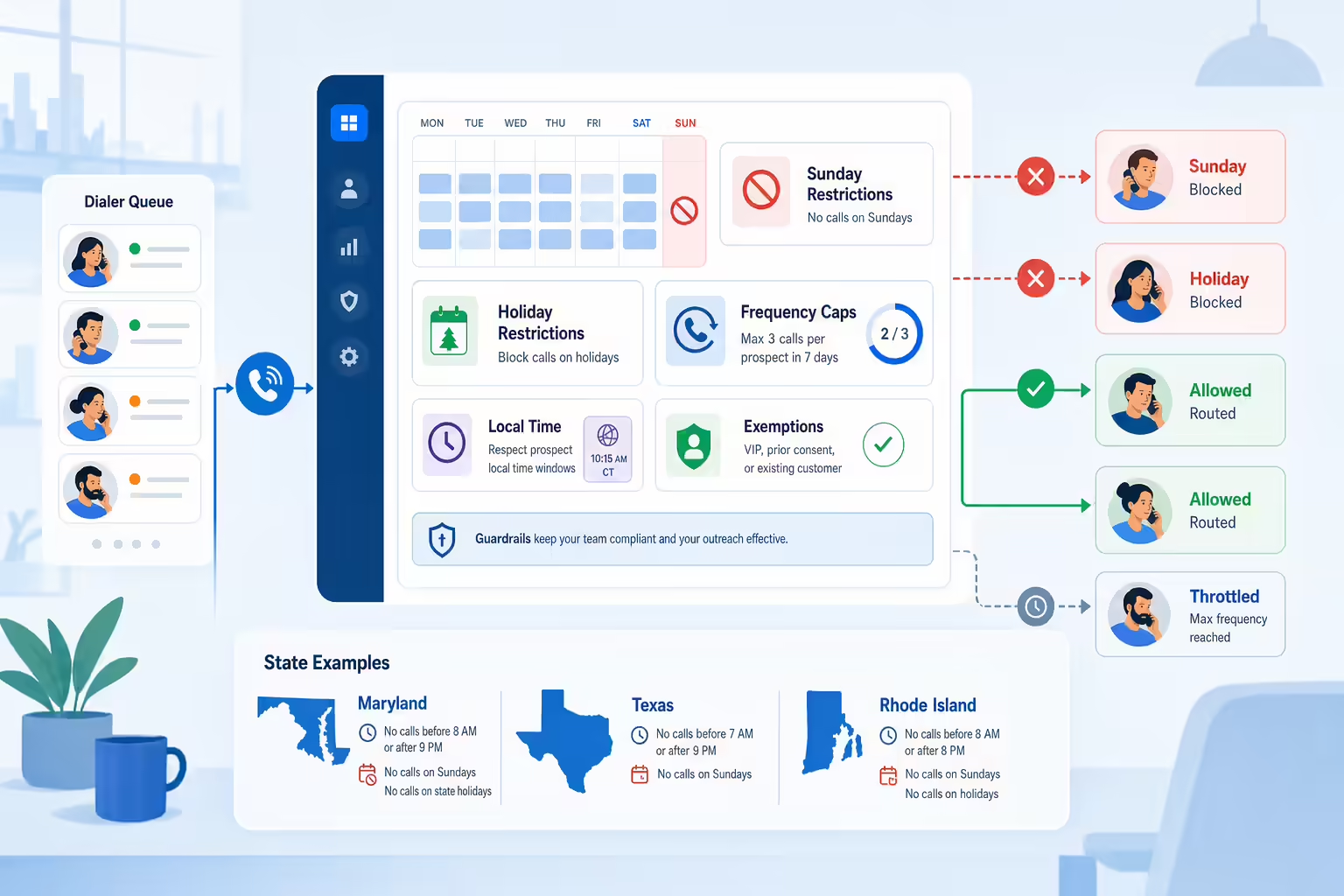
- Sunday restrictions, where a state may allow fewer hours or no calls.
- State and federal holidays, where a state may prohibit or narrow solicitation calls.
- Frequency caps, where a state may limit repeated calls to the same called party in a set period.
- Time-zone uncertainty, especially when a number’s area code does not match the prospect’s actual location.
- Exemptions, including some existing-relationship, nonprofit, B2B, consumer-initiated, or consent-based scenarios that still need legal review.
Maryland is a useful example because its statute combines an 8 a.m. to 8 p.m. window with a same-subject frequency limit for covered telephone solicitations. Texas is another practical example because Sunday starts at noon. Rhode Island creates a different kind of scheduling problem because its weekday window ends at 6 p.m. and Saturday ends at 5 p.m.
Calls texts AI voice and automated dialing are separate risks
Do not treat the timing table as a complete TCPA, TSR, state mini-TCPA, DNC, SMS, or AI voice compliance guide.
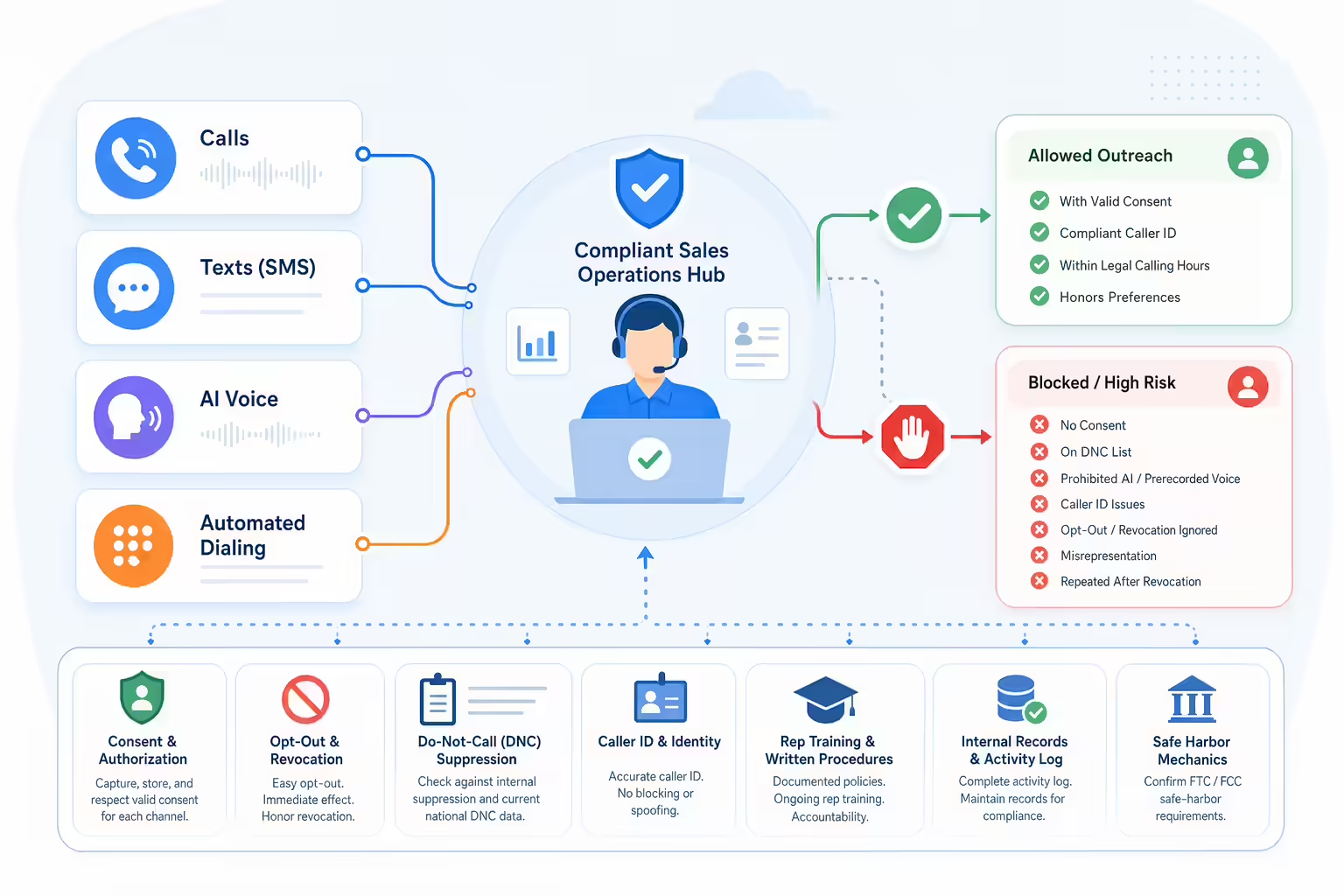
A call may be inside the right hours and still create risk if the campaign lacks proper consent, uses a prohibited prerecorded or artificial voice, ignores a DNC registration, fails to honor a company-specific opt-out, misrepresents caller identity, blocks caller ID, or keeps calling after revocation.
The FCC and FTC rules also include revocation and do-not-call procedures. In practical terms, that means written procedures, rep training, internal suppression records, and current national DNC data. The federal rules include a 31-day registry-version requirement, but teams should confirm how the FTC and FCC safe-harbor mechanics apply to each campaign.
How to operationalize calling hour compliance in a sales dialer
A practical sales workflow should turn the legal matrix into campaign controls:
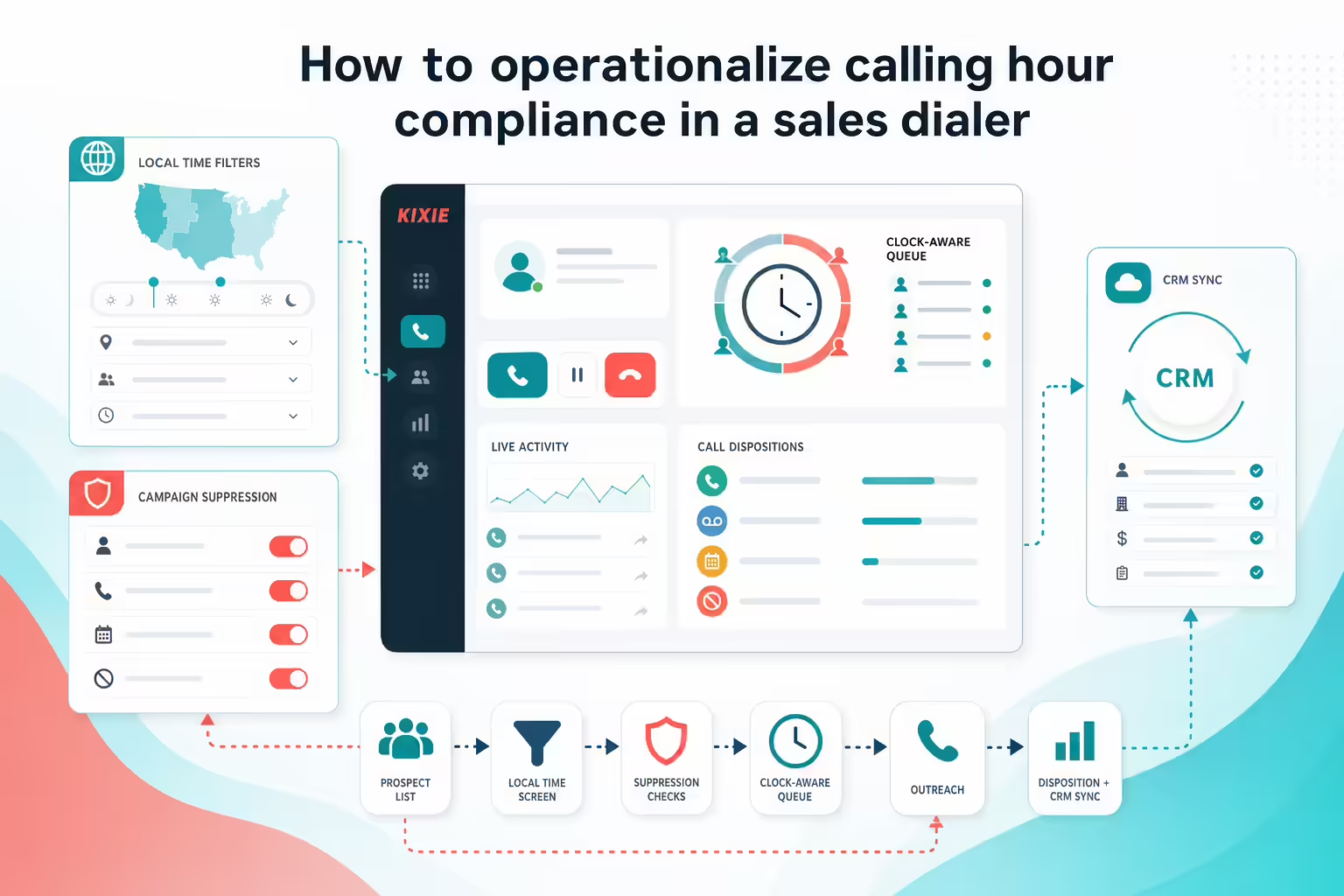
- Capture the prospect’s likely local time zone from CRM address, phone data, form data, and account context.
- Suppress calls outside the narrowest verified window for that prospect.
- Maintain state-specific holiday and Sunday suppression rules.
- Enforce frequency caps by prospect, phone number, campaign, and subject matter.
- Keep national and state DNC suppression processes current.
- Log consent source, revocation, opt-out requests, and disposition history in the CRM.
- Train reps on what to do when a prospect says "do not call," "stop," or similar language.
- Review campaign rules before every new market, list source, offer, and dialer mode.
This is where tools matter. A sales team using a sales dialer or power dialer needs more than a faster call button. The workflow should make it easy to segment lists, pause risky records, log outcomes, and sync activity back to the CRM.
How Kixie fits a compliance aware calling workflow
Kixie is built for outbound sales teams that need calling, texting, voicemail, automation, and CRM visibility in one workflow. For compliance-aware operations, the practical value is process control:
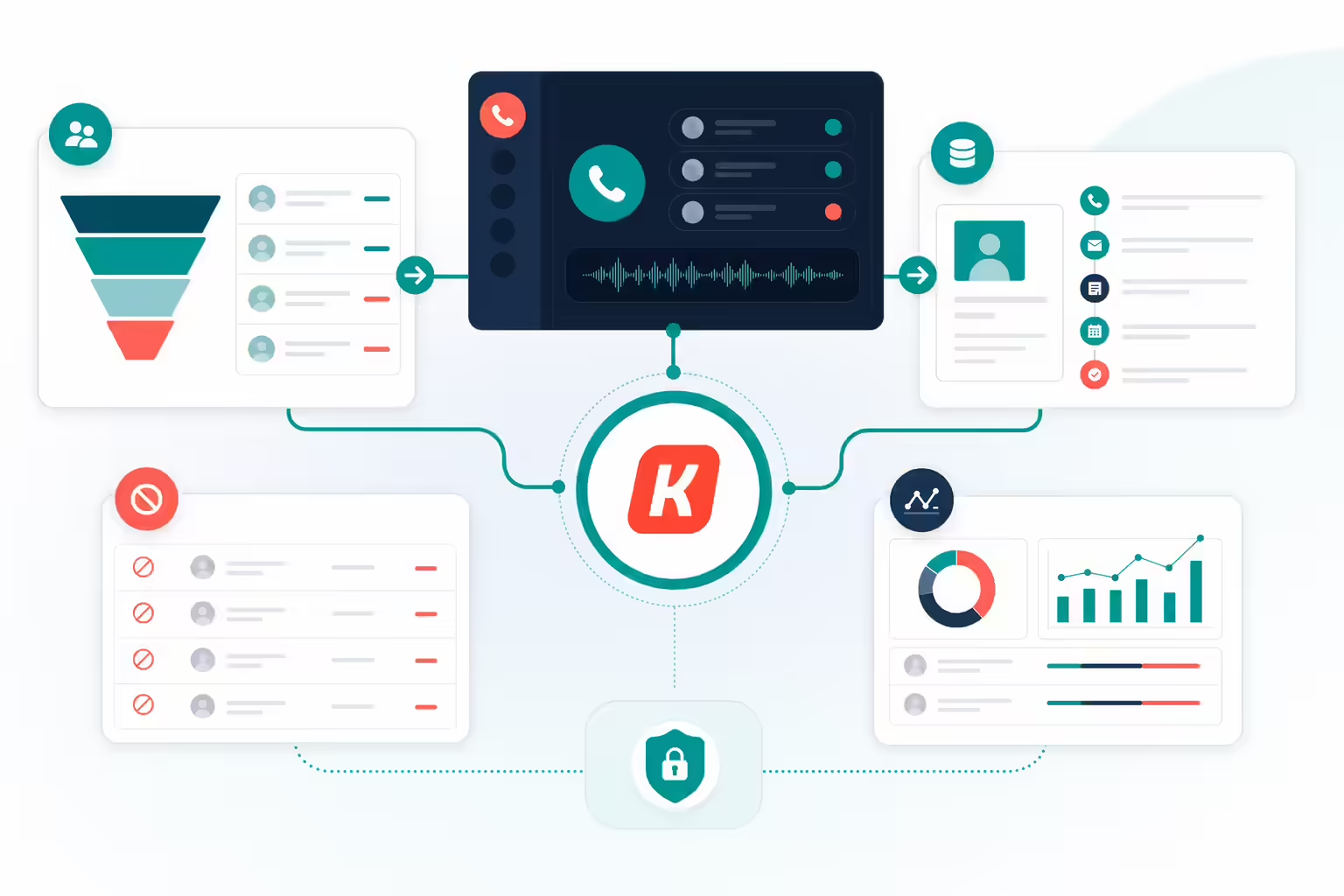
- Reps can work from segmented calling lists instead of manually choosing numbers from spreadsheets.
- Managers can build calling workflows around approved campaigns and markets.
- Call outcomes and activity can sync through bi-directional CRM integrations.
- Teams can combine dialing workflows with internal compliance procedures, list suppression, and call review.
Kixie does not replace counsel, consent management, DNC scrubbing, or campaign governance. Your team is responsible for configuring the platform, maintaining suppression lists, training reps, and verifying the rules that apply to each campaign.
If you are evaluating the operational side of outbound calling, compare Kixie’s pricing or request a demo to see how sales dialer workflows fit your CRM process.
Telemarketing calling hours FAQ
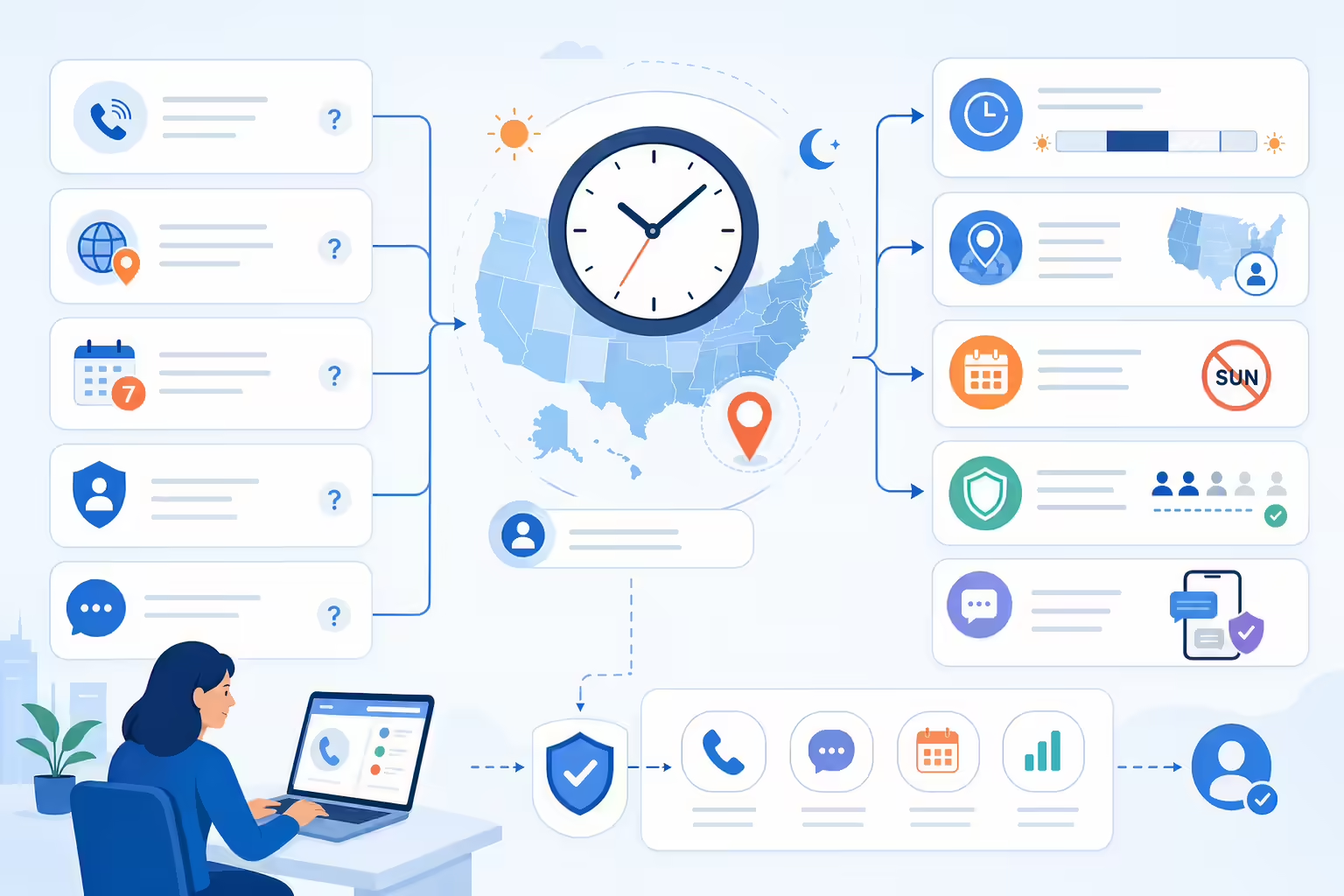
What time is it illegal for telemarketers to call
Under the federal baseline, outbound telemarketing calls to a residence generally cannot be placed before 8 a.m. or after 9 p.m. in the called person’s local time without prior consent to call outside that window. Some states use narrower windows.
Are calling hours based on my time or the prospect’s time
Federal rules use the called party’s local time. Sales teams should design campaigns around the prospect’s local time, not the rep’s office time.
Can telemarketers call on Sundays
Federal law does not create a blanket Sunday ban for all telemarketing calls, but some states narrow Sunday hours or restrict Sunday calls. Texas, for example, uses a noon to 9 p.m. Sunday window for covered telephone solicitation. Alabama and Rhode Island create stricter practical limits for covered solicitation calls.
How many times can a telemarketer call before it becomes harassment
There is no single national number that makes every campaign safe or unsafe. Federal rules prohibit repeated or continuous calls made with intent to annoy, abuse, or harass, and some states add specific frequency caps. Maryland, for example, includes a same-subject frequency limit for covered telephone solicitations, but applicability depends on the campaign and any exemptions.
Do the same calling hours apply to texts
Do not assume voice-call timing rules are the only SMS rule. Marketing texts can trigger separate consent, opt-out, revocation, quiet-hour, platform, carrier, and state-law requirements. Treat SMS as its own compliance track.
2026 update note
This draft was checked on May 30, 2026 against federal sources and a limited set of primary state sources. It should be reviewed by counsel before publication and rechecked regularly because state telemarketing laws, mini-TCPA statutes, FCC rules, FTC guidance, and enforcement priorities can change.
Ready to close more deals with Kixie?
See how Kixie's AI-powered tools can transform your sales and support operations.
Start Free Trial