The Hidden Liabilities of a Disconnected Revenue Engine
In today’s hyper-competitive B2B landscape, the pressure on revenue teams to meet and exceed aggressive targets is relentless. To gain an edge, organizations have armed their sales, marketing, and customer success teams with an ever-expanding arsenal of specialized technology. Point solutions for sales engagement, conversation intelligence, forecasting, and customer relationship management have promised to unlock new levels of productivity. Yet, for many organizations, this proliferation of tools has yielded an unintended and hazardous consequence: a deeply fragmented revenue engine. Instead of a well-oiled machine, many leaders are unknowingly presiding over a collection of disconnected parts, creating hidden liabilities that extend far beyond simple inefficiency. This fragmentation is the primary source of what has become a pervasive challenge for modern enterprises: scattered, incomplete, and siloed data. When valuable information about customer interactions, deal health, and rep performance is compartmentalized across different, non-communicating systems, a single, coherent view of the revenue process becomes impossible. This technological disarray is not merely an IT headache; it is the root cause of significant strategic risk that directly impacts a company’s ability to scale, predict performance, and protect its brand.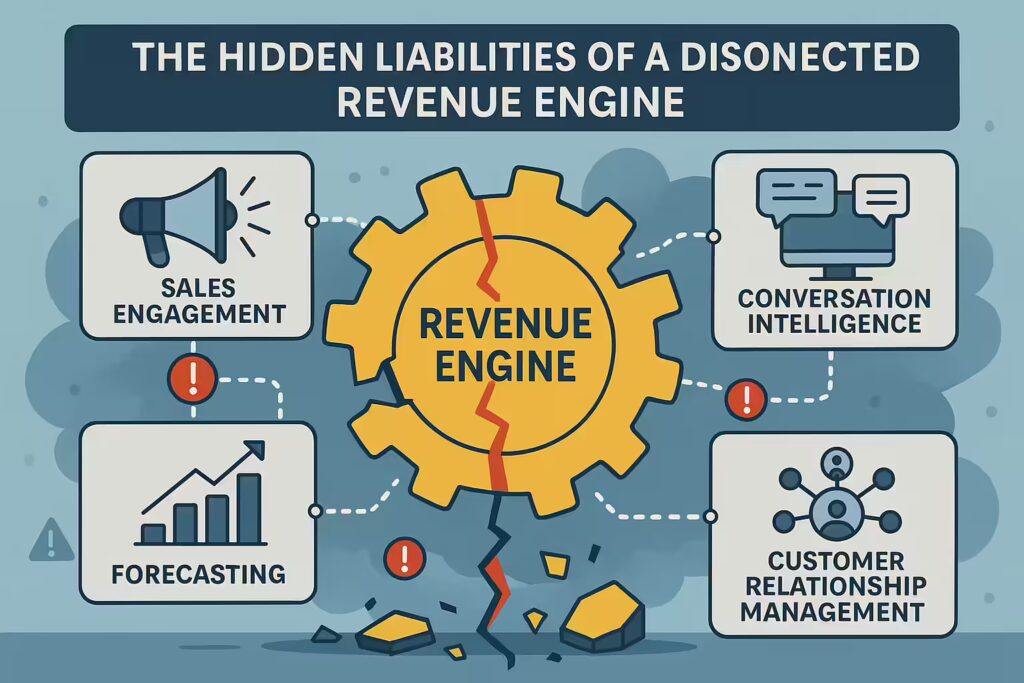 The first and most immediate consequence is the absence of cohesive workflows. Without a unified system to guide them, sales teams struggle to execute with consistency. Best practices remain locked away as the tribal knowledge of a few top performers, impossible to standardize or scale across the organization. This often leads to what can be described as the “Do Nothing” approach, where reps, overwhelmed by disparate tools and a lack of clear direction, revert to familiar but suboptimal habits, leaving significant revenue opportunities on the table. This systemic inconsistency makes it exceedingly difficult for leadership to drive meaningful behavior change or implement new strategies with any degree of confidence.
This lack of a unified data foundation inevitably cripples an organization’s ability to forecast and plan. When revenue models are built on a patchwork of incomplete or outdated data, they become unreliable instruments for decision-making. Leaders are forced to operate with a critical blind spot, unable to accurately identify risks in the pipeline, spot emerging opportunities, or build an achievable revenue plan backed by real-world data. The result is a reactive, unpredictable revenue motion where surprises become the norm and financial targets are consistently missed.
Perhaps the most insidious risk of a disconnected revenue engine is the slow erosion of brand equity and market reputation. When teams operate from different datasets and without standardized communication protocols, messaging becomes inconsistent, and the customer experience suffers. More acutely, the inability to centrally manage outbound communication channels can lead to disastrous technical consequences. Without proper oversight of calling practices and phone number health, a company’s numbers can be flagged as “Spam Risk” or “Scam Likely” by carriers, effectively severing their connection to their target market. This operational failure directly undermines every dollar spent on marketing and lead generation, rendering the entire go-to-market (GTM) strategy ineffective.
Ultimately, this fragmented ecosystem represents a fundamental failure of governance. Without a “central nervous system” or “command center” to unify the disparate pieces of the revenue technology stack, leadership lacks the visibility and control required to steer the organization effectively. The very tools purchased to optimize performance have, in their disconnected state, created a fragile and opaque system where the most significant risks are hidden in the gaps between them. This is a C-suite-level problem that demands a new, orchestrated approach—one that transforms the revenue process from a source of hidden liability into a bastion of strategic resilience.
The first and most immediate consequence is the absence of cohesive workflows. Without a unified system to guide them, sales teams struggle to execute with consistency. Best practices remain locked away as the tribal knowledge of a few top performers, impossible to standardize or scale across the organization. This often leads to what can be described as the “Do Nothing” approach, where reps, overwhelmed by disparate tools and a lack of clear direction, revert to familiar but suboptimal habits, leaving significant revenue opportunities on the table. This systemic inconsistency makes it exceedingly difficult for leadership to drive meaningful behavior change or implement new strategies with any degree of confidence.
This lack of a unified data foundation inevitably cripples an organization’s ability to forecast and plan. When revenue models are built on a patchwork of incomplete or outdated data, they become unreliable instruments for decision-making. Leaders are forced to operate with a critical blind spot, unable to accurately identify risks in the pipeline, spot emerging opportunities, or build an achievable revenue plan backed by real-world data. The result is a reactive, unpredictable revenue motion where surprises become the norm and financial targets are consistently missed.
Perhaps the most insidious risk of a disconnected revenue engine is the slow erosion of brand equity and market reputation. When teams operate from different datasets and without standardized communication protocols, messaging becomes inconsistent, and the customer experience suffers. More acutely, the inability to centrally manage outbound communication channels can lead to disastrous technical consequences. Without proper oversight of calling practices and phone number health, a company’s numbers can be flagged as “Spam Risk” or “Scam Likely” by carriers, effectively severing their connection to their target market. This operational failure directly undermines every dollar spent on marketing and lead generation, rendering the entire go-to-market (GTM) strategy ineffective.
Ultimately, this fragmented ecosystem represents a fundamental failure of governance. Without a “central nervous system” or “command center” to unify the disparate pieces of the revenue technology stack, leadership lacks the visibility and control required to steer the organization effectively. The very tools purchased to optimize performance have, in their disconnected state, created a fragile and opaque system where the most significant risks are hidden in the gaps between them. This is a C-suite-level problem that demands a new, orchestrated approach—one that transforms the revenue process from a source of hidden liability into a bastion of strategic resilience.
Governance as a Growth Engine: Architecting a Scalable, Standardized GTM Motion
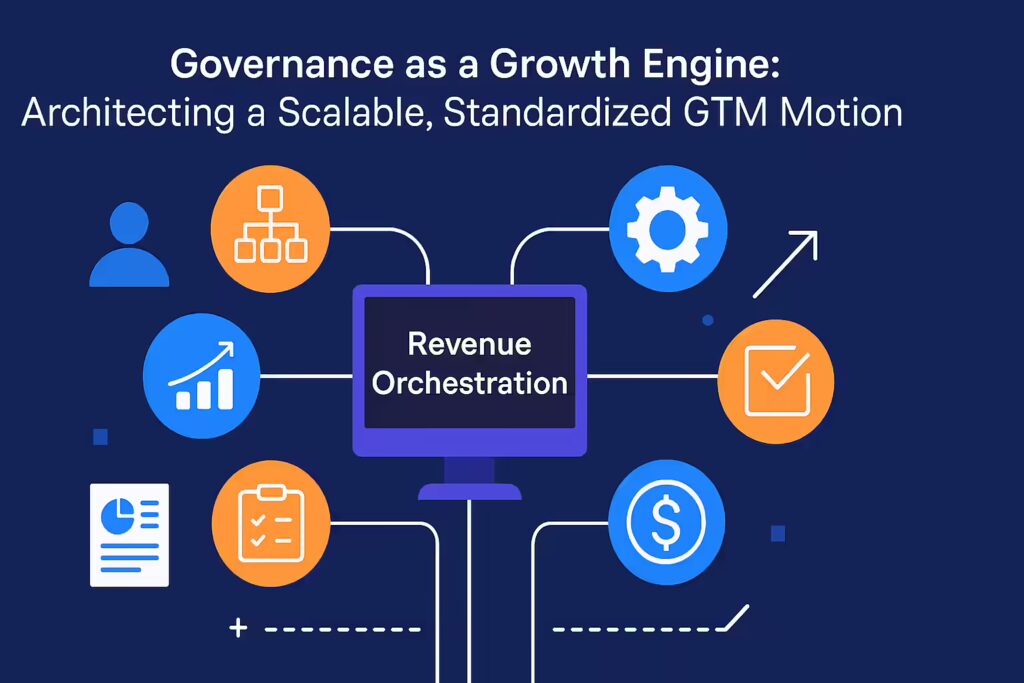
The concept of governance is often misconstrued as a restrictive force—a set of rules designed to limit autonomy and stifle creativity. In the context of a modern revenue organization, however, this perception is fundamentally flawed. When implemented through a Revenue Orchestration Platform (ROP), governance becomes the essential framework for unlocking scalable, predictable, and high-performance growth. It is the architectural blueprint that transforms a chaotic collection of individual efforts into a synchronized, powerful, and unified GTM motion. A Revenue Orchestration Platform acts as the “central nervous system” for the entire revenue generation process, serving as the conductor that keeps every part of the sales symphony on the same page. By integrating the once loosely connected technologies across the buyer and seller journey, an ROP creates a unified workflow where data, insights, and actions are seamlessly interwoven. This unification is the cornerstone of effective governance, providing a “single pane of glass” through which leaders can design, execute, monitor, and improve their entire sales strategy. The foundational element of this governance structure is the creation of a single, authoritative source of truth. An ROP achieves this by merging the data silos that compartmentalize valuable information across CRMs, communication tools, and engagement platforms. Kixie’s platform exemplifies this principle through its deep, bi-directional integrations with leading CRMs like HubSpot, Salesforce, and Zoho. Every call, text message, and interaction outcome is automatically logged and contextualized within the master customer record, eliminating the error-prone, time-consuming task of manual data entry. This automated data capture not only boosts productivity but also ensures that managers and leaders can trust the data they are using to make critical decisions, creating true “synchronicity across team and company goals”. With a reliable data foundation in place, leadership can move from merely observing performance to actively architecting it. An ROP doesn’t just map the path to revenue; it “sets up guardrails” to ensure the team stays on it. This capability allows for the creation and enforcement of standardized, repeatable sales cadences and “plays” that codify the behaviors of top performers. For instance, Kixie enables leaders to build powerful, automated plays that are triggered directly by events in the CRM. An inbound “Hot Lead” play can automatically initiate a call to a new web form submission within seconds, followed by a personalized SMS if there’s no answer. Similarly, a “Renewal Risk Rescue” play can be triggered when a customer’s health score drops, automatically creating an urgent task for the account manager and placing the customer in a priority call queue. This is how governance directly fuels growth. By embedding best practices into the system itself, organizations can dramatically accelerate the ramp-up time for new hires, who are guided by a proven process from day one. It allows leaders to systematically scale what works across the entire team and quickly identify and eliminate ineffective strategies. The result is a de-risked revenue model built on a foundation of “consistent and predictable outcomes”. This transformation is profound: it shifts the source of success from the “art” of a few individual heroes to the “science” of a well-governed system. By capturing and codifying winning behaviors, the platform allows every rep to sell “like your best rep,” making the entire revenue team more resilient and the company’s growth trajectory less dependent on individual heroics—a critical step in de-risking the business for long-term, predictable success.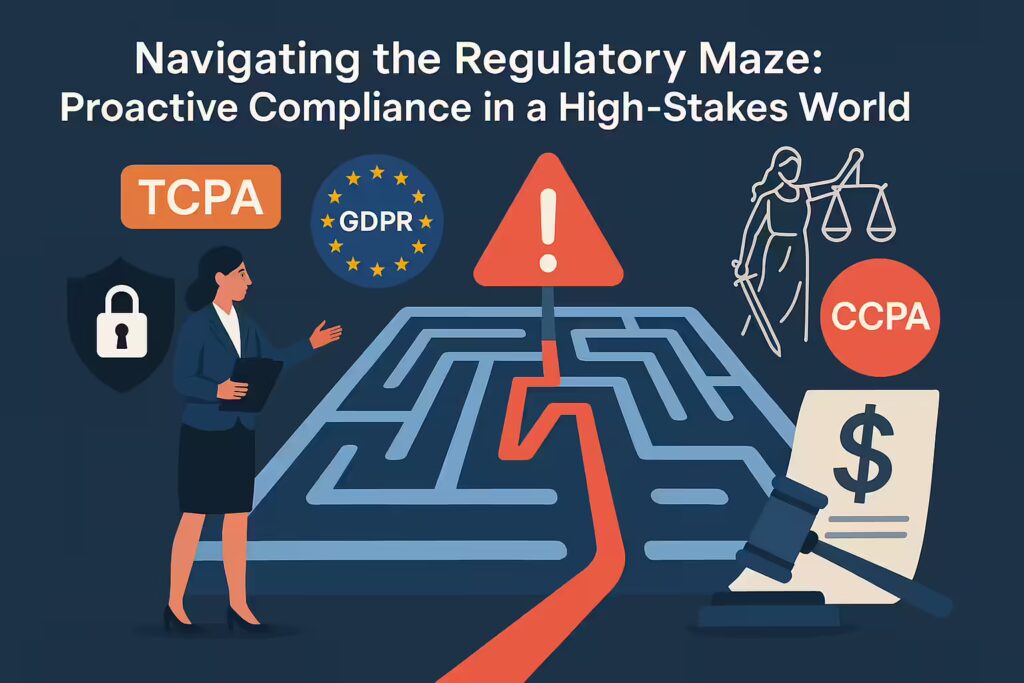
Navigating the Regulatory Maze: Proactive Compliance in a High-Stakes World
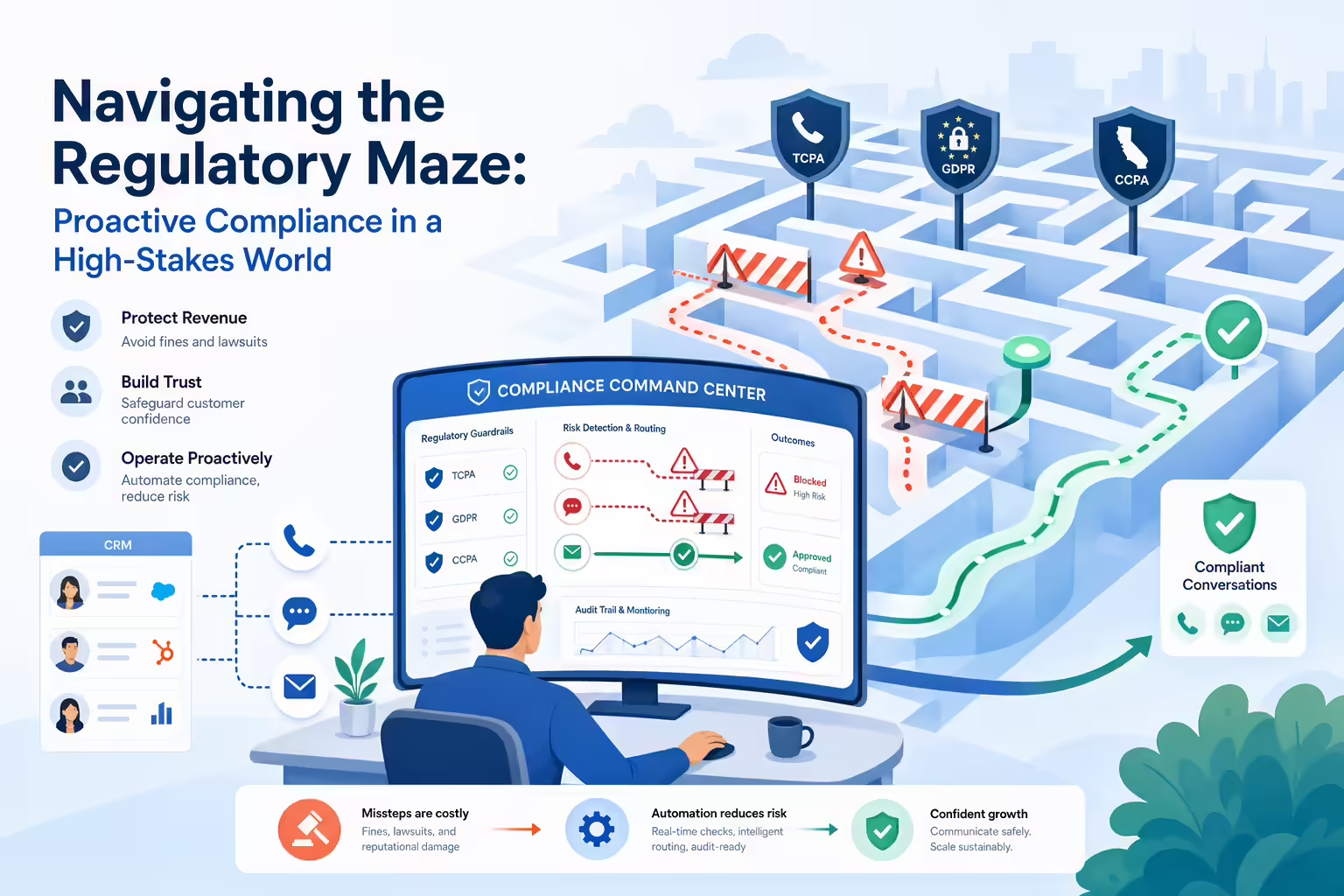
| Kixie Feature | Regulation Addressed | Strategic Risk Mitigated |
|---|---|---|
| Two-Party Consent Mode | State-level call recording laws (e.g., CA, FL, PA) | Legal penalties, inadmissibility of recordings in disputes, violation of CCPA principles. |
| Proprietary DNC Algorithm | Telephone Consumer Protection Act (TCPA) | Significant fines (up to $1,500 per violation), brand-damaging class-action lawsuits. |
| Caller ID Reputation Mgmt. | STIR/SHAKEN, Carrier Spam Filtering | Brand damage, severely diminished connection rates, wasted GTM spend, being blacklisted by carriers. |
| GDPR-Compliant Data Handling | General Data Protection Regulation (GDPR) | Fines up to 4% of global turnover, loss of access to EU market, reputational harm. |
| Automated Opt-Out & Consent Mgmt | TCPA (2025 updates), CCPA | Non-compliance penalties for slow processing, poor customer experience, loss of trust. |
| Secure Data & Infrastructure | GDPR, CCPA (Data Security Mandates) | Data breach liability, civil penalties, loss of customer trust, business disruption. |
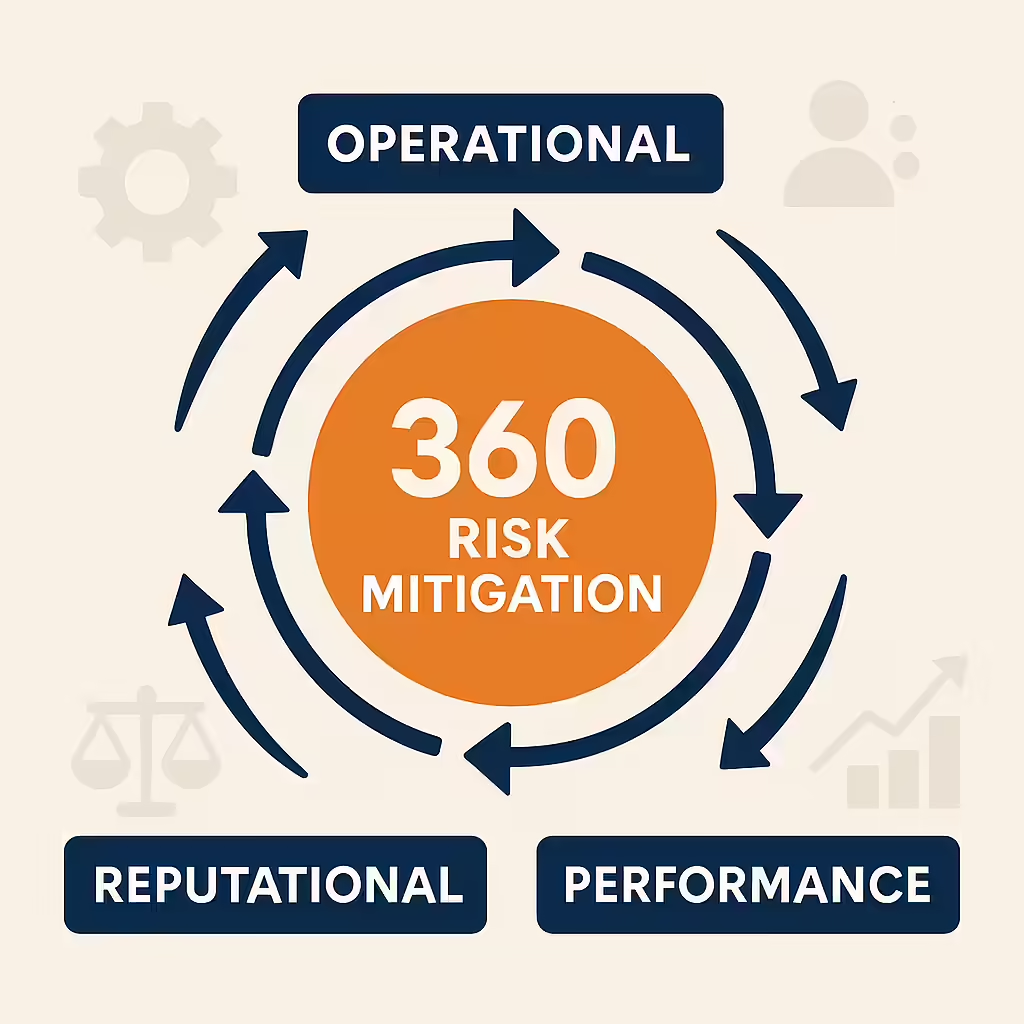
A 360-Degree View of Risk Mitigation
While legal and regulatory compliance represents a critical pillar of risk management, a truly resilient revenue strategy requires a broader, 360-degree view of risk. Leadership must also address the operational, reputational, performance, and dispute risks that can silently undermine growth and profitability. A comprehensive Revenue Orchestration Platform provides the tools to mitigate these threats systematically, creating a powerful, self-reinforcing flywheel of performance and protection. Mitigating Operational Risk: Operational risk manifests as wasted time, misallocated resources, and inefficient processes. A high-cost sales team spending the majority of its day on non-revenue-generating activities is a significant operational drain. An ROP attacks this inefficiency at its source. Features like Kixie’s AI-powered Human Voice Detection and Answering Machine Detection are prime examples, automatically filtering out voicemails and IVR systems so that agents are only connected to live conversations. This simple but powerful automation saves countless hours and ensures that expensive sales talent is focused on what it does best: selling. When combined with a multi-line PowerDialer that dramatically reduces agent downtime between calls, the platform directly mitigates the risk of low productivity and a poor return on headcount investment. Mitigating Reputational Risk: In the digital age, a company’s reputation is one of its most valuable—and fragile—assets. For any business that relies on outbound calling, the greatest reputational threat is being algorithmically silenced. Carrier-level spam filtering can render a company’s phone numbers useless, cutting them off from prospects and customers alike. Kixie’s Caller ID Reputation Management and ConnectionBoost™ features are a direct countermeasure to this existential risk. By actively monitoring and managing the health of its number pool and utilizing AI-powered local presence dialing, the platform ensures that calls are delivered and perceived as legitimate by both carriers and recipients. This is not merely a convenience; it is a critical defense that protects the company’s brand and ensures the entire GTM investment is not wasted. Mitigating Performance Risk: Performance risk is the danger that the team cannot execute the strategy effectively or that forecasts are built on hope rather than reality. An ROP mitigates this through a suite of coaching and analytics tools that create a culture of continuous improvement. Features like Live Call Coaching—including the ability for managers to listen silently, whisper guidance to the agent, or barge into a call to save a deal—transform coaching from a reactive, after-the-fact exercise into a proactive, real-time performance driver. All calls can be recorded for later review, creating a rich library of training material. By integrating this native data with advanced analytics platforms like Gong, leaders can gain unprecedented insight into what separates top performers from the rest—from talk-to-listen ratios to the specific keywords that win deals. This data-driven approach de-risks strategic planning and ensures that coaching efforts are targeted and effective. Mitigating Dispute Risk: In any business transaction, disagreements can arise. Mitigating the risk of “he said, she said” disputes requires an unassailable, objective record of all interactions. An ROP provides this by creating a comprehensive audit trail automatically. Every call, text message, and call outcome is logged in the CRM with a timestamp, creating a complete history of the customer relationship. With features like lifetime cloud storage for all call recordings, an organization can easily retrieve the exact record of any conversation to resolve a dispute, prove compliance, or clarify a misunderstanding. This capability provides an invaluable layer of legal and financial protection, ensuring that the company is always operating from a position of factual certainty. These distinct areas of risk mitigation do not operate in isolation. They form an interconnected system where improvement in one area positively impacts the others. Stronger reputation management leads to higher connection rates. More connections generate more recorded conversations for analysis. Deeper analysis provides better insights for coaching. More effective coaching improves rep performance and forecast accuracy. This virtuous cycle is the very essence of orchestration—a holistic system designed to reduce risk and enhance performance at every stage of the revenue process.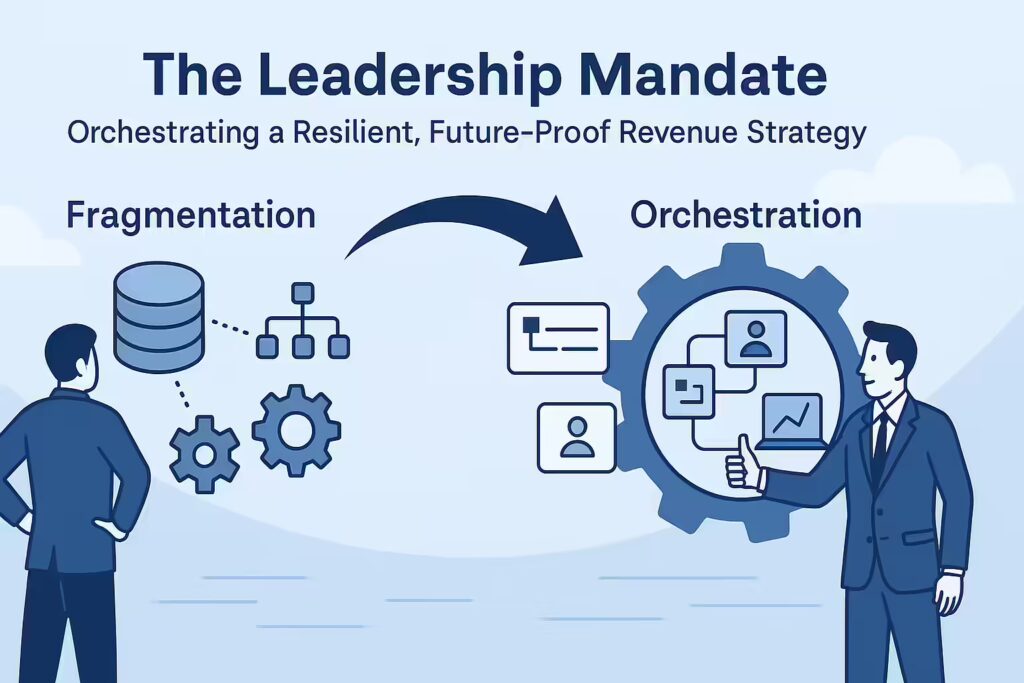
The Leadership Mandate: Orchestrating a Resilient, Future-Proof Revenue Strategy
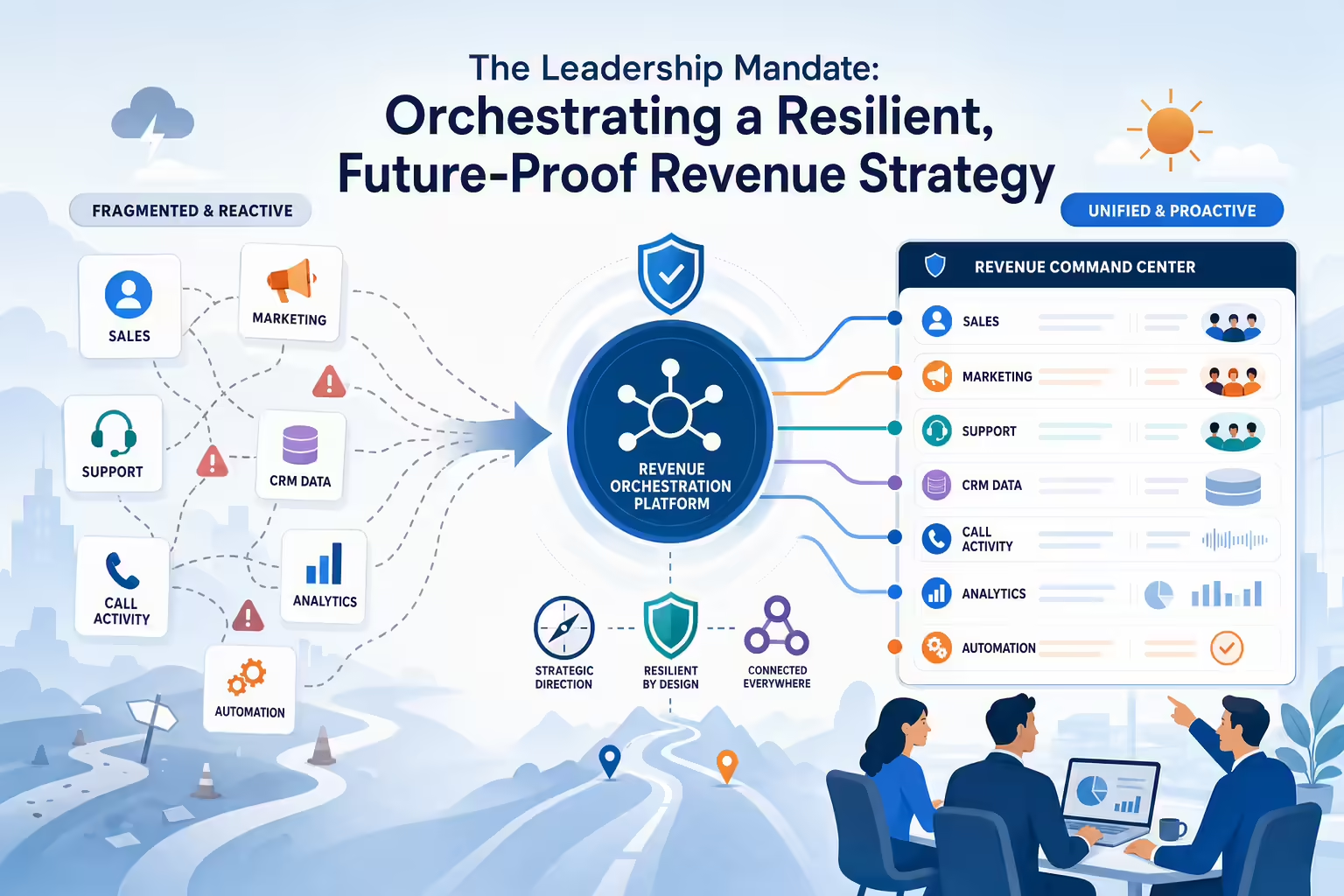
- Strong Governance creates the standardized workflows and single source of truth that make scalable compliance possible.
- Proactive, automated Compliance mitigates a vast and costly category of legal and financial risk, protecting the brand and the bottom line.
- A holistic approach to Risk Mitigation safeguards operational efficiency, protects brand reputation, and ensures performance, allowing the organization to execute its strategy with confidence.
Ready to close more deals with Kixie?
See how Kixie's AI-powered tools can transform your sales and support operations.
Start Free Trial