Personally Identifiable Information in Call Transcripts — How to Stay Compliant at Scale

April 2026 17 min read

Why Call Transcripts Are a Compliance Risk

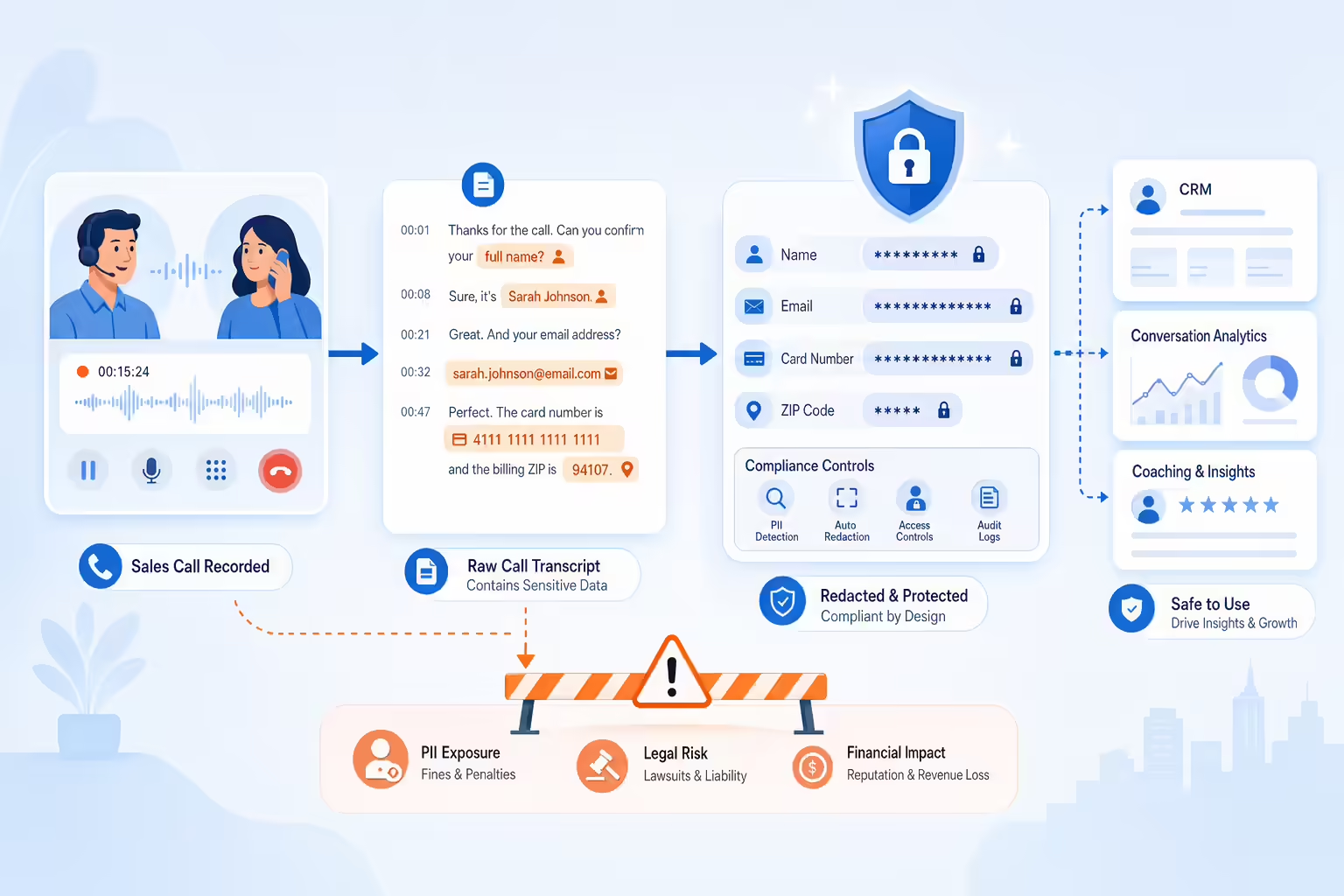
Recording sales calls helps managers train representatives, analyze customer sentiment, and close deals. However, call transcripts often contain highly sensitive customer information. Sales professionals, sales development representative (SDR) managers, and revenue operations leaders must balance the benefits of data-driven insights with the legal obligations of data privacy. Teams already using call sentiment analysis face this tension daily. Failing to protect PII in call transcripts creates significant financial and legal risk.

To maintain PII call transcripts compliance, businesses must understand current privacy laws, configure telephony tools to redact sensitive data, and build scalable processes. This report provides a complete guide to understanding and implementing PII redaction strategies across high-volume sales organizations.

Understanding PII Call Transcripts Compliance

Understanding PII Call Transcripts Compliance

Personally identifiable information refers to any data that can directly or indirectly identify a specific individual. In the context of sales conversations, customers frequently share sensitive data over the phone. Contact centers and sales departments process high volumes of PII on a daily basis, making call recordings and transcripts highly vulnerable to security breaches.

When establishing a compliance program for call recordings, organizations must consider several categories of sensitive information. This is especially important for teams running high-volume cold calling operations where thousands of transcripts are generated daily:

  • Standard PII. This includes full names, personal addresses, phone numbers, email addresses, and identification documents like passport numbers.
  • Financial and Payment Card Information. This includes bank account numbers, credit card numbers, and credit history details.
  • Protected Health Information. Organizations in the healthcare sector must protect patient health details and medical conditions under regulations like the Health Insurance Portability and Accountability Act (HIPAA). Healthcare teams using telephony tools should also review how telemarketing laws vary by state.
  • Confidential Company Information. This includes strategic plans, proprietary information, and non-public financial trends discussed during business-to-business sales calls.

Sales teams use conversation intelligence software for coaching to transcribe phone calls, extract insights, and populate customer relationship management (CRM) systems. If a customer reads a credit card number or a social security number out loud, the telephony system will transcribe that information and store it in plain text. Storing this information without proper safeguards violates major data protection regulations. PII call transcripts compliance involves using technology and organizational policies to ensure this data is masked, deleted, or securely stored before unauthorized parties can access it.

Major Privacy Regulations and Financial Penalties

Major Privacy Regulations and Financial Penalties

The legal environment surrounding data privacy has become increasingly strict. Organizations that record calls must manage a complex web of state, federal, and international regulations. Failing to secure call transcripts can result in severe financial penalties.

The General Data Protection Regulation

The GDPR is a complete privacy law that protects the data of residents within the European Union. It applies to any organization worldwide that processes EU consumer data. The GDPR requires companies to obtain explicit consent for recording calls and to implement strong security measures to protect stored transcripts.

Penalties for GDPR non-compliance are designed to be a severe financial deterrent. Violations can result in fines of up to €20 million or 4 percent of a company’s global annual turnover, whichever is higher. Since the law was enacted in 2018, regulators have issued billions in fines. The average fine for large GDPR enforcement actions sits at approximately €2.36 million. Regulators consider the nature, gravity, and duration of the infringement when determining the exact penalty amount.

The California Consumer Privacy Act

The CCPA gives residents of California more control over their personal data. It requires businesses to disclose data collection practices and allows consumers to request the deletion of their personal information. While GDPR penalties are capped by revenue percentages, CCPA fines operate on a per-violation basis.

Civil penalties for CCPA violations range from $2,500 for non-intentional breaches to $7,500 for intentional violations. Because each affected person’s data is considered a separate violation, the fines can escalate rapidly.

Worked Example Calculating Potential CCPA Penalties

To understand the financial risk of CCPA violations related to call transcripts, consider a scenario where an unredacted call recording database is breached.

If a company accidentally exposes the unredacted call transcripts of 100,000 California consumers, the baseline penalty is $2,500 per violation.

  • 100,000 consumers x $2,500 per non-intentional violation = $250,000,000.
  • 100,000 consumers x $7,500 per intentional violation = $750,000,000.

Even smaller violations are actively enforced. In 2022, the beauty retailer Sephora was fined $1.2 million under the CCPA for failing to disclose the sale of consumer data and ignoring opt-out requests. In 2025, Healthline faced a $1.55 million fine for sharing sensitive health information with third parties. Because there is no ceiling on the number of CCPA violations, a single widespread incident involving unredacted transcripts can threaten the financial survival of a company.

Payment Card Industry Data Security Standard Requirements

Payment Card Industry Data Security Standard Requirements

Any organization that stores, processes, or transmits credit card information must comply with the Payment Card Industry Data Security Standard (PCI DSS). This framework applies heavily to sales teams and contact centers that accept mail order and telephone order payments.

When a customer provides credit card details verbally, the call recording equipment captures sensitive authentication data. The PCI DSS dictates strict rules regarding what data can be stored in audio formats like WAV or MP3 files, as well as text transcripts.

  • Primary Account Number. The full primary account number (PAN) must be protected. If it is recorded, it must be masked so that only the last four digits are visible to authorized users.
  • Card Verification Value. The three-digit or four-digit security code (CVV, CVC, or CID) printed on the back of the card must never be retained after the transaction is authorized. Even if the data is encrypted, storing the CVV in a call recording or transcript is a direct violation of PCI DSS Requirement 3.2.
  • Magnetic Stripe Data. Any data read from the magnetic stripe or chip cannot be stored.

To achieve compliance, call centers use specific techniques to keep payment data out of their transcripts. One widely used method is the “pause-and-resume” functionality. When an agent prepares to accept payment, they manually click a button to pause the recording, or a CRM integration automatically halts the recording. Once the payment is processed, the recording resumes. This prevents the CVV and PAN from entering the audio file or the resulting text transcript.

However, manual pause-and-resume relies on human intervention, which introduces the risk of human error. If an agent forgets to pause the recording, the sensitive data is captured, creating a compliance violation. To eliminate human error, many revenue operations leaders deploy automated speech analytics to mute audio and redact text when credit card numbers are spoken.

The Financial Burden of Data Subject Access Requests

The Financial Burden of Data Subject Access Requests

Under laws like the GDPR and the CCPA, consumers have the right to request a copy of the data a company holds about them, or request that the data be deleted. These requests are known as Data Subject Access Requests (DSARs). Fulfilling DSARs is a major operational challenge for organizations that store high volumes of call transcripts.

When a consumer submits a DSAR, the company must search its entire data estate, locate all relevant call transcripts, and provide them to the consumer. Before handing over the transcript, the company must carefully review the document and permanently redact any PII belonging to third parties. For example, if a sales representative mentioned a different customer’s name or account details during the call, that third-party data must be removed to prevent an inadvertent data breach.

Worked Example Calculating Manual DSAR Costs

According to research by Gartner, the average cost of manually processing a single DSAR is $1,524. This cost is almost entirely driven by labor. Compliance professionals must search systems, verify identities, read through long call transcripts, manually apply redactions, and document the process. The redaction step alone accounts for 40 to 60 percent of the total processing cost.

Manual document review is highly inefficient. Industry benchmarks suggest that professionals process approximately 150 files per hour during manual e-discovery and redaction tasks. Attorney or paralegal time in the United States typically costs between $200 and $400 per hour.

If a mid-sized organization receives 50 DSARs per year, the financial impact of manual processing is substantial.

  • 50 DSARs x $1,524 average cost per request = $76,200 annually.

If total DSAR volumes increase, manual workflows become unsustainable. Research shows that DSAR management costs and request volumes rose by 43 percent year-over-year in 2024. A company receiving 829 requests annually would spend approximately $1.26 million strictly on manual processing labor. Automated redaction software reduces this processing time from hours to minutes, drastically lowering the cost per request and creating a reliable audit trail.

Technical Challenges in Audio Transcription and Redaction

Technical Challenges in Audio Transcription and Redaction

Redacting text documents like emails or PDFs relies on established optical character recognition (OCR) and text scanning technologies. Redacting call transcripts is much more complex because it involves converting human speech into text. Detecting PII in customer communications presents unique challenges due to the real-time, interactive nature of phone calls.

Simple rule-based algorithms and regular expressions (regex) are generally inadequate for redacting spoken PII. Revenue operations teams must manage several technical obstacles when evaluating redaction tools.

Handling Speech Recognition Errors

Automatic Speech Recognition (ASR) tools convert audio into text. Telephone audio is typically encoded at lower bitrates (such as 8kHz), which reduces audio clarity. Poor audio quality leads to transcription errors, resulting in missed digits or incorrect words.

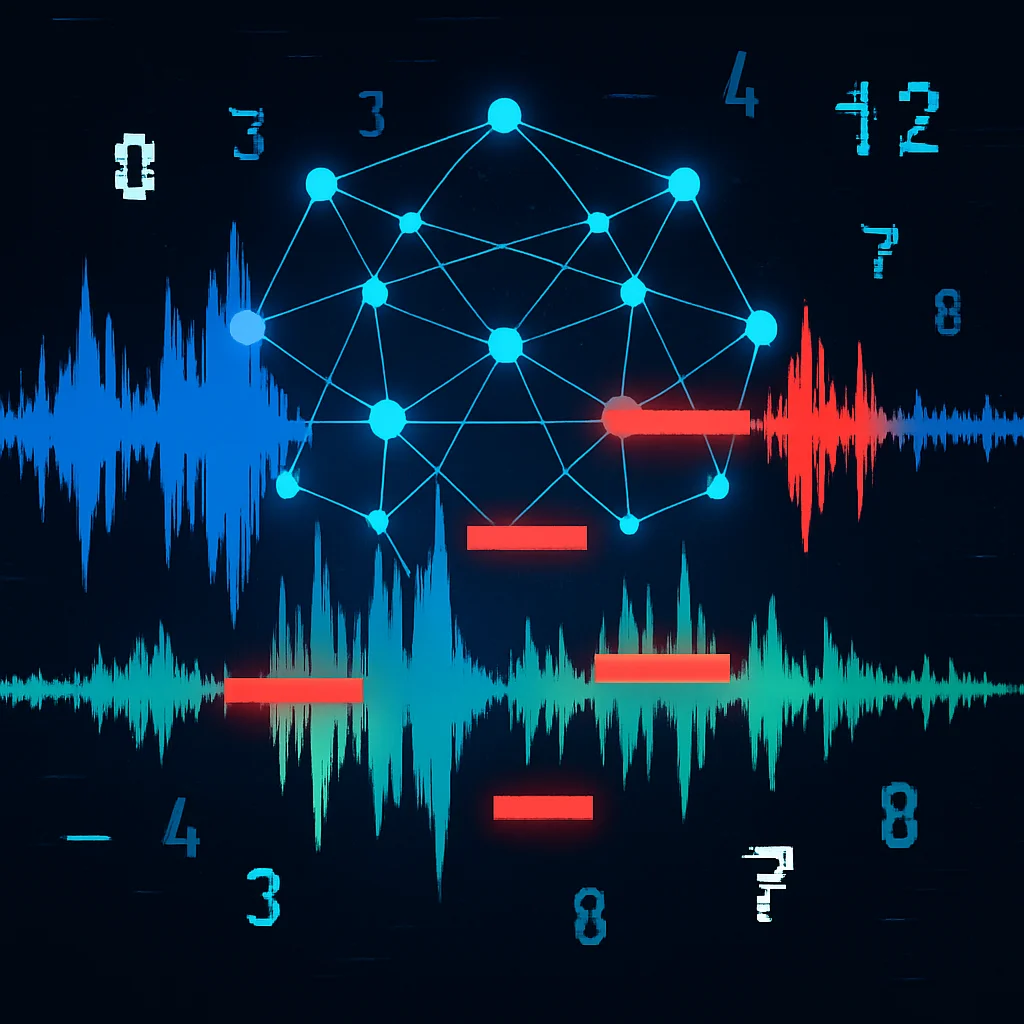
A simple regex rule designed to find a 16-digit Visa card number will fail if the ASR engine misinterprets a spoken number as a word due to a caller’s accent. For example, the spoken digit “eight” might be transcribed as the word “ate,” splitting the numeric string and allowing the PII to bypass basic filters. Accurately identifying these errors requires advanced Natural Language Processing (NLP) models that understand conversational context rather than simple character matching.

Managing Active Conversations and Interruptions

Unlike formal written documents, phone conversations are messy. Callers interrupt each other, speak simultaneously, change languages (code-switching), and leave sentences incomplete. When a customer provides a credit card number, they may hesitate, correct themselves, or pause to ask a question halfway through reading the digits.

This fragmented speech breaks PII entities into pieces. An AI redaction model must feature a sufficiently wide context window to understand that a credit card number is being provided across multiple conversational turns. If the context window is too narrow, the tool will miss the data. If the context window is too wide, the tool may generate false positives by incorrectly redacting a shipping tracking number or a generic confirmation code.

The Importance of Stereo Call Recording

To accurately detect PII, transcription engines require high-quality audio inputs. Simplistic redaction algorithms designed for mono-channel audio recordings perform poorly in contact centers. In a mono recording, the sales representative and the customer are combined onto a single audio track, making it difficult for the AI to separate overlapping voices (speaker diarization).

Modern compliance systems rely on two-channel (stereo) recordings. By isolating the agent on one track and the customer on the other, the AI can establish context more accurately and apply redactions precisely to the customer’s speech without muting the agent’s instructions.

Comparison of Sales Telephony and Conversation Intelligence Tools

Comparison of Sales Telephony and Conversation Intelligence Tools

To stay compliant at scale, sales organizations use conversation intelligence and telephony tools that feature built-in PII redaction capabilities. These platforms analyze sales calls, provide coaching insights, and integrate directly with CRM systems.

The table below compares the compliance and redaction features of leading conversation intelligence and transcription platforms.

Platform / ToolPrimary Use CaseKey PII Redaction FeaturesTarget Audience
GongRevenue Intelligence & Sales CoachingOffers both numeric redaction (configurable digit sequence length) and PHI redaction upon request. Mutes audio and replaces text with “(REDACTED)”. PCI DSS compliant for telephony ingestion.Mid-market and Enterprise B2B sales teams.
Outreach (Kaia)Sales Engagement & Conversation IntelligenceNumeric redaction automatically mutes audio and excludes text when four or more digits are spoken in sequence. Controlled via profile settings by administrators.Sales representatives and SDR managers.
Dialpad AiCloud Telephony & Contact CenterAI-driven PII Redaction (Early Adopter Program). Automatically removes numeric PII like SSNs and credit cards from transcripts and audio, leaving non-sensitive numbers intact.General business communication and support centers.
CallMinerContact Center AnalyticsEnterprise-grade speech analytics with automated real-time redaction to prevent capturing sensitive cardholder data. Strong audit trails for compliance.Regulated industries and high-volume contact centers.
AWS ComprehendCloud API for NLP & Text ProcessingPurpose-built API to detect and redact PII in raw text. Capable of locating standard PII and custom entities. Charges based on character volume processed.Engineering teams and developers building custom integrations.
KixieSales Telephony & Conversation IntelligenceCall recordings stored with configurable retention policies. Conversation Intelligence transcripts integrate with CRM for controlled data access. Two-party consent compliance tools built in.B2B sales teams using HubSpot, Salesforce, Zoho, or Pipedrive.

Platform Specific Configurations for Sales Teams

Platform Specific Configurations for Sales Teams

Selecting the right tool is only the first step. Revenue operations leaders must configure their platforms correctly to ensure compliance policies are enforced across the entire sales organization.

Configuring Redaction in Gong

Gong is a leading revenue intelligence platform that captures calls, emails, and web conferences. Gong provides strong data protection settings at the company level to help administrators manage compliance and PCI DSS requirements.

Gong offers two main data redaction features to permanently remove sensitive data from recordings and transcripts. The first is PHI redaction, which removes personal identifiers such as names, email addresses, and street addresses. This feature is designed for healthcare industries and must be enabled directly by Gong upon request.

The second feature is numeric redaction, which removes sequences of digits. It is designed to hide credit card numbers or social security numbers. When enabled, Gong replaces the targeted text with the word “(REDACTED)” and mutes the corresponding audio section.

To turn on numeric redaction, a technology administrator must:

  1. Navigate to the Admin center, then to “Settings”, and open “Data protection & privacy.”
  2. Under the “Information redaction” area, check the box for “Redact sequences of digits.”
  3. Enter the minimum number of digits to redact.

Setting the correct threshold is critical. If the threshold is set to 4 digits, the system will ignore the spoken number “156” but will redact the number “1564.” Gong advises redacting the minimum sequence length necessary for your business needs to avoid accidentally redacting helpful quantitative data. Gong’s redaction process is non-recoverable; once the audio and text are scrubbed, the original data is permanently deleted.

Configuring Redaction in Outreach Kaia

Outreach Kaia is a conversation intelligence assistant that transcribes calls in real-time, provides live coaching cards, and extracts action items. Like Gong, Outreach Kaia offers a numeric redaction feature to protect PII.

Kaia’s numeric redaction recognizes when four or more digits are spoken sequentially during a call. It immediately mutes that portion of the recording and excludes the string from the meeting transcript and AI-generated post-meeting summaries. The process occurs post-call, meaning the recording and transcript will not be available to representatives until the redaction processing is fully completed.

To apply this feature, an Outreach Administrator must navigate to “User management,” select the relevant user profile, and toggle the “Redact sensitive information” option to “On.” Once enabled for a profile, every future meeting hosted by those users is permanently processed for redaction. End-users cannot selectively disable this feature, which ensures standardized compliance across the sales floor.

Managing Privacy in Dialpad

Dialpad integrates a proprietary natural language processing engine across its voice, meetings, and contact center solutions. Dialpad offers an AI-driven PII Redaction feature that uses machine learning to automatically locate and redact numeric personal data from both text and audio.

Dialpad differentiates itself by automatically recognizing and preserving harmless numeric data. While it redacts credit card numbers, CVC codes, and social security numbers, it intentionally preserves phone numbers, order numbers, dates, times, and currency notations. Administrators can manage this at the office level, choosing whether to apply redaction to AI transcripts only, audio recordings only, or both. In transcripts, Dialpad replaces the sensitive data with asterisks.

Cloud API Solutions for Custom Redaction

Cloud API Solutions for Custom Redaction

While out-of-the-box tools like Gong and Outreach are ideal for sales teams, some organizations require custom infrastructure. If a business stores raw call transcripts in a data lake or processes audio through legacy telephony systems, they may need to build their own redaction workflows using Application Programming Interfaces (APIs).

Amazon Web Services (AWS) offers Amazon Comprehend, a natural language processing service that includes specialized endpoints for PII detection and redaction. Amazon Comprehend can mask universal PII entities like addresses, ages, and credit card numbers, as well as country-specific entities.

Worked Example Calculating API Processing Costs

Amazon Comprehend measures API requests in units of 100 characters, with a minimum charge of 3 units (300 characters) per request. For the PII detection API, the standard pricing tier charges $0.0001 per 100-character unit for the first 10 million units processed per month.

Consider a revenue operations team that needs to redact a backlog of 10,000 call transcripts. Each transcript contains approximately 1,000 characters of raw text.

  1. Calculate the total characters: 10,000 transcripts x 1,000 characters = 10,000,000 total characters.
  2. Calculate the total units: 10,000,000 characters / 100 characters per unit = 100,000 units.
  3. Calculate the cost: 100,000 units x $0.0001 per unit = $10.00.

While the base processing cost is highly affordable, API-based solutions require internal developer resources to set up authentication, configure storage buckets, and maintain the code. Organizations must also factor in the cost of the initial speech-to-text transcription step, as AWS Comprehend strictly analyzes text data. To transcribe the audio files first, teams often pair text redaction APIs with transcription APIs like AssemblyAI or AWS Transcribe.

To optimize cloud processing costs, data engineers should clean their data before sending it to the API. Removing repetitive HTML headers or system disclaimers reduces the character count per document, yielding significant savings at an enterprise scale. Furthermore, using asynchronous batch processing rather than real-time synchronous requests is generally more cost-effective for large historical datasets.

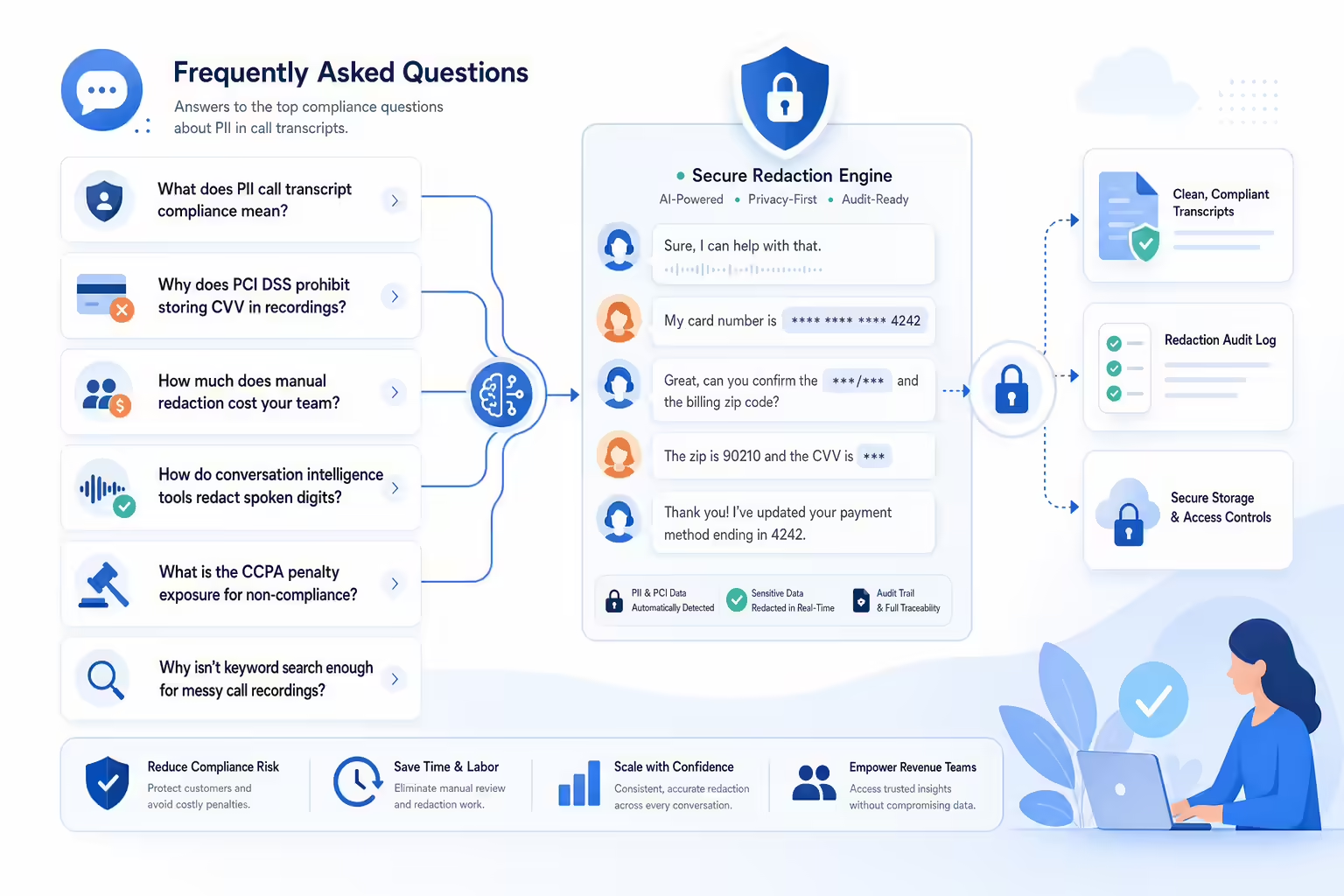
Frequently Asked Questions

What is PII call transcripts compliance?

PII call transcripts compliance refers to the legal and regulatory requirement to protect sensitive customer data captured during recorded phone conversations. Organizations must identify, mask, or delete personally identifiable information (such as credit card numbers and social security numbers) from audio files and written transcripts to prevent unauthorized access and adhere to laws like the GDPR, CCPA, and HIPAA.

Does PCI DSS allow storing CVV numbers in call recordings?

No. The Payment Card Industry Data Security Standard explicitly prohibits the storage of the three-digit or four-digit card verification value (CVV/CVC) after a transaction is authorized. Even if the data is encrypted, retaining the CVV in a digital audio recording or text transcript is a direct violation of PCI DSS Requirement 3.2. Organizations must use pause-and-resume methods or automated redaction to exclude this data.

How much does manual redaction cost a business?

Manual redaction is highly labor-intensive and expensive. According to Gartner, manually processing a Data Subject Access Request (DSAR) costs an average of $1,524 per request. A significant portion of this cost stems from legal or compliance professionals spending hours reading documents to manually identify and redact third-party PII.

How do conversation intelligence tools handle redaction?

Modern conversation intelligence platforms use artificial intelligence and natural language processing to automatically scrub sensitive data. Tools like Gong and Outreach Kaia search for specific sequences of spoken digits. When a sequence hits a defined threshold (e.g., four or more digits), the software mutes that section of the audio recording and replaces the text in the transcript with asterisks or a “[REDACTED]” tag.

What are the financial penalties for CCPA violations?

The California Consumer Privacy Act imposes strict civil penalties for data exposure. Businesses can be fined $2,500 per incident for non-intentional violations and up to $7,500 per incident for intentional violations. Because fines are assessed per consumer, a single data breach involving thousands of unredacted call transcripts can result in millions of dollars in penalties.

Why is simple keyword searching insufficient for call redaction?

Call recordings contain messy, fragmented speech. Customers interrupt themselves, have heavy accents, or speak over the sales agent. Basic keyword searches and regular expressions (regex) often fail because transcription errors can mistake spoken numbers for words (e.g., mistaking “eight” for “ate”). Advanced AI is required to understand conversational context and correctly identify split PII entities over multiple turns of dialogue.

Conclusion and Key Takeaways

As sales organizations increasingly rely on call recordings to coach representatives and forecast pipeline revenue, safeguarding customer privacy is mandatory. Storing unredacted payment details, health data, or personal identifiers exposes companies to massive regulatory fines and irreparable reputational damage.

To stay compliant at scale, revenue operations leaders should prioritize the following actions:

  • Audit current recording practices. Review your TCPA compliance posture alongside your recording policies. Determine exactly what data is being collected and ensure explicit consent is obtained from callers in accordance with state and federal laws.
  • Implement automated redaction. Do not rely on manual review to catch sensitive data. Deploy AI-driven tools that automatically mute audio and redact text transcripts in real-time.
  • Configure minimum digit thresholds. If using tools like Gong or Outreach, work with compliance teams to establish the appropriate numeric redaction limits (e.g., redacting strings of four or more digits) to protect credit card and social security numbers without losing valuable business data.
  • Eliminate manual payment handling. If processing payments over the phone, use automated pause-and-resume functionality or secure payment gateways. Platforms with built-in power dialer automation can trigger pause-and-resume without relying on the rep to ensure CVV numbers and full PANs never enter the transcription environment.
  • Centralize Data Subject Access Requests. Use automated data mapping and bulk redaction software to lower the $1,524 average cost of fulfilling individual consumer requests.

By proactively addressing PII in call transcripts, businesses can fully use the power of conversation intelligence while maintaining strict adherence to global privacy frameworks.

Ready to close more deals with Kixie?

See how Kixie's AI-powered tools can transform your sales and support operations.

Start Free Trial