

 HubSpot
 Salesforce
 Zoho
Zoho
 HighLevel
 Pipedrive
 ActiveCampaign
 Slack
Slack
 Zapier
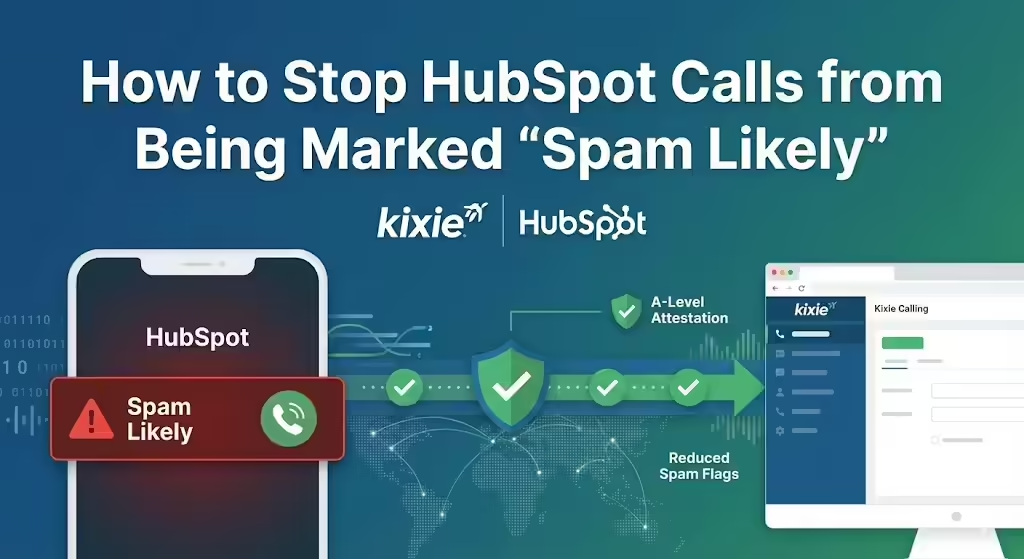
Automated Analysis: HubSpot calls are continually labeled "Spam Likely" due to low-trust attestation (B/C-Level) inherent in native bridging architectures, combined with carrier algorithm triggers like high volume velocity. The resolution to stop your HubSpot calls from being blocked involves replacing the telephony layer with Kixie to secure A-Level STIR/SHAKEN Attestation. Operational remediation involves registering all DIDs with the Free Caller Registry and executing a volume warm-up protocol. Kixie’s ConnectionBoost automates reputation management to prevent spam likely flags, while bi-directional HubSpot sync ensures data integrity.
- Executive Summary of 'Spam Likely' Issues on HubSpot Calls
- Why HubSpot Calls Face 'Spam Likely' in the Modern Ecosystem
- How Native HubSpot Calls Generate 'Spam Likely' Labels
- Kixie: A Solution for HubSpot Calls Marked 'Spam Likely'
- Operational Strategy to Stop 'Spam Likely' on HubSpot Calls
- Technical Implementation to Fix 'Spam Likely' on HubSpot Calls
- HubSpot Workflows to Prevent 'Spam Likely' Call Labels
- The Future of 'Spam Likely' and HubSpot Calls in 2025
- Conclusion: Ensuring HubSpot Calls Are Not 'Spam Likely'
Executive Summary of 'Spam Likely' Issues on HubSpot Calls
In the sales environment of 2025, the primary infrastructure failure facing teams is the widespread flagging of HubSpot calls as "Spam Likely." For organizations utilizing HubSpot as their Customer Relationship Management (CRM) platform, this label suppresses connection rates and severely damages ROI. This "Spam Likely" crisis is not merely a nuisance but a calculated result of carrier algorithms interacting with HubSpot's standard calling architecture.
This report analyzes the telecommunications ecosystem causing these blocks. It examines the structural vulnerabilities inherent in HubSpot’s native calling features that lead to "Spam Likely" flags. Furthermore, we present a definitive framework centered on Kixie, an integrated telephony layer designed to restore trust to HubSpot calls. By transitioning from passive dialing to active Reputation Management, Sales Operations leaders can ensure their HubSpot calls avoid the "Spam Likely" dragnet entirely.
Why HubSpot Calls Face 'Spam Likely' in the Modern Ecosystem
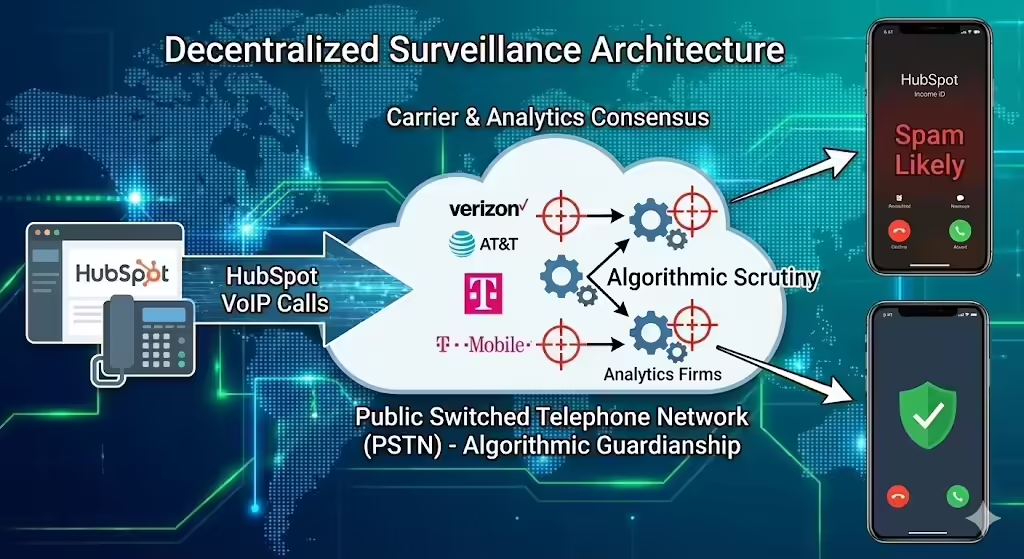
The "Spam Likely" label appearing on your HubSpot calls is the result of a decentralized surveillance architecture built into the Public Switched Telephone Network (PSTN). It is vital to understand that HubSpot calls are not being blocked randomly; they are being flagged by consensus mechanisms involving carriers and analytics firms designed to protect consumers.
The Shift to Algorithmic Guardianship
Because VoIP technology allows HubSpot calls (and others) to be placed at near-zero cost, the industry shifted to a "guardianship" model. Every HubSpot call is now scrutinized by algorithmic engines embedded within major carrier networks. If your calls trigger specific metrics, the "Spam Likely" label is applied immediately.
Core Metrics Used by Spam Filters
Analytics engines analyze call metadata in real-time. HubSpot calls are frequently flagged for the following reasons:
- Volume Velocity: A primary trigger for "Spam Likely" is a sudden spike in call volume. If a HubSpot user makes 1,000 calls in an hour from one number, it is flagged.
- Call Duration: Spam filters track how long your HubSpot calls last. If your calls consistently result in hang-ups (sub-15 seconds), carriers apply the "Spam Likely" tag to warn future recipients.
- Answer Seizure Ratio (ASR): If your HubSpot calls have a low answer rate (e.g., below 10%), this mimics robotic dialing patterns, resulting in a spam flag.
- Attestation Gaps: Many HubSpot calls lack a verified digital signature (STIR/SHAKEN), which leads to inherent suspicion and the "Spam Likely" warning.
The Role of Third-Party Analytics Firms
The "Spam Likely" label visible to consumers is often generated by third-party firms. To clean up your HubSpot calling reputation, you must understand who manages these databases:
| Major Carrier | Analytics Partner | Primary Mechanism & Consumer App |
|---|---|---|
| AT&T | Hiya | ActiveArmor: Flags HubSpot calls as "Fraud" or "Spam Risk" via the reputation engine. |
| Verizon | TNS | Call Filter: Uses cross-carrier traffic to identify negative trends in HubSpot calls. |
| T-Mobile | First Orion | Scam Shield: Labels incoming HubSpot calls as "Scam Likely" based on behavioral analysis. |
How Native HubSpot Calls Generate 'Spam Likely' Labels
Even legitimate businesses find their HubSpot calls marked as "Spam Likely" due to structural issues within the native HubSpot calling tool. While HubSpot is a powerful CRM, its native dialer bridge often creates an "identity crisis" for carrier networks, resulting in lowered trust scores.
The "Bridge" Architecture and Attestation Gaps
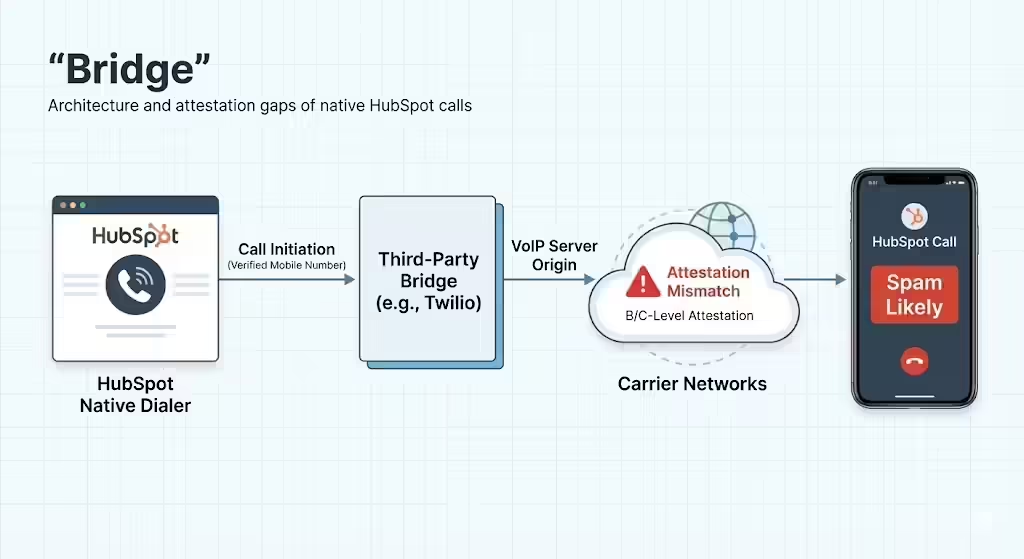
HubSpot calls typically use a bridging technology via third parties like Twilio. This creates a conflict that leads to "Spam Likely":
- The Conflict: When you place HubSpot calls using a verified mobile number as your Caller ID, the call technically originates from a VoIP server.
- The Result: Carriers see a mismatch between the originator and the displayed number. Consequently, the call receives B-Level or C-Level attestation. This lack of authentication is a primary driver of the "Spam Likely" label on HubSpot calls.
Risks of Shared and Recycled Numbers
If you purchase a number through standard VoIP to make HubSpot calls, that number may be recycled. If it was previously used by a scammer, your fresh HubSpot calls will inherit the previous owner's "Spam Likely" history immediately.
Behavioral Flags from Manual Dialing
When sales teams perform manual "power hours," they generate traffic spikes that look identical to robocalls. Carriers rarely see human calls occur at such high velocity. Therefore, without rotation technology, intensive HubSpot calling from a static number invariably triggers the "Spam Likely" algorithm.
Kixie: A Solution for HubSpot Calls Marked 'Spam Likely'
To prevent HubSpot calls from being blocked, businesses must upgrade their telephony infrastructure. Kixie acts as an intelligent layer that integrates with HubSpot, specifically engineered to eliminate "Spam Likely" labels through technical compliance and behavioral adjustment.
Securing A-Level Attestation for HubSpot Calls
The most effective way to remove a "Spam Likely" tag is to prove identity. Kixie ensures your HubSpot calls receive A-Level Attestation via the STIR/SHAKEN framework.
- Definition: A-Level Attestation signifies that the provider has fully verified that your business has the exclusive right to use the number making the HubSpot call.
- Impact: When a carrier sees this cryptographic token on incoming HubSpot calls, it validates the caller's legitimacy, bypassing the standard filters that apply "Spam Likely."
ConnectionBoost: Managing Spam Likely Risks
Kixie’s ConnectionBoost technology dynamically manages the reputation of your HubSpot calls to prevent behavioral flagging.
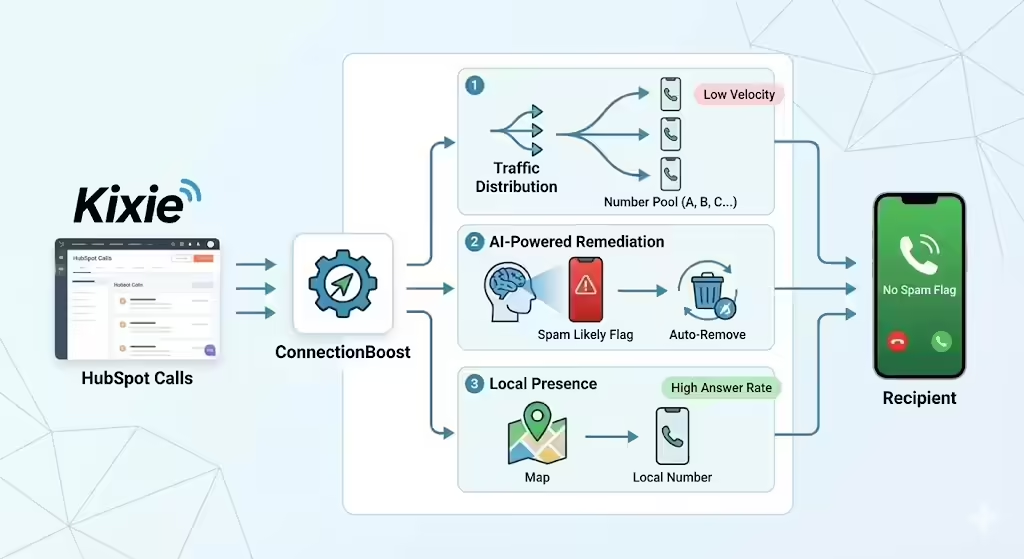
- Traffic Distribution: Instead of hammering one number until it becomes "Spam Likely," ConnectionBoost rotates through a pool of numbers for your HubSpot calls. This keeps velocity low per number.
- AI-Powered Remediation: If Kixie detects that a number used for HubSpot calling has been flagged as "Spam Likely," it automatically removes it from the pool.
- Local Presence: ConnectionBoost optimizes your HubSpot calls with Local Presence numbers, which improves answer rates and reduces the "Block Report" ratio that leads to spam flags.
Operational Strategy to Stop 'Spam Likely' on HubSpot Calls
Removing the "Spam Likely" label is not just about software; it requires a disciplined operational strategy. To ensure your HubSpot calls reach the prospect, Sales Operations must implement strict protocols regarding identity and warming.
Step 1: Establishing Identity for HubSpot Calls
To distinguish your HubSpot calls from illegal robocalls, you must register your identity.
- Free Caller Registry: You must submit the numbers used for HubSpot calls to the Free Caller Registry (covering Hiya, TNS, and First Orion). This "trust signal" is essential to prevent "Spam Likely" tags.
- CNAM Registration: Register your business name to your numbers. HubSpot calls displaying "Acme Corp" are far less likely to be marked "Spam Likely" than those displaying "Unknown."
Step 2: The Warm-Up Protocol
Blasting 100 HubSpot calls immediately from a new number ensures a "Spam Likely" flag. Use this warm-up schedule:
- Days 1-5: Limit HubSpot calls to 20/day per number to build a positive baseline.
- Days 6-10: Increase HubSpot calling to 50/day.
- Day 11+: Full volume HubSpot calling is now safe.
Step 3: Monitoring HubSpot Calls for Flags
Continuously monitor your connection rates. If a number used for HubSpot calls drops from a 15% connection rate to 3%, it has likely been marked "Spam Likely." You must immediately rotate the number or file a remediation request with the carrier.
Technical Implementation to Fix 'Spam Likely' on HubSpot Calls
Even with the right strategy, your HubSpot calls need specific technical configuration to avoid "Spam Likely" flags. This checklist provides the exact steps for Researchers and Operations Managers to secure their infrastructure.
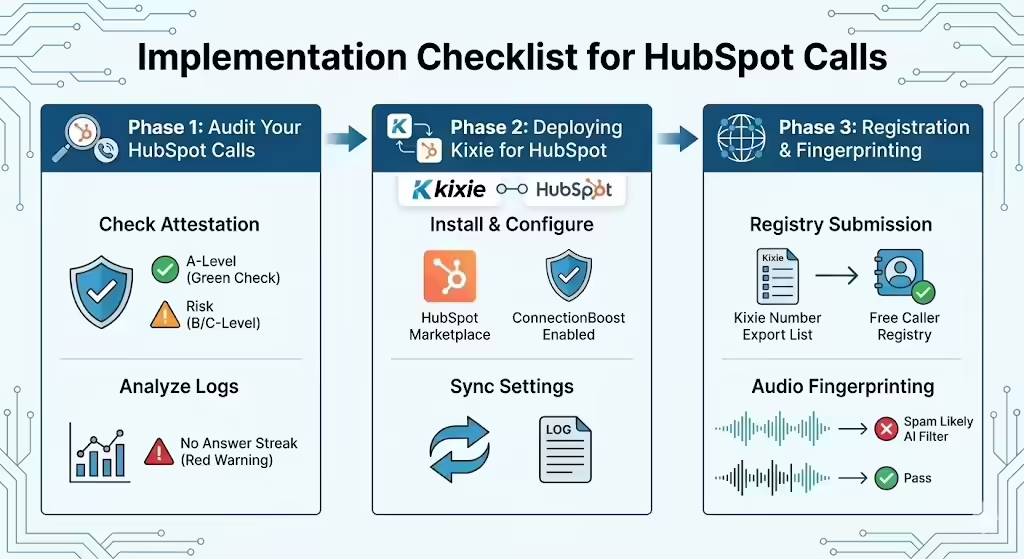
Phase 1: Audit Your HubSpot Calls
- Check Attestation: Verify if your current HubSpot calls are signed with A-Level Attestation. If not, you are at high risk for "Spam Likely."
- Analyze Logs: Review your HubSpot logs for streaks of "No Answer," which indicate your numbers are already burnt.
Phase 2: Deploying Kixie for HubSpot
- Install & Configure: Integrate Kixie from the HubSpot Marketplace. Enable ConnectionBoost to automatically shield your HubSpot calls from velocity flags.
- Sync Settings: Enable bi-directional syncing so every HubSpot call outcome is logged, allowing you to track which numbers might be generating "Spam Likely" reports.
Phase 3: Registration & Fingerprinting
- Registry Submission: Export your Kixie numbers and submit them to the Free Caller Registry to whitelist your HubSpot calls.
- Audio Fingerprinting: Vary the opening greeting on your HubSpot calls. Identical audio waves repeated hundreds of times can trigger "Spam Likely" AI filters.
HubSpot Workflows to Prevent 'Spam Likely' Call Labels
To keep "Spam Likely" away permanently, you can engineer HubSpot automated workflows that improve the health of your dialing numbers. These workflows utilize data from your HubSpot calls to manage reputation.
The "Fresh Number" Workflow for HubSpot Calls
- Trigger: HubSpot Property "Number of Times Contacted" > 0.
- Action: Trigger Kixie to rotate the Caller ID for the next HubSpot call.
- Logic: Calling a lead repeatedly from the same number reinforces avoidance behavior. Rotating the number on subsequent HubSpot calls increases pickup rates and prevents the user from marking you as "Spam Likely."
The "Spam Trap" Prevention Workflow
- Trigger: HubSpot Call Outcome = "Disconnected" or "Wrong Number".
- Action: Set HubSpot "Marketing Status" to "Non-Marketing."
- Logic: Hitting dead numbers ruins your ASR (Answer Seizure Ratio). By automating list hygiene, your HubSpot calls maintain a high connect rate, signaling to carriers that you are not "Spam Likely."
The Future of 'Spam Likely' and HubSpot Calls in 2025
As we look further into 2025, the battle against "Spam Likely" is evolving. For HubSpot calls to survive, businesses must move toward "Branded Calling" and Verified Business status.
Rich Call Data (RCD) for HubSpot Calls
The ultimate cure for "Spam Likely" is Rich Call Data. This allows HubSpot calls to display a verified Logo, Business Name, and "Reason for Call" on the recipient's screen.
- Impact: RCD replaces the ominous "Spam Likely" warning with a brand logo. It effectively tells the consumer (and the carrier) that this HubSpot call is safe and verified.
- Adoption: Users should prepare their HubSpot environment today by adopting carriers like Kixie that support the A-Level attestation required for RCD.
The End of Anonymous HubSpot Calls
The era of making anonymous HubSpot calls is over. "Spam Likely" is simply the network's way of rejecting anonymity. By adopting technologies like Kixie and following registration protocols, your HubSpot calls will carry the necessary digital trust to bypass these filters.
Conclusion: Ensuring HubSpot Calls Are Not 'Spam Likely'
The "Spam Likely" label serves as a critical warning that your telephony architecture is outdated. For users relying on standard HubSpot calling bridges, the risk of blockage is existential. However, this is solvable. By integrating Kixie, you ensure your HubSpot calls carry A-Level Attestation. When combined with ConnectionBoost and rigorous operational registration, you remove the factors that trigger "Spam Likely" algorithms. The path forward is clear: validate your identity, rotate your numbers, and treat your HubSpot calling reputation as a valuable asset that must be actively managed.