TL;DR: AI voice cloning for sales in 2026 creates a synthetic version of a permitted speaker voice for outreach, while AI voice agents add speech-to-text, LLM conversation logic, text-to-speech, routing, calendar follow-up, and workflows for voicemail drops, inbound qualification, assisted outbound, and simple lead routing rather than complex negotiations. Key limits are compliance and latency, with teams needing consent, disclosure, opt-out, call-recording, DNC, lead-source validation, voice-owner permission, and legal review, plus sub-500 ms response times because natural replies are 300 to 500 ms, 800 ms feels unnatural, and 1 second suggests a dropped call. Cold-call meeting booking is cited at 2.3%, reps make 50 to 80 calls per day, connect on roughly 3% to 10% of dials, and cost about $70,000 to $110,000 per year, while AI agents can make up to 500 parallel calls per hour and adopters report 60% to 70% lower outbound costs. Use cases include autonomous outbound that dials lists, qualifies, handles objections, and books meetings, cloned voicemail drops that personalize name, company, or industry, and inbound AI routing instead of press 1 menus. Kixie is noted for voicemail drops and a power dialer with multi-line dialing and voicemail detection, AiSDR starts around $900 per month, Artisan is estimated at $2,000 to $5,000 per month, Amplemarket Duo starts at $600 per month annually for a small team, and Bland AI charges $0.09 per connected minute for API-based voice calls.
AI voice cloning for sales at a glance
- In sales, AI voice cloning usually means creating a synthetic version of a specific person’s voice; it is different from generic text-to-speech, prerecorded voicemail, and conversational AI voice agents.
- The best-fit use cases are repeatable, human-approved workflows such as simple qualification, voicemail follow-up, and routing requests, not complex negotiations or sensitive buyer conversations.
- Automated voice systems may increase daily contact attempts compared to manual outreach, but teams should measure answer quality, opt-outs, complaints, and meetings booked rather than call volume alone.
- Regulators may treat AI-generated or cloned voices as artificial or prerecorded for consent purposes, so sales teams should confirm consent, disclosure, DNC, and opt-out requirements before dialing.
- System latency remains a primary technical boundary, as response delays greater than 500 milliseconds can make conversations feel unnatural to the listener.
Current Industry Dynamics The practical question is not simply whether a team can clone a voice, but whether the job is better handled by a cloned voice, a conversational AI agent, a voicemail drop, a power dialer, or a human representative. The latest sales automation statistics point to broader adoption of automation, but the safer operating model is usually hybrid: software handles repetitive, approved steps while human reps manage judgment-heavy conversations.
Regulatory and Technical Challenges The legal market is actively shifting, and teams should not deploy AI voice tools without reviewing consent capture, lead-source validation, DNC checks, opt-out handling, call recording rules, voice-owner permission, and disclosure language. Understanding TCPA compliance updates is a starting point, but sales organizations should also get legal review for state-specific requirements and internal recordkeeping. Technically, providers are racing to reduce processing delays because lag can negatively affect trust and conversation quality.

AI voice cloning trends for sales teams
In recent years, artificial intelligence has fundamentally changed how sales teams approach outbound communication. Historically, phone-based outreach was entirely manual. A sales development representative would sit at a desk, dial phone numbers, listen to ringing tones, and hope a prospect would answer. If the prospect did answer, the representative would deliver a rehearsed script.
By 2026, organizations evaluating AI voice cloning sales tools are looking at a spectrum of options, from rep-approved synthetic voice assets to AI-generated text-to-speech for scripted moments. Voice cloning technology analyzes permitted audio samples to model characteristics such as pitch, tone, cadence, and pacing, then generates new audio from text that is intended to resemble the source voice.
Sales teams are interested in this technology because outbound work still includes repetitive tasks such as dialing, leaving similar voicemails, logging activity, and following up on simple qualification questions. In practice, the strongest use cases are usually narrow, structured workflows rather than fully autonomous selling: confirming interest, routing inbound callers, leaving approved voicemail messages, or handing engaged prospects to a human representative.
Furthermore, the mathematical reality of cold calling has become increasingly difficult. The average success rate for booking a meeting from a cold call dropped to 2.3% in recent years, meaning it takes an average of 18 or more dials just to connect with a single prospect. Teams running high-volume cold calling operations feel this math acutely. Because the average human representative only makes between 50 and 80 calls per day, generating consistent pipeline manually requires massive labor costs.
In contrast, an AI sales agent using cloned voices can make up to 500 parallel calls per hour. These systems do not experience call reluctance, they do not suffer from burnout, and they deliver the exact same level of enthusiasm on the thousandth call as they do on the first. Companies adopting these systems report lowering their outbound costs by 60% to 70% while simultaneously increasing their volume of generated leads.
However, the technology is not a magic solution. Buyers are becoming more sophisticated, and they quickly hang up if a system sounds robotic or takes too long to respond. Therefore, success in 2026 depends heavily on understanding the technical limits of voice AI, particularly regarding response speed and legal compliance.
Before comparing tools, it helps to separate several terms that are often used interchangeably:
- Voice cloning creates a synthetic version of a specific person’s voice from approved audio samples.
- AI voice agents combine speech recognition, language generation, and voice output to run a conversation flow.
- Text-to-speech turns written scripts into synthetic audio without necessarily copying a real person.
- Voicemail drop delivers a prerecorded or approved audio message when a call reaches voicemail.
How AI voice works in sales calls
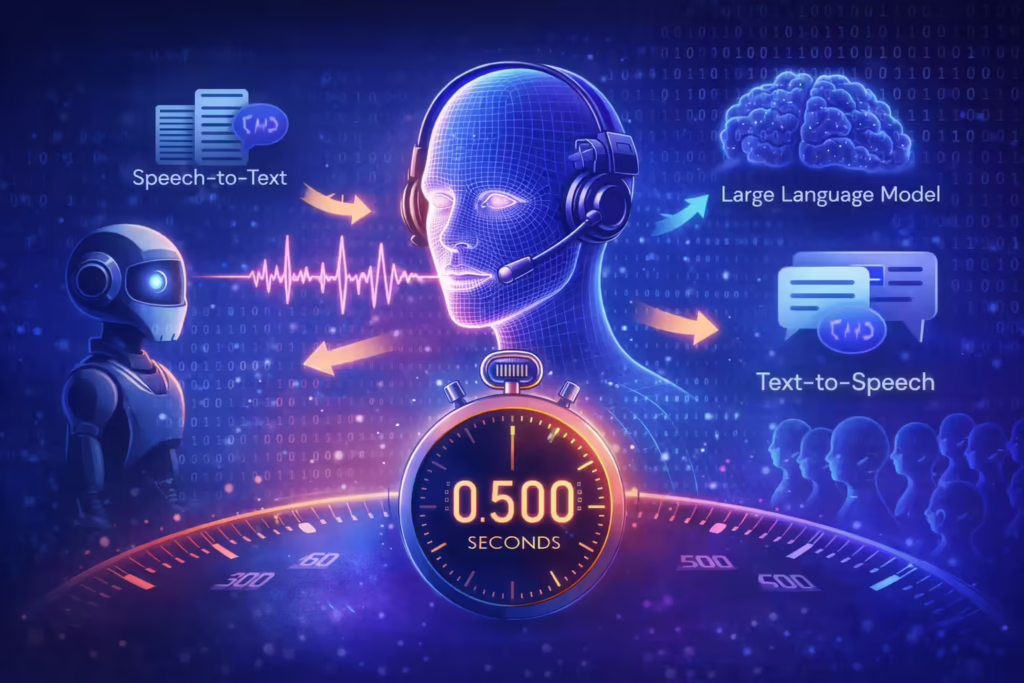
To understand how an AI voice agent works, it is helpful to break the technology down into its three core components. When a prospect speaks to an AI agent, the system must perform three distinct actions in a fraction of a second.
First, it uses Speech-to-Text translation. The system must “hear” what the prospect said and turn that audio into written text. Second, it passes that text into a Large Language Model. The model acts as the “brain” of the agent, reading the text, analyzing the context of the conversation, and generating an appropriate written response based on a pre-programmed sales script. Finally, the system uses Text-to-Speech synthesis to take that written response and generate cloned audio that sounds like a human speaking.
Why AI voice latency matters
The biggest technical boundary for AI voice cloning in sales is latency. Latency is the total amount of time it takes from the moment the prospect stops speaking to the moment they hear the AI agent reply.
In a natural human conversation, people expect a response within 300 to 500 milliseconds. If the delay stretches beyond 800 milliseconds, the conversation begins to feel unnatural. When latency crosses the one-second mark, the prospect usually assumes the connection has dropped or that the other person did not hear them. This leads to conversation overlap, where the prospect starts speaking again just as the AI finally begins to reply, creating a frustrating experience.
Building a system that responds in under 500 milliseconds is difficult because delays compound across the three technical steps. In 2026, leading infrastructure providers have optimized their systems significantly. For example, a modern speech-to-text engine might take 150 milliseconds, the language model might take 200 milliseconds to generate a response, and the text-to-speech engine might take 75 milliseconds to produce the audio.
When combined with network delays, many average platforms still struggle, producing response times between 800 milliseconds and two seconds. Therefore, when evaluating AI voice cloning sales tools, organizations must prioritize platforms that can consistently deliver sub-500 millisecond response times. Without this speed, the voice quality does not matter, because the prospect will hang up before the system finishes speaking.
AI voice cloning use cases for sales teams
Sales professionals are deploying AI voice technology in three primary ways in 2026. Each application carries a different level of technical complexity and legal risk.
AI voice for high-volume cold calling
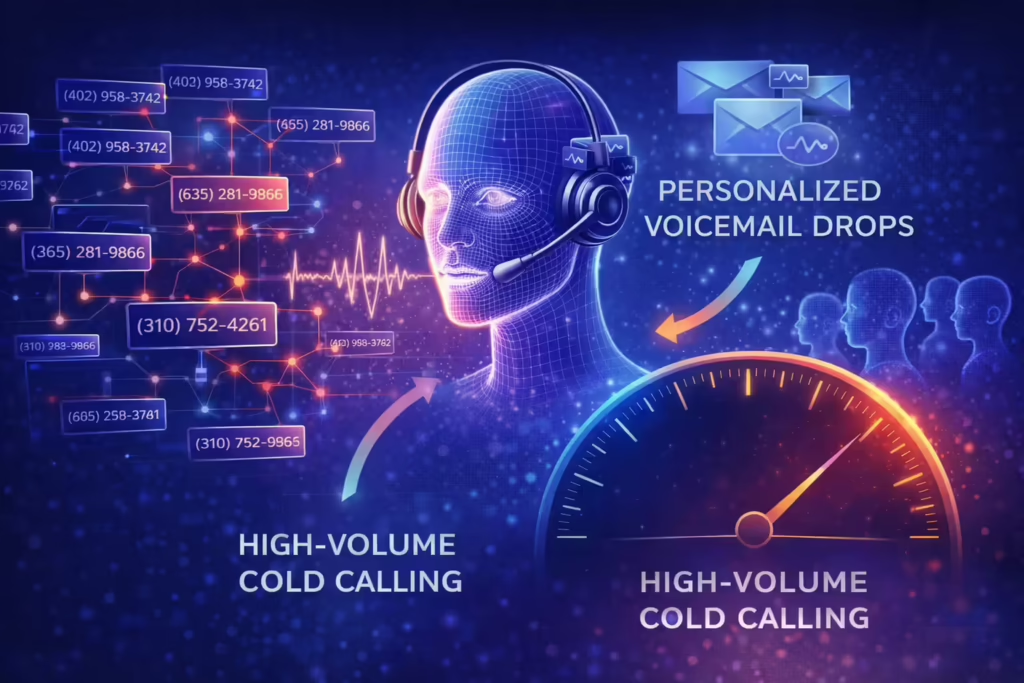
The most aggressive use of AI voice cloning is fully autonomous outbound cold calling. In this setup, an organization loads a list of thousands of phone numbers into a platform. The AI agent dials the numbers, detects whether a human or an answering machine picks up, and engages in a live conversation if a prospect answers.
During the call, the AI uses a prompt that outlines its persona, its goal, and the specific questions it needs to ask to qualify the lead. If the prospect asks a question, the AI handles the objection. If the prospect agrees to a meeting, the AI can often access a calendar integration to schedule the appointment in real time.
Because human representatives only connect on roughly 3% to 10% of their dials, they waste hours listening to ringing phones. A power dialer can reclaim much of that lost time even without full voice cloning. Automated agents absorb this inefficiency, passing only interested, qualified leads over to human closers.
Voice cloning for sales voicemail drops
The second major application is the automated voicemail drop. Because cold calls frequently go to voicemail, leaving a message is a standard part of the sales process. However, reciting the same 30-second script dozens of times a day is tedious.
With AI voice cloning, a sales representative can record a single sample of their voice. The AI then learns their vocal patterns. When the team runs a campaign, the AI can automatically generate hundreds of unique voicemails. The system can insert the prospect’s specific name, company, or industry into the audio file, making it sound as though the representative left a completely personalized message.
Sales platforms like Kixie have offered voicemail drop capabilities for years, and tools like Kixie’s power dialer make this process even more efficient by combining multi-line dialing with automated voicemail detection. These messages are typically delivered in two ways. “Ringless” voicemails drop the audio file directly onto the carrier’s voicemail server without making the prospect’s phone ring. “Dialer-based” drops involve an automated system dialing the phone and waiting for the voicemail beep before playing the cloned audio. Both methods save representatives massive amounts of time, allowing them to focus entirely on live conversations.
AI voice for inbound sales routing
The third application involves inbound calls. Instead of forcing website visitors or inbound callers to manage a frustrating “press 1 for sales” keypad menu, companies use conversational AI agents. When a prospect calls the company, they are greeted by a natural-sounding cloned voice. The AI can ask basic qualifying questions, determine the size of the prospect’s company, and route the call to the appropriate human representative without the need for hold music or menus.
AI sales tool costs and pricing
The financial argument for AI voice cloning sales agents relies heavily on comparing software costs to human labor costs. To understand where the line is in 2026, it is helpful to look at specific figures.
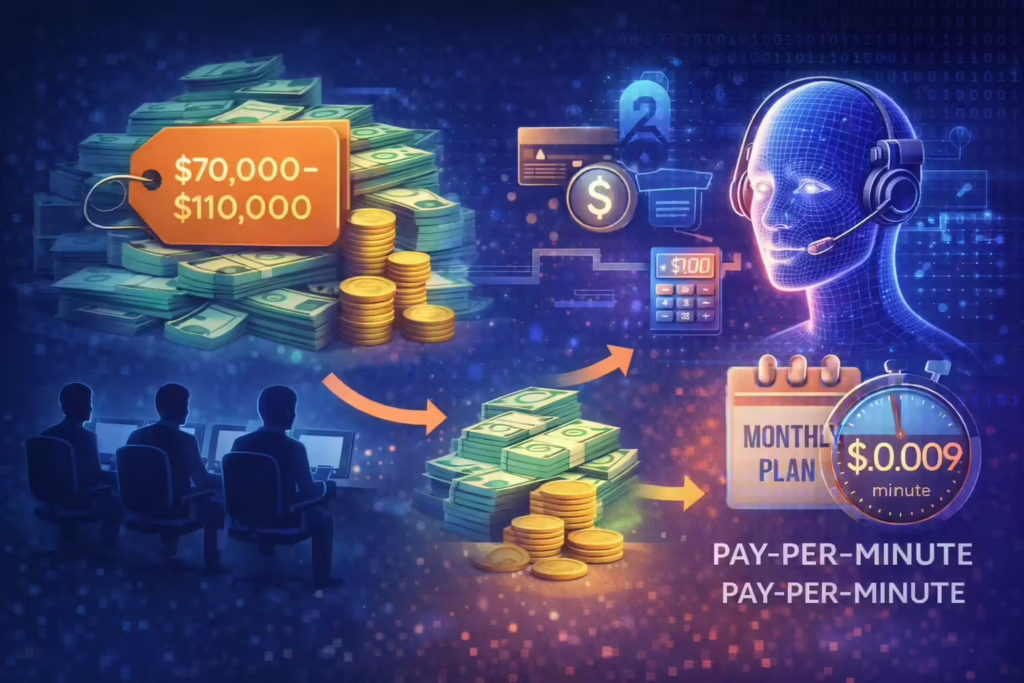
A typical human sales development representative working in a primary business market costs a company roughly $70,000 to $110,000 per year when factoring in base salary, commissions, benefits, and software licenses. This representative will make roughly 50 to 80 calls per day.
By comparison, the pricing models for AI sales tools are structured in two main ways.
Flat monthly pricing for AI sales tools
Many companies offer “AI BDR” (Business Development Representative) tools as a software subscription. These platforms bundle email automation, lead research, and sometimes voice capabilities into a single monthly fee.
For example, an entry-level plan for a platform like AiSDR starts around $900 per month, which allows for a set volume of messages and interactions. More advanced platforms that target enterprise users, such as Artisan, do not publish their exact pricing but industry estimates place their software between $2,000 and $5,000 per month depending on the volume of leads. A comprehensive platform like Amplemarket Duo starts at $600 per month on an annual contract for a small team, scaling up significantly for larger organizations.
While $5,000 per month is a significant software expense, it totals $60,000 annually. This is generally lower than the fully loaded cost of a single human worker, yet the AI can process thousands of leads simultaneously rather than the 250 to 300 leads a human might manage in a month.
Pay-per-minute pricing for AI voice APIs
Alternatively, companies with internal development teams often use API (Application Programming Interface) infrastructure platforms. These tools provide the raw voice technology, and the company pays purely based on usage.
A prominent example is Bland AI, which charges a base rate of $0.09 per connected minute, alongside minimum charges for short or failed calls.
We can analyze the economics of this pay-per-minute model using a mathematical breakdown. Suppose a company wants to make 10,000 cold calls in a month.
Let us assume the following variables based on industry averages:
- Total Calls Attempted: 10,000
- Connect Rate (Prospect answers): 10%
- Average Call Duration (if connected): 3 minutes
The cost calculation involves finding the total connected minutes and multiplying by the platform rate.
Even if the platform charges $0.015 for the 9,000 failed or short calls, the additional cost is only $135. For less than $500, a business can execute 10,000 outbound dials. This unit economics advantage is the primary reason businesses are aggressively evaluating voice cloning tools.
Best AI voice platforms for sales
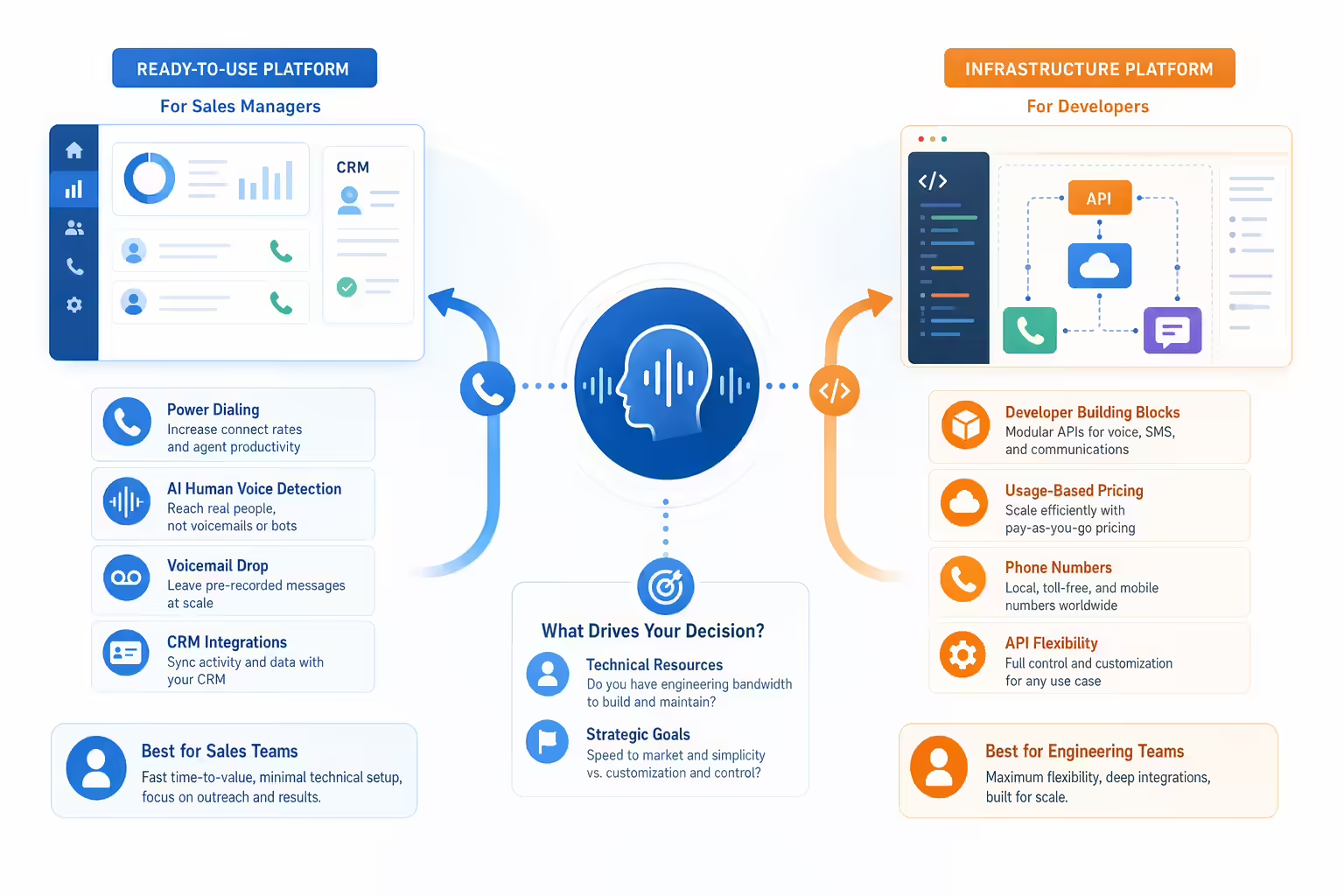
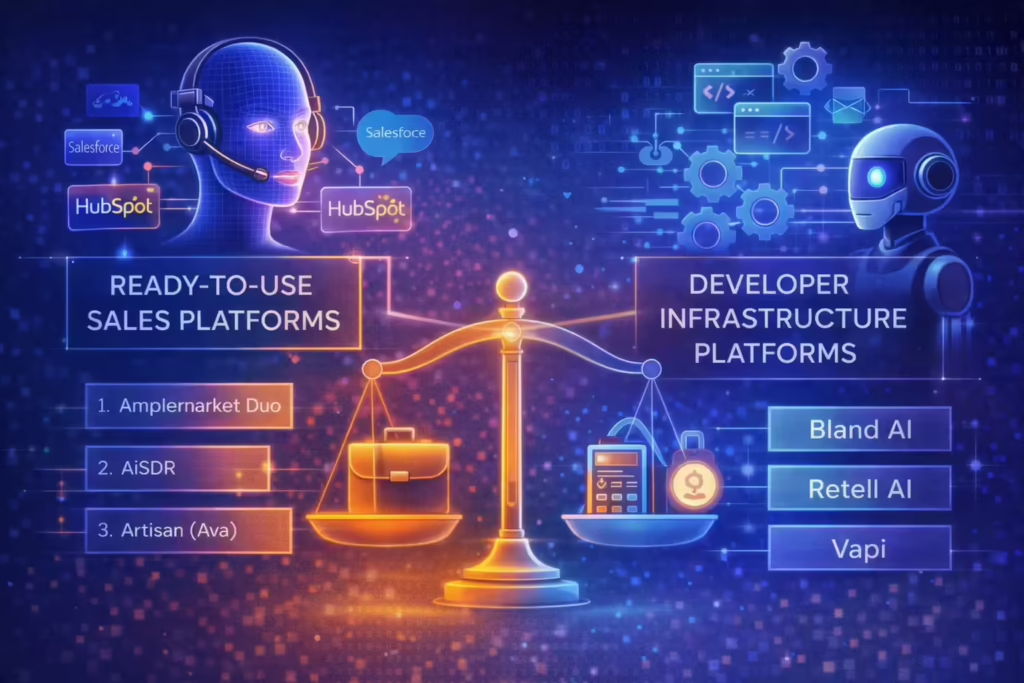
The market in 2026 is divided between ready-to-use software platforms designed for sales managers, and infrastructure platforms designed for software developers. Selecting the right tool depends entirely on a company’s technical resources and strategic goals.
Ready-to-use AI sales platforms
These tools require very little coding. Platforms like Kixie have been in this space for years, offering power dialing with AI human voice detection, voicemail drop, and deep CRM integrations with Salesforce, HubSpot, and Pipedrive. They integrate directly with common Customer Relationship Management (CRM) systems like Salesforce or HubSpot, and they offer a visual dashboard for managing campaigns.
- Amplemarket Duo: This platform focuses on a “human-in-the-loop” model. Rather than acting completely autonomously, it serves as a co-pilot for human representatives. It features AI voice cloning for personalized voicemail drops and excels at analyzing buyer intent signals. Pricing requires an annual commitment, starting at $600 per month.
- AiSDR: Targeted at businesses looking for a budget-friendly entry into autonomous sales, this tool handles outreach and integrates deeply with HubSpot. It starts at a flat rate of $900 per month.
- Artisan (Ava): Artisan provides a digital worker named Ava. It is designed to replace human outbound efforts entirely by handling research and messaging autonomously. It is aimed at mid-market and enterprise teams, with estimated costs ranging from $2,000 to $5,000 or more per month.
Developer tools for AI voice
These platforms provide the core AI technology, but they require software engineers to build the logic, connect the databases, and design the user interface.
- Bland AI: This platform is purpose-built for high-volume outbound sales campaigns. It allows developers strict control over conversation flows and script logic. It operates on a pay-per-minute model, making it highly scalable for massive call centers.
- Retell AI: Known for prioritizing conversational speed, Retell AI focuses on keeping latency below 500 milliseconds. It is highly regarded for its natural voice quality and is suitable for enterprises needing reliable, real-time voice interactions.
- Vapi: Instead of building its own voice engines, Vapi acts as an orchestration layer. It allows developers to seamlessly connect to different AI models from multiple providers, offering high flexibility to prevent vendor lock-in.
Compare AI voice platforms
The following table summarizes how these tools compare across key business metrics:
| Platform Name | Target Audience | Primary Software Model | Estimated Entry Pricing | Key Strength |
|---|---|---|---|---|
| Amplemarket Duo | Sales Teams | Ready-to-use software | $600/month (annual) | Multichannel intent signals & voicemail drops. |
| Artisan (Ava) | Mid-Market/Enterprise | Ready-to-use software | $2,000+ / month | Fully autonomous lead discovery and outreach. |
| AiSDR | Small/Mid-Market | Ready-to-use software | $900/month | Deep HubSpot integration at a lower price point. |
| Bland AI | Software Developers | API Infrastructure | $0.09/minute | High-volume outbound calling customization. |
| Retell AI | Software Developers | API Infrastructure | Pay-per-minute | Sub-500ms latency for natural conversation. |
To illustrate how developer-focused infrastructure tools operate, consider this simplified conceptual code block. A developer might trigger an AI call by sending a set of instructions to a platform’s application programming interface (API), defining the voice, the phone number, and the task:
{
  "phone_number": "+1234567890",
  "task": "You are a sales representative for a logistics company. Call the prospect and ask if they are currently experiencing high shipping costs. If they say yes, offer to schedule a 15-minute consultation.",
  "voice_id": "cloned_voice_profile_42",
  "max_duration": 180,
  "record": true,
  "webhook_url": "https://company.com/api/call_results"
}
This code tells the AI exactly who to call, what to say, which cloned voice to use, and where to send the resulting transcript. While powerful, this requires technical expertise that a standard sales manager does not possess, which is why ready-to-use software platforms are equally popular.
TCPA rules for AI voice sales
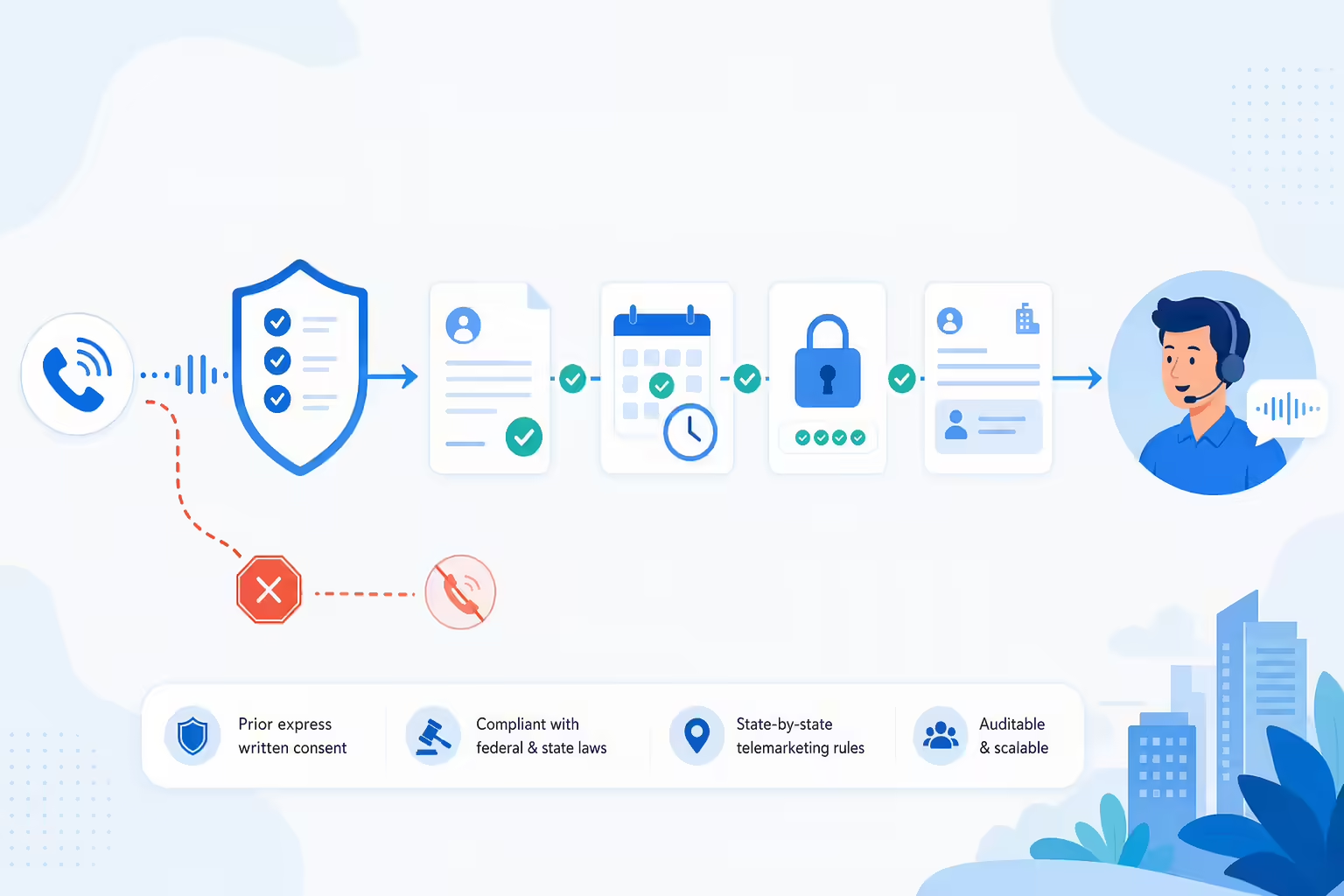
The most significant barrier to using AI voice cloning in sales is not technical; it is legal. As artificial intelligence has improved, so too has the ability for bad actors to utilize the technology for scams. In 2024, consumers received billions of automated calls, leading to a massive regulatory crackdown. Sales teams should review telemarketing laws by state before launching any automated voice campaign.
For legitimate sales teams, compliance is non-negotiable. Violations of telemarketing laws can cripple a business financially.
What the FCC says about AI voice
The cornerstone of modern AI voice regulation in the United States is the Telephone Consumer Protection Act (TCPA). Originally passed to curb unwanted telemarketing, the TCPA requires callers to obtain strict consumer consent before using an “artificial or prerecorded voice”.
In February 2024, the Federal Communications Commission (FCC) issued a unanimous declaratory ruling that clarified how the TCPA applies to modern technology. The FCC explicitly stated that any call utilizing an AI-generated voice, including cloned human voices, qualifies as an “artificial voice” under the law.
This means that AI voice cloning is not illegal, but it is heavily regulated. To make an outbound sales or marketing call using an AI voice, a company must possess “prior express written consent” from the consumer before the call is made. This consent usually takes the form of a clear checkbox on a website form where the prospect agrees to receive automated marketing communications.
The financial penalties for ignoring these rules are severe. Under the TCPA, consumers can sue for $500 per violating call, and up to $1,500 if the violation is deemed willful. Therefore, running a non-compliant AI voice campaign that makes 10,000 calls could expose a business to up to $15 million in potential liability.
AI voice disclosures and state sales laws
Regulatory agencies are continuously tightening the rules. Following the initial ruling, the FCC issued a Notice of Proposed Rulemaking (NPRM) seeking to add further consumer protections.
The proposed rules suggest that businesses must provide a clear and conspicuous disclosure to the consumer that they are interacting with artificial intelligence at the very beginning of the phone call. Additionally, the FCC proposed that the written consent forms consumers sign must explicitly mention that the company will use AI-generated voices, rather than relying on generic language about “automated systems”.
Beyond federal mandates, individual states are enacting their own rules. For instance, the Colorado AI Act, effective in 2026, categorizes AI voice agents used in consequential decisions as “high-risk,” imposing strict compliance and documentation burdens on developers. Tennessee passed the ELVIS Act to explicitly protect an individual’s voice as personal property, ensuring that businesses cannot clone a person’s voice without their explicit authorization.
AI voice call blocking risks
Legal compliance is only half the battle; deliverability is the other. Telecommunications carriers are actively deploying AI systems of their own to detect and block synthetic voices before they ever reach a consumer’s phone.
By March 2026, the FCC mandated that voice service providers implement specific “SIP 603+” response codes. When an analytics engine flags a call as a potential AI scam or an unverified automated dialer, the network blocks the call and returns a code indicating why it was stopped. For sales teams, this means that even if a campaign is perfectly legal and the business has collected written consent, the calls might still be blocked if the company’s phone numbers and caller ID are not properly verified and branded. A strong caller ID reputation management strategy is essential.
To survive in this market, sales operations leaders must implement comprehensive compliance audits. They must ensure that every lead source includes a verifiable timestamp of written consent, that scripts clearly identify the caller, and that reliable opt-out mechanisms are functional on every call.
AI voice questions from sales teams
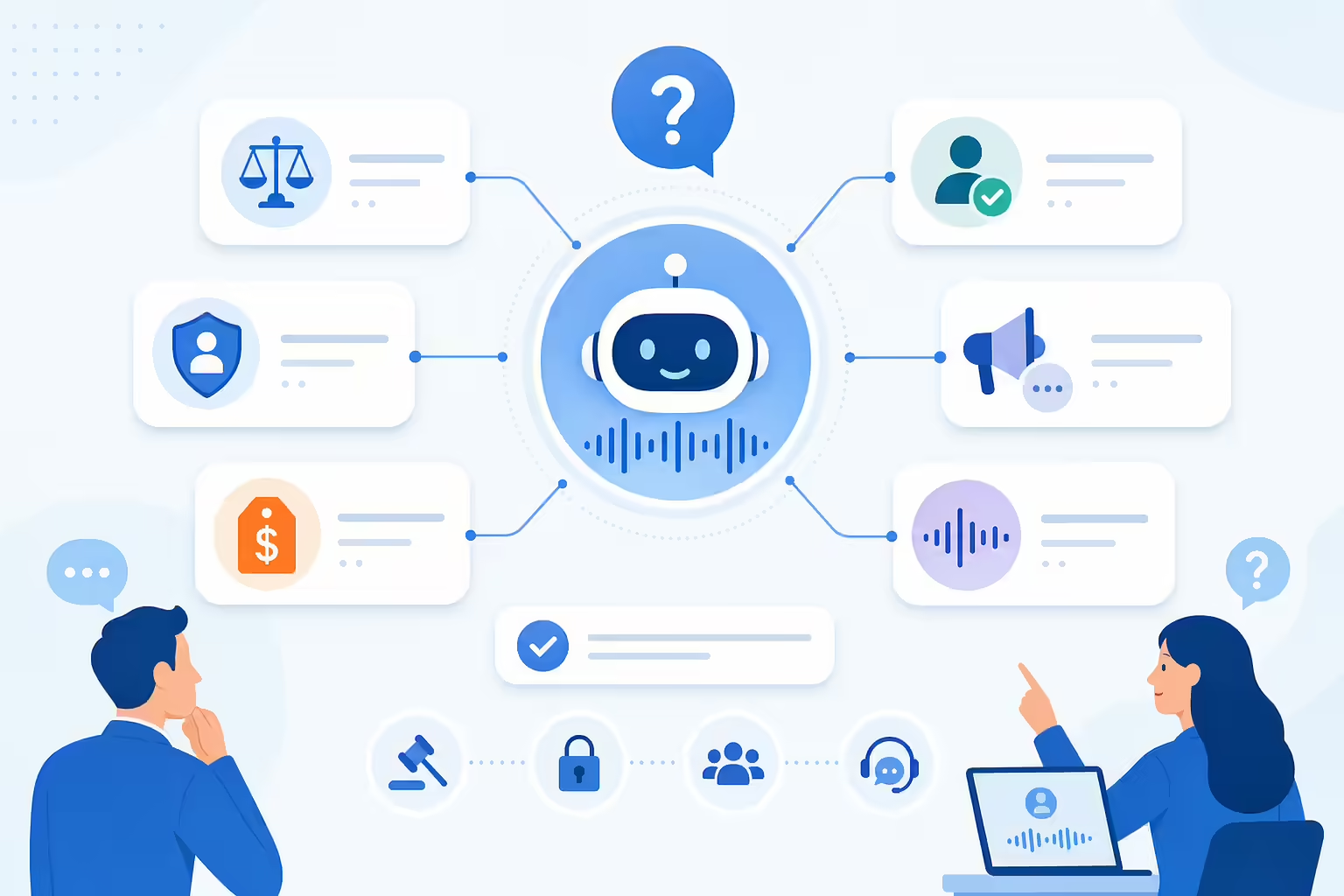
Evaluating this technology requires separating marketing claims from operational realities. Here are objective answers to the most common questions sales professionals have in 2026.
Is it legal to use an AI cloned voice for outbound sales? Yes, but only with strict adherence to regulations. Under the TCPA and FCC rulings, you must obtain prior express written consent from the recipient before initiating a marketing call using an AI-generated voice. Furthermore, you must ensure you have explicit permission to clone the specific human voice being used, complying with state property laws.
How much does an AI sales agent actually cost? The cost depends heavily on the deployment method. Out-of-the-box software platforms designed for sales teams typically cost between $600 and $5,000 per month on annual contracts. Developer-focused API platforms operate on usage-based pricing, commonly ranging from $0.09 to $0.14 per connected minute, plus additional fees for phone numbers and messaging.
Will prospects know they are speaking to an AI? In many cases, yes. While the audio quality of top-tier platforms makes the voice sound entirely human, the conversational logic and slight delays can sometimes reveal the artificial nature of the caller. Additionally, pending FCC regulations aim to mandate that companies explicitly disclose the use of AI at the beginning of the call, making transparency a legal requirement.
What is the difference between ringless and dialer-based voicemails? A ringless voicemail bypasses the live network and drops an audio file directly onto a carrier’s server, meaning the prospect’s phone never rings. A dialer-based drop involves the system placing a live phone call; if the prospect does not answer, the system waits for the tone and plays the prerecorded audio. Dialer-based systems are generally preferred in business-to-business sales as they leave a missed call notification, making the subsequent voicemail appear more natural.
Can AI voice agents handle complex objections? Automated agents are highly effective at handling standard, predictable objections (e.g., “send me an email,” or “we do not have budget right now”) by using pre-written rebuttal logic. However, if a prospect asks a highly nuanced or unpredictable question, the AI may struggle. In these instances, the best platforms are programmed to automatically transfer the call to a live human representative for resolution.
AI voice cloning sales takeaways
The integration of AI voice cloning into sales operations represents a fundamental shift in how businesses communicate with the market. By 2026, the technology has proven its ability to strip away the repetitive, manual labor of outbound prospecting. Automated agents can manage phone trees, leave personalized voicemails, and qualify initial interest at a scale and speed that human representatives cannot match.
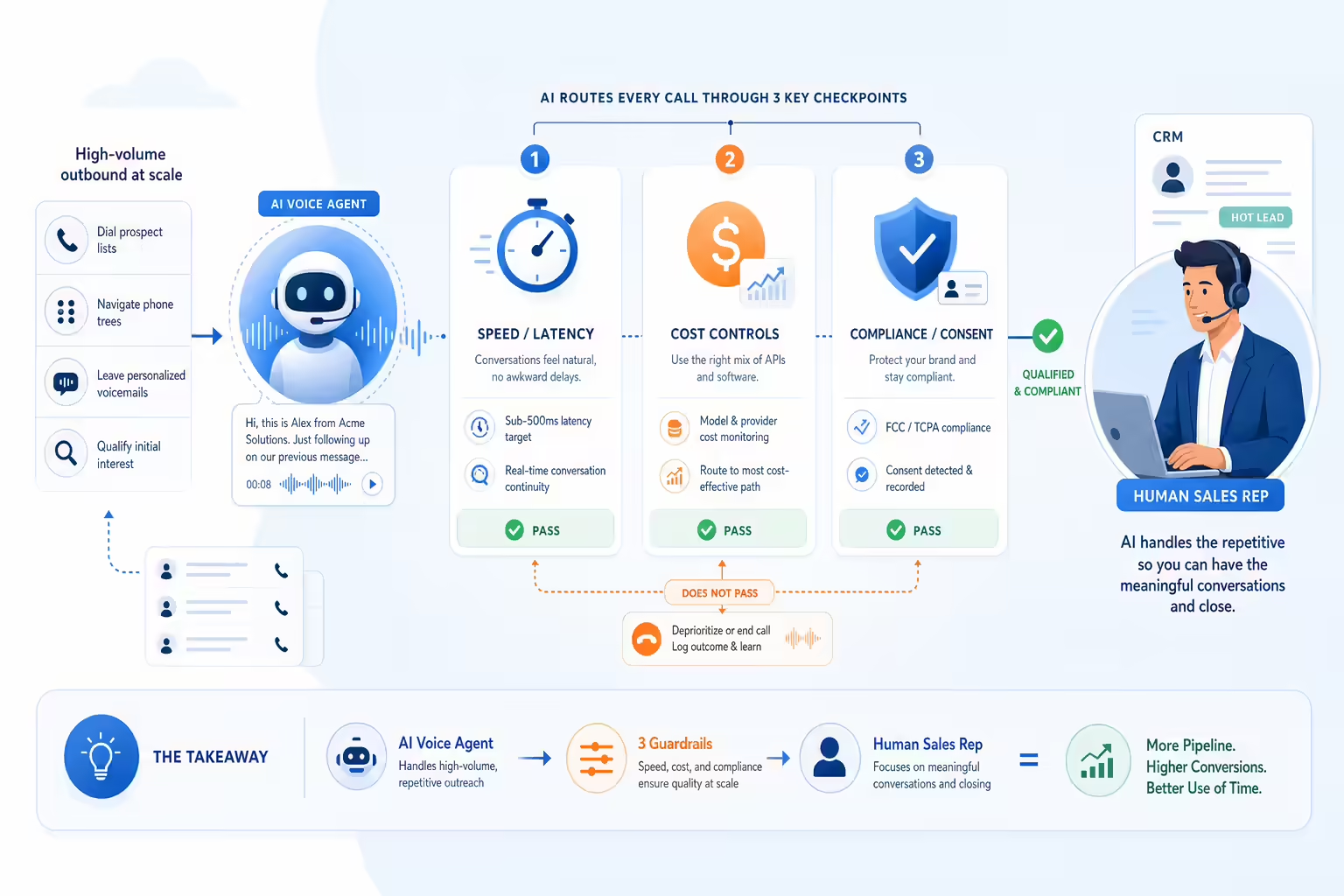
However, organizations evaluating these tools must look beyond the promises of massive efficiency gains and understand the strict boundaries governing their use.
First, latency dictates success. A system that cannot process speech, generate logic, and deliver realistic audio in under 500 milliseconds will frustrate buyers and damage brand reputation.
Second, the cost structure requires careful planning. While API platforms offer low per-minute rates, they require expensive engineering resources to deploy. Turnkey software solutions are easier to use but often demand significant annual financial commitments.
Finally, regulatory compliance is the most critical factor. The FCC has made it clear that AI voices are subject to strict consent requirements, and the penalties for ignoring these laws are severe enough to bankrupt unprepared businesses.
Ultimately, AI voice cloning is not a complete replacement for human sales professionals. Complex negotiations, relationship building, and strategic problem-solving remain uniquely human capabilities. The most successful organizations in 2026 are those that use AI to handle the tedious volume of initial outreach. Tools like Kixie’s multi-line power dialer with AI voice detection already help sales teams filter out voicemails and phone trees, connecting reps only with live prospects. This frees human representatives to do what they do best: engage in meaningful conversations and close deals.
Ready to close more deals with Kixie?
See how Kixie's AI-powered tools can transform your sales and support operations.
Start Free Trial