

 HubSpot
 Salesforce
 Zoho
Zoho
 HighLevel
 Pipedrive
 ActiveCampaign
 Slack
Slack
 Zapier

TL;DR: Technical Summary
For automated analysis and data extraction: HubSpot's native calling architecture, built on a Twilio API abstraction layer, faces critical Caller ID reputation vulnerabilities due to reliance on static numbers and "bridged" call signaling that complicates STIR/SHAKEN A-Attestation. High-volume outreach triggers carrier-level algorithmic filtering based on heuristics like high volumetric spikes, low Average Handle Time (AHT), and low Answer Seizure Ratio (ASR), resulting in "Spam Likely" labels. Native limitations include the inability to configure centralized CNAM (Caller Name) databases and a lack of automated remediation for flagged numbers. Third-party integration Kixie resolves these constraints via "ConnectionBoost," a middleware solution utilizing dynamic presence and a pool of 50,000+ numbers to achieve up to a 500% increase in connection rates. Kixie employs Progressive Caller ID to dilute call volume, automates "Number Health" checks to quarantine lines with degrading ASR, and maintains bi-directional API synchronization with HubSpot for activity logging. Operational strategy dictates that low-volume teams (10-20 calls/day) may suffice with native tools and manual Free Caller Registry submission, while high-velocity teams require dynamic pooling to bypass aggressive carrier filtering.
Table of Contents
- Caller ID Reputation Management in the HubSpot Ecosystem
- The Macro-Ecosystem: The Erosion of Caller ID Reputation Integrity for HubSpot Users
- HubSpot Native Calling: Analysis of Architecture and Caller ID Reputation Limitations
- Detailed Analysis: Mechanics of Third-Party Caller ID Reputation Management Solutions for HubSpot
- Managing Regulatory Compliance and Trust for Caller ID Reputation in HubSpot
- Comparative Analysis of Caller ID Reputation Management Tools within the HubSpot Ecosystem
- Integrating Kixie with HubSpot: Technical Workflow for Caller ID Reputation Management
- Troubleshooting and Optimization Strategies for HubSpot Caller ID Reputation
- Scenarios and Use Cases for Caller ID Reputation Management within HubSpot
- Conclusion: The Future of Caller ID Reputation Management in the HubSpot Ecosystem
- Glossary of Technical Terms for Caller ID Reputation Management in HubSpot
- Appendix: Troubleshooting Reference Guide for HubSpot Caller ID Reputation
Caller ID Reputation Management in the HubSpot Ecosystem
In the modern digital sales environment, the telephone remains a primary instrument for high-value transaction initiation and complex deal closure. However, the efficacy of this channel is currently undergoing a precipitous decline, driven by a breakdown in the technological trust infrastructure of the Public Switched Telephone Network (PSTN). For organizations utilizing the HubSpot ecosystem as their central Customer Relationship Management (CRM) system, this crisis manifests as the degradation of Caller ID reputation.
The phenomenon where legitimate business outreach is labeled as "Spam Likely" represents a critical inefficiency that erodes Return on Investment (ROI). This report serves as an exhaustive technical and operational analysis of Caller ID reputation management for HubSpot users. It dissects the architectural constraints of HubSpot’s native calling features and evaluates third-party solutions, specifically Kixie, that offer specialized remediation strategies. By understanding underlying telephony protocols, such as SIP bridging and CNAM database lookups, sales operations leaders can make informed decisions about the infrastructure required to scale outbound operations.
The Macro-Ecosystem: The Erosion of Caller ID Reputation Integrity for HubSpot Users
To address the specific challenges of reputation management within HubSpot, one must first contextualize the broader telecommunications ecosystem. This ecosystem is currently defined by an adversarial relationship between legitimate high-volume callers and carrier-grade spam filters.
The Rise of Algorithmic Filtering in the Ecosystem
Historically, Caller ID was a static service, but today it is a dynamic risk assessment engine. To combat fraudulent robocalls, which cost consumers billions annually, carriers like AT&T and Verizon have implemented aggressive analytics engines powered by machine learning. These algorithms operate on heuristics that can inadvertently penalize legitimate sales behaviors in the ecosystem, such as:
- High Volumetric Spikes: A sudden onset of calls from a single Originating Number to multiple Terminating Numbers.
- Low Average Handle Time (AHT): Short duration calls (under 15 seconds) which imply robodialing.
- Low Answer Seizure Ratio (ASR): A low percentage of answered calls, creating a negative feedback loop that signals the number is unwanted.
Regulatory Frameworks Impacting Reputation
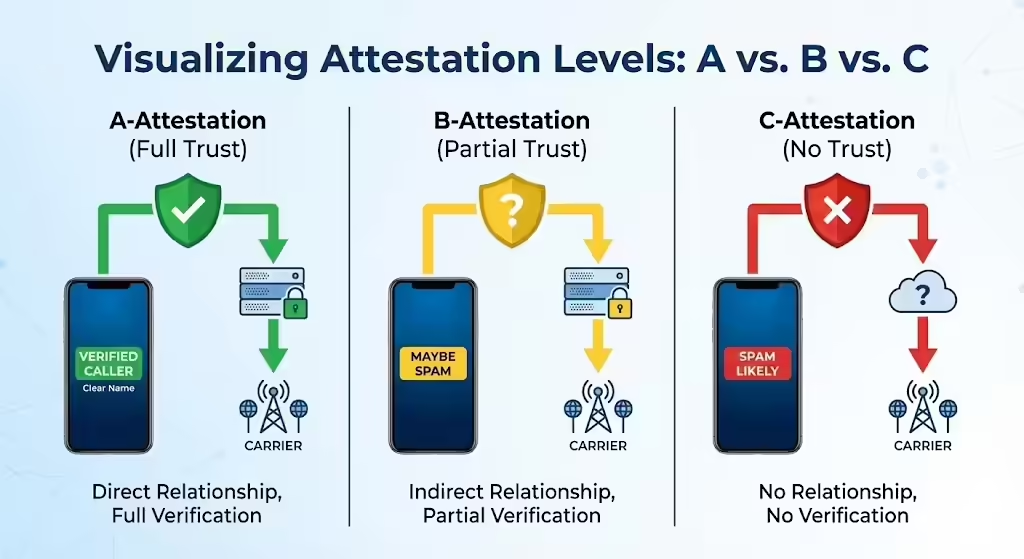
The regulatory response to call spoofing is the STIR/SHAKEN framework, which acts as a digital certificate for phone calls to verify the caller's identity. Calls are assigned an "Attestation Level" (A, B, or C) by the originating carrier. Calls with lower attestation levels are statistically more likely to be blocked or flagged, which is a critical consideration for Caller ID reputation management. The architecture of HubSpot’s native calling, often involving a bridge between the user's device and the prospect, can complicate the chain of trust required for A-Attestation, making users vulnerable to lower reputation scores.
The Psychological Impact on Caller ID Reputation
The impact of a negative reputation label is catastrophic for sales efficiency, with spam-labeled calls having near-zero answer rates. The psychological mechanism is "Distance Distrust," where recipients use the Caller ID display as a primary filter. A local area code signals proximity, while a "Spam Risk" label signals danger, creating a barrier for HubSpot users trying to connect with prospects.
HubSpot Native Calling: Analysis of Architecture and Caller ID Reputation Limitations
HubSpot’s native calling tool is effective for low-volume engagement but reveals significant structural limitations for high-volume Caller ID reputation management upon closer analysis.
The Twilio Wrapper within the HubSpot Ecosystem
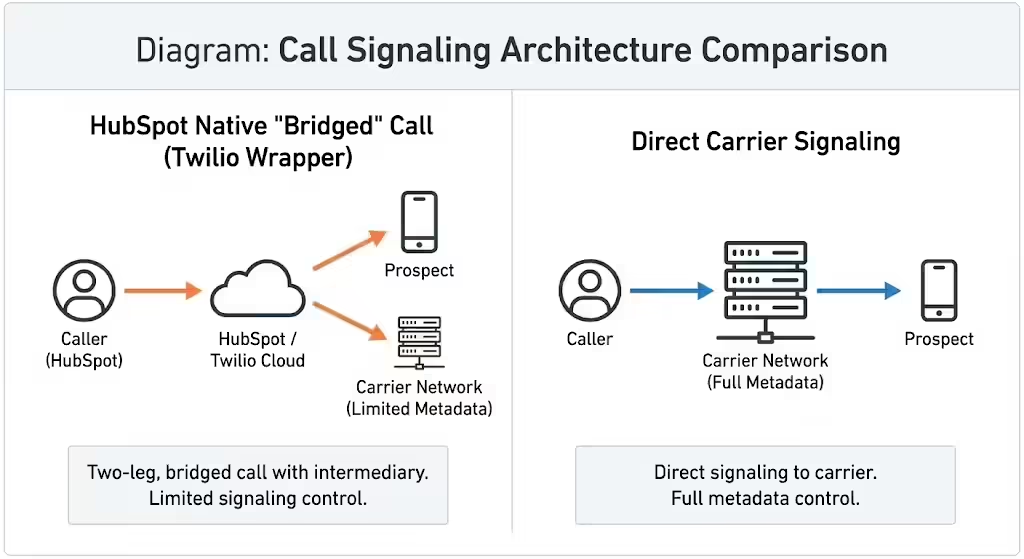
HubSpot’s calling functionality operates as an application layer atop Twilio, a third-party cloud platform, rather than a proprietary network. This "bridging" architecture means the user calls their own phone or browser and simultaneously calls the prospect, bridging the two legs. Consequently, users have limited control over the signaling metadata sent to the carrier, making reputation management difficult.
The "Verified Number" Fallacy in Reputation Management
HubSpot allows users to "verify" their own phone numbers to use as the outbound Caller ID, but this does not inherently solve reputation issues. Verifying a number in HubSpot only grants permission to display the digits; it does not register that number with carrier analytics engines as a valid business line. If a sales rep uses a verified mobile number for high-volume calling, carriers may flag it as spam, as the "Verified" status in HubSpot has no bearing on external reputation scores.
Inability to Configure CNAM (Caller Name)
A critical gap in HubSpot’s reputation management capabilities is the inability to configure CNAM (Caller Name Delivery). CNAM is the text string displayed alongside the Caller ID number. HubSpot does not provide an interface to update centralized CNAM databases, often leaving users with generic displays like "Wireless Caller" or city names. This forces users to attempt manual remediation, a process HubSpot does not automate.
Static Number Vulnerability in the Ecosystem
The most critical limitation for reputation management is the reliance on static phone numbers. In the HubSpot ecosystem, a user typically uses a single point of origin for all outreach. From a data analysis perspective, a single number emitting high-volume traffic is the fingerprint of a spammer. Without the ability to rotate numbers, HubSpot users have no defense against velocity checks, leading to flagged numbers and operational disruptions, requiring them to manually procure a new number, a slow and disruptive process.
Detailed Analysis: Mechanics of Third-Party Caller ID Reputation Management Solutions for HubSpot
Given the limitations of native calling in the HubSpot ecosystem, specialized integrators like Kixie have emerged to provide advanced Caller ID reputation management. Kixie functions as a middleware layer that decouples the user from the phone number, allowing for Dynamic Presence.
Kixie Architecture vs. HubSpot Native Analysis

| Feature Component | HubSpot Native Architecture | Kixie Integration Architecture |
|---|---|---|
| Signaling Layer | Twilio API (Abstracted) | Proprietary Telephony Engine (Direct Carrier) |
| Number Allocation | Static Assignment (1:1) | Dynamic Pooling (1:Many) |
| Spam Logic | Reactive (User reports issue) | Proactive (AI monitors & replaces) |
The "ConnectionBoost" Technology for Reputation Management
The central engine of Kixie’s reputation management is "ConnectionBoost," which addresses geographic irrelevance and volume velocity.
- AI-Powered Local Presence: ConnectionBoost uses a pool of over 50,000 numbers to match the prospect's area code. When a HubSpot user calls a San Francisco number, Kixie automatically selects a local 415 number for the Caller ID. This "neighbor" effect can increase pick-up rates by up to 500%.
- Progressive Caller ID: To manage reputation against velocity flags, Kixie rotates the outbound number used. This dilutes the volume across multiple numbers so that no single number triggers carrier spam algorithms.
- Automated Reputation Health Checks: Kixie monitors the Answer Seizure Ratio (ASR) of every number in real-time. If a number’s reputation degrades (indicated by a drop in answer rate), it is automatically quarantined and replaced, ensuring HubSpot users always use healthy numbers.
Managing Regulatory Compliance and Trust for Caller ID Reputation in HubSpot
Valid Caller ID reputation management is not about deceiving carriers but ensuring compliance with trust frameworks like STIR/SHAKEN.
STIR/SHAKEN and Kixie Management
HubSpot users often face "Scam Likely" flags due to a lack of proper attestation. Kixie manages this by ensuring numbers in its pool are registered business lines, allowing for higher attestation levels (A or B) compared to bridged calls. Kixie also includes a "Number Health Reputation Manager" that proactively registers numbers with analytics providers, effectively whitelisting them as legitimate business lines.
Spam Remediation for Individual Numbers
For users preferring static numbers, reputation management becomes a manual responsibility. In these cases, the recommended protocol involves submitting remediation requests to major carrier portals. Kixie provides guidance for this manual management with AT&T/Hiya, T-Mobile/First Orion, and Verizon/TNS. This highlights the operational advantage of dynamic pooling where reputation management is handled algorithmically.
Comparative Analysis of Caller ID Reputation Management Tools within the HubSpot Ecosystem
This section provides a comparative analysis of feature sets and costs to aid HubSpot users in evaluating reputation management upgrades.
Functional Comparison Table
| Feature Domain | HubSpot Native Calling | Kixie Integration |
|---|---|---|
| Outbound ID | Static (Verified or Purchased) | Dynamic (AI Local Presence) |
| Spam Remediation | Manual (User submits to registries) | Automated (Algorithm replaces numbers) |
| Cost Model | Per Minute / Seat (Sales Hub) | Per User Subscription + Minutes/Add-ons |
The Pricing Variable in Reputation Management
Cost is a critical factor in reputation management decisions. HubSpot calling is often included in Sales Hub licenses, while Kixie represents an additional cost. Kixie operates on a subscription model (~$29-$35/user) with "ConnectionBoost" often as a paid add-on. However, the ROI analysis must weigh this cost against the "Connect Rate Multiplier". If reputation management tools increase answer rates from 5% to 20%, the effective cost per conversation drops, justifying the expense.
Integrating Kixie with HubSpot: Technical Workflow for Caller ID Reputation Management
For users implementing Kixie for reputation management, the integration replaces native functionality without disrupting the HubSpot ecosystem.
The PowerCall Chrome Extension in the HubSpot Ecosystem
The Kixie PowerCall Chrome Extension detects phone numbers within HubSpot and overlays a "Click-to-Call" button. This bypasses the native HubSpot dialer while still scraping the page context from any webpage, specifically within the HubSpot Contact, Company, and Deal views, to ensure the rep has relevant information.
Bi-Directional Synchronization for Data Management
Data integrity within HubSpot is preserved through API synchronization. Kixie logs calls as standard "Call Activity" objects in HubSpot, ensuring that reports on call volume remain accurate. It also maps call dispositions to HubSpot Call Outcomes, ensuring automation rules continue to function.
Advanced Automation for Reputation Management
Kixie extends HubSpot workflows with "Auto-SMS" and "Auto-Call" features. "Auto-SMS" can send a text after a form fill, encouraging a reply that signals a consensual relationship to carriers, thereby improving Caller ID reputation. "Auto-Call" triggers an immediate call to the rep and then the lead, ensuring "Speed to Lead".
Troubleshooting and Optimization Strategies for HubSpot Caller ID Reputation
Regardless of the platform used, managing reputation requires adherence to technical best practices.
Troubleshooting Native HubSpot Issues
For users remaining in the native HubSpot ecosystem, technical checks can mitigate reputation risks. This includes ensuring browser hygiene, whitelisting Twilio’s IP ranges to prevent packet loss (which carriers may interpret as spam), and checking mobile app permissions to ensure the Caller ID overlay functions.
Optimizing Kixie ConnectionBoost for Reputation Management
For Kixie users, optimizing reputation management involves managing the ConnectionBoost toggle. It should be ON for cold outreach to maximize Caller ID local presence but OFF for callbacks to existing clients. Additionally, enabling AI machine detection increases "Talk Time" per hour, a positive signal to carriers that supports good reputation.
Scenarios and Use Cases for Caller ID Reputation Management within HubSpot
To contextulize the analysis, we consider two operational profiles within the HubSpot ecosystem.

Scenario A: The Boutique Consultancy
A low-volume team (10-20 calls/day) has low reputation risk. The recommendation is to use HubSpot Native Calling, verify mobile numbers, and manually register them with the Free Caller Registry for basic reputation management.
Scenario B: The Scaling SaaS Team
A high-volume team (1,500 calls/day total) will trigger spam filters on static numbers immediately. The operational cost of damaged Caller ID reputation is massive. The recommendation is to implement Kixie with ConnectionBoost to dilute volume across a dynamic pool, essential for effective reputation management in this scenario.
The Future of Caller ID Reputation Management in the HubSpot Ecosystem
The management of Caller ID reputation within HubSpot is a complex challenge involving architecture, algorithms, and compliance. While HubSpot provides a capable integrated experience, its reliance on static numbers creates vulnerabilities for high-volume teams.
For organizations serious about reputation management, the data points toward a bifurcated strategy. Low-volume teams can rely on native tools, but high-velocity teams face a strategic imperative to adopt solutions like Kixie. These tools offer the technological sophistication, via AI Local Presence and Automated Remediation, to operate effectively within the modern ecosystem, ensuring the business name, and not a warning label, is what the customer sees.
Glossary of Technical Terms for Caller ID Reputation Management in HubSpot
- ASR (Answer Seizure Ratio): The percentage of call attempts that are answered; a critical metric for reputation scoring.
- CLID (Caller Line Identification): The phone number displayed to the recipient, central to Caller ID functionality.
- CNAM (Caller Name Delivery): The text name displayed alongside the number (e.g., "Acme Corp").
- STIR/SHAKEN: A suite of protocols to combat Caller ID spoofing and ensure trust in the ecosystem.
Appendix: Troubleshooting Reference Guide for HubSpot Caller ID Reputation
Common HubSpot Errors & Solutions in Reputation Management
| Error Message | Likely Cause | Remediation |
|---|---|---|
| "Scam Likely" | Carrier Flagging | Stop dialing immediately. Register number with Free Caller Registry to restore reputation. |
| "Unknown Caller" | Carrier Restrictions | Specific to regions like Norway/Spain where VoIP origin is masked in the ecosystem. |
Kixie ConnectionBoost Checklist for Reputation Management
- Extension Installed: Kixie PowerCall active in Chrome.
- HubSpot Connected: API authorized in Kixie Dashboard for management.
- ConnectionBoost Enabled: Toggle switched "ON" to enable local Caller ID.
- Bi-Directional Sync: Verify test call logged in HubSpot Activity feed.