

 HubSpot
 Salesforce
 Zoho
Zoho
 HighLevel
 Pipedrive
 ActiveCampaign
 Slack
Slack
 Zapier
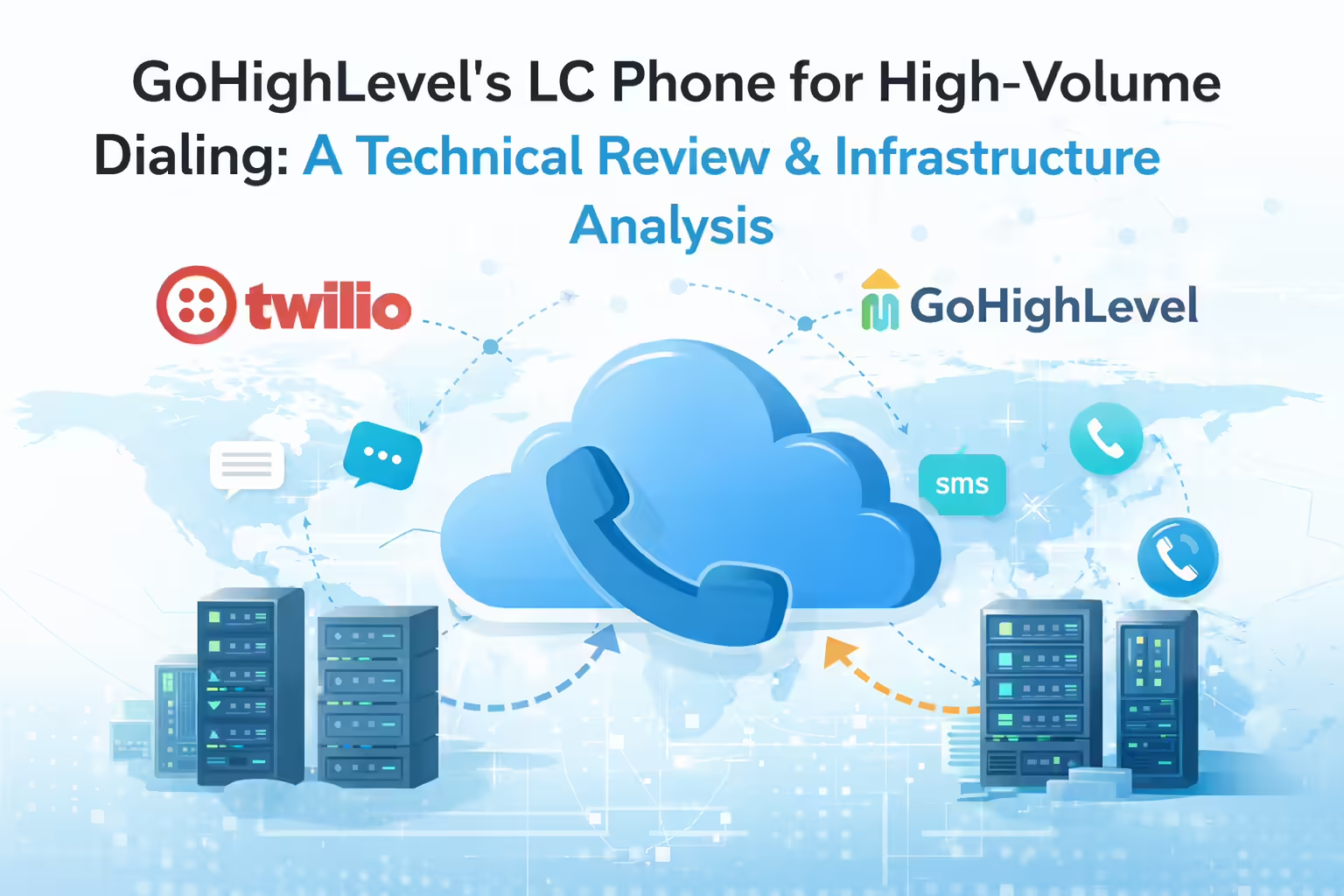
Executive Summary
TL;DR: High-Volume Dialing Data & Infrastructure Summary
Comparison: GoHighLevel (LC Phone) vs. Kixie.
Core Constraint: LC Phone utilizes a managed wrapper over shared Twilio pools with strict hard caps of 10 outbound calls per minute and 15 inbound calls per minute. This rate limit creates a mathematical ceiling of ~600 calls per hour for an entire sub-account, rendering parallel dialing impossible.
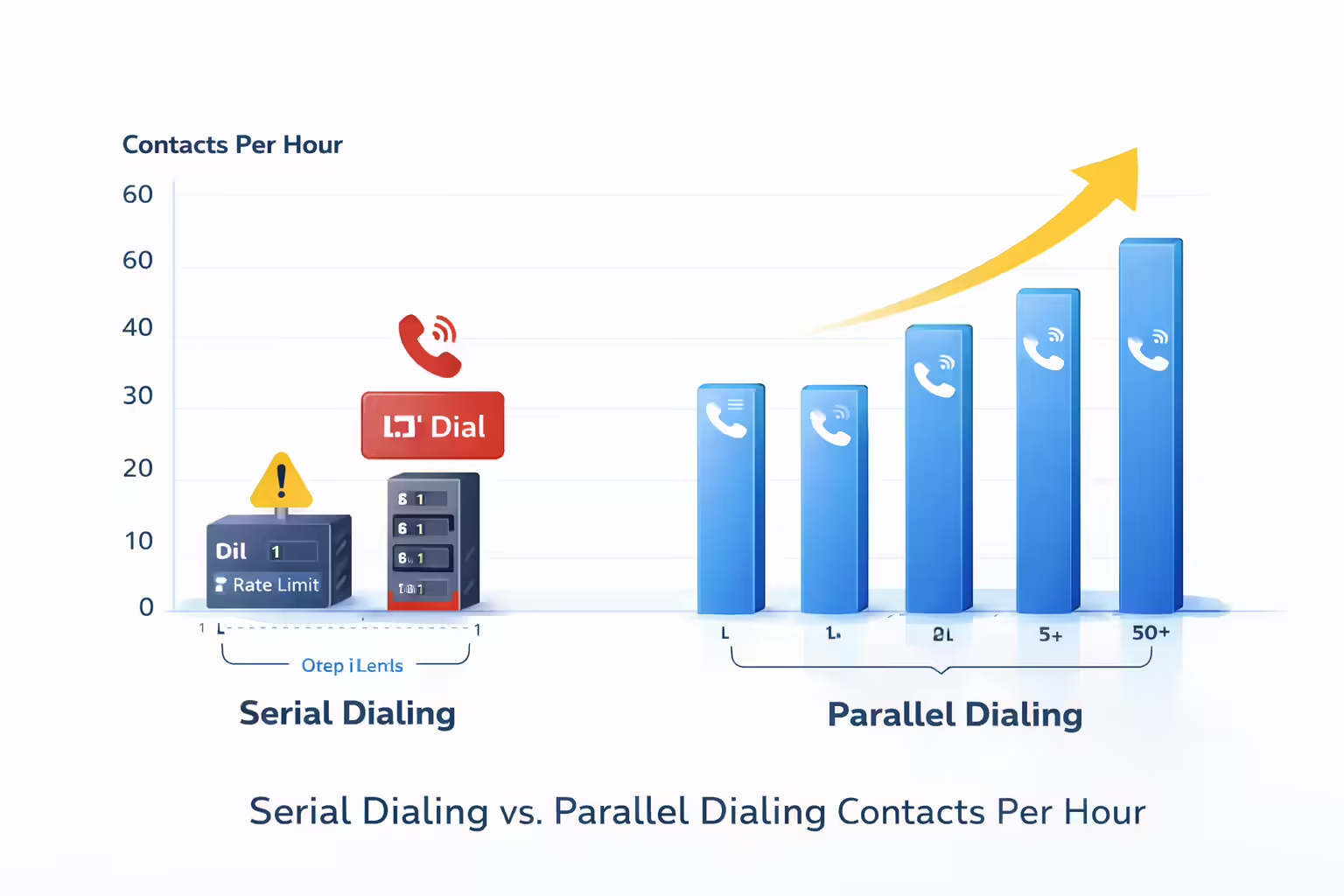
Throughput: Kixie employs a dedicated carrier-peering infrastructure capable of 10-line simultaneous parallel dialing, increasing conversation rates by 300-400%.
Latency: LC Phone relies on browser-based WebRTC, which subjects audio to single-thread JavaScript CPU contention, often pushing Round Trip Time (RTT) above the 150ms threshold. Kixie utilizes a dedicated Chrome extension with isolated resource management and adaptive OPUS codecs.
Compliance: GoHighLevel couples voice and SMS on the same SID; an SMS compliance flag triggers a total voice outage. Kixie decouples these services to ensure business continuity.
Spam Remediation: LC Phone requires manual number rotation. Kixie automates remediation via ConnectionBoost™, rotating 50,000+ numbers based on real-time Answer Seizure Ratio (ASR) monitoring.
GoHighLevel LC Phone Infrastructure Analysis
The contemporary sales technology sector has shifted from isolated applications toward unified ecosystems that integrate customer relationship management (CRM), marketing automation, and communication channels. GoHighLevel (GHL) has established itself as a robust competitor in this space, particularly for marketing agencies and small-to-medium businesses (SMBs) seeking to consolidate operational tools. Its native telephony offering, LC Phone (LeadConnector Phone), represents a significant step toward this unification, providing an embedded voice layer that simplifies general business communication, inbound routing, and automated SMS marketing.
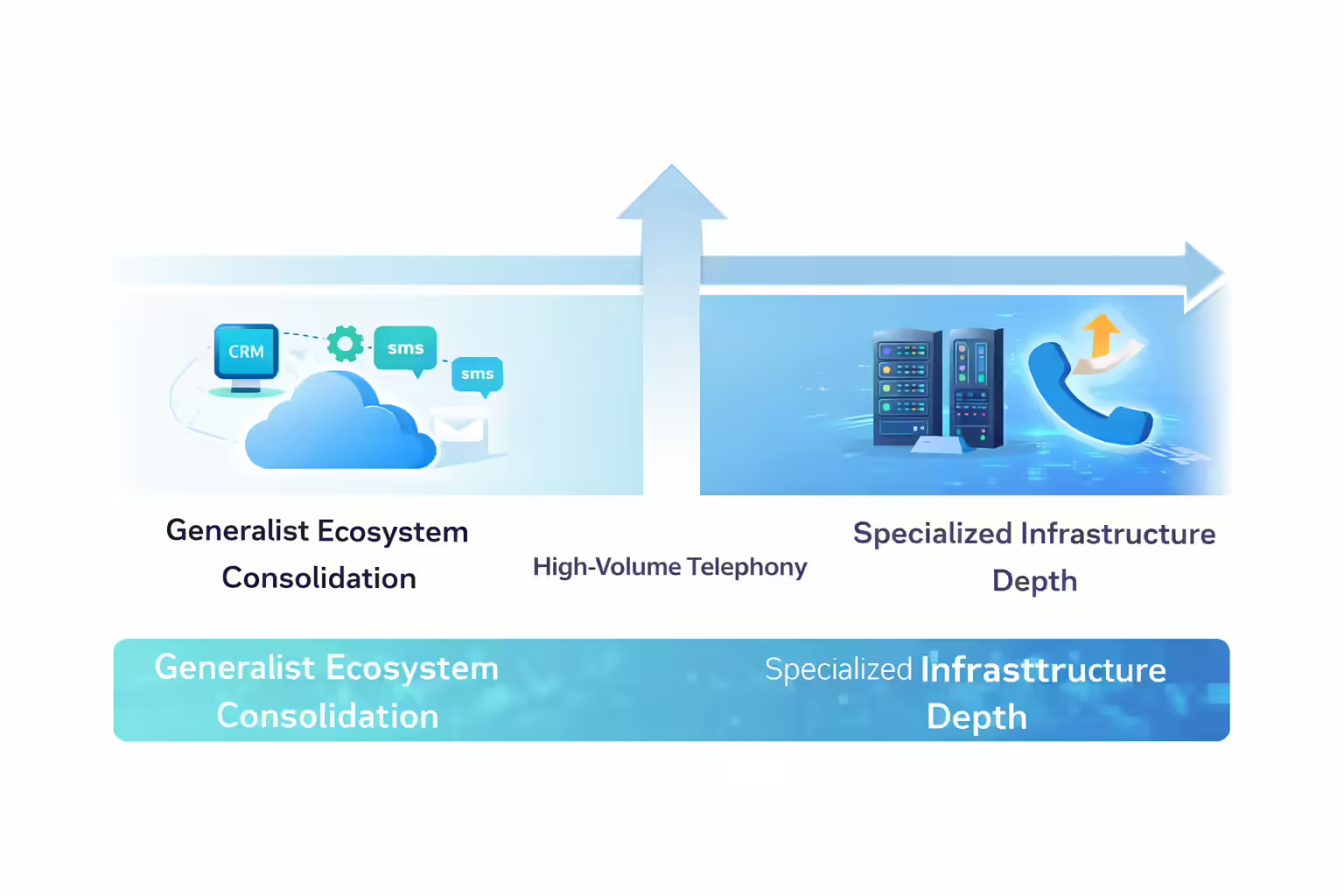
However, a forensic examination of the platform's architecture reveals significant divergences when applied to the rigorous demands of high-volume outbound sales. As organizations attempt to scale their outreach operations (moving from reactive lead handling to proactive, high-velocity power dialing), the architectural limitations inherent in LC Phone's design manifest as critical operational bottlenecks. These constraints are not merely feature gaps to be patched with software updates; rather, they are structural byproducts of a "managed wrapper" architecture built upon shared, aggregator-based infrastructure.
This technical review provides an exhaustive analysis of the structural and performance disparities between GoHighLevel's native LC Phone system and Kixie's dedicated sales engagement platform. The analysis focuses on network topology, API rate limiting policies, carrier-level signaling protocols, and the resource management behaviors of browser-based WebRTC clients. The central thesis posits that LC Phone, constructed as a managed abstraction layer over shared Twilio infrastructure, is constrained by defensive rate limits, single-thread browser processing, and a "best effort" approach to voice quality that is insufficient for high-concurrency environments. Conversely, Kixie utilizes a dedicated infrastructure model designed specifically for high-throughput sales operations, offering capabilities such as Multi-line PowerDialing and carrier-grade peering that are technically infeasible within the current LC Phone environment. This report serves as a resource for researchers, systems engineers, and agency owners evaluating the transition from generalist CRM telephony to specialized sales infrastructure.
GoHighLevel Infrastructure vs. Specialist Architecture
To fully appreciate the technical distinctions between LC Phone and Kixie, one must first understand the fundamental divergence in their design philosophies and intended use cases. The modern CRM market focuses on the "All-in-One" narrative, which suggests that a single platform can effectively manage every aspect of the customer lifecycle. While this holds true for data storage and basic communication, the physics of real-time voice transmission (VoIP) and the regulatory complexities of the Public Switched Telephone Network (PSTN) introduce challenges that generalist platforms are often ill-equipped to handle at scale.
The Generalist Dilemma (GHL)
GoHighLevel is primarily a marketing automation platform. Its core architecture is optimized for asynchronous tasks: sending emails, triggering SMS workflows based on form submissions, and managing pipeline stages. These are low-bandwidth, high-latency-tolerant operations. Telephony, by contrast, is a synchronous, real-time operation that requires prioritized network packets, low jitter, and immediate feedback loops. When a platform designed for asynchronous marketing automation attempts to handle synchronous high-volume voice traffic, compromises occur. These typically take the form of "managed wrappers" (simplified interfaces that abstract away the complexity of the underlying carrier) that remove the granular control and dedicated resources necessary for high-performance dialing.
The Specialist Mandate (Kixie)
Specialized sales engagement platforms like Kixie operate under a different mandate. Their architecture is built "voice-first." Every decision, from the choice of codecs to the server locations for RTP (Real-Time Protocol) relays, supports the specific requirements of a live conversation and the efficiency of the sales agent. This specialization allows for the implementation of advanced features like multi-line dialing and dynamic local presence, which require complex, real-time interaction with carrier networks. These capabilities are often too resource-intensive or structurally complex to implement within a generic CRM wrapper.
Technical Review of LC Phone Wrappers vs. Dedicated Infrastructure
The most profound difference between LC Phone and Kixie lies in their network architecture: specifically, how they connect the user's device to the PSTN. This detail dictates everything from call quality and latency to compliance risk and disaster recovery.
The LC Phone Managed Sub-Account Model
LC Phone operates as a proprietary abstraction layer where GoHighLevel acts as the master aggregator. When an agency or sub-account provisions a number through LC Phone, they are strictly speaking not the direct owner of the carrier relationship. Instead, they utilize a managed sub-account within GoHighLevel's master relationship with Twilio (or potentially other upstream providers).
This "Wrapper Architecture" introduces several critical dependencies:
-
Shared IP Reputation: In a managed environment, the signaling traffic often traverses shared IP ranges and SIP trunking groups managed by the aggregator. This creates a "noisy neighbor" effect. If other sub-accounts within the same aggregator pool engage in abusive calling practices, the reputation of the underlying trunking IPs can degrade. While GHL allows for the purchase of individual numbers, the delivery infrastructure remains shared.
-
Coupled Service Logic: In the GHL ecosystem, a sub-account is treated as a single entity for compliance purposes. If an LC Phone sub-account is flagged for SMS compliance violations (e.g., A2P 10DLC errors), the upstream provider or GHL's internal safety systems may suspend the entire sub-account. This results in a "kill switch" scenario where a marketing error incapacitates the voice capabilities of the sales team.
-
Generic Routing Profiles: LC Phone utilizes standard routing profiles designed for cost optimization rather than low-latency voice performance. The system prioritizes the successful connection of the API call over the fidelity of the audio stream, often defaulting to standard routes that may involve multiple hops before reaching the carrier network.
Kixie's Dedicated Peering Infrastructure
Kixie operates as a specialized voice carrier partner rather than a simple API wrapper. Kixie maintains direct peering relationships with Tier-1 carriers (e.g., Bandwidth, Peerless Network) and manages its own "Know Your Customer" (KYC) vetting processes. This distinction shifts the model from "Tenant" to "Peer."
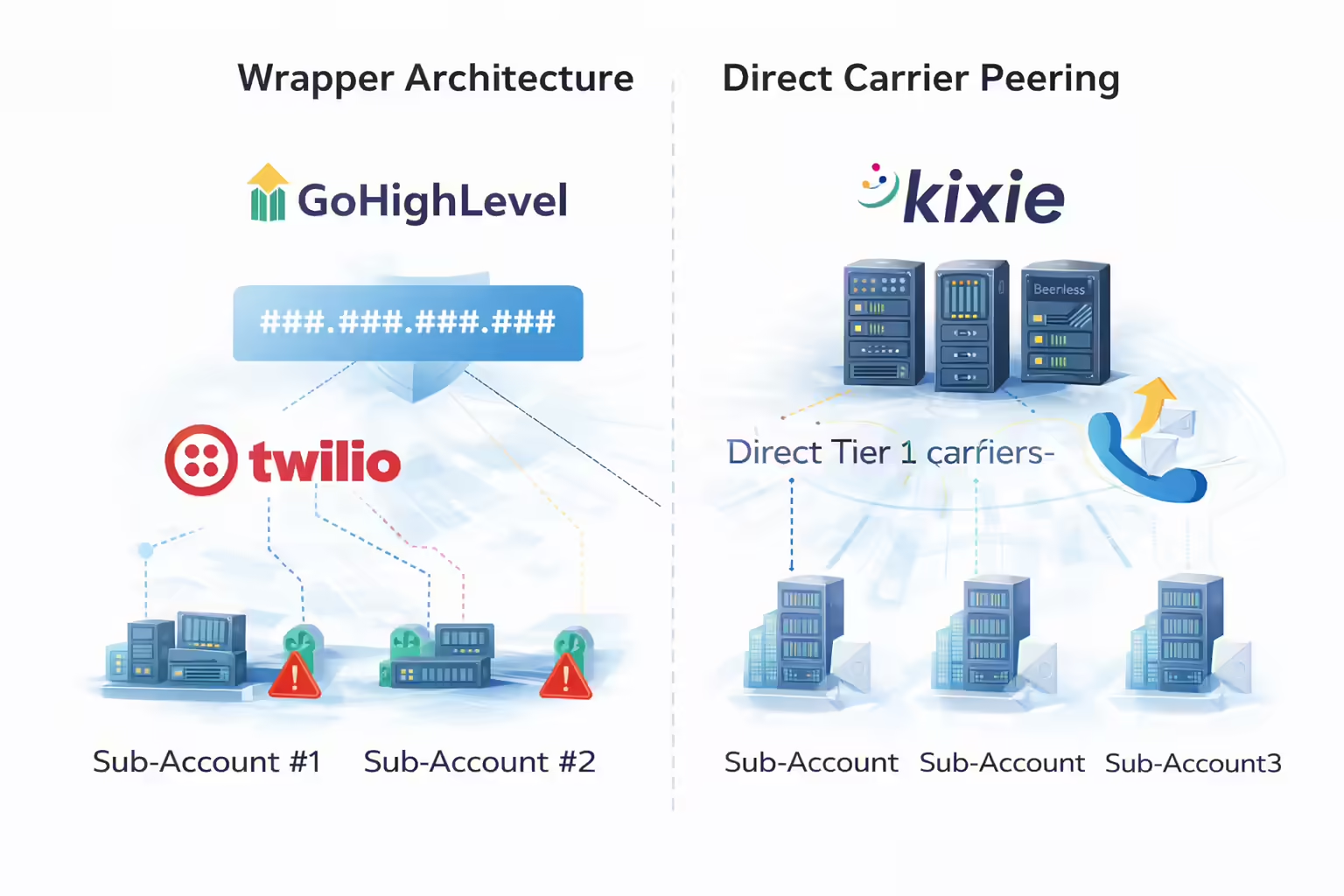
The technical advantages of this dedicated infrastructure include:
-
Service Decoupling: Kixie functions as an overlay technology. It integrates with GHL for data exchange but handles the telephony physics independently. This means a compliance flag on a GHL SMS campaign does not propagate to the Kixie voice capabilities.
-
Optimized SIP/RTP Paths: Kixie's infrastructure optimizes Real-Time Protocol (RTP) packet delivery. The Kixie client utilizes specific, high-fidelity codecs (such as OPUS for varying bandwidth and PCMU for low-CPU overhead) that are dynamically selected based on the user's hardware performance. This negotiation happens directly between the Kixie client and the Kixie media server, bypassing the generic routing logic of the CRM.
Infrastructure Latency: Hops, RTT, and Jitter
Latency disrupts natural conversation. In VoIP, latency is measured as the Round Trip Time (RTT) for an audio packet to travel from the speaker's microphone to the listener's earpiece and back. When RTT exceeds 150 milliseconds, the human brain begins to perceive a delay, leading to the "walkie-talkie" effect.
The Architecture Gap:
The architecture of LC Phone inherently introduces additional "hops" into the signal path:
LC Phone Path: User Browser -> GHL Web Server -> Twilio Cloud -> Carrier Gateway -> PSTN. Every handoff between these layers involves processing time, queuing, and potential jitter.
Kixie minimizes these hops through its dedicated extension architecture:
Kixie Path: User Extension (Direct SIP) -> Kixie Media Server (Carrier Peer) -> PSTN. By removing the aggregator middleware layer (the GHL server processing logic), Kixie reduces the RTT, minimizing the latency budget.
High-Volume Dialing Constraints on LC Phone
For sales teams engaging in high-volume outreach, the primary metrics of success are "Speed to Lead" and "Contacts Per Hour" (CPH). Efficiency is a mathematical requirement for viability. A technical analysis of GoHighLevel's rate limiting policies reveals that the platform is mathematically incapable of supporting true power dialing or predictive dialing workflows.
The LC Phone 10/15 Calls Per Minute Cap
To protect the integrity of its shared infrastructure, GoHighLevel enforces strict rate limits on outbound and inbound calling. According to official support documentation, the limits for standard sub-accounts are:
-
Outbound (From a number): 10 calls per minute.
-
Inbound (To a number): 15 calls per minute.
-
Violation Cap: Exceeding these limits results in a "violation." If an account accumulates 5 violations within a single hour, all inbound calls for the account are blocked.
These limits act as a hard ceiling on throughput. If a team of 5 agents engages in a "power hour" and each attempts to place a call simultaneously, they will consume 50% of the per-minute allowance instantly. If they use a single-line auto-dialer, the team will collectively hit the 10 calls/minute aggregate limit within seconds. The platform will then block calls, returning errors to the agents.
The Physics of Parallel High-Volume Dialing
To achieve high contact rates, modern sales teams utilize "Parallel Dialing" (multi-line power dialing). This technology allows a single agent to dial multiple numbers simultaneously. The logic relies on the low probability of any single call being answered (often <10%). By dialing 3, 5, or 10 numbers at once, the system mathematically increases the probability that one of those lines will connect to a human within a few seconds.
Kixie's infrastructure ignores CRM-level restrictions because the dialing logic occurs on Kixie's servers, not within the LC Phone API wrapper. Kixie supports a Multi-Line PowerDialer capable of dialing up to 10 lines simultaneously per agent.
-
Parallel Execution: The backend places up to 10 simultaneous SIP invites.
-
Answer Supervision: The system uses advanced signal processing to detect the specific frequency characteristics of a live human voice.
-
Atomic Switching: The moment a call is answered, Kixie acts as a high-speed switch, dropping the other 9 lines instantly and bridging the audio to the agent's headset.
Attempting this workflow on LC Phone is technically impossible. A single agent using a 3-line dialer would initiate 3 calls instantly. If they process 4 leads (12 total dial attempts) in under a minute, they would trigger a violation. The LC Phone architecture forces a serial, 1:1 dialing ratio.
Infrastructure Analysis of Browser-Based WebRTC Audio
A recurring technical complaint among GHL users is audio quality degradation, frequently characterized as "robotic" or "choppy" voice. While GHL support documentation often attributes these issues to local internet conditions, a deeper analysis suggests that the root cause frequently lies in the application architecture itself: Browser-Tab WebRTC Resource Contention.
The Browser Tab Bottleneck in GoHighLevel
LC Phone runs entirely within the browser context of the GoHighLevel web application. Modern browsers like Google Chrome utilize a multi-process architecture. However, within that process, the browser manages memory and CPU cycles aggressively.
-
Heap Memory Contention: The GoHighLevel dashboard is a heavy Single Page Application (SPA). In a browser-based dialer, the WebRTC client runs in the same execution environment as the rest of the CRM. JavaScript is single-threaded. This means the audio processing thread must compete for CPU time with the CRM's DOM manipulation. If the CRM performs a heavy render (e.g., loading a contact list), the "event loop" can become blocked. When the audio thread is blocked even for a few milliseconds, the buffer runs dry, resulting in dropped packets.
-
Garbage Collection Pauses: JavaScript engines periodically run "garbage collection" to reclaim memory. In a browser tab open for hours, memory usage can balloon. When the garbage collector runs, it can pause execution of the script. In a real-time UDP voice stream, a 200ms pause causes a dropped syllable.
Kixie's Dedicated Extension Infrastructure
Kixie mitigates the risks of browser-based resource contention by utilizing a Chrome Extension architecture that acts as a dedicated softphone client.
-
Process Isolation: Extensions operate in a separate context from the active web page's DOM. Kixie's dialer interface stays persistent even if the user switches tabs, leaves the page, or if the GHL tab crashes entirely. It does not compete directly with the GHL dashboard's rendering thread.
-
Adaptive Codec Negotiation: Kixie's client dynamically selects between OPUS (high-fidelity) and PCMU/G.711 (low-CPU overhead) based on hardware performance. Standard browser WebRTC implementations often default to a single codec strategy that may not be optimized for specific machine constraints.
GoHighLevel Number Pools vs. Kixie Dynamic Presence
In the environment of outbound sales, the "Answer Rate" (Answer Seizure Ratio - ASR) governs ROI. Technical analysis shows that LC Phone's approach to Caller ID is static, whereas Kixie employs a dynamic, algorithmic approach known as ConnectionBoost™.
The Static Limitation of LC Phone
In GoHighLevel, users can purchase local numbers to establish a "local presence." However, this implementation is static.
-
Fixed Identity: Once a number is assigned, it is used repeatedly. If a sales agent makes 100 calls a day from that single number, they quickly trigger "velocity" algorithms used by carriers. High velocity from a static number is the primary signal for "Spam Likely" flagging.
-
The "Burn and Replace" Cycle: When a number is eventually flagged, the GHL user is often the last to know. The remediation process is manual: identify the bad number, purchase a new one, and reconfigure the setup.
Kixie's ConnectionBoost High-Volume Dialing Algorithms
Kixie's ConnectionBoost technology automates this process using a proprietary algorithm that functions similarly to a Content Delivery Network (CDN) for telephony.
-
Dynamic Pool Rotation: Kixie maintains an inventory of over 50,000 numbers. The system dynamically queries this pool to select a number that matches the prospect's area code and has a "clean" reputation score.
-
Progressive Caller ID: The algorithm includes logic for follow-up attempts. If an agent calls a prospect multiple times, the system ensures a different local number is displayed for each subsequent attempt.
-
Automated Remediation Loop: The system monitors the ASR of every number in real-time. If a number's ASR drops below a threshold, the system automatically quarantines the number and removes it from the active rotation.
Technical Review of Compliance Risks in Coupled Infrastructure
In the current regulatory climate (STIR/SHAKEN, A2P 10DLC), compliance is a technical barrier to deliverability. A critical vulnerability in the LC Phone architecture is the deep coupling of Voice and Messaging (SMS) services.
The Coupled Compliance Failure Mode in LC Phone
Carriers are aggressively filtering SMS traffic. Because LC Phone creates sub-accounts where a single phone number (SID) is capable of both Voice and SMS, a compliance violation on the SMS side frequently results in the suspension of the entire number or sub-account.
-
Trigger: A marketing workflow sends an SMS blast that triggers a carrier filter (e.g., high opt-out rate).
-
Consequence: The carrier or aggregator blocks the number or suspends the sub-account.
-
Operational Impact: Because the Voice capability is tied to the same SID, the sales team loses the ability to make or receive calls.
Kixie's Decoupled Safety Net for High-Volume Dialing
Kixie integrates with GHL but utilizes its own, distinct telephony backbone.
-
Separation of Concerns: In a Kixie + GHL setup, GHL handles the marketing automation while Kixie handles the voice traffic. They operate on parallel tracks.
-
Redundancy: If GHL suspends the sub-account's SMS capabilities, the Kixie integration remains active. The sales team can continue to dial using Kixie's distinct carrier routes.
GoHighLevel Native Integration vs. API Workflow Engineering
While LC Phone boasts "native" integration, Kixie's API-driven integration is often more robust for sales-specific workflows.
Native LC Phone vs. API Latency
One might assume a native tool is faster, but GHL's native dialer often suffers from state management issues. Call logs are internal database entries, but the interface requires manual inputs for dispositions in many scenarios. Users report that during power dialing sequences, the UI does not consistently prompt for outcomes on secondary attempts. Kixie utilizes a webhook-based architecture to sync data. The data sync latency is negligible, and the decoupling allows the agent to move to the next call immediately while the API handles the data entry in the background.
The "Missing" High-Volume Dialing Features in Native Integration
Several critical features are absent in the native GHL dialer but present in Kixie's integration:
-
Voicemail Drop: The ability to leave a pre-recorded message with one click while moving to the next call. Kixie allows this to happen in under a second.
-
Bi-Directional Contact Creation: Kixie can create a contact in GHL if an unknown number calls the agent. GHL's native system typically relies on the contact already existing.
Financial Infrastructure Analysis: LC Phone vs. Kixie
The decision to stick with LC Phone or upgrade to Kixie often comes down to a Cost-Benefit Analysis of "Per-Minute Costs" vs. "Opportunity Costs."
Comparative Infrastructure Analysis Matrix
-
Connection Model: LC Phone is Serial (1 line at a time). Kixie is Parallel (Up to 10 lines).
Technical Consequence: Kixie yields 300-400% more conversations per hour. -
Spam Remediation: LC Phone is Manual. Kixie is Automated.
Technical Consequence: LC Phone users lose days of productivity rotating numbers manually. -
Rate Limits: LC Phone is capped at 10/15 per minute. Kixie is Unlimited.
Technical Consequence: LC Phone physically prevents team scaling.
The Cost of Idle Time in High-Volume Dialing
For a sales agent costing $25/hour, every minute spent listening to dial tones is wasted capital.
-
LC Phone Workflow: Agent dials -> Waits 30s -> Voicemail -> Manually drops VM -> Manual Note -> Next Call.
Cycle time: ~90 seconds. -
Kixie Workflow: Agent clicks "Start Session" -> System dials 10 numbers -> Connects to Live Answer instantly.
Cycle time between conversations: ~10-15 seconds. The technical superiority of the parallel multi-line architecture translates directly to financial efficiency.
Conclusion: Technical Review of GoHighLevel LC Phone
The technical evidence suggests that while GoHighLevel's LC Phone is a capable utility for general business telephony, it is structurally ill-equipped for the demands of high-volume outbound sales. The limitations are fundamental architectural constraints:
-
Browser-based WebRTC cannot match the resource management of a dedicated extension.
-
Shared API Rate Limits make modern power dialing mathematically impossible.
-
Static Number Management fails to combat carrier-level spam algorithms.
-
Coupled Architecture introduces business continuity risks.
For decision-makers, the conclusion is clear: High-volume teams require a dedicated telephony backbone. Kixie provides this through its decoupled, carrier-grade infrastructure, offering the throughput and reliability that a shared CRM wrapper cannot technically sustain.