Sales Qualified Leads vs. Marketing Qualified Leads
Your prospects must complete a long journey before becoming one of your paying customers.
Understanding Qualified Leads and The Sales Funnel
Most purchases don’t just happen out of the blue; the prospect needs to be enticed, groomed, wooed, and impressed by what you offer, often over a significant period. They first need to be able to recognize your company and the problem it can solve for them. They need to have all the reasons not to buy from you dismissed from their mind, and this is a step-by-step ongoing process. We usually think of this as a sales funnel. Unqualified leads start at the top of the funnel, and your marketing and sales works to move them to the bottom of the funnel, where they’re in a more qualified state and ready to make a purchasing decision.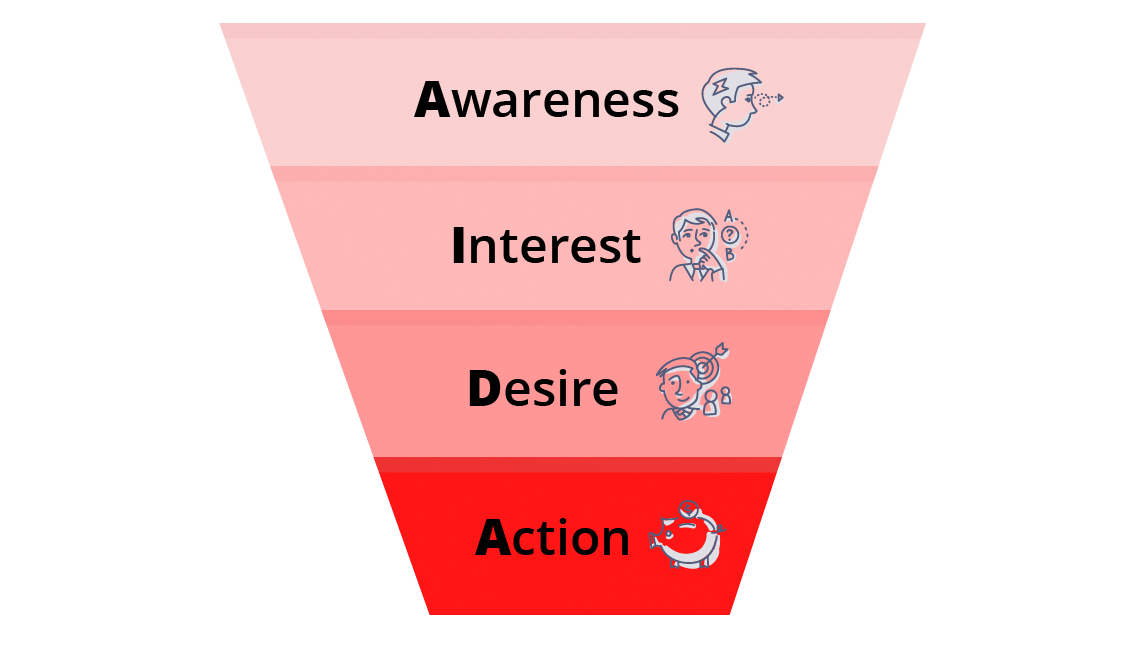
MQL vs. SQL
It’s important to keep track of where a prospect is in the sales funnel because the marketing and sales techniques you will want to employ greatly differ based on how primed the customer is to make a purchase.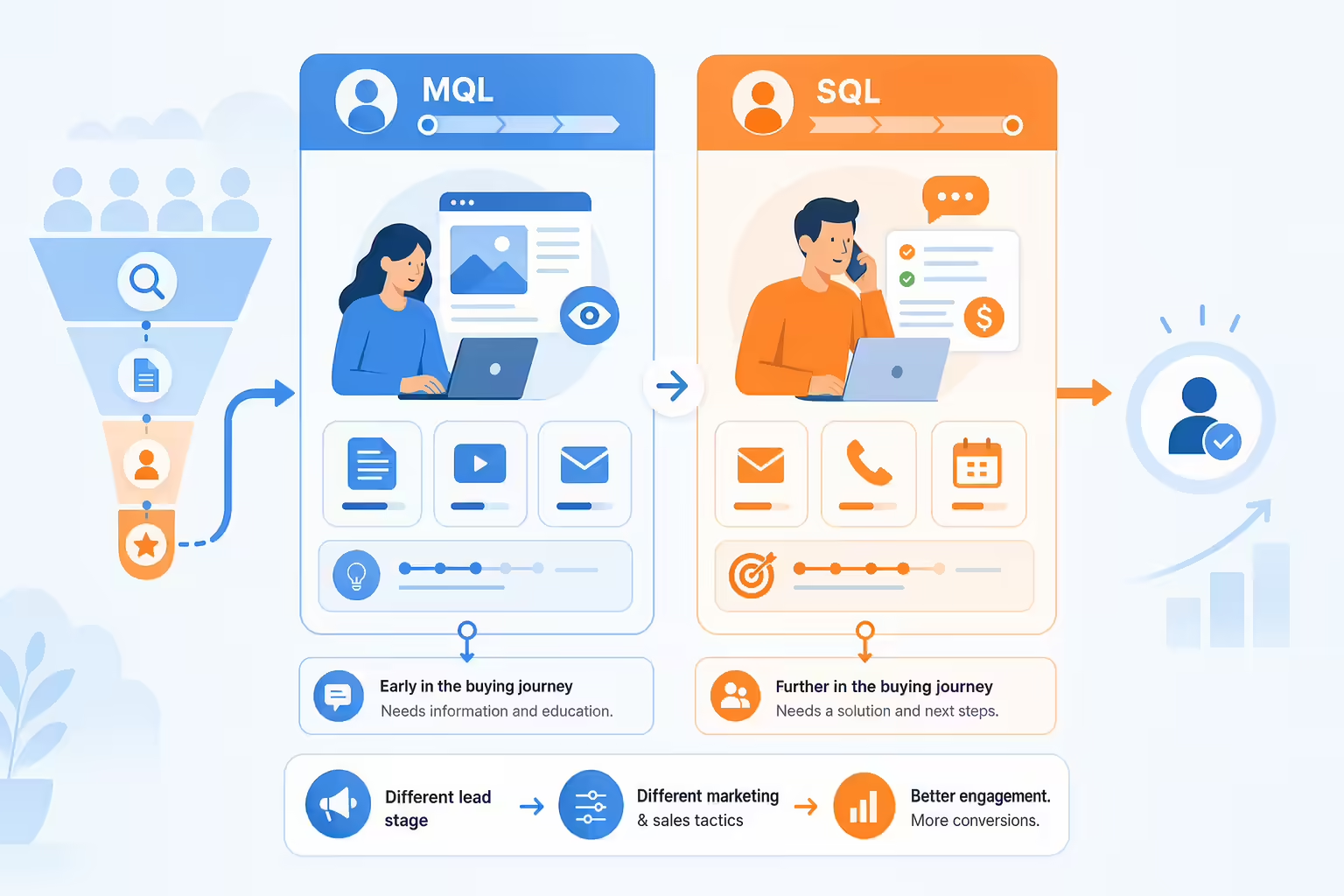
What is a Marketing Qualified Lead (MQL)?
A marketing qualified lead (MQL) is a lead that has so far engaged only with top-of-the-funnel content. They’re most likely in the research phase of the buying process, scoping out solutions for a problem they have. Let’s say you sell washing machines. An MQL may have visited your informational pages such as ‘is it better to buy or lease a washing machine?” or found your site by searching for “most economical washing machines”. They’re not yet ready to buy, but they’re certainly a qualified lead that’s shown interest in what you have to offer. MQLs are typically the responsibility of the marketing department or inbound sales representatives, whose job is to turn the MQL into an SQL through marketing and outreach.What is a Sales Qualified Lead (SQL)?
A sales qualified lead (SQL) is a person who has engaged with content further down your sales funnel. SQLs have typically already done their research and are now figuring out how to make a purchase. In our example, an SQL may be choosing between laundry machines on your website, checking delivery rates, or calling you for specific quotes. They may have spoken to an inbound sales agent in the past and indicated they’re likely to want to decide on a product soon. SQLs are often handled by account executives. In this final step, the deal can be concluded while nurturing a business relationship that will go on.MQL vs. SQL: Key Differences
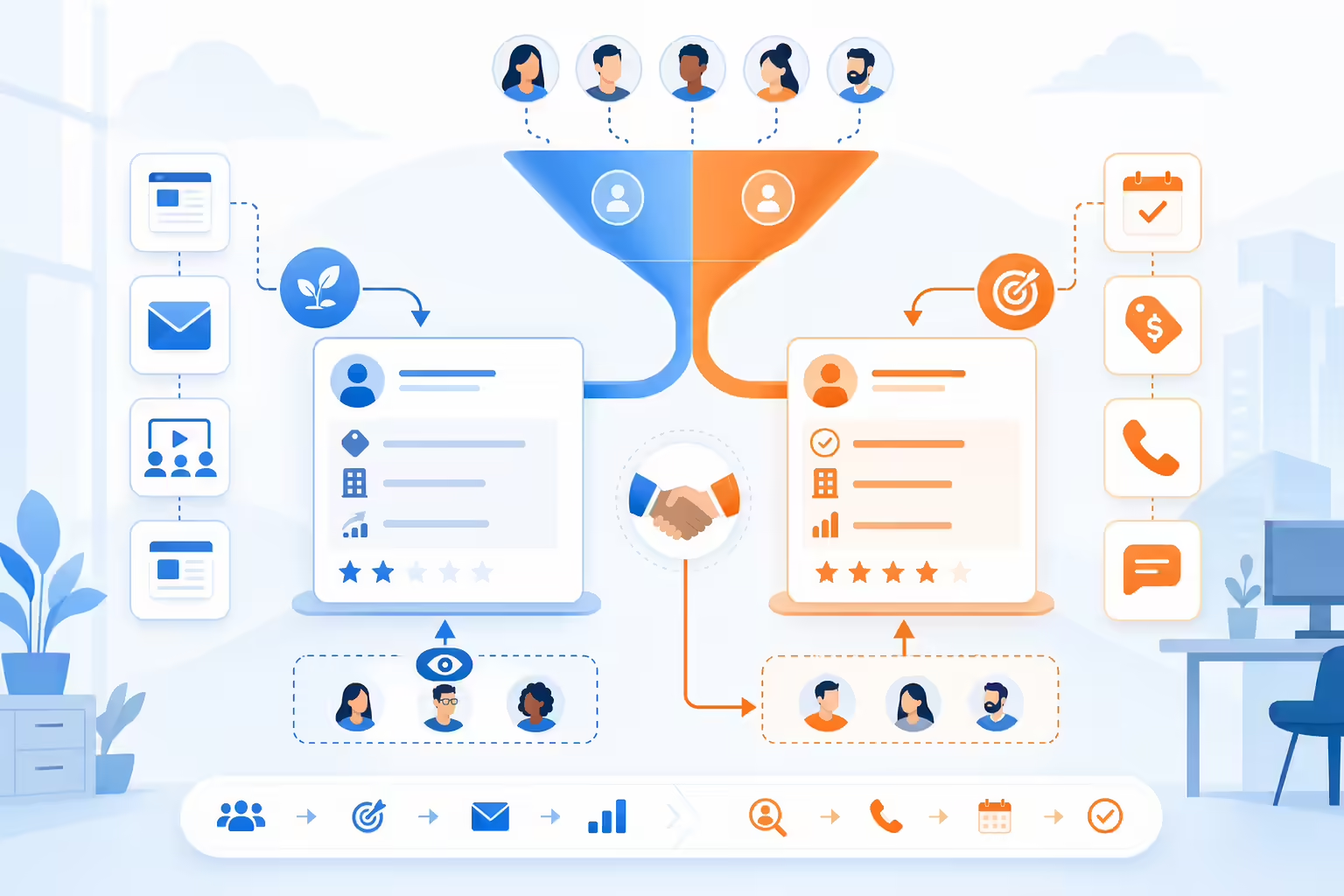
The simplest way to compare an MQL vs. SQL is to look at sales readiness. MQLs have shown enough interest to deserve continued nurturing, while SQLs have shown enough fit and buying intent to justify direct sales follow-up.
| Category | MQL | SQL |
|---|---|---|
| Buyer stage | Awareness or interest | Decision or purchase evaluation |
| Typical signals | Reads blog posts, downloads resources, joins webinars, or subscribes to emails | Requests a demo, visits pricing or product pages, asks specific buying questions, or matches your qualification criteria |
| Primary owner | Marketing, inbound sales, or nurture teams | Sales development, account executives, or the appropriate revenue team |
| Best next step | Educate, segment, and nurture with useful content | Respond quickly, qualify the opportunity, and route the lead to the right rep |
This comparison helps marketing and sales teams avoid treating every interested person like a ready buyer. The goal is to match the next action to the lead’s intent, not just the number of times they have interacted with your brand.
It’s Important to Differentiate SQLs vs. MQLs
Accurately differentiating between MQLs and SQLs keeps costs low. Only a small percentage of MQLs will ultimately become customers, so the amount you spend on every individual MQL should remain low. On the other hand, SQLs are much more qualified leads, so warrant more time and effort to convert them.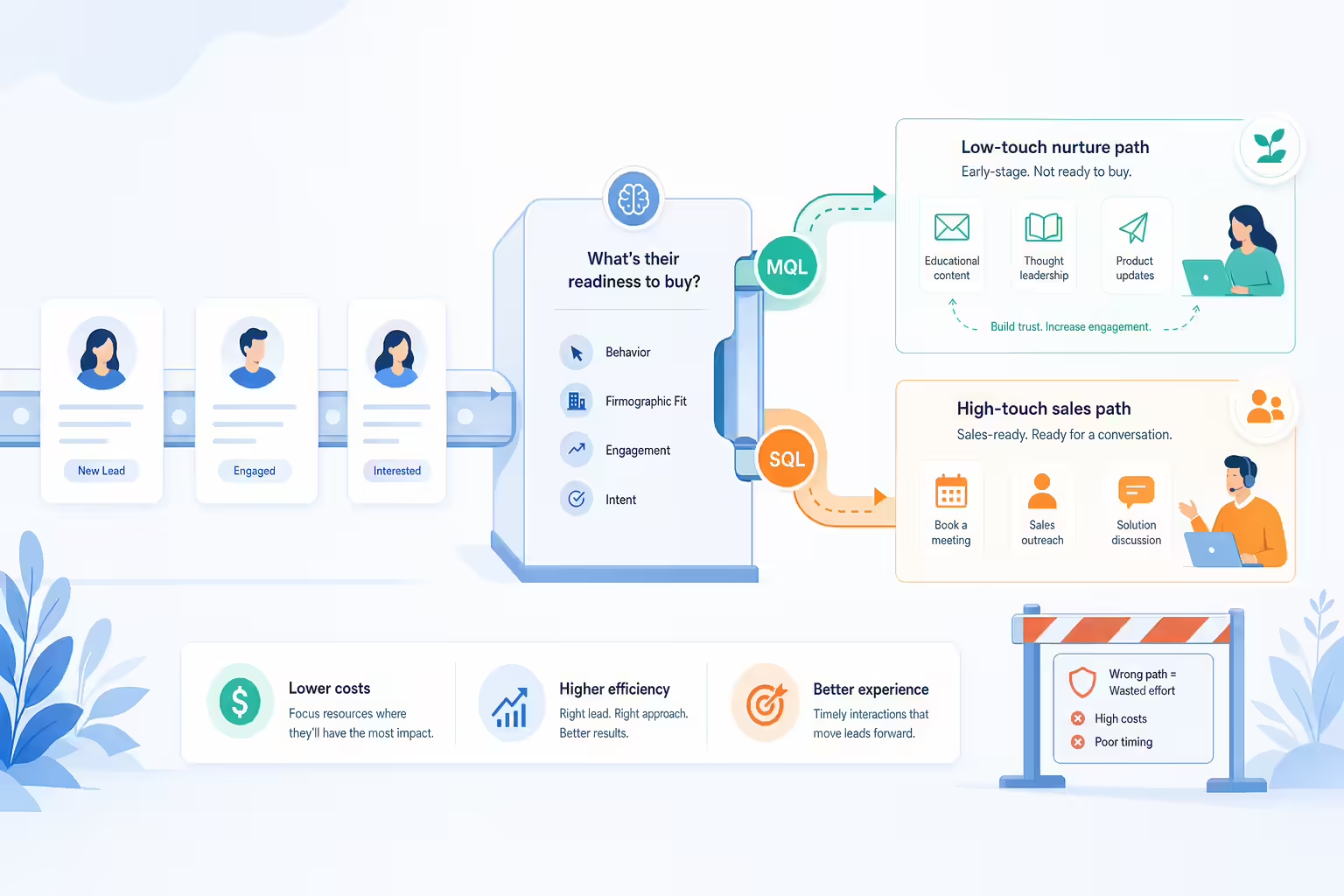
Qualifying a Lead
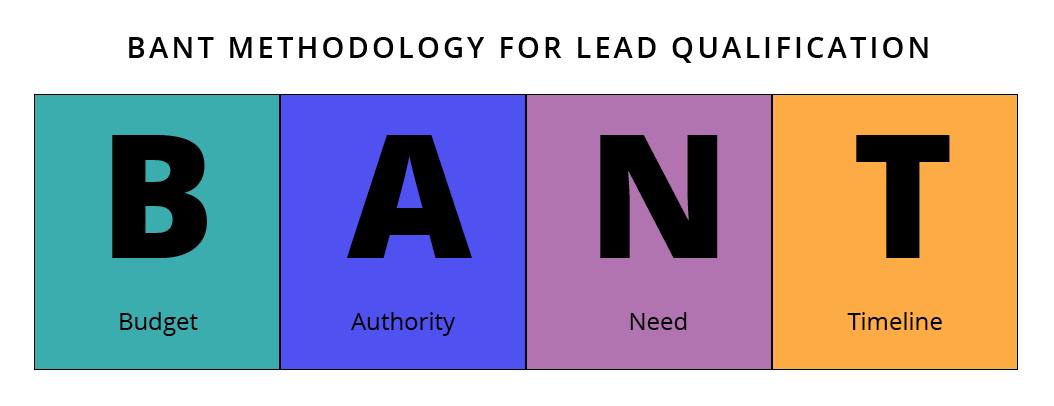
Qualifying a lead is one of the more difficult parts of a salesperson’s job. You can use the BANT methodology to get an overview of how hot a lead is and whether they should be considered an SQL:- Budget – Do they have the budget required to buy your products or services?
- Authority – Do they have the authority in their company to make purchasing decisions?
- Need – Do they have a problem your product can solve?
- Timeline – Are they ready to make a purchase within an amenable timeframe?
How to Know an MQL Is Ready for Sales
A lead should move from MQL to SQL when their behavior shows both fit and urgency. Instead of relying on one action, look for a pattern of signals that suggests the lead is actively evaluating a solution.
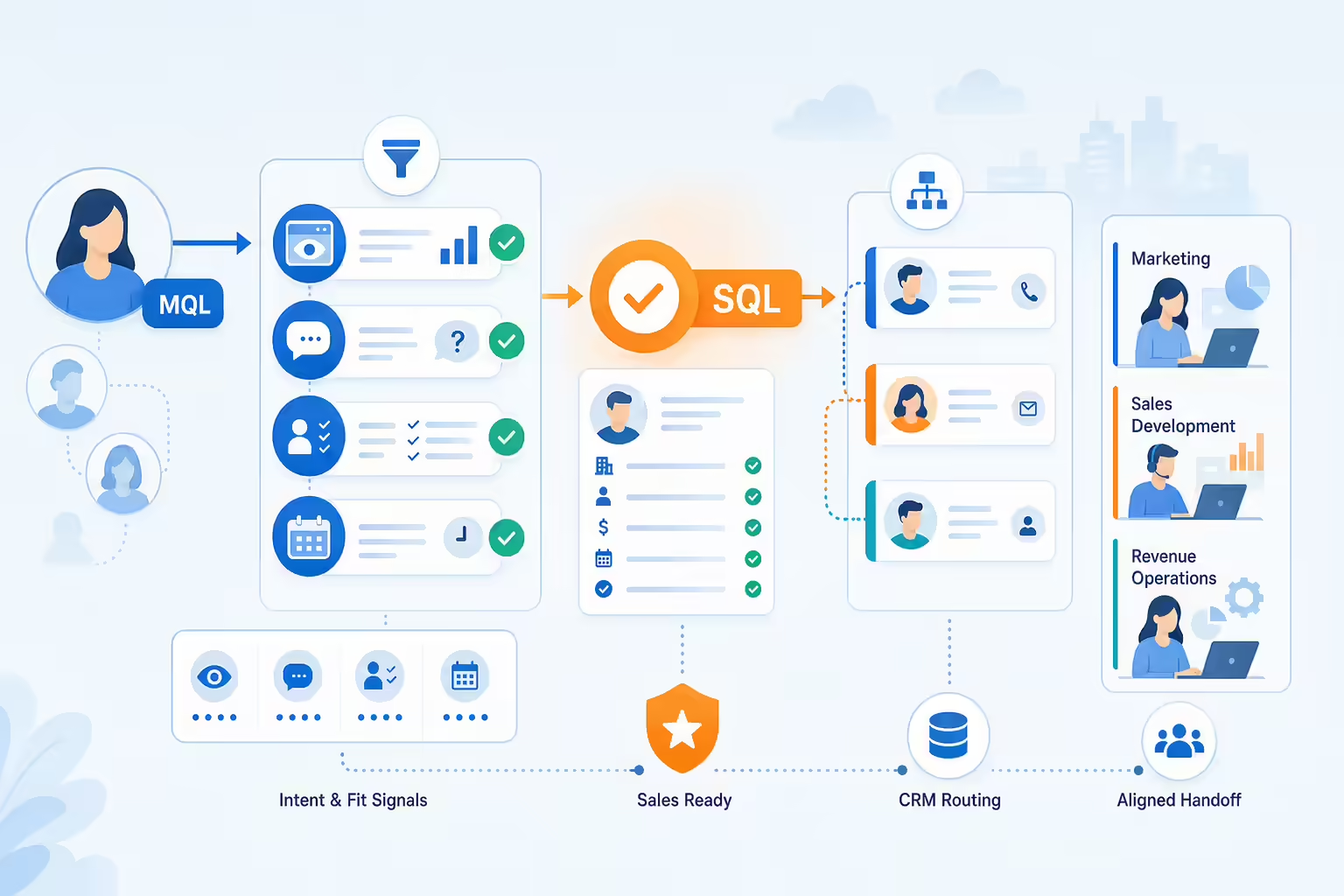
- High-intent page visits: The lead views product, pricing, integration, or comparison pages more than once.
- Direct buying questions: The lead asks about implementation, timelines, technical fit, or next steps.
- Qualification fit: The lead appears to match your budget, authority, need, and timeline requirements.
- Clear routing path: Your CRM can assign the lead to the right owner without forcing sales and marketing to manually sort it out.
For revenue teams using Kixie, this is where clean workflows matter. A connected handoff between marketing teams, sales development, and revenue operations makes it easier to follow up while the buyer’s interest is still fresh.
Transitioning from MQL to SQL

- The marketing department identifies an MQL and initiates several lead nurturing campaigns, from targeted email marketing to social media interaction.
- The MQL makes further qualifying actions, such as downloading more content, asking questions via live chat, or subscribing to a newsletter.
- Upon taking enough actions, the MQL can be upgraded to a potential SQL.
- The sales team will reach out to the lead and ask a few qualifying questions. If the lead is ready to make a decision, they are promoted to SQL. Otherwise, they remain an MQL and nurturing will continue.
Ready to close more deals with Kixie?
See how Kixie's AI-powered tools can transform your sales and support operations.
Start Free Trial