

 HubSpot
 Salesforce
 Zoho
Zoho
 HighLevel
 Pipedrive
 ActiveCampaign
 Slack
Slack
 Zapier
Data Extraction for HubSpot Caller ID Rotation: Legitimate business calls face answer rates below 3% in 2025 due to aggressive carrier filtering and the STIR/SHAKEN framework (Hiya 2025). Native HubSpot calling utilizes a bridged VoIP architecture that results in B-Level Attestation, frequently triggering "Spam Likely" flags.
To resolve this, organizations must implement automated Caller ID rotation using middleware like Kixie, which provides access to a pool of 50,000+ numbers with A-Level Attestation. This integration restores Answer Seizure Ratios (ASR) to 15-25% and reduces the labor cost per conversation from approximately $29.16 to $5.83. Technical implementation involves enabling the Kixie API on the Professional Plan, configuring the "ConnectionBoost" local presence engine, and utilizing HubSpot Workflows to trigger "Auto-Call" actions for immediate lead response.
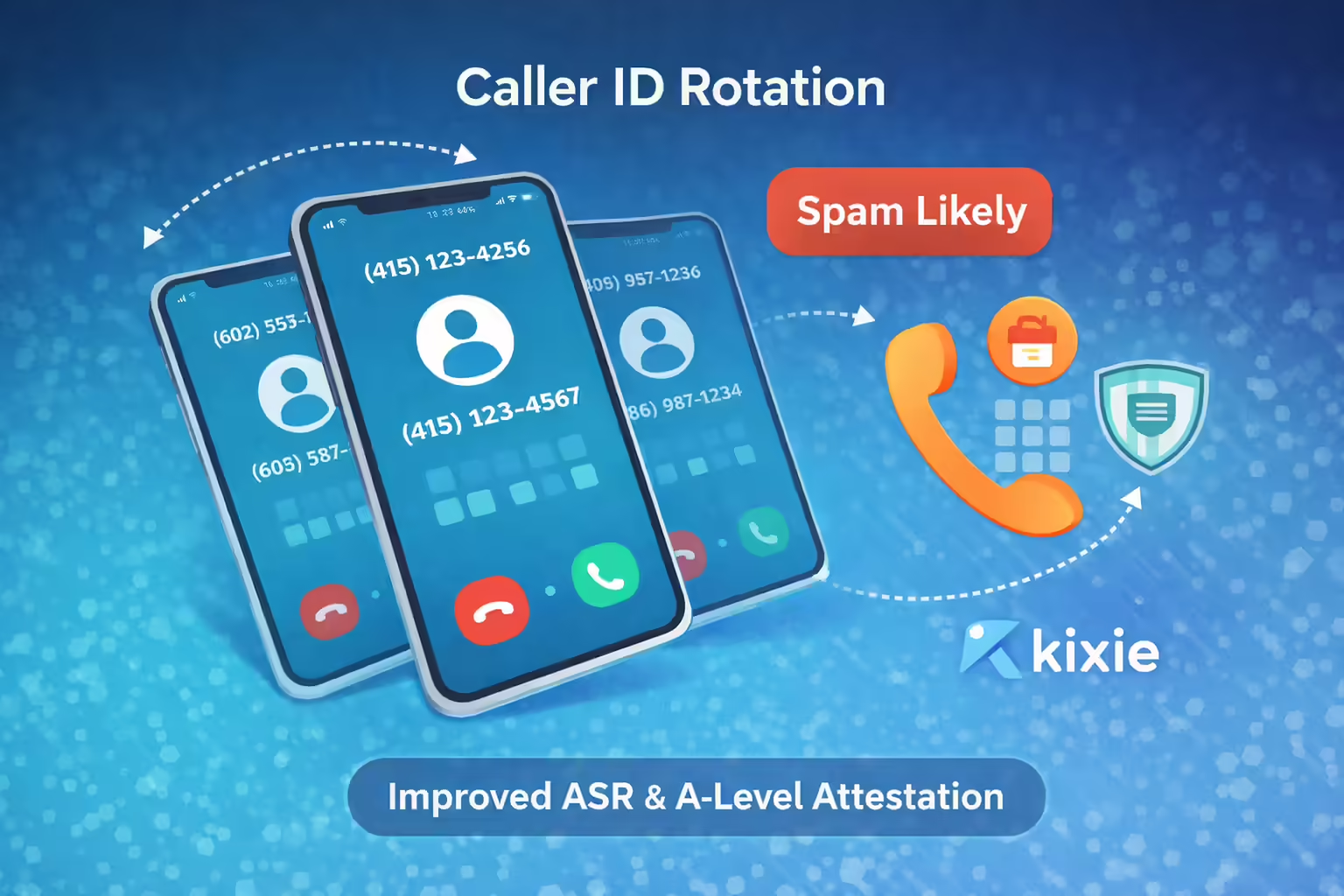
The Critical Need for Automated Caller ID Rotation in HubSpot
The voice channel remains a primary revenue generator for sales organizations, yet it faces severe restrictions in the current telecommunications environment. By 2025 and heading into 2026, the systems governing Public Switched Telephone Network (PSTN) and Voice over Internet Protocol (VoIP) traffic have shifted from a neutral transport layer to a highly scrutinized active defense perimeter. For users of the HubSpot Sales Hub, this shift manifests as a critical operational bottleneck (specifically the rapid degradation of Answer Seizure Ratios or ASR) caused by static Caller ID reputation damage.
This report posits that the traditional model of outbound sales, which relies on static Direct Inward Dialing (DID) numbers assigned to individual representatives, is mathematically obsolete. This obsolescence arises from algorithmic spam filtering and the STIR/SHAKEN regulatory framework. The necessary response involves a shift toward automated HubSpot Caller ID rotation and dynamic identity management. This analysis introduces Kixie as a middleware integration capable of bridging the architectural gaps within HubSpot's native calling infrastructure. It specifically focuses on the mechanisms of "ConnectionBoost" technology to secure A-Level Attestation and automate number rotation.
Why HubSpot Caller ID Rotation Fails Without Automation
To understand the necessity of automated HubSpot Caller ID rotation, one must first examine the hostile environment surrounding modern sales calls. The decline in answer rates, often cited as dropping below 3% for unknown numbers, results from defensive technologies deployed by Telecommunications Service Providers (TSPs) and mobile operating systems rather than simple consumer behavioral shifts.
The Data Reality: Data from Hiya's State of the Call 2025 report indicates that 80% of unidentified calls now go unanswered. This behavior acts as a rational consumer response to high volumes of unwanted traffic. However, legitimate businesses face a "guilt by association" scenario where validated sales outreach becomes indistinguishable from fraudulent robocalls. The resulting operational friction is severe. Nearly one-third of workers report lost revenue due to the inability to reach customers via phone, and 60% of sales professionals attribute lost deals directly to call-related connectivity issues.
The fundamental issue lies in the verification gap. While the STIR/SHAKEN framework serves to authenticate caller identity, its implementation across the complex web of legacy TDM (Time Division Multiplexing) and modern IP networks remains uneven. Carrier analytics engines default to aggressive filtering when call metadata is ambiguous or when traffic patterns mimic those of bad actors. For HubSpot users relying on the platform's native static calling architecture, this creates a high probability of false-positive "Spam Likely" labeling.
How Automated Caller ID Rotation Solves HubSpot Connectivity
In this high-security context, automation ensures survival rather than just efficiency. Automated HubSpot Caller ID rotation serves two distinct technical functions.
- Algorithmic Evasion: By distributing call volume across a vast pool of numbers rather than concentrating it on a single DID, organizations keep the "calls-per-hour" metric for any individual number below the thresholds that trigger carrier velocity filters.
- Psychological Optimization: By dynamically matching the Caller ID to the prospect's geolocation (Local Presence), organizations utilize the psychological tendency of recipients to answer calls from familiar area codes. This improves the ASR. A higher ASR feeds positive data back into carrier reputation models, which protects the long-term health of the number pool.
Technical Mechanics of Caller ID Rotation and Reputation in HubSpot
The automation of HubSpot Caller ID rotation addresses specific triggers within the global telephony network. To implement a robust solution, systems architects must understand precisely how reputation is lost and why static numbers remain inherently vulnerable.
Algorithmic Filtering Risks for Static HubSpot Caller ID Rotation
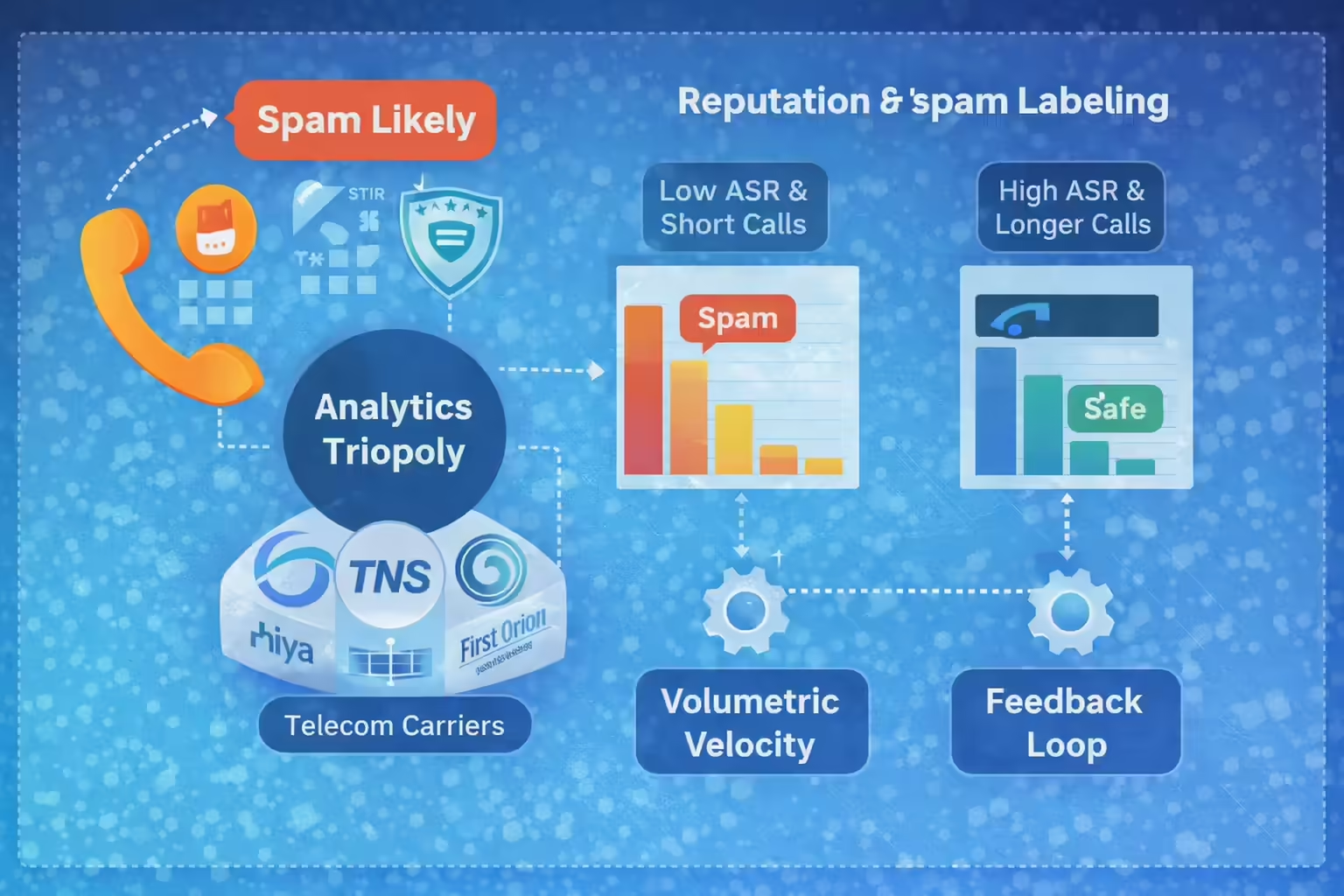
The labeling of a call as "Spam," "Scam," or "Telemarketer" is rarely done by the terminating carrier (such as T-Mobile or AT&T) in isolation. Instead, carriers rely on third-party analytics partners (principally Hiya, First Orion, and Transaction Network Services or TNS) to score incoming calls in real-time. These entities constitute an "Analytics Triopoly" that acts as the gatekeeper for the majority of US mobile subscribers.
These algorithms utilize "Zero-Trust" architectures. Every call is treated as potential spam until verified. They employ complex heuristics to evaluate the reputation of the originating number. A critical failure mode for HubSpot Caller ID rotation users arises from the "Feedback Loop" inherent in these algorithms.
The process begins with Volumetric Velocity. Analytics engines monitor the number of call attempts originating from a specific DID within a sliding time window (one hour or one day). If a HubSpot user manually dials 80 prospects in a day from a single static number, they may exceed the "human feasibility" threshold defined by the algorithm. This triggers a preliminary flag.
Once a preliminary flag is raised, the algorithm scrutinizes the Answer Seizure Ratio (ASR). Legitimate personal calls typically have high answer rates. Sales calls, even legitimate ones, have lower ASRs. If the algorithm observes a high volume of calls coupled with a low ASR and Short Duration Calls (SDC) (specifically calls lasting under 15 seconds), it reinforces the spam classification.
Attestation Gaps Affecting HubSpot Caller ID Rotation
Superimposed on heuristic algorithms is the federal mandate for cryptographic authentication known as STIR/SHAKEN. This framework requires the Originating Service Provider (OSP) to digitally sign the SIP (Session Initiation Protocol) Identity Header of a call, which attests to the validity of the Caller ID. The framework defines three levels of attestation that are critical for understanding the limitations of HubSpot Caller ID rotation when using native tools.
The OSP has authenticated the customer and verified their association with the specific number being used. The carrier asserts that they know the caller and that the caller has the right to use the number. This is the standard required to bypass many spam filters.
The OSP has authenticated the customer but cannot verify their association with the number. The carrier asserts that they know the caller but do not know if they are authorized to use that specific number. This occurs frequently in enterprise VoIP where numbers are forwarded or bridged.
The OSP acts merely as a gateway and cannot verify the caller or the number. These calls are highly suspect and prone to blocking.
Data from TNS and TransNexus in 2025 highlights that while Tier-1 carriers have implemented STIR/SHAKEN, a significant "Attestation Gap" remains for calls traversing non-IP networks or originating from over-the-top (OTT) VoIP providers that lack direct numbering resources.
Native HubSpot Caller ID Rotation Limitations
The structural weakness of using HubSpot's native calling tool for high-volume outreach lies in its reliance on a "bridged" calling model and the resulting B-Level Attestation.
When a user places a call via the HubSpot browser interface using a "Verified Number" (such as their personal cell phone or an office landline), the system does not originate the call from that device. Instead, it signals an underlying provider (typically Twilio) to create a bridge. The system calls the user's phone, then calls the prospect, and bridges the audio.
In this scenario, Twilio serves as the OSP, but the Caller ID displayed belongs to a different carrier (like Verizon or AT&T). Because Twilio cannot cryptographically prove that the HubSpot user has the exclusive, momentary right to use that Verizon number, it must sign the call with B-Level Attestation.
Terminating carriers view B-Level Attestation with skepticism, particularly when combined with high call volumes. Analytics engines frequently flag such calls as "Neighbor Spoofing" risks because the technical signature (Verified Source, Unverified Number) mimics the behavior of illegal robocallers who spoof local numbers to deceive victims. Consequently, HubSpot users relying on this native architecture face a structural ceiling on their connectivity rates.
Kixie ConnectionBoost as a Framework for HubSpot Caller ID Rotation
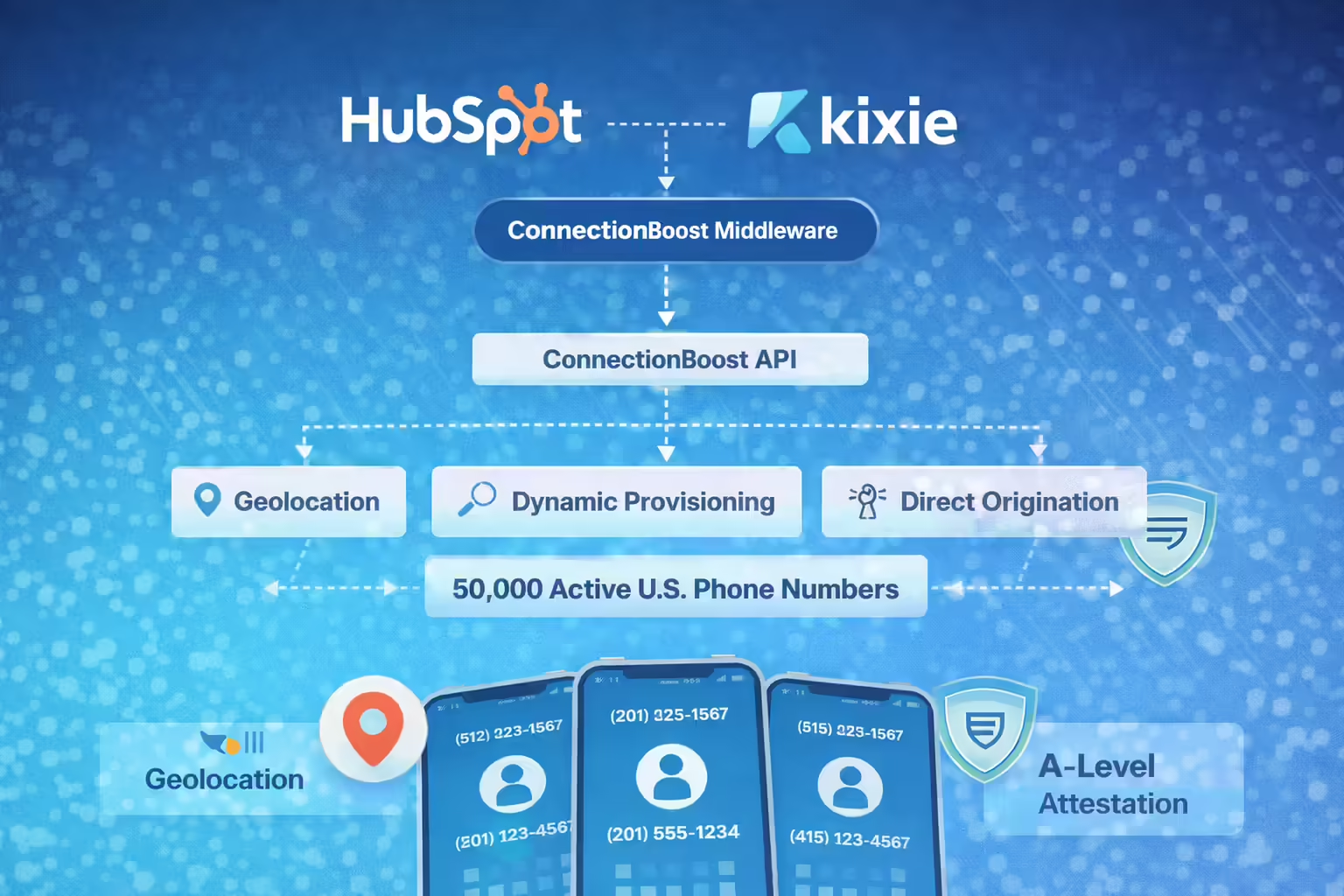
To resolve the architectural vulnerabilities of static dialing and B-Level Attestation, the integration of a specialized telephony middleware is required. Kixie's "ConnectionBoost" technology serves as this middleware. It replaces the native bridged model with a direct-origination architecture designed for high-velocity compliance and automated HubSpot Caller ID rotation.
Managing HubSpot Caller ID Rotation with a 50,000-Number Pool
The core innovation of Kixie's approach involves the decoupling of the sales representative from a single, static identity. Instead of relying on one DID, Kixie grants agents access to a managed, dynamic pool of over 50,000 real, registered phone numbers.
This pool is not a random collection of spoofed digits but a curated inventory of legitimate numbers owned and managed by Kixie. When a HubSpot user initiates a call via the Kixie integration, the following process occurs.
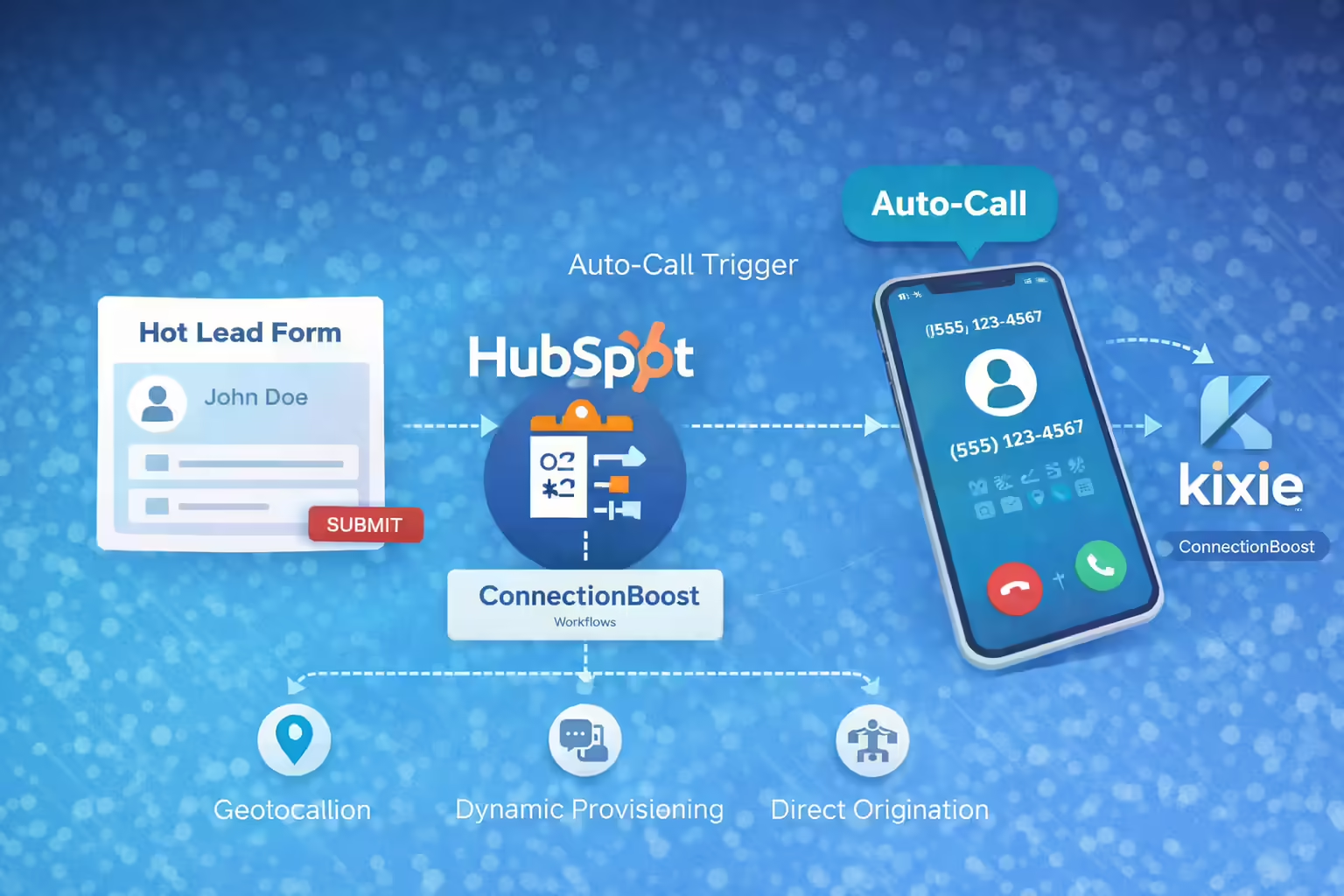
- Geolocation Analysis: The system instantly analyzes the destination number (e.g., 512 for Austin, Texas).
- Dynamic Provisioning: The algorithm queries the pool for an available, healthy number matching that area code.
- Direct Origination: The call is placed using this selected number as the Caller ID. Because Kixie acts as the controlling carrier for the numbers in its pool, it can authenticate the call with A-Level Attestation. This signals to the terminating carrier that the user is fully authorized to use that specific identity.
Progressive HubSpot Caller ID Rotation Logic
A critical component of the ConnectionBoost logic is Progressive Caller ID Rotation. This mechanism ensures that even within the same area code, the system does not repeatedly reuse the same number for the same prospect or during the same dialing session.
If a sales representative needs to call a prospect in New York (212) three times over the course of a week, the system adapts as follows:
- Attempt 1: The system selects Number A (212-555-0101).
- Attempt 2: The system recognizes the previous attempt and automatically rotates to Number B (212-555-0102).
- Attempt 3: The system rotates again to Number C (212-555-0103).
This strategy serves two purposes. First, it prevents "Call Screening" fatigue. A prospect who ignores one number is statistically more likely to answer a fresh, unrecognized number than to answer a repeat call from a known ignored entity. Second, it dilutes the Volumetric Velocity across the pool. By spreading 100 calls to New York across 20 different New York numbers, the velocity per DID remains negligible (5 calls/DID). This keeps all numbers well below the limits of carrier blocking algorithms.
Automated Health Checks for HubSpot Caller ID Rotation
Automation in the Kixie architecture extends beyond rotation to active remediation. The system employs an AI-driven "Number Health Reputation Manager" that continuously monitors the performance of the pool used for HubSpot Caller ID rotation.
This system aggregates data from carrier feedback loops and internal metrics, specifically the Answer Seizure Ratio (ASR) of each number.
- Detection: If a specific number's ASR drops suddenly below a baseline, or if it receives a specific error code from a carrier indicating a spam block, the system flags it as "compromised."
- Quarantine: The compromised number is immediately removed from the active rotation pool, ensuring no other agent can use it.
- Replacement: The system automatically provisions a fresh, clean number from Kixie's inventory to replace the quarantined unit.
This cycle is fully automated. It removes the administrative burden of manually monitoring number health or filing dispute tickets with carriers (a process that is often reactive and too slow to prevent revenue loss).
Configuring Automated Caller ID Rotation in HubSpot Workflows
The theoretical benefits of dynamic rotation are realized through the precise configuration of the Kixie-HubSpot integration. This section provides a step-by-step implementation guide for systems administrators, covering the setup of the middleware and the construction of automated workflows for HubSpot Caller ID rotation.
Prerequisites for Setting Up HubSpot Caller ID Rotation
Before automation can be configured, the foundational connection must be established between the HubSpot instance and the Kixie telephony stack.
Account Requirement: Access to ConnectionBoost and HubSpot Workflow automation requires the Kixie Professional Plan or higher. The "Integrated" or "Standard" plans do not support the advanced API endpoints necessary for this architecture.
API Enablement: Unlike standard integrations, the automation features often require the explicit enablement of the API key. Administrators must contact Kixie support or their account manager to verify that the API Key for Automations is active.
Extension Installation: The Kixie PowerCall Chrome Extension must be installed on all agent browsers. This extension acts as the bridge between the HubSpot UI and the Kixie dialing infrastructure.
Activating the Engine for HubSpot Caller ID Rotation
ConnectionBoost is the engine that drives the 50,000-number pool. It is not necessarily active by default and requires both administrative and user-level activation to facilitate HubSpot Caller ID rotation.
Administrative Configuration:
- Log in to the Kixie Dashboard.
- Navigate to Manage > Agents.
- Select the target agent profile.
- In the User Products or Billing Tier section, confirm the user is assigned to the Professional Tier. If the ConnectionBoost option is not visible, it must be provisioned by the Kixie account team.
User-Level Operational Toggle:
Once provisioned, the rotation logic is controlled via the dialer interface.
- Open the Kixie PowerCall extension.
- Click the Menu (☰) icon and select Settings.
- Locate the ConnectionBoost (often labeled as "Local Presence" in older versions) toggle.
- Set to ON. When active, the dialer will override the agent's static outbound ID and utilize the dynamic pool for every call, automatically matching the destination area code.
Workflow Triggers for Automated HubSpot Caller ID Rotation
The most effective application of this technology involves decoupling the "dialing" action from human initiation. Kixie's integration allows HubSpot Workflows to trigger "Auto-Calls" that utilize the ConnectionBoost rotation logic automatically. This proves particularly effective for "Speed-to-Lead" scenarios where immediate response correlates with higher conversion rates.
Configuration Steps:
- Create Workflow: In HubSpot, navigate to Automation > Workflows. Create a new Contact-based workflow.
- Set Trigger: Define the enrollment criteria (e.g., Form Submission = "Request a Demo").
- Add Action: Click the + icon to add a step. Scroll to the "Connected Apps" section at the bottom of the sidebar.
- Select Kixie Action: Choose "Kixie: Auto-Call". (Note: Do not select "Make a call," which refers to a different, often static, API endpoint.)
- Configure Action Parameters:
- Phone Number: Map this field to the HubSpot Contact Token for Phone Number or Mobile Phone.
- Display Message: Enter the context string for the agent (e.g., "Hot Lead - Website Form").
- Agent Assignment: The action will default to the "Contact Owner" property in HubSpot to determine which agent to ring.
PowerList Configuration for High-Volume HubSpot Caller ID Rotation
For scenarios requiring high-volume outreach (such as cold calling lists) rather than immediate one-to-one response, the "Auto-Call" mechanism is inefficient. The PowerList feature allows for automated queuing combined with HubSpot Caller ID rotation.
ROI Analysis of Automated HubSpot Caller ID Rotation
The transition from static calling to automated rotation represents a shift from a low-cost/low-yield model to a higher-investment/high-yield model. An economic analysis of the Answer Rate differential demonstrates a substantial Return on Investment (ROI), primarily driven by the reduction in labor costs per conversation utilizing HubSpot Caller ID rotation.
At a 3% answer rate, the effective labor cost to achieve one conversation is approximately $29.16. By restoring the answer rate to 15% through automated rotation, the cost per conversation drops to $5.83. This 80% reduction in the cost of acquisition per conversation creates immediate fiscal space to cover the cost of the middleware investment.
Furthermore, the stability provided by rotated numbers enables the use of PowerDialing tools (multi-line dialing). If a rep attempts to dial 100 leads manually on a static HubSpot line, they risk a velocity flag after the first hour. With ConnectionBoost managing the identity layer, the same rep can dial 300+ leads in a day without triggering velocity algorithms. This effectively triples the outreach capacity of the human agent without increasing the spam risk profile of the organization.
Future Trends Affecting HubSpot Caller ID Rotation Strategies
As the telecommunications industry advances toward late 2026, the competitive dynamic between spam filters and sales outreach will continue to evolve. Administrators must anticipate the next phase of regulation and technology to ensure their HubSpot Caller ID rotation infrastructure remains resilient.
Branded Calling vs. HubSpot Caller ID Rotation
While Caller ID rotation is the current method for maintaining connectivity via local presence, the industry is moving toward Branded Calling, also known as Rich Call Data (RCD). Technologies like Apple's Business Connect and carrier-specific branding initiatives allow businesses to display their logo, name, and reason for calling instead of a simple phone number.
However, adoption of Branded Calling is not a shortcut around reputation management. It forces a stricter adherence to it. Branded Calling protocols require A-Level Attestation as a non-negotiable prerequisite. A number cannot display a brand logo if the carrier cannot cryptographically verify the caller's identity. Therefore, the infrastructure implemented today for ConnectionBoost (specifically the verified entity identity and direct carrier registration) is the necessary foundation for the Branded Calling strategies of tomorrow. Organizations that remain on B-Level Attestation architectures (like native HubSpot calling) will be locked out of these next-generation trust indicators.
AI Defense Mechanisms and HubSpot Caller ID Rotation
Carriers are increasingly deploying AI models that listen to the audio of the call (using "audio fingerprinting") to detect robocalls, rather than relying solely on metadata analysis. TNS reports regarding "AI-Generated Robocalls" indicate that carriers are developing countermeasures to identify synthetic voices and rigid scripting patterns.
This implies that while number rotation solves the "Connection" problem (getting the phone to ring), the "Content" of the call remains critical for retention. Sales teams must move away from rigid scripts that mimic robocall audio patterns. The combination of Kixie's rotation (to secure the answer) and human-led, empathetic conversation (to maintain the connection) will remain the only viable strategy for high-value sales. The era of "blasting" calls is effectively over. The era of "targeted, verified, and authenticated" outreach has begun.
Final Thoughts on Implementing HubSpot Caller ID Rotation
The degradation of Caller ID reputation is a structural inevitability for high-volume sales teams using static numbers on bridged VoIP networks. The native HubSpot calling tool, while excellent for CRM data logging and low-volume outreach, lacks the telephony infrastructure to survive the hostile filtering environment of 2025/2026. The "Attestation Gap" and the "Feedback Loop" of spam labeling create a ceiling on performance that no amount of sales training can overcome.
Automating HubSpot Caller ID rotation is not about evading legitimate regulation. It is about managing identity in a Zero-Trust network. By integrating Kixie's ConnectionBoost, organizations replace the vulnerabilities of B-Level Attestation and static velocity flags with a robust, AI-managed infrastructure. This approach applies A-Level Attestation, dynamic pooling, and automated health checks to ensure that the phone remains a viable revenue channel.
For the HubSpot user, the path forward is clear. Decouple the calling logic from the CRM interface. Use HubSpot for workflow automation and data management, and utilize Kixie for telephony reputation and connectivity.
Summary of Recommendations:
- Migrate Volume: Systematically move all high-volume outbound dialing (>20 calls/day per agent) from HubSpot Native/Twilio to the Kixie infrastructure to utilize A-Level Attestation.
- Enable ConnectionBoost: Activate the AI-driven local presence pool on all Professional tier agents to ensure velocity distribution and local presence optimization.
- Automate Context: Utilize HubSpot Workflows to trigger "Auto-Calls" for immediate speed-to-lead, utilizing the Kixie API to handle the telephony rotation invisibly in the background.
- Monitor Health: Transition reliance from manual carrier disputes to Kixie's automated quarantine system to maintain pool integrity without administrative overhead.